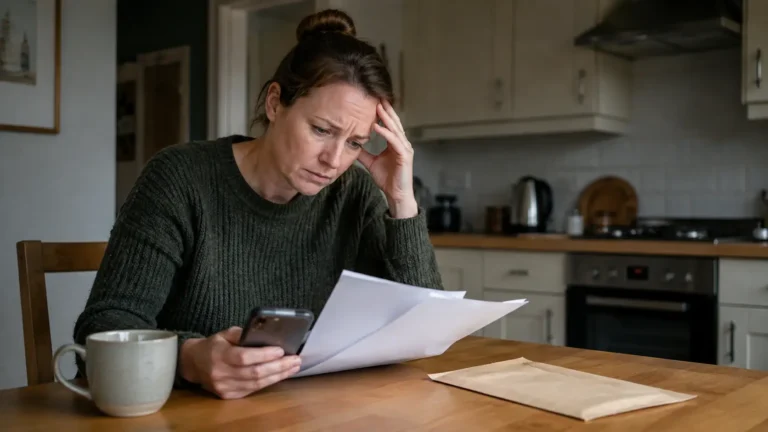


There is no universal HMRC rule requiring UK pensioners to have £500 deducted from their bank accounts. Current HMRC guidance does not establish £500 as a standard pension charge, fixed deduction or Direct Recovery of Debts threshold.
What can happen is that an individual pensioner may owe Income Tax because of State Pension income, private pensions, savings interest, an incorrect tax code or another source of taxable income.
HMRC can deal with underpaid tax through PAYE coding, a P800 calculation or Simple Assessment. Direct recovery from a bank account is a separate debt-enforcement process with much stricter conditions.
In fact, HMRC says Direct Recovery of Debts is considered only for tax and tax-credit debts of more than £1,000, making the distinction particularly important for anyone seeing headlines about an automatic £500 deduction.
Last Updated: 11 August 2026
Has HMRC Actually Confirmed a £500 Bank Deduction for Pensioners?

HMRC has powers to collect tax that is genuinely due, but its current published guidance does not establish a blanket £500 bank deduction specifically targeting pensioners.
A person might coincidentally owe £500, £300, £1,200 or another amount after their individual tax position is calculated, but that is very different from a nationwide £500 charge.
The distinction matters because tax underpayments can occur when several sources of taxable income come together.
This is particularly relevant to pensioners facing unexpected tax bills, where the important figure is the individual’s total taxable income and tax already paid rather than a predetermined £500 amount. The sitemap identifies that pension-tax article as a current supporting page.
Is £500 a Fixed HMRC Charge?
No. Current HMRC guidance on State Pension taxation, Simple Assessment and Direct Recovery of Debts does not set a £500 standard charge for pensioners.
Could an Individual Pensioner Still Owe Around £500?
Yes. An individual tax calculation could result in £500 being due. That may happen because too little tax was collected through PAYE, savings interest became taxable, pension income changed or HMRC’s information needs correcting. The amount depends on the person’s circumstances.
Latest HMRC Update: Simple Assessment Letters to Pensioners From 12 August 2026
One of the most important developments is not a £500 deduction but a large HMRC Simple Assessment exercise.
HMRC announced on 28 July 2026 that it expects to issue around 1.8 million Simple Assessment letters. Working-age customers began receiving them from 30 June, while pensioners will begin receiving letters from 12 August 2026.
A second tranche is planned between October and December 2026 and will relate to Bank and Building Society Interest data.
The letters, officially called PA302, are generated where HMRC identifies tax that has not been collected through PAYE or Self Assessment. Reasons can include pension income, savings interest, a second income or tax that cannot be collected through a tax code.
The official HMRC Simple Assessment update therefore provides a much firmer explanation for current pensioner tax concerns than reports of a standard £500 deduction.
HMRC Chief Customer Officer Myrtle Lloyd said:
“If you receive a Simple Assessment letter and have tax to pay, please don’t ignore it.”
For 2025/26, a Simple Assessment received before 31 October 2026 is normally payable by 31 January 2027. If it arrives on or after 31 October for 2025/26 or an earlier tax year, the payment deadline is generally three months from the letter’s date.
What Does HMRC’s New 2026 State Pension Tax Guidance Say?

HMRC published dedicated State Pension tax guidance on 7 July 2026.
It confirms that State Pension is taxable income, although Income Tax is not deducted before the State Pension itself is paid. You normally pay tax only when your overall taxable income exceeds the allowances available to you.
For 2026/27, the standard Personal Allowance remains £12,570.
HMRC’s newer guidance also makes an important technical point: taxable State Pension is based on the amount you were entitled to receive during the tax year, rather than simply adding up the cash that happened to reach your bank account during that period.
This is why a State Pension tax warning can be relevant even where nothing has been directly deducted from the State Pension payment. That page is included in the site’s pension and tax coverage.
Why Could a Pensioner Owe HMRC Money?
There are several ordinary tax situations that can produce an underpayment. You may need to examine your position particularly carefully if you:
- receive State Pension and a private or workplace pension
- receive income from several pensions
- continue working after reaching State Pension age
- receive taxable savings interest
- take taxable money from a defined contribution pension
- have other untaxed income
- have had a tax-code or income estimate changed during the year
Having several PAYE income sources can make tax calculations more complicated. LITRG notes that underpayments can arise where someone has more than one pension, retires during a tax year or draws income flexibly from a pension.
The wider MoneyHelper pension tax guidance also explains how pension income, withdrawals and tax rules interact, which can be useful when distinguishing a genuine pension tax liability from an alarming headline.
How Is Tax on the State Pension Actually Collected?
If you receive State Pension alongside a private pension or employment income, HMRC will usually change the tax code attached to the other PAYE source so that the tax due on your overall income can be collected there.
That can make it appear as though your private pension has suddenly been “cut”, when the underlying issue may simply be a change in the amount of Income Tax collected.
A change to your tax code therefore deserves checking against HMRC’s income estimates and your pension records rather than being treated automatically as a new charge.
Can HMRC Take Tax Directly From Your State Pension?
The State Pension is paid without Income Tax being deducted first. If another PAYE pension or employment source is available, HMRC will usually adjust that tax code instead.
Where the tax cannot be collected through PAYE, HMRC may use Simple Assessment.
If State Pension is your only income and it creates a tax liability above your available Personal Allowance, HMRC says a Simple Assessment bill may be issued.
What Is a P800 Tax Calculation?
A P800 is an HMRC calculation used after the tax year where the PAYE system shows that you paid too much or too little Income Tax.
It can include income from employment, pensions and taxable State benefits, and may also include savings interest supplied to HMRC.
For the 2025/26 tax year, P800 calculations are being issued during 2026, although some can arrive later when HMRC is waiting for information from banks or building societies.
The independent PAYE underpayment guidance from LITRG recommends comparing HMRC’s figures with records such as P60s, pension statements and bank statements rather than assuming every figure is correct.
What Should Pensioners Check on a P800?
Check the:
- pension income shown
- State Pension figure
- savings interest
- employment income, if applicable
- allowances included
- tax code used
- Income Tax already deducted.
For a 2025/26 P800 showing an underpayment below £3,000, HMRC will generally try to collect the tax through future PAYE coding where the relevant conditions allow it.
What Is Simple Assessment for Pensioners?
Simple Assessment differs from a P800 because it is itself a calculation and demand for tax that HMRC requires you to pay.
HMRC says you may receive one where Income Tax cannot automatically be collected from your income, where you owe £3,000 or more, or where tax is due on your State Pension.
A Simple Assessment letter shows your taxable income, Income Tax already paid and the amount HMRC says remains due. If information is incorrect, HMRC currently requires you to contact it within 60 days.
That makes checking the underlying figures especially important. Previous HMRC pension overcharging cases also reinforce why pensioners should compare official calculations with their own records rather than focusing only on the final amount demanded. The supporting pension-tax page appears in the supplied sitemap.
Can Savings Interest Lead to an Unexpected HMRC Tax Bill?

Yes. Savings interest can contribute to taxable income, and HMRC receives information from banks and building societies that can feed into tax calculations and Simple Assessment.
For 2026/27, the Personal Savings Allowance remains £1,000 for basic-rate taxpayers and £500 for higher-rate taxpayers. The precise amount of tax due depends on all of your income and allowances, not simply the balance held in your savings account.
This issue is particularly timely because HMRC says its second tranche of 2026 Simple Assessment letters, scheduled between October and December, will relate to Bank and Building Society Interest information.
If interest appears in an HMRC calculation, compare the figure with annual statements from your banks and building societies. The site’s coverage of HMRC savings tax letters also sits directly within this developing 2026 tax issue.
Can HMRC Take Money Directly From a Pensioner’s Bank Account?
HMRC does have a power called Direct Recovery of Debts (DRD), but this is not the same thing as receiving a P800, having your PAYE tax code changed or being sent a Simple Assessment.
Current HMRC guidance says DRD is aimed at established tax and tax-credit debts where the person or business can afford to pay but has not done so despite HMRC’s attempts to make contact.
Crucially, HMRC says DRD is considered for tax and tax-credit debts of more than £1,000. On that rule, a standalone tax debt of exactly £500 would not itself meet the DRD debt threshold.
What Safeguards Apply Before Bank Recovery?
HMRC’s June 2026 guidance lists significant safeguards. It says:
- the debt must be established and normal appeal time limits must have passed
- HMRC must have repeatedly tried to make contact
- individuals receive a face-to-face visit before DRD is considered
- the qualifying debt must be more than £1,000
- at least £5,000 must remain available across the individual’s accounts after a hold
- the customer gets a 30-day period to object after funds are put on hold
- safeguards apply for people requiring extra support or facing hardship
For joint accounts, HMRC generally assumes the money belongs equally to the account holders when working out what share can be considered.
These rules are substantially different from the idea that HMRC can suddenly remove £500 from any pensioner’s bank account.
What Is the Difference Between P800, PAYE, Simple Assessment and Direct Bank Recovery?
| HMRC process | What it does | How money is dealt with |
|---|---|---|
| PAYE tax-code adjustment | Changes how much Income Tax is collected from PAYE income | Tax is deducted from pay or another PAYE pension |
| P800 | Reconciles Income Tax after a tax year | Can show an overpayment or underpayment |
| Simple Assessment | Calculates tax HMRC requires you to pay separately | You receive a PA302 tax bill |
| Direct Recovery of Debts | Enforcement for qualifying established unpaid HMRC debts | HMRC can ultimately recover money from qualifying bank/building society accounts |
A pensioner receiving a P800 or PA302 should therefore not assume that HMRC is preparing to take money directly from their bank account. Each process has a different purpose and procedure.
Which Pensioners Should Check Their Tax Position in 2026?
You should pay particular attention to your tax position if your income changed during 2025/26 or 2026/27, especially where you have several taxable income sources.
That includes pensioners who:
- receive State Pension alongside one or more private pensions
- continue working
- have sizeable taxable savings interest
- recently started receiving State Pension
- have accessed taxable pension funds
- received a new tax code
- have received a P800
- receive a Simple Assessment letter from August 2026 onwards.
HMRC’s new State Pension guidance and its summer Simple Assessment campaign make checking the actual income figures particularly relevant during 2026.
How Can You Check Whether an HMRC Letter or Tax Demand Is Genuine?

Simple Assessment letters can arrive by post or appear in your Personal Tax Account. HMRC specifically advises customers to check the figures against records such as P60s, bank statements and DWP correspondence.
Before paying, confirm:
- the tax year
- your taxable pension income
- State Pension entitlement
- savings interest
- tax already paid
- the HMRC reference
- the payment deadline
- whether the same information appears in your official HMRC account.
Be cautious about unexpected messages that pressure you to make an immediate payment through an unfamiliar link or payment method.
Accessing HMRC independently through GOV.UK or your Personal Tax Account avoids relying on contact details contained in a suspicious message.
What Should You Do if HMRC Says You Owe £500?
First establish why HMRC says you owe £500. The amount alone does not tell you whether the issue is PAYE reconciliation, Simple Assessment, savings interest or another tax liability.
A practical order is:
- Identify the document – for example, a P800 or PA302
- Confirm the tax year.
- Compare pension figures with your P60s and pension statements.
- Check the State Pension amount HMRC has used.
- Compare savings-interest figures with bank statements.
- Check Income Tax already deducted.
- Verify your current tax code.
- Contact HMRC promptly if information appears incorrect.
- If the tax is correct but difficult to pay, discuss available payment options before the deadline.
HMRC’s 2026 Simple Assessment guidance says information believed to be incorrect should be raised within 60 days. It also confirms that help may be available where someone cannot pay their tax bill on time.
What Should Pensioners Check Before Paying an HMRC Tax Demand?
The most useful check is not whether the letter contains the number £500, but whether the calculation behind that number is correct.
Before paying, check:
- State Pension entitlement for the relevant tax year
- private and workplace pension income
- employment or self-employment income
- taxable savings interest
- pension withdrawals
- allowances HMRC has applied
- tax already paid under PAYE
- your current tax code
- the deadline and reference shown on genuine HMRC correspondence.
HMRC itself tells Simple Assessment recipients to compare its figures with their own records.
Conclusion
The HMRC £500 bank deduction for pensioners should not be treated as a new flat charge applying to retirees across the UK.
Current HMRC rules point instead to established systems for dealing with individual tax liabilities, including PAYE coding, P800 calculations, Simple Assessment and, in much more restricted circumstances, Direct Recovery of Debts.
The most important new development is HMRC’s 2026 Simple Assessment programme. Pensioners are due to begin receiving letters from 12 August, with a further tranche linked to bank and building society interest expected between October and December.
If HMRC says you owe £500 or another amount, identify the process being used and verify the income, pension, savings and tax figures behind the calculation before deciding what action is required.
FAQs
Does Every UK Pensioner Have to Pay HMRC £500?
No. HMRC’s current published rules do not impose a universal £500 tax or bank deduction on UK pensioners. Individual pensioners can owe tax, but the amount depends on their taxable income, allowances and tax already paid.
Has HMRC Introduced a New £500 Pension Tax?
No blanket £500 pension tax appears in current HMRC guidance. State Pension remains taxable income and genuine underpayments can be collected through established tax processes.
Are Pensioners Receiving New HMRC Letters in August 2026?
Yes. HMRC says pensioners will begin receiving 2025/26 Simple Assessment letters from 12 August 2026. A further batch linked to bank and building society interest data is planned between October and December.
Can HMRC Take £500 Straight From My Bank Account?
A normal £500 tax bill should not be confused with Direct Recovery of Debts. HMRC’s DRD guidance says that process is considered for tax and tax-credit debts of more than £1,000, alongside other safeguards.
Why Has My Pension Tax Code Changed?
HMRC may adjust the tax code on a private pension or employment income to account for State Pension or other taxable income. Several income sources can also result in multiple tax codes.
Can Savings Interest Increase My Pension Tax Bill?
Yes. Savings interest can be taxable depending on your overall income and available allowances. For 2026/27, the Personal Savings Allowance is £1,000 for basic-rate taxpayers and £500 for higher-rate taxpayers.
What Happens if My Simple Assessment Is Wrong?
HMRC says you should contact it within 60 days if information in your Simple Assessment is incorrect. Compare the calculation with pension records, bank statements, P60s and DWP information first.
Can I Ask HMRC to Spread a Tax Payment?
HMRC says support is available where someone cannot pay a tax bill on time. The options depend on the person’s circumstances, so contact HMRC before the payment deadline rather than assuming an instalment arrangement will automatically be granted.