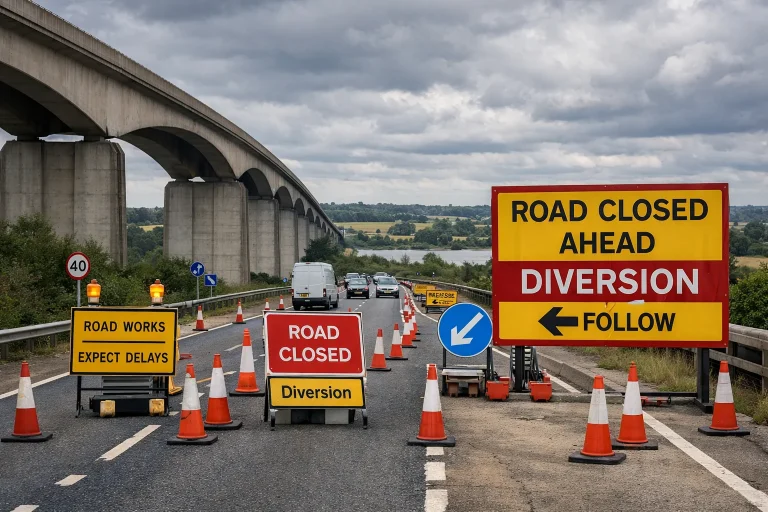


Before booking any international trip, British nationals should first check the UK’s updated do not travel list issued by the Foreign, Commonwealth and Development Office FCDO.
The direct answer is that the UK currently advises against all travel or all but essential travel to multiple countries including Iran, Israel, Russia, Afghanistan, Syria, Yemen and several high risk regions worldwide.
These warnings are based on armed conflict, terrorism, political instability, detention risks and infrastructure disruption.
Travelling against this advice may invalidate insurance and limit consular support. Below is a clear summary of the key points covered in this report.
Key Points Summary:
| Topic Covered | Key Insight |
|---|---|
| What the do not travel list means | Official FCDO safety classification system |
| Countries with full restrictions | 15 nations under advise against all travel |
| Countries with regional restrictions | Dozens with high risk border or conflict zones |
| All but essential travel destinations | 6 countries plus multiple regional areas |
| Insurance implications | Most policies invalid if advice ignored |
| Risk assessment factors | Conflict, terrorism, detention, instability |
| Financial and legal consequences | Limited consular support and evacuation costs |
What Is the UK’s Updated Do Not Travel List and Why Does It Matter in 2026?

The UK’s updated do not travel list is issued by the Foreign, Commonwealth and Development Office FCDO and serves as the official risk framework for British nationals travelling abroad.
It categorises countries and regions into three primary warning levels, advise against all travel, advise against all but essential travel and partial regional restrictions.
These classifications are based on ongoing intelligence, diplomatic reporting, military developments, counter terrorism analysis and infrastructure assessments. The system is dynamic and frequently updated when geopolitical conditions change.
Ignoring the do not travel list carries serious consequences. Most standard travel insurance policies become invalid if a traveller knowingly enters a country or region where the FCDO advises against travel.
In addition, consular assistance may be limited in conflict zones or territories with restricted diplomatic access.
In practical terms, the advisory system protects travellers from exposure to:
- Armed conflict and cross border escalation
- Terrorist activity and kidnapping
- Arbitrary detention or arrest
- Civil unrest and state collapse
- Infrastructure breakdown including utilities and healthcare
FCDO Advisory Categories
| Advisory Level | Description | Practical Impact |
|---|---|---|
| Advise Against All Travel | Severe and ongoing threats to safety | Insurance invalid, high evacuation risk |
| Advise Against All But Essential Travel | Elevated instability or security risk | Insurance often invalid, requires risk assessment |
| Regional All Travel Restrictions | Specific provinces or border areas unsafe | Insurance invalid in restricted zone |
| Regional Essential Travel Restrictions | Heightened caution in defined areas | Risk dependent on insurer |
Which Countries Are on the FCDO Advise Against All Travel List?
The following countries are currently subject to nationwide advise against all travel warnings.
Countries with Nationwide Advise Against All Travel
| Country | Core Risk Identified | Primary Risk Category |
|---|---|---|
| Afghanistan | Volatile security situation | Armed conflict |
| Belarus | Significant risk of arrest | Political repression |
| Burkina Faso | Terrorist attacks and kidnapping | Terrorism |
| Haiti | Volatile security situation | Gang violence |
| Iran | Risk of arbitrary detention | State detention |
| Iraq | Regional military escalation | Armed conflict |
| Israel | Regional escalation risks | Security instability |
| Mali | Unpredictable security conditions | Terrorism |
| Niger | Terrorist and criminal kidnappings | Kidnap risk |
| Palestine | Regional escalation | Conflict |
| Russia | Threats linked to Ukraine invasion | Geopolitical conflict |
| South Sudan | Armed violence and criminality | Civil conflict |
| Syria | Ongoing war conditions | Active conflict |
| Venezuela | State of external commotion | Political instability |
| Yemen | Unpredictable security environment | Armed conflict |
In several of these destinations, particularly Iran, Belarus and Russia, detention risks for British nationals are a significant factor.
A regional political analyst noted, “The detention variable has become increasingly relevant. Risk is not limited to physical violence but includes state level enforcement unpredictability.”
Which Countries Have Regions Under Advise Against All Travel Warnings?
In many countries, the FCDO restricts only specific provinces, border zones or conflict regions rather than the entire nation.
Countries with Partial Advise Against All Travel Restrictions
| Country | Restricted Regions |
|---|---|
| Algeria | Within 30km of borders with Libya, Mauritania, Mali, Niger and Tunisia |
| Armenia | Within 5km of eastern border with Azerbaijan and M16 H26 road section |
| Azerbaijan | Within 5km of Armenia border |
| Benin | Northern border regions |
| Burundi | Cibitoke, Bubanza and specified provinces |
| Cameroon | Bakassi Peninsula, Far North, North West, South West and 40km from CAR, Chad and Nigeria borders |
| Central African Republic | All except Bangui |
| Chad | Borkou, Ennedi Ouest, Ennedi Est, Tibesti, Kanem and 30km from borders |
| Congo | Within 50km of CAR border in Likouala Region |
| Côte d’Ivoire | Within 40km of Burkina Faso and Mali borders |
| Democratic Republic of the Congo | Eastern provinces, Kasaï Oriental and border regions |
| Djibouti | Eritrea border |
| Egypt | Within 20km of Libya border and North Sinai Governorate |
| Eritrea | Within 25km of land borders |
| Ethiopia | Tigray, Amhara, Afar, Gambela, Oromia, Somali, Sidama and others |
| Georgia | South Ossetia and Abkhazia |
| India | Within 10km of Pakistan border and Jammu and Kashmir |
| Indonesia | Mount Lewotobi Laki Laki, Mount Sinabung, Mount Marapi, Mount Semeru, Mount Ruang, Mount Ibu |
| Jordan | Within 3km of Syria border |
| Kenya | Somalia border and northern east coast |
| Lebanon | South, Nabatiyeh, Beqaa, Baalbek Hermel, Akkar, Tripoli and refugee camps |
| Libya | All except Benghazi and Misrata |
| Mauritania | Eastern Mauritania and 25km from Mali border |
| Moldova | Transnistria |
| Mozambique | Cabo Delgado and parts of Nampula and Niassa |
| Myanmar | Chin, Kachin, Kayah, Kayin, Mon, Rakhine, Sagaing, Magway, Shan North and others |
| Nigeria | Borno, Yobe, Adamawa, Gombe, Katsina, Zamfara and riverine southern states |
| Pakistan | Within 10 miles of Afghanistan border and areas in Khyber Pakhtunkhwa and Balochistan |
| Philippines | Western and central Mindanao and Sulu archipelago |
| Saudi Arabia | Within 10km of Yemen border |
| Somalia | All except Awdal, Maroodijeh and Sahil |
| Sudan | All except Hala’ib Triangle and Bir Tawil |
| Togo | Within 30km of Burkina Faso border |
| Tunisia | Western border with Algeria and southern border with Libya |
| Turkey | Within 10km of Syria border |
| Ukraine | All regions except some western areas |
| Western Sahara | Within 30km of the Berm boundary line |
Border areas frequently appear in this category due to insurgency, smuggling routes and military tension
I once asked a security adviser why border zones dominate these warnings and he explained, “Borders combine military sensitivity with weak enforcement and cross border networks. That combination raises unpredictability significantly.”
Which Countries Are Under Nationwide All But Essential Travel Warnings?

The FCDO advises against all but essential travel to the following countries in full.
Nationwide All But Essential Travel
| Country | Main Concern |
|---|---|
| Bahrain | Regional escalation |
| Cuba | Severe infrastructure disruption |
| North Korea | Rapidly changing security conditions |
| Kuwait | Missile attack concerns |
| Qatar | Missile attack concerns |
| United Arab Emirates | Regional escalation |
These warnings reflect heightened tension rather than full scale conflict. Business travellers in particular must weigh operational necessity against security exposure.
A corporate travel risk specialist stated, “Essential travel should be defined narrowly. Organisations must consider evacuation capability, communication reliability and medical access before approval.”
Which Countries Have Regions Under All But Essential Travel Warnings?
The following countries have specific areas where only essential travel is advised.
Countries with Partial All But Essential Travel Restrictions
| Country | Restricted Areas |
|---|---|
| Angola | Cabinda Province and border areas in Lunda Norte |
| Bangladesh | Chittagong Hill Tracts |
| Bolivia | Chapare region |
| Brazil | Specified Amazon river areas west of Codajás and east of Belém do Solimões and tributaries |
| Cambodia | Within 20km of Thailand border |
| Colombia | Within 5km of borders and parts of northern, central and southern regions |
| Ecuador | Seven coastal provinces and 20km from Colombia border |
| Ghana | Bawku Municipality |
| Guatemala | Within 5km of Mexican border and specified towns |
| Kosovo | Zvečan, Zubin Potok, Leposavic and north Mitrovica |
| Laos | Xaisomboun Province |
| Malaysia | Eastern Sabah coastal islands |
| Mexico | Parts of Baja California, Chihuahua, Sinaloa, Tamaulipas, Zacatecas, Guanajuato, Michoacán, Jalisco, Colima, Guerrero and Chiapas |
| Papua New Guinea | Hela, Southern Highlands and Enga except Wabag |
| Peru | 20km south of Colombia border and VRAEM region |
| Rwanda | Rusizi district |
| Tanzania | Within 20km of Mozambique border |
| Thailand | Southern provinces near Malaysia and within 20km of Cambodia border |
In reviewing crime and insurgency patterns in Latin America, I observed that regional risk often shifts rapidly.
A correspondent covering organised crime once told me, “Travel risk is hyper local. Two neighbouring districts can present completely different security realities.”
How Does the Foreign Office Assess and Update the Do Not Travel List?
The FCDO relies on a structured intelligence and diplomatic framework when updating the do not travel list. This includes coordination with embassies, allied governments, defence analysts and crisis monitoring units.
Triggers for updates typically include:
- Escalation of military operations
- Terrorist incidents
- Government coups or emergency declarations
- Infrastructure collapse affecting healthcare or utilities
- Increased detention or arrest cases involving foreign nationals
The process reflects probability and consequence modelling. In speaking with a regional policy adviser, I was told, “The threshold for advise against all travel is high. It requires credible evidence that ordinary travel exposes individuals to unacceptable risk.”
The do not travel list, therefore, functions not as a blanket political signal but as a calibrated safety mechanism grounded in risk assessment methodology.
How Does the UK Do Not Travel List Affect Travel Insurance, Airlines and Tour Operators?

The UK do not travel list has direct consequences for the travel industry, particularly in relation to insurance underwriting, airline operations and package holiday providers.
Travel Insurance Implications
Most standard travel insurance policies include a clause excluding cover if a traveller enters a destination against FCDO advice. This applies to both advise against all travel and advise against all but essential travel warnings.
If a traveller proceeds regardless of official advice, the following may not be covered:
- Emergency medical treatment
- Repatriation to the UK
- Trip cancellation claims
- Personal liability costs
- Lost or stolen belongings
Specialist insurers may provide high risk cover, but premiums are significantly higher, and exclusions often remain in place for conflict related incidents.
A London based insurance adviser explained, “The moment a destination moves into advise against all travel territory, most automated policies cease to apply. Travellers should never assume flexibility unless it is confirmed in writing.”
Airline and Flight Operations
Airlines are not automatically required to suspend flights when the FCDO updates its advisory.
However, commercial decisions are often influenced by:
- Passenger demand
- Insurance coverage for aircraft operations
- Airspace safety restrictions
- Sanctions and diplomatic developments
In active conflict zones, airlines may reroute or cancel services due to airspace risks rather than passenger safety advisories alone.
Tour Operators and Package Holidays
Under UK consumer protection regulations, package holiday providers may be obligated to offer refunds or alternative arrangements if FCDO advice changes before departure. If advice changes during a trip, repatriation may be organised depending on the circumstances.
The complexity increases in partially restricted countries where only specific provinces are flagged. Operators must assess whether itineraries enter restricted zones.
From my observation covering travel industry responses to geopolitical crises, companies that maintain strong real time risk monitoring systems respond more effectively.
One operations director stated, “The challenge is speed. Advisory updates can occur overnight, and contingency plans must activate immediately.”
What Trends Are Emerging in the 2026 Do Not Travel List and Global Risk Landscape?

The 2026 update of the do not travel list reveals several broader geopolitical and security trends shaping international mobility.
Expansion of Regional Rather Than Nationwide Restrictions
A noticeable pattern is the growing number of partial restrictions. Instead of entire countries being classified as unsafe, specific border areas, provinces, or municipalities are designated high risk.
This reflects:
- Localised insurgencies
- Organised crime corridors
- Cross border smuggling routes
- Ethnic or separatist tensions
Countries such as Mexico, Colombia, Thailand and India illustrate how risk can be geographically concentrated rather than nationwide.
Increased Focus on Detention and Legal Risk
Beyond armed conflict, the FCDO has placed a stronger emphasis on arbitrary detention risk. This is particularly relevant in countries where diplomatic relations are strained.
Iran, Russia and Belarus demonstrate how geopolitical tensions translate into travel advisories based on detention probability rather than traditional battlefield threats.
A geopolitical consultant remarked, “Modern travel risk is multidimensional. Physical danger is only one factor. Legal exposure and diplomatic friction are increasingly central.”
Missile and Regional Escalation Risk in the Gulf
The classification of Bahrain, Kuwait, Qatar and the United Arab Emirates under all but essential travel highlights concerns over missile threats and spillover from wider regional tensions.
Although these states maintain advanced infrastructure, proximity to active theatres of conflict elevates risk profiles during periods of escalation.
Infrastructure and Governance Fragility
In Cuba and parts of Haiti and Venezuela, warnings relate not only to security but to infrastructure degradation. Power shortages, healthcare limitations and supply chain disruptions can significantly affect traveller safety.
From a personal analytical standpoint, I have observed that infrastructure fragility often receives less public attention than armed conflict but can be equally disruptive.
A crisis response specialist once told me, “When hospitals lack capacity and power grids fail, even minor incidents become major emergencies for foreign nationals.”
The Increasing Complexity of Traveller Decision Making
The modern do not travel list requires granular awareness. It is no longer sufficient to check whether a country is generally open. Travellers must examine:
- Provincial boundaries
- Border proximity
- Rapidly changing security alerts
- Insurance policy wording
- Employer duty of care obligations
The 2026 landscape demonstrates that travel risk assessment has become more technical and data driven.
Governments now respond to hybrid threats, regional spillover and non state actors in ways that create layered advisories rather than simple red or green classifications.
Conclusion
The UK’s updated do not travel list reflects a rapidly shifting global security environment where regional conflict, political instability and organised crime continue to shape international mobility.
From nationwide conflict zones to specific border regions, the FCDO guidance provides a structured risk framework for British nationals.
Travellers must review official advice carefully, assess insurance implications and monitor updates before departure, as conditions can change quickly and significantly impact safety, legal protection and financial security abroad.
FAQs
How often is the FCDO travel advice updated?
The FCDO updates travel advice regularly, sometimes multiple times per week, depending on developments on the ground.
Can travel advice change while someone is abroad?
Yes. Situations can deteriorate rapidly, and British nationals abroad should monitor updates continuously.
Does travel insurance ever cover trips to red list countries?
In most cases, no. Policies generally exclude travel against FCDO advice unless specialist high-risk cover is purchased.
Are airlines required to cancel flights to restricted destinations?
Airlines are not automatically required to cancel services, though many adjust schedules based on risk.
How can travellers receive real-time alerts?
British nationals can sign up for email alerts through official government travel advice pages.
Does dual nationality affect consular support?
Dual nationals may receive limited assistance if travelling on another passport in a country that does not recognise dual citizenship.
Is essential business travel treated differently from tourism?
Legally, the decision rests with the individual traveller, but insurers and employers often apply stricter risk assessments.