
A recent incident involving an innocent shopper wrongfully ejected from a London Sainsbury’s has intensified scrutiny over facial recognition in UK retail. The individual, Warren Rajah, was misidentified by staff following a facial recognition alert, triggering an experience he called “traumatic” and “Orwellian.”
Despite claims of a human error, the event exposes wider concerns about data privacy, surveillance, and accountability in biometric technology.
Key Takeaways:
- Sainsbury’s staff wrongly removed Warren Rajah due to mistaken identity from a facial recognition alert.
- The store blamed human error, not the Facewatch system.
- Rajah was forced to submit ID to prove innocence.
- Experts warn of growing privacy concerns and lack of safeguards.
- Facial recognition use in UK retail continues to expand despite public unease.
What Happened at Sainsbury’s? A Facial Recognition Error in Focus

In January 2026, Warren Rajah, a data professional, visited his local Sainsbury’s store in Elephant and Castle, South London. During his routine shopping trip, he was unexpectedly approached by three staff members, including a security guard, who informed him he had to leave immediately.
Without being given a clear reason, he was escorted out and told only to refer to a sign in the store window about facial recognition technology. Later investigations revealed that a customer flagged by Sainsbury’s facial recognition system, powered by Facewatch, had also entered the store. Staff mistakenly identified Rajah as that person.
Facewatch confirmed he was not in their database and that the incident stemmed from a mistake during manual verification by Sainsbury’s staff.
Rajah described the experience as a “trial in the supermarket aisle, with the three Sainsbury’s staff members acting as his ‘judge, jury and executioner.’” Despite apologies from both the store and Facewatch, he criticised the lack of transparency and recourse, raising concerns for how such systems may affect vulnerable individuals.
How Did the Sainsbury’s Facial Recognition Incident Unfold?
The following is a breakdown of how the incident unfolded, highlighting key actions, responses, and concerns raised by the affected individual and external organisations.
Step-by-step Breakdown From Store Entry to Ejection
- Entry into Store: On 27 January 2026, Warren Rajah entered the Elephant and Castle Sainsbury’s branch to do his usual grocery shopping.
- Approach by Staff: As he browsed the aisles, he was confronted by three employees. One appeared to compare his face with an image on a device.
- Identification: Staff concluded he resembled someone flagged by the store’s Facewatch system. Without a proper explanation, he was asked to leave.
- Ejection: Rajah was escorted out of the store while other shoppers looked on.
He later said, “It was traumatic – being kicked out of a store, with everyone watching you.”
Actions Taken by Sainsbury’s Staff
- No Clear Explanation: When Rajah asked why he was removed, the staff pointed to a poster in the window that outlined the use of facial recognition software.
- No Immediate Recourse: He was told to contact Facewatch directly via a QR code, but received no support from Sainsbury’s at the time.
- Voucher Offer: After the incident, Sainsbury’s apologised and offered him a £75 shopping voucher, but Rajah said this did not address the emotional distress or systemic issues.
When Facewatch and Sainsbury’s Responded?
- Facewatch Response: Rajah contacted Facewatch, who confirmed he had not triggered an alert and was not in their offender database. However, they required him to send a photo of himself and his passport.
- Sainsbury’s Statement: The retailer stated, “This was not an issue with the facial recognition technology in use but a case of the wrong person being approached in store.”
- Ongoing Concerns: Rajah questioned why personal data had to be shared with a third party to prove innocence. He felt caught in a loop, “You’re just thrown from pillar to post , because Sainsbury’s initially blame Facewatch, then Facewatch retort saying it’s actually Sainsbury’s.”
How Facewatch’s Facial Recognition Technology Works in Sainsbury’s Stores?
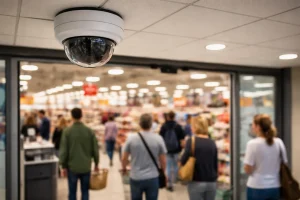
Facewatch is the facial recognition software deployed by Sainsbury’s in select London branches to deter repeat offenders and violent incidents. The system captures the faces of individuals entering the store and compares them to a cloud-based watchlist of known offenders.
When a potential match is made, store staff are alerted and expected to manually verify the identity before taking any action. The company claims the system has a 99.98% accuracy rate, and all matches are reviewed by trained employees.
However, this process relies heavily on the discretion and judgment of store staff, as was seen in Rajah’s case, where he was misidentified during the final verification stage.
Facewatch insists it did not generate an alert for Rajah, but Sainsbury’s staff misinterpreted another alert. This shows that even with high-accuracy tech, human oversight plays a crucial role in outcomes, which can have serious implications.
Was It Human Error or a Facial Recognition Fault?
While both Sainsbury’s and Facewatch have insisted the technology did not fail, the incident has reignited the debate on whether such systems can be safely deployed.
According to their joint statements, the error occurred when store staff mistook Rajah for someone flagged by the system, despite Facewatch not generating any alert about him.
This reliance on human verification raises questions about training, accountability, and the reliability of such processes. As Rajah stated, “I still do believe that AI and tech can be an amazing thing.
The caveat is that it’s only ever as good as the people behind it.” In this case, the people behind it made a significant error, resulting in public embarrassment and a loss of trust.
The incident demonstrates that even when facial recognition is technically accurate, human fallibility can still cause damaging outcomes.
What Are the Legal and Ethical Concerns Around Facial Recognition in UK Retail?
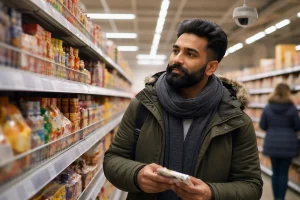
Facial recognition in public and commercial spaces walks a fine legal and ethical line in the UK. Rajah’s experience has brought these issues into sharper focus, especially regarding consumer rights, data privacy, and corporate responsibility.
Overview of ICO and GDPR Obligations
The Information Commissioner’s Office (ICO) has emphasised that facial recognition use must comply with data protection law. This includes:
- Processing only necessary and proportionate personal data.
- Providing clear notices to customers.
- Ensuring accuracy to avoid misidentification.
Retailers like Sainsbury’s are required to carry out Data Protection Impact Assessments (DPIAs) before implementing biometric surveillance.
What Retailers Must Do Before Deploying Surveillance Tech?
- Notify customers through signs and policies.
- Limit access to personal data.
- Justify the system’s necessity for public safety.
- Ensure trained staff can handle potential alerts without bias or discrimination.
Data Protection and Rights of UK Consumers
Customers have the right to:
- Be informed if their data is collected.
- Access and challenge data held on them.
- File complaints to the ICO.
- Refuse consent to facial recognition in non-essential contexts.
In Rajah’s case, being redirected to submit passport data to a third party highlights a potential overreach in data collection, raising significant concerns.
Accountability Gaps Exposed in This Case
Despite apologies, neither Sainsbury’s nor Facewatch accepted full accountability. Instead, responsibility was shifted between technology and staff.
This fragmented chain of accountability leaves consumers confused and without clear channels for remedy.
Jasleen Chaggar of Big Brother Watch summarised the dilemma: “In the vast majority of cases, they are offered little more than an apology when companies are finally forced to admit the tech got it wrong.”
The Emotional Toll: Public Humiliation and Its Consequences
The psychological impact of being publicly ejected from a store cannot be understated. For Rajah, the incident was deeply unsettling. “You feel horrible, you feel like a criminal and you don’t even understand why,” he told The Independent. “It’s borderline fascistic… how can you just have something done to you and not have an understanding?”
He added that the event had been especially distressing because of its public nature, with shoppers witnessing the removal without explanation.
He also raised concerns for others less able to challenge such actions: “Imagine how mentally debilitating this could be to someone vulnerable, after that kind of public humiliation.”
Jasleen Chaggar echoed these concerns, noting that Big Brother Watch “regularly hears from members of the public who are left traumatised after being wrongly caught in this net of privatised biometric surveillance.”
The Rise of Surveillance in UK Supermarkets: Safety or Overreach?
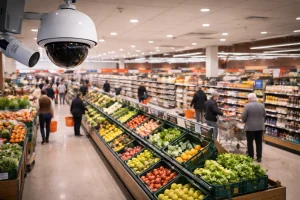
Sainsbury’s has defended the rollout of Facewatch by citing reductions in crime and abuse against staff. The technology reportedly helped reduce theft and aggression by 46% in pilot stores.
The system is now active in branches across London, including Dalston, Camden, and Whitechapel.
Retailers argue this helps create “fewer frightening moments” for employees. But critics believe these measures come at the cost of customer rights. Big Brother Watch has warned that unchecked expansion could normalise invasive surveillance.
While the need for staff safety is legitimate, the use of facial recognition without robust oversight risks public trust and civil liberties.
What Do Experts and the Public Think About Sainsbury’s Facial Recognition Error?
The incident has drawn strong reactions from privacy advocates, legal experts, and the wider public.
- Jasleen Chaggar said, “The idea that we are all just one facial recognition mistake away from being falsely accused of a crime is deeply chilling.”
- Critics pointed out the lack of remedies: “Innocent people must jump through hoops and hand over more personal data just to discover what they’re accused of.”
- Public trust is being eroded as more retailers turn to AI without transparency or clear redress for errors.
Rajah’s story has resonated with many, revealing how surveillance systems can go from protective tools to sources of injustice when poorly handled.
Technology vs. Human Judgment: Where Did It Really Go Wrong?
The system used in Sainsbury’s was not faulty in detecting a known individual, but the failure came in the human interpretation. This shows that technology, no matter how precise, cannot be fully trusted without ethical and trained human oversight.
As Rajah noted, “I shouldn’t have to prove I’m wrongly identified as a criminal.” This case underscores that no technology is immune to human error and highlights the need for robust review mechanisms.
Even the best systems can lead to injustice if poorly managed, implemented without accountability, or placed in the hands of inadequately trained staff.
How Facial Recognition Alerts Work in Retail Stores?
Facial recognition in stores follows a multi-step process. Below is a simplified overview of how alerts are typically handled:
Stage Description Who's Involved Risk of Error
Camera Capture Entry camera scans the customer’s face CCTV/AI software Low
System Match Face compared to the database of offenders Facewatch algorithm Low
Staff Verification Staff confirms match visually Store employees High
Customer Confrontation Shopper asked to leave/store takes action Security staff High
Identity Resolution The shopper must contact Facewatch/store Customer + third parties Moderate to High
While the system’s initial stages are automated and highly accurate, the final decision relies on human judgment. This is where errors are most likely and most impactful.
The Future of Biometric Surveillance in UK Retail
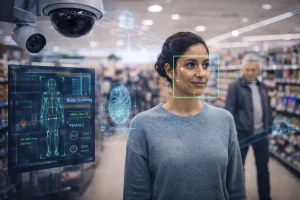
The growing adoption of facial recognition in supermarkets like Sainsbury’s signals a trend toward increased biometric monitoring.
- Facewatch is already used by Budgens, B&M, Sports Direct, and Home Bargains.
- Trials suggest reduced theft and violence, encouraging further expansion.
- Government regulation, however, remains limited, leaving gaps in consumer protection.
Jasleen Chaggar warns: “The Government’s promise to regulate this invasive technology will be payment to lip service unless it reins in the unchecked expansion.”
Retailers must balance efficiency with ethics, ensuring technology supports security without violating rights. Stronger regulations, transparency, and public debate will be critical as the UK navigates this digital shift.
Conclusion
The misidentification and public ejection of Warren Rajah from Sainsbury’s was not just an isolated incident. It was a clear example of how advanced technology, when paired with flawed human judgment and unclear accountability, can produce deeply unjust outcomes.
This case has stirred vital discussions about data privacy, ethical AI, and the need for safeguards in retail surveillance. As facial recognition expands across the UK, the question is not whether it should exist, but how it can be used responsibly, transparently, and fairly.
Retailers must now re-evaluate their systems, not just for technical accuracy but for human impact.
Frequently Asked Questions
What is Facewatch and how does it work in stores like Sainsbury’s?
Facewatch is a facial recognition system that scans customer faces and compares them to a database of known offenders to alert staff in real time.
Was the Sainsbury’s facial recognition system at fault?
No, the system did not flag Warren Rajah; the error occurred during manual identification by staff after another alert was triggered.
Do retailers have to inform customers about facial recognition use?
Yes, UK law requires retailers to notify customers through visible signage and privacy notices when using biometric systems.
Can a customer refuse to provide ID to Facewatch after an incident?
Yes, but refusal may limit your ability to confirm whether you were flagged and could delay resolving your case.
What should someone do if wrongly ejected due to facial recognition?
They should file a formal complaint with the store, request access to any data held, and escalate the issue to the ICO if necessary.
Is it legal for supermarkets to use facial recognition in the UK?
Yes, but the use must be justified, proportional, and compliant with GDPR and ICO guidelines.
What are the risks of relying on facial recognition in retail?
Main risks include misidentification, privacy intrusion, racial bias, and lack of clear recourse for wrongly accused customers.