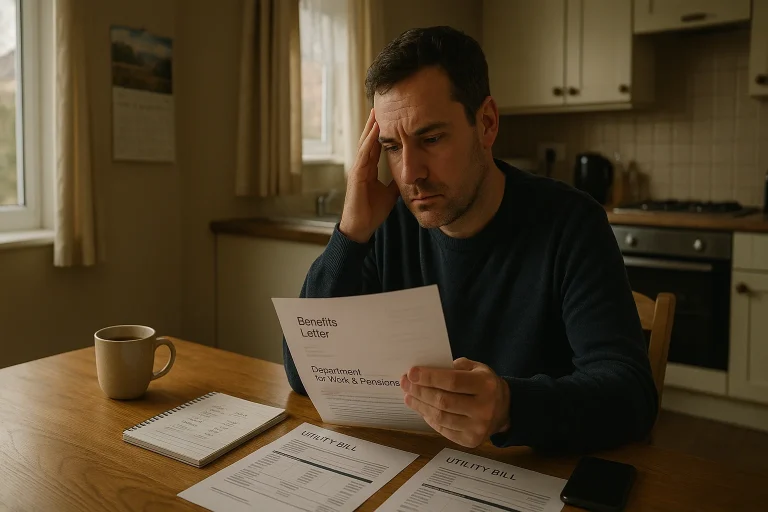

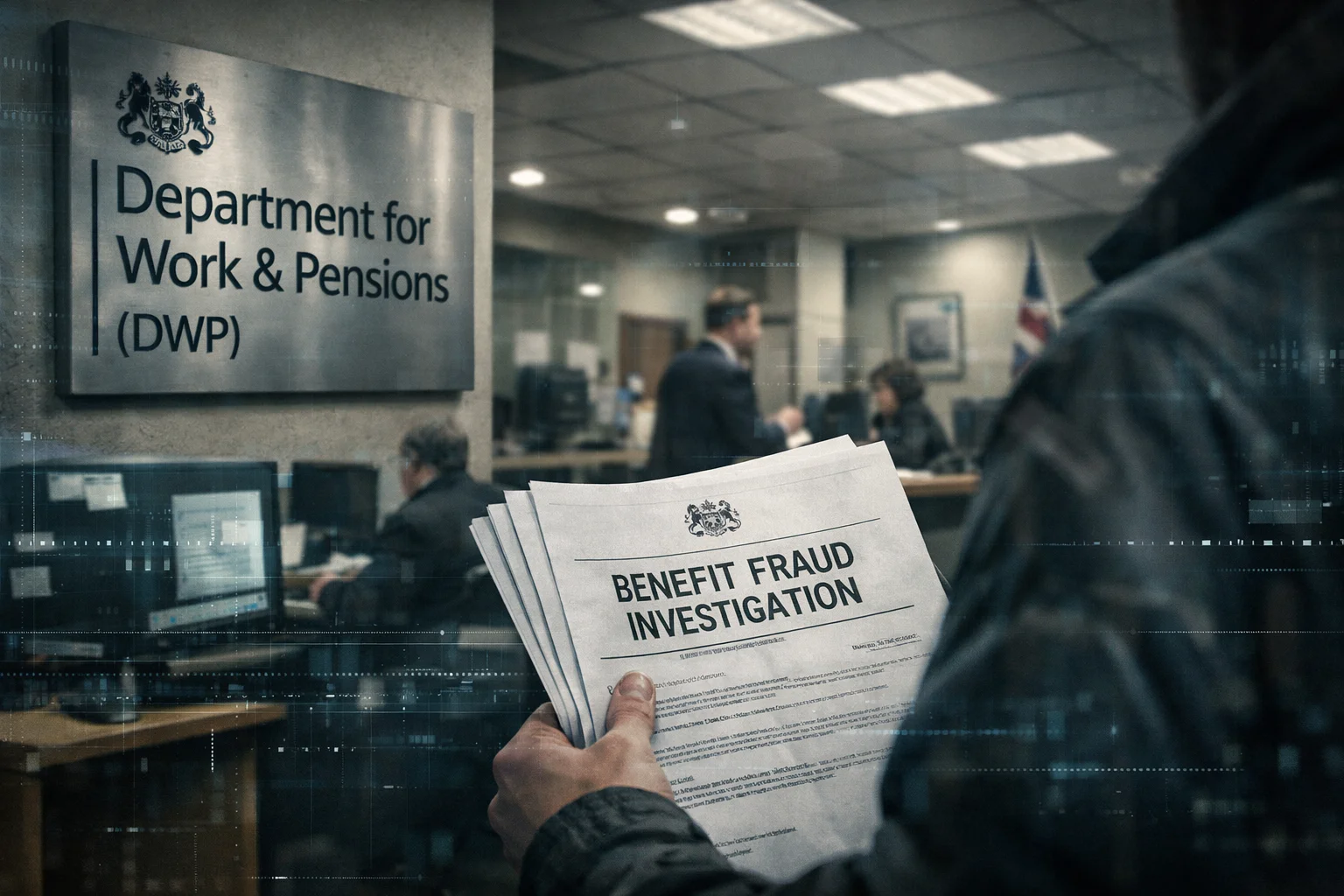
The UK government is tightening the rules around benefit fraud, and the DWP benefit fraud crackdown in 2025 will bring in powerful new enforcement measures.
These changes aim to reduce fraud and error across the welfare system by giving the Department for Work and Pensions (DWP) stronger powers, including access to bank account data from 15 major UK banks. If you’re a benefit claimant, it’s vital to understand what this means for your finances and eligibility.
Key Takeaways:
- DWP will receive limited banking data to check if savings exceed benefit limits.
- The crackdown affects Universal Credit, ESA, Pension Credit, and more.
- AI tools and new legal powers will help detect fraud quickly.
- Claimants must report any changes in living situations, income, or savings.
- Penalties may include fines, benefit stoppage, and even suspended driving licences.
What Is the DWP Benefit Fraud Crackdown?

The DWP benefit fraud crackdown is a sweeping new initiative set to launch fully in 2026. It is designed to combat fraudulent claims and reduce financial error within the UK’s welfare system.
This crackdown is supported by the Public Authorities (Fraud, Error and Recovery) Act, a law passed in late 2024 that grants the DWP significant powers to enforce compliance among benefit claimants.
The Department for Work and Pensions will now work with major banks to access limited data, allowing them to identify claimants whose financial situation may make them ineligible for certain means-tested benefits.
These powers will be used to check eligibility for schemes like Universal Credit, ESA, and Pension Credit without initially requiring a warrant or explicit consent. This policy reflects a growing concern over the billions lost annually to fraudulent and erroneous claims.
The government has stated its intention to ensure that support goes only to those who genuinely need it, while also deterring potential fraudsters through increased scrutiny and tougher consequences.
Why Has the DWP Launched This Crackdown Now?
The DWP has launched this benefit fraud crackdown in response to rising losses due to fraud and error, estimated to exceed £8 billion annually. The government has made clear that this is unsustainable and unfair to taxpayers and genuine claimants alike. The goal is to restore integrity and accountability to the welfare system.
Modern threats to welfare budgets require modern responses. The Public Authorities (Fraud, Error and Recovery) Act gives departments the legal framework to use data analytics, artificial intelligence, and direct access to banking information to identify discrepancies in claims. This allows earlier intervention, reducing long-term overpayments and saving public funds.
Additionally, public pressure has grown in recent years as media reports and internal audits exposed cases of large-scale fraud. By taking proactive steps now, the government aims to signal that benefit fraud will no longer be tolerated and that better technologies will be used to detect and prevent abuse before it causes widespread financial harm.
How Will the DWP Access Your Bank Information?
As the crackdown rolls out, one of the most talked-about changes is the DWP’s ability to access limited bank data from people receiving means-tested benefits. This is being done under the Eligibility Verification Measure (EVM), which forms part of the new fraud law.
The DWP will not access your full bank statements or transactions, but it will receive specific details, such as account balances, to assess whether your savings or capital exceed the legal limits for benefit entitlement. This will allow the department to flag inconsistencies without waiting for a claimant to report changes in financial circumstances.
Explanation of Eligibility Verification Measure (EVM)
The EVM allows banks to automatically share summary data with the DWP to assist in verifying eligibility for benefits.
This includes:
- Whether savings exceed the £6,000 or £16,000 threshold for benefits like Universal Credit.
- Periodic reporting rather than continuous surveillance.
- Alerts for accounts that may indicate discrepancies in declared income or capital.
The purpose of the EVM is not to spy on spending habits or make automatic accusations, but to identify possible fraud indicators more efficiently.
List of 15 Participating UK Banks
- Bank of Scotland
- Barclays
- Halifax
- HSBC
- Lloyds Bank
- Metro Bank
- Monzo Bank Limited
- NatWest
- Nationwide
- Santander
- Starling Bank
- The Co-operative Bank
- Royal Bank of Scotland
- TSB
- Yorkshire Bank
These banks are required by law to participate in the programme. According to the DWP, they account for over 97 percent of accounts receiving benefit payments.
Clarify: No Access to Transactions, Only Balance Data
It’s crucial to understand that the DWP will not be able to view where you spend your money, your purchases, or your individual transaction history.
The measure only allows access to high-level financial information like:
- Total account balance
- Account ownership details
- Account activity flags if thresholds are breached
This approach limits the intrusion while still enabling the DWP to identify potential fraud cases quickly and accurately.
Which Benefits Are Affected by the Crackdown?
The crackdown is specifically targeting means-tested benefits, where eligibility depends on income, savings, or capital. Claimants receiving these benefits are more likely to face scrutiny under the new rules.
Key benefits affected include:
- Universal Credit
- Pension Credit
- Employment and Support Allowance (income-based)
- Jobseeker’s Allowance (income-based)
If you’re receiving any of these, it’s important to ensure your financial information is always up to date. Even temporary increases in your bank balance, such as gifts or short-term transfers, could be flagged and may trigger a review.
Claimants with more than £16,000 in savings are generally ineligible for means-tested benefits. Benefits that are not means-tested, such as Disability Living Allowance or Child Benefit, are not affected by the EVM data checks.
What Triggers a DWP Investigation?

A DWP investigation may begin for various reasons, often related to inconsistencies in the information you’ve provided or data received from banks or other agencies. Even simple oversight or delay in reporting changes can trigger scrutiny.
Triggers include:
- Failing to report a change in your living situation, such as living with a partner.
- Sudden increases in bank account balances.
- Discrepancies between declared self-employment income and bank data.
- Tips or reports received from anonymous sources.
The DWP also uses AI-powered pattern detection, which can identify suspicious behaviour based on thousands of claims. If your situation appears unusual compared to similar claimants, it might be flagged automatically. Once an investigation is triggered, you may be contacted by post or invited for an interview under caution, especially if fraud is suspected.
What Powers Has the DWP Been Given?
Under the new laws, the DWP has been granted significant enforcement powers that enhance its ability to detect, investigate, and punish fraud.
These include:
- Access to limited bank data through participating banks under the EVM.
- Authority to suspend driving licences of individuals with unpaid benefit-related debts over £1,000.
- Power to obtain search warrants to inspect homes, devices, and financial records if criminal fraud is suspected.
- Legal ability to recover overpayments directly from claimants, subject to court approval.
These powers represent a sharp shift from previous practices, where the DWP relied more heavily on claimant disclosures and reactive investigation. Now, the process is proactive and data-driven, targeting discrepancies as early as possible.
Claimants should understand these powers and their implications. It is no longer enough to assume that minor errors or oversights will go unnoticed.
What Are the Penalties If You’re Found Guilty of Fraud?
If you’re found guilty of benefit fraud, the consequences can be financially and legally serious. The DWP has clarified that even attempted fraud, not just successful fraud, may result in penalties.
These consequences can affect your ability to claim benefits in the future and may even result in criminal proceedings, depending on the severity of the case.
Claimants proven to have committed fraud may face:
- Repayment of all overpaid benefits, regardless of intent.
- Civil penalties range from £350 to £5,000, depending on the nature of the fraud.
- Reduction or complete stoppage of benefits for a period of up to three years, especially for repeat offenders.
- Legal action or prosecution, which may lead to a criminal record or even imprisonment.
- Loss of certain entitlements,s such as housing support, if the fraud involves false residency claims.
The DWP will also keep a record of fraudulent activity, which may be shared with other departments, affecting future applications and eligibility across government schemes.
What Are Sanctionable and Non-Sanctionable Benefits?
The new crackdown divides benefits into two key categories: sanctionable and non-sanctionable. If you’re convicted of fraud, your ability to continue receiving some benefits may be impacted, while others are protected by law and cannot be reduced or stopped.
The following table outlines which benefits fall under each category:
| Sanctionable Benefits | Non-Sanctionable Benefits |
|---|---|
| Universal Credit | Child Benefit |
| Pension Credit | State Pension |
| Jobseeker’s Allowance | Disability Living Allowance |
| Employment and Support Allowance (ESA) | Personal Independence Payment |
| Housing Benefit | Attendance Allowance |
| Income Support | Guardian’s Allowance |
| Carer’s Allowance | War Pension Mobility Supplement |
| Severe Disablement Allowance | War Pension Constant Attendance Allowance |
| Industrial Injuries Benefits (various types) | Bereavement Support Payment |
| War Widow’s Pension & related war pensions | Social Fund Payments |
| Widowed Parent’s Allowance | Christmas Bonus |
If you are on both types of benefits and are found guilty of fraud in a non-sanctionable category, the DWP may reduce your other sanctionable benefits instead. In short, being convicted could still impact your finances even if some benefits remain untouched.
Can the DWP Freeze or Seize My Account?

There is widespread confusion around whether the DWP can freeze or seize funds directly from your bank account. Contrary to popular belief, the DWP cannot take money from your bank account without due legal process.
The new powers allow banks to flag account balances that exceed benefit thresholds, but do not give the DWP automatic access to withdraw or freeze funds.
Instead, if the DWP confirms overpayment or fraud, they can:
- Apply to the courts for permission to recover funds.
- Agree on repayment plans with claimants.
- Use civil recovery orders for persistent non-payment of welfare debt.
The idea that money will vanish from your account overnight without notice is a myth. The DWP must follow legal procedures and allow you the right to appeal or negotiate repayment options.
How Can You Protect Yourself and Stay Compliant?
To avoid triggering an investigation or facing penalties, claimants must be proactive, accurate, and transparent with their financial information. Most people do not commit fraud intentionally, but small oversights can still lead to serious issues.
Here are essential steps to stay compliant:
- Report all changes in circumstances immediately, this includes changes in your income, job status, who you live with, or your savings.
- Keep detailed records of your financial activity and communications with the DWP.
- Understand your benefit’s eligibility rules, especially around capital limits like the £6,000 or £16,000 savings threshold.
- Seek professional help if you’re unsure. Citizens’ Advice, benefit advisors, or solicitors can guide you.
- Check your statements to ensure all payments and claims align with your actual situation.
Staying honest and informed is your best defence. The system is becoming increasingly automated, and mistakes, even innocent ones, can be costly.
What If You’re Contacted by a Fraud Investigation Officer?
If you are contacted by the DWP regarding a potential investigation, it’s important to treat the situation seriously and respond appropriately. You may receive a letter or be asked to attend an Interview Under Caution, a formal interview that could form part of a criminal investigation.
If this happens, here’s what to expect and do:
- Do not panic, but don’t ignore the notice either. Take it seriously.
- You have the right to legal advice, and it’s recommended to seek help from a solicitor or Citizen’s Advice.
- The interview may be recorded, and anything you say could be used as evidence.
- Fraud Investigation Officers (FIOs) may visit your home or workplace to collect further details.
- Remain honest and transparent throughout the process. Lying or withholding information could worsen the outcome.
An investigation does not automatically mean you’ve done something wrong, it may be triggered by a data flag or mistake. But failing to respond or cooperate can lead to harsher penalties.
Public Concerns: Surveillance or Protection?

The rollout of the DWP benefit fraud crackdown has sparked fierce debate among politicians, privacy advocates, and the public. Many welcome the move as a necessary step to protect public funds, while others warn of the potential for Orwellian-style surveillance and widespread distress.
MPs and Public Criticising Orwellian Tactics
Several MPs, including Independent MP Zarah Sultana, have raised strong objections.
She argued in Parliament that allowing the DWP to:
- Access bank records
- Suspend driving licences
- Apply for search warrants
Without prior notice or transparent oversight could turn the UK into a surveillance state. She described these measures as “tools of an Orwellian state” and questioned whether they would unfairly target vulnerable individuals.
Privacy groups have echoed this, expressing concern that:
- Claimants may feel constantly watched.
- Innocent people could be caught in the system due to minor mistakes.
- Mental health could be negatively affected by fear of investigation.
DWP’s Defence and Transparency Assurances
In response, the DWP has stated that:
- They do not access transactions, only balances.
- Investigations are not automatic but based on clear triggers.
- The aim is to protect genuine claimants and the integrity of the welfare system.
They have also worked closely with UK Finance and the 15 participating banks to ensure:
- No wrongful “de-banking” occurs.
- Claimants can appeal decisions and request reassessments.
- Oversight mechanisms will be introduced to prevent misuse of new powers.
The DWP insists that this crackdown is about targeting systemic fraud, not policing ordinary claimants.
What Should You Do Next?
If you’re claiming any benefits affected by the new crackdown, now is the time to act. Staying informed and making small changes to how you manage your claim can make a big difference.
Here’s what you should do:
- Review your current savings and ensure they’re below the eligibility limit.
- Update your benefit claim if there’s been any change in your living situation or income.
- Keep communication records of all correspondence with the DWP.
- Speak to a professional if unsure about your eligibility.
- Check your bank accounts for short-term changes that could be misinterpreted.
Being proactive helps you avoid problems before they arise. The system is changing, and understanding your rights and responsibilities is more important than ever.
Conclusion
The DWP benefit fraud crackdown in 2025 marks a major shift in how the UK government tackles fraud in the welfare system. With new powers, technology, and bank partnerships, the DWP is moving towards a more robust and automated compliance framework.
While these changes may seem intimidating, especially with talk of surveillance, the reality is that claimants who stay informed, honest, and proactive have nothing to fear.
If you’re receiving benefits, now is the time to review your finances, ensure all information is up to date, and seek advice where needed. The system is evolving, and being prepared is the best way to protect your entitlements and your peace of mind.
FAQs
What is the purpose of the DWP’s new fraud crackdown?
The crackdown aims to reduce benefit fraud and errors by using bank data and AI tools to spot inconsistencies early.
Will the DWP see my bank transactions under the new rules?
No, the DWP can only see balance data, not where or how you spend your money.
Which banks are involved in sharing data with the DWP?
15 UK banks including Barclays, HSBC, NatWest, and Lloyds are required to share limited data with the DWP.
What happens if I have savings over the allowed limit?
If your savings exceed the threshold, your benefit may be stopped and you might have to repay any overpayments.
Can the DWP take money directly from my account?
Not without a legal process. They must apply for court permission to recover funds.
What should I do if I’m invited to an interview under caution?
Seek legal advice immediately and attend the interview fully prepared with accurate information.
Will all benefit claimants be investigated?
No. Investigations are triggered by suspicious activity, inconsistencies, or flagged data from the bank or DWP systems.