
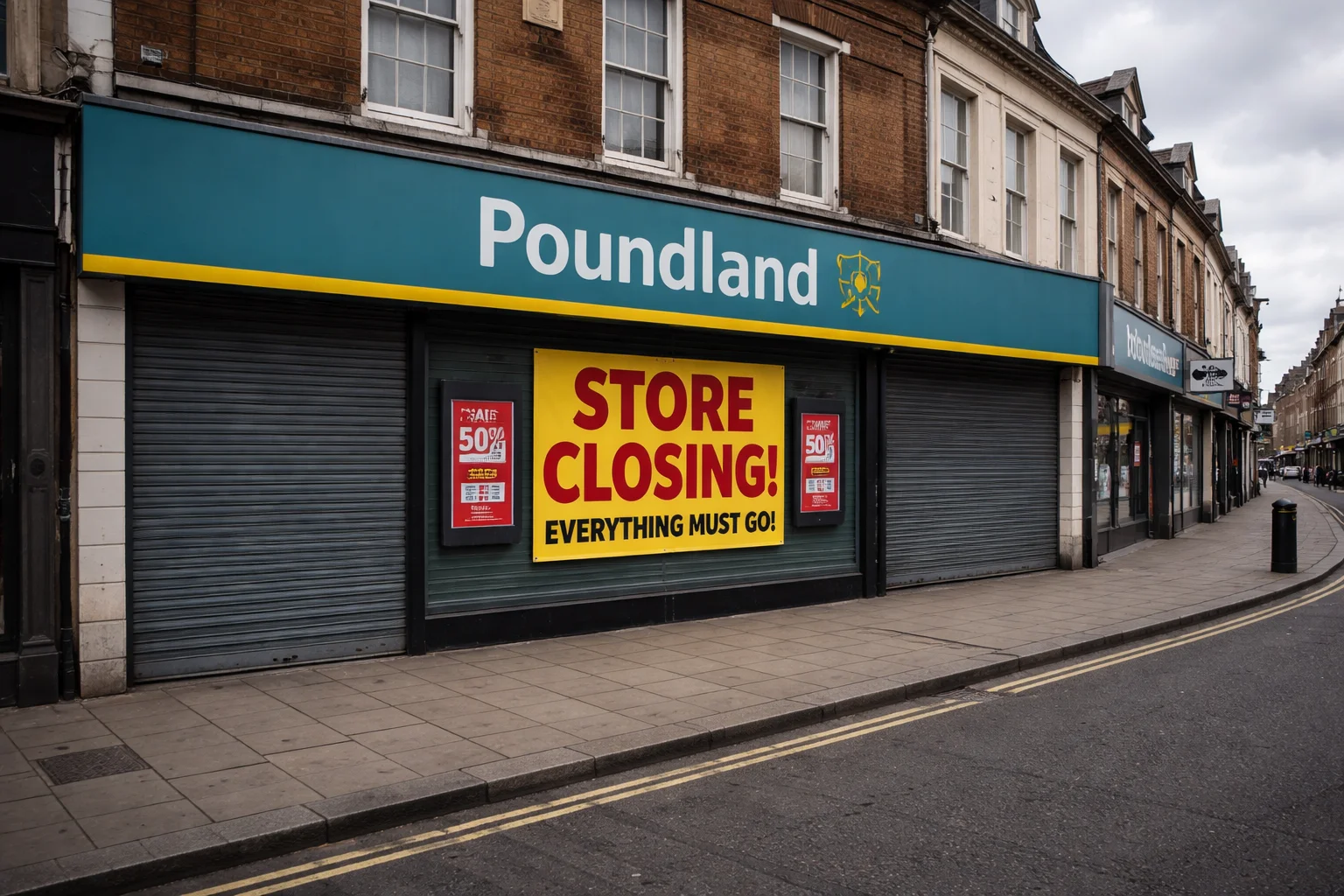
Why are so many Poundland stores closing across the UK in 2026? The answer lies in a complex mix of economic strain, strategic restructuring, and changing shopping behaviour. Poundland’s recent sale and its plan to reduce the number of stores from 800 to between 650 and 700 has shaken communities nationwide.
Here are the key takeaways:
- Poundland was sold for £1 to Gordon Brothers in June 2025
- Over 100 stores are closing as part of a restructuring strategy
- Closures are linked to lease expiries, landlord decisions, and declining profits
- Thousands of jobs are at risk and shoppers are losing vital local services
- Discount retail is being reshaped by inflation and new consumer trends
Let’s explore what’s happening, why it matters, and how it affects you.
Why Are So Many Poundland Stores Closing in the UK?

The wave of Poundland store closures sweeping across the UK is rooted in a business deal that made headlines in 2025. Pepco, the previous owner of Poundland, sold the entire chain to US-based Gordon Brothers for just £1.
While shocking on the surface, this symbolic transaction was part of a larger plan to rescue the company from a deepening financial struggle. In return, Gordon Brothers inherited all the challenges, including debt, underperforming branches, and high operating costs.
The restructuring plan involved the closure of unprofitable stores and shedding locations where leases had expired or landlords refused renewal.
With rising costs and shrinking profit margins, especially in locations that failed to generate consistent footfall, maintaining a network of 800 stores had become unsustainable.
A particularly tough factor has been the cost-of-living crisis. Ironically, although budget shopping is in high demand, even discount retailers like Poundland are finding it difficult to keep prices low while absorbing increased operational costs.
Their traditional £1 pricing model no longer fits the current economy, where inflation has eroded profit margins drastically.
Full List of Poundland Store Closures in 2026
Poundland has confirmed that its closure programme will continue well into 2026, affecting dozens of locations across the UK.
This move is part of a wider effort to streamline operations and stabilise the business following its acquisition. You can find details of the closure schedule and affected locations below.
December 2025 – February 2026 Closures
Below is the confirmed list of Poundland stores that are closing between December 2025 and February 2026:
| Store Location | Closure Date |
|---|---|
| Melton Mowbray | December 4 |
| Christchurch - Meteor Retail Park | December 5 |
| Arnold | December 6 |
| Worthing | December 6 |
| Droitwich | December 9 |
| Ballymena | December 13 |
| Weston Favell | December 19 |
| Lancaster | December 19 |
| Hammersmith | December 24 |
| Portishead | December 24 |
| Grantham | December 24 |
| Northampton Sixfields | December 31 |
| Prestatyn | December 31 |
| Farnham | December 31 |
| Brighton | December 31 |
| Hempstead Valley | December 31 |
| Bexhill, East Sussex | January 5 |
| Ponders End, Greater London | January 5 |
| Kilmarnock, East Ayrshire | January 5 |
| Faversham, Kent | January 6 |
| Mitcham, Greater London | January 14 |
| Liverpool, Merseyside | January 15 |
| Yeovil, Somerset | January 16 |
| Cameron Toll, Edinburgh | January 20 |
| Nottingham Eastpoint | January 22 |
| Lymington, Hampshire | January 23 |
| Christchurch (47 High Street), Dorset | January 23 |
| Bristol Avon Meads | January 29 |
| Winton, Dorset | February 6 |
| Coatbridge, North Lanarkshire | February 8 |
Closures Due to Lease Expiries, Landlord Repossessions, and Poor Performance
The majority of these closures are not solely due to underperformance. A large portion is linked to lease expirations and property owners deciding not to renew. In some cases, landlords are seeking new tenants or higher-paying businesses, which forces Poundland to vacate.
Additionally, certain stores had long faced profitability issues. With economic pressures mounting and the cost of goods rising globally, maintaining profitability in some locations became impossible. Stores with low footfall or high rent were prioritised for closure.
Final Expected Number of Stores: 650–700 from Original 800+
At the start of the restructuring plan, Poundland operated around 800 stores. By mid-2026, that figure is expected to drop to between 650 and 700. This significant reduction reflects the company’s new strategy to focus on stronger-performing outlets while cutting operational costs across the board.
How Will the Poundland Store Closures Affect You and Your Local Community?

Poundland’s retreat from many towns and cities has a ripple effect that extends far beyond the store’s walls.
For local shoppers, the closures mean losing access to affordable everyday goods. Essentials such as toiletries, groceries, homeware, and seasonal items are often purchased at Poundland for their affordability.
Here’s how you and your community might be impacted:
- Job Losses: Over 1,300 jobs are at risk due to store and warehouse closures.
- Reduced Access to Bargains: For many low-income households, Poundland offers prices not easily matched elsewhere.
- Decline of High Streets: Town centres already struggling with empty shopfronts may face further decline.
- Increased Costs: Customers might now need to shop at more expensive stores for the same items.
These closures remove a reliable budget option and can leave a visible void in smaller communities that rely on discount retail.
What Poundland is Saying About the Closures
Poundland’s UK country manager, Darren MacDonald, has acknowledged the public disappointment surrounding the closures. However, he’s also reiterated that the brand remains committed to offering value where it continues to operate.
To ease the transition, Poundland has launched clearance sales of up to 40 percent off at stores slated for closure. This gives shoppers one last opportunity to make purchases at deep discounts while clearing stock efficiently.
The company insists that this isn’t a full retreat. Instead, it’s a realignment of operations. While some locations are closing, many others will remain open, and Poundland hopes to continue serving communities through a more sustainable footprint.
MacDonald stated that the aim is to exit locations “with pride” and to welcome customers into the “hundreds of Poundland stores” still active across the UK.
The Bigger Picture: Is the UK High Street in Crisis?
Poundland’s struggle is not an isolated event. Across the UK, high streets are facing significant challenges. Rising rents, changing consumer behaviour, and inflation have made it harder for traditional retailers to survive, even in budget sectors.
Wilko, another well-known discount retailer, went into administration in 2023. B&M has launched its own turnaround plan, and Maxideal has closed completely. These examples suggest that the UK’s retail environment is under systemic strain.
As larger retailers downsize and small businesses close, entire town centres are being reshaped. This trend signals an urgent need for high street revitalisation policies, commercial rent reforms, and innovative retail models that can withstand modern economic pressures.
Are UK Shoppers Outsmarting Budget Stores?

While demand for bargains remains high, UK shoppers are now more strategic than ever. Their behaviour is forcing budget retailers to rethink their models.
Key shopping behaviour changes include:
- Price Awareness: Shoppers now track prices across multiple stores and online platforms before making decisions.
- Digital Sharing: Consumers share deals via WhatsApp or social media, reducing dependency on a single retailer.
- Loyalty Schemes: Many are switching to supermarkets that offer reward points and discount programmes.
- Selective Spending: Instead of buying broadly, shoppers focus on high-value items only.
Retail experts note that the modern consumer is not necessarily loyal to budget stores. Instead, they are loyal to the best deal, regardless of where it’s found. This new approach to bargain hunting is one reason even long-standing chains are struggling to maintain relevance.
What’s Next for Vacant Poundland Stores?
With dozens of closures underway, the next question is what happens to the empty premises? Some of these former Poundland locations are already being eyed by other retailers.
Award-winning pet superstore Jollyes is among the businesses taking over some of these sites. Their expansion is turning closed-down high street spaces into fresh opportunities for retail diversity. Jollyes plans to open five new stores in these vacated spaces, offering a lifeline to areas that might otherwise face increased commercial vacancies.
The hope is that other small or medium-sized businesses may also seize these opportunities. Whether through pop-up shops, independent retailers, or community initiatives, these locations still hold value and potential.
Will Poundland Recover or Continue to Decline?

The future of Poundland hinges on how effectively the brand can realign with the needs of modern consumers. Its original £1 model has already been largely phased out in favour of multi-price options, but pricing remains a core issue.
Retail analysts believe Poundland can recover if it refocuses on what made it successful in the first place simplicity, affordability, and relevance. The recent inclusion of Pepco clothing lines confused many shoppers and deviated from the store’s identity.
Signs of progress include store redesigns, a clearer pricing strategy, and stock realignment. However, the company must balance innovation with consumer expectations. If Poundland can simplify its offering and retain its reputation for value, it stands a chance to not only survive but thrive again.
Conclusion
The ongoing Poundland store closures reflect the evolving nature of discount retail and the pressures facing high street businesses across the UK. With over 100 closures confirmed and more expected, the impact is widespread, affecting jobs, shoppers, and communities.
However, these challenges also bring opportunities. Poundland’s downsizing could pave the way for new businesses to emerge in vacated spaces, and the brand itself is actively working on a leaner, more focused strategy.
Whether this will lead to long-term recovery remains to be seen, but one thing is clear, UK retail is in a transformative era, and how Poundland adapts will shape its role in that future.
FAQs
How many Poundland stores are closing in 2026?
Over 100 Poundland stores are set to close across the UK by early 2026 as part of a business restructure.
Why did Poundland sell for just £1?
Poundland was sold to Gordon Brothers for £1 due to financial difficulties, with the buyer taking on the company’s liabilities.
Which UK regions are most affected by the closures?
Closures span England, Scotland, and Northern Ireland, with notable impacts in Greater London, East Sussex, and Dorset.
Will my nearest Poundland remain open?
You can check Poundland’s official site or local news to confirm if your store is on the closure list.
What alternatives are there for budget shopping in the UK?
Shoppers are turning to Aldi, Lidl, Home Bargains, and online discount retailers as alternatives.
Are other discount retailers also closing down?
Yes, brands like Wilko, Maxideal, and The Original Factory Shop have also shut down multiple locations or entered administration.
How can communities recover from losing budget stores like Poundland?
Repurposing store spaces, supporting local businesses, and attracting new retailers can help communities rebuild.