
🔴 ENFORCEMENT ACTION UPDATE
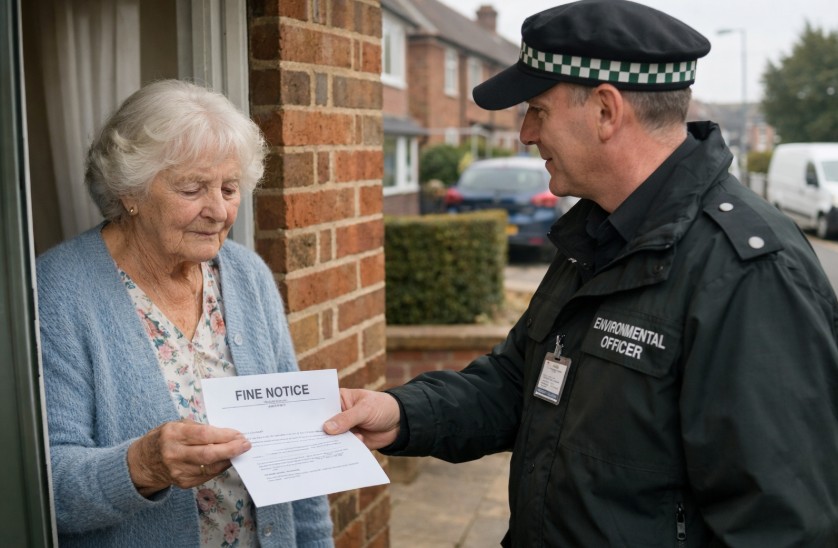
83-year-old Carole Wright has been fined after leaving a cardboard box beside a full recycling bin at the Milestone Centre in Reading. The fine, issued through enforcement contractor Kingdom, has sparked public concern over fairness, vulnerability, and proportionality in local authority waste enforcement.
⏱️ Quick Check: Mrs Wright has received a £600 fixed penalty notice, with further legal action threatened in January 2026.
⚠️ Family Response: Her daughter says the fine has caused distress and health decline. The family initially believed the letters were a scam until council confirmation arrived.
📌 Current Status: Reading Borough Council states it remains open to dialogue but has yet to receive any formal appeal or supporting documentation from the family.
The Carole Wright fly tipping fine refers to a controversial £600 penalty issued to an 83 year old pensioner after she left a single cardboard box beside an overflowing recycling bin in Reading. The case has triggered national debate about council enforcement, fairness, and the treatment of elderly residents.
Key takeaways
- An elderly woman was fined £600 for a single cardboard box
- The incident occurred beside a full recycling bin at a community centre
- Public outrage has questioned council enforcement practices
- The case highlights wider concerns around fly tipping rules in the UK
This incident has become a defining example of how waste enforcement policies can clash with public expectations of compassion and proportionality.
Who is Carole Wright and What Happened at the Recycling Bin?

Carole Wright is an 83 year old resident of Reading who became the centre of national attention following a routine trip to a local recycling point. In October, she visited the Milestone Centre recycling drop off near her home to dispose of household packaging.
Upon arrival, the recycling bins were already full, leaving her with limited options. Mrs Wright placed a single cardboard box next to the bin, believing it would be collected as part of the regular recycling process.
The box had previously contained a kitchen pan and still displayed her name and address, which later became a key factor in identifying her. At the time, she did not believe she was committing an offence and thought she had acted reasonably given the circumstances.
Her daughter Catherine later explained that her mother is approaching her mid eighties and can be forgetful at times. Carole herself reportedly believed she had placed the cardboard correctly and gave the matter no further thought.
This small action, however, resulted in a fixed penalty notice that would soon cause significant distress. The incident highlights how everyday decisions can unexpectedly escalate into serious legal and emotional consequences.
Why Did Reading Council Issue a £600 Fly Tipping Fine?
Reading Borough Council issued the fine after its enforcement contractor Kingdom, identified the cardboard box as fly tipped waste. Councils across the UK employ private enforcement firms to investigate and act on waste related offences, particularly when identifying information is found on discarded items.
According to the council, leaving waste beside a recycling bin rather than inside it is classified as fly tipping under local enforcement rules. After the box was discovered, a letter was sent to Mrs Wright requesting further information. When no response was received within the stated 30 day period, the council authorised enforcement action.
The fixed penalty notice of £600 was issued as part of this process. The council stated that residents have consistently raised concerns about littering and fly tipping, making enforcement a local priority. Officials emphasised that the fine was not immediate and followed procedural steps.
The council later said it remained open to dialogue and that enforcement action was only taken after the investigation period expired. Despite this explanation, many members of the public questioned whether the strict application of the rules was appropriate in this case.
What Has Been the Public Response to the Carole Wright Fly Tipping Fine?

The public response to the Carole Wright fly tipping fine has been swift and largely critical. News of an elderly pensioner being fined £600 for a single cardboard box prompted widespread outrage across the UK. Many people expressed disbelief that such a penalty could be applied to what appeared to be a minor and unintentional act.
Readers and commentators questioned the proportionality of the fine, particularly given Mrs Wright’s age and the circumstances surrounding the full recycling bins. The case has been widely shared as an example of what critics describe as overzealous enforcement by local authorities.
Public discussion has also focused on the role of private contractors and whether financial incentives influence enforcement decisions. Some residents expressed concern that enforcement policies prioritise penalties over education and support.
The incident has resonated strongly with older residents and carers who fear similar situations could happen to vulnerable individuals. Many have argued that common sense and discretion should play a greater role in waste enforcement. This strong public reaction has placed pressure on councils to review how such cases are handled.
How Has the Fine Affected Carole Wright and Her Family?
The Carole Wright fly tipping fine has placed significant emotional strain on the 83 year old pensioner and her family, with the impact extending far beyond the £600 financial penalty.
According to her daughter Catherine, the enforcement letters caused her mother serious distress, particularly due to fears that failing to pay could lead to court action or imprisonment.
Catherine said her mother became overwhelmed soon after receiving the notice, struggling to understand how leaving a single cardboard box could result in such severe consequences.
She recalled her mother repeatedly expressing fear and confusion, telling her, “I don’t understand how this has happened. I thought I’d done the right thing.” The stress, she said, began to affect her mother’s daily life, leaving her withdrawn and visibly anxious.
As further correspondence arrived, the situation worsened. Catherine explained that her mother became fixated on the possibility of being taken to court. “She kept saying to me, ‘They’re going to put me in prison because I can’t pay,’” she said, adding that her mother’s appetite declined and her health appeared to deteriorate.
The family initially believed the letters might be fraudulent, a reaction Catherine attributed to disbelief rather than avoidance. “We honestly thought it must be a scam at first,” she said. That assumption changed when another letter arrived, prompting them to contact the council, who confirmed the action was legitimate.
A final demand issued in January intensified the family’s anxiety, leaving them feeling that a minor mistake had escalated into a deeply unsettling experience for an elderly woman who never intended to break the law.
Is Leaving a Cardboard Box Next to a Recycling Bin Considered Fly Tipping?

The question of whether leaving a cardboard box beside a recycling bin constitutes fly tipping lies at the heart of this case. Under UK law, fly tipping is defined as the illegal disposal of waste on land without permission. This includes leaving items outside designated containers, even if the waste is recyclable.
- Understanding fly tipping in the UK: Fly tipping covers a wide range of actions, from dumping large items to leaving household waste beside bins. Councils interpret these rules strictly to deter littering and maintain public spaces.
- Council justification: Reading Borough Council stated that any waste left outside a bin is considered improperly disposed of. Even when bins are full, residents are expected to take waste home or find an alternative authorised disposal point.
- Cardboard at recycling sites: Many residents assume cardboard placed near recycling bins will be collected. However, councils argue that overflowing bins do not permit exceptions. This strict interpretation often surprises the public.
Key considerations include:
- Whether the waste was placed inside the bin
- If the site was authorised for overflow waste
- Whether identifying information was found
This case highlights the gap between public understanding and legal enforcement of fly tipping rules.
Could the Enforcement Process Have Been Handled Differently?
Many observers believe the enforcement process could have been approached with greater flexibility. While councils have a duty to enforce waste regulations, critics argue that discretion should be applied in cases involving elderly or vulnerable individuals.
The involvement of a private contractor has also raised questions. Enforcement letters, strict deadlines, and formal language can be intimidating, particularly for older residents. In this case, the family believed earlier communication or clearer guidance may have prevented escalation.
The council stated it was open to dialogue, yet the family felt unsupported when asked to provide medical evidence without clear guidance. A more educational approach, such as issuing a warning or offering assistance, may have avoided distress.
This case has prompted broader discussion about whether enforcement should focus more on compliance through understanding rather than punishment. Many believe better communication and early intervention could reduce harm while still addressing waste concerns.
What Are the Rules and Fines for Fly Tipping in the UK?

Fly tipping is considered a serious offence under UK law, specifically outlined in the Environmental Protection Act 1990. It refers to the unauthorised dumping of waste materials on land that does not have a proper permit.
This can include anything from household rubbish and old furniture to construction debris and black bags. Authorities treat the matter seriously due to its environmental and social impact.
Depending on the scale of the offence, those caught can face substantial legal consequences. For minor incidents, local councils typically issue fixed penalties, while more serious cases are handled by the courts or the Environment Agency.
Current fly tipping rules and penalties include:
- Definition: Disposing of waste on public or private land without permission or a valid licence.
- Fixed Penalty Notices (FPNs): Councils can issue FPNs of up to £1,000 for minor offences. Failing to ensure proper waste disposal through licensed carriers can also lead to fines of £600.
- Court Sanctions: If prosecuted, fines can rise to £50,000 in Magistrates’ Courts and become unlimited in Crown Court. Offenders may also face imprisonment for up to 5 years or receive community service orders.
- Vehicle Confiscation: Vehicles used in the act of illegal dumping can be seized or permanently destroyed.
- Private Land Responsibility: When waste is dumped on private land, it is typically the landowner’s duty to remove it at their own cost.
- Duty of Care: Every household must ensure their waste is handed over to authorised waste carriers. Not doing so can result in enforcement action, including a financial penalty.
Local councils are tasked with dealing with smaller scale fly tipping issues, while the Environment Agency focuses on larger, more hazardous or organised waste crimes.
These rules are designed to protect communities and the environment, but the Carole Wright case has led many to question how such regulations are applied in practice.
Can Carole Wright Appeal the Fly Tipping Fine?
Appealing a fly tipping fine is possible but can be challenging. In Mrs Wright’s case, the council stated that further information was requested within a 30 day period. When no response was received, enforcement action followed.
Appeals typically require evidence of mitigating circumstances. Catherine explained that she was asked to provide medical documentation to support her mother’s condition but did not have suitable records.
The enforcement contractor Kingdom stated it remained open to dialogue and would consider closing the case if sufficient evidence was provided. However, the burden of proof rests with the individual, which can be difficult for elderly residents.
This process has raised concerns about accessibility and fairness. Many believe clearer guidance and support should be available for vulnerable individuals navigating complex appeal procedures.
What Can Councils Do to Prevent Situations Like This in the Future?

Preventing similar cases requires a balance between enforcement and empathy. Councils could invest in clearer signage at recycling sites explaining what to do when bins are full. Simple instructions may prevent unintentional breaches.
Improved communication is also essential. Early engagement before issuing fines could allow residents to explain circumstances and correct mistakes. Training enforcement officers to recognise vulnerability could reduce harm.
Public education campaigns about fly tipping rules may also help align public understanding with legal expectations. Additionally, councils could review whether fixed penalties should be adjusted based on intent and impact.
The Carole Wright fly tipping fine has highlighted the need for a more compassionate approach that still protects public spaces while recognising human circumstances.
What Does the Carole Wright Case Tell Us About Council Enforcement Policies?
This case has become a symbol of wider concerns about local authority enforcement. It suggests that strict rule based systems may fail to account for context and vulnerability.
While councils face pressure to address litter and fly tipping, public trust can be undermined when enforcement appears disproportionate. The involvement of private contractors further complicates perceptions of fairness.
The Carole Wright fly tipping fine has prompted calls for policy reviews and clearer safeguards. Many believe councils must reassess how enforcement aligns with community values.
Ultimately, the case demonstrates that enforcement policies are not just legal tools but social decisions that affect real lives. Balancing responsibility with compassion remains a critical challenge for local government.
Conclusion
The Carole Wright fly tipping fine has exposed a significant disconnect between waste enforcement policy and public expectation. What began as a single cardboard box left beside a full recycling bin escalated into a £600 penalty that caused distress to an elderly woman and her family.
The case has sparked national debate about fairness, discretion, and the role of private enforcement in local governance. While councils have a duty to protect public spaces, this incident shows the importance of context and compassion.
As public scrutiny continues, the case may influence how councils approach future enforcement. It serves as a reminder that effective policy must balance rules with humanity to maintain trust and fairness within communities.
FAQs
Why was Carole Wright fined for fly tipping?
She was fined after leaving a cardboard box beside a recycling bin, which the council classified as illegal waste disposal.
How much was the Carole Wright fly tipping fine?
The fixed penalty notice issued to her was £600.
Who issued the fly tipping fine?
The fine was issued by Kingdom, acting on behalf of Reading Borough Council.
Did Carole Wright know she was breaking the law?
Her family stated she believed she had disposed of the cardboard correctly due to the bin being full.
Can elderly people appeal fly tipping fines?
Yes, appeals are possible but usually require evidence of mitigating circumstances.
Is cardboard considered fly tipping in the UK?
Yes, if left outside a designated bin, even if it is recyclable.
Has the council responded to public criticism?
The council said it remains open to dialogue and is willing to review the case with further information.