
Theft and vandalism are an expensive plague on the UK construction industry. Recent reports suggest that the sector loses hundreds of millions of pounds annually due to stolen plant machinery, tools, and materials.
But the financial sting doesn’t stop at the replacement cost. The true damage often lies in project delays, increased insurance premiums, and the administrative nightmare of filing police reports.
Despite these risks, many site managers unintentionally leave their projects vulnerable. Security is often treated as an afterthought, a box to be ticked rather than a strategic priority. By identifying common weak spots, you can fortify your site against opportunist thieves and organised criminal gangs alike.
Here are the five most significant security mistakes construction sites make and the practical steps you can take to fix them.
What Are the 5 Costly Construction Site Security Mistakes You Must Avoid?
1. Relying on Weak Perimeter Protection

Your perimeter is your first line of defence. If it fails, everything inside is at risk. A common mistake is using standard, lightweight fencing that is easily climbed, cut, or pushed over. Furthermore, leaving gaps under hoarding or using padlocks that can be easily cropped invites trouble.
The Solution:
Invest in high-security site hoarding or anti-climb fencing. Ensure that the perimeter is continuous, with no gaps for unauthorized access.
Access points should be limited to one main entrance where possible, strictly controlled by turnstiles or manned guarding during operational hours. The goal is to make physical entry difficult and time-consuming enough to deter opportunists.
2. Leaving the Site in the Dark
Criminals prefer to operate under the cover of darkness. A poorly lit site allows intruders to scout for valuable assets, cut locks, and load vehicles without being detected. If your security lighting is non-existent, or worse, not functioning, you are essentially rolling out the red carpet for thieves.
The Solution:
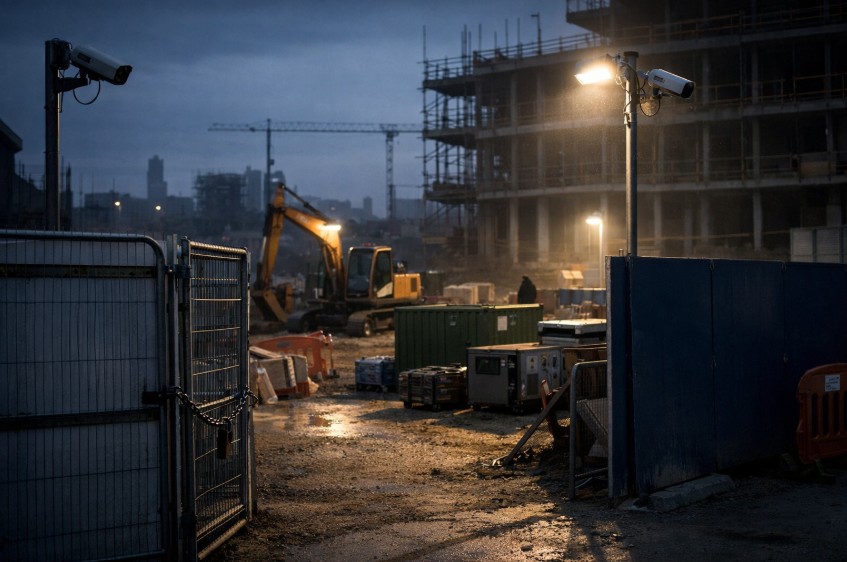
Install motion-activated floodlighting in key areas, particularly around storage containers, fuel tanks, and access points. Lighting serves a dual purpose: it acts as a deterrent by removing the cloak of invisibility, and it improves the quality of CCTV footage should an incident occur.
3. Using Unmonitored or Poorly Placed CCTV
Sticking up a few cameras might make you feel secure, but if nobody is watching them, their value is limited. Unmonitored CCTV is useful only for reviewing a crime after it has happened.
By then, your expensive plant machinery is likely already on a shipping container leaving the country. Additionally, cameras placed too high or at the wrong angles often fail to capture identifiable facial features or number plates.
The Solution:
Transition from passive recording to active remote monitoring. This is where partnering with experts like profm becomes invaluable. With remote monitoring, trained professionals can view your site in real-time.
If a camera detects movement, an alert is sent immediately, allowing security teams to issue audio warnings to intruders or dispatch police before a theft is completed.
4. Poor Asset Management and Key Control

It is surprising how often high-value plant machinery is stolen simply because keys were left in the ignition or hidden “safely” inside the cab. Similarly, leaving small tools scattered across the site rather than locking them away in a secure steel container is a gift to thieves.
The Solution:
Implement a strict key management protocol. Keys should be signed out at the start of a shift and returned to a secure, lockable cabinet at the end of the day.
For smaller tools and materials, use heavy-duty steel storage containers with concealed shackles. Additionally, consider using immobilisers and GPS tracking devices on all larger plant machinery.
5. Treating Security as a “Set and Forget” Task
Construction sites are dynamic environments. As the build progresses, lines of sight change, scaffolding goes up (creating new climbing routes), and assets move. A security plan that worked during the groundworks phase may be completely inadequate during the fit-out stage. Failing to update your risk assessment is a critical error.
The Solution:
Conduct regular security audits. As the site footprint changes, your security measures must adapt. Profm can assist in conducting these ongoing risk assessments, ensuring that your CCTV blind spots are covered and that new vulnerabilities, like scaffolding near a neighbouring wall, are addressed immediately.
Secure Your Site Before It’s Too Late
Security is an investment in your project’s timeline and profitability. By addressing these five common mistakes, you drastically reduce the likelihood of becoming a statistic.
Don’t wait for a break-in to expose the flaws in your security strategy. Profm brings expert knowledge and tailored solutions to the UK construction sector, helping you protect your assets from the ground up.