
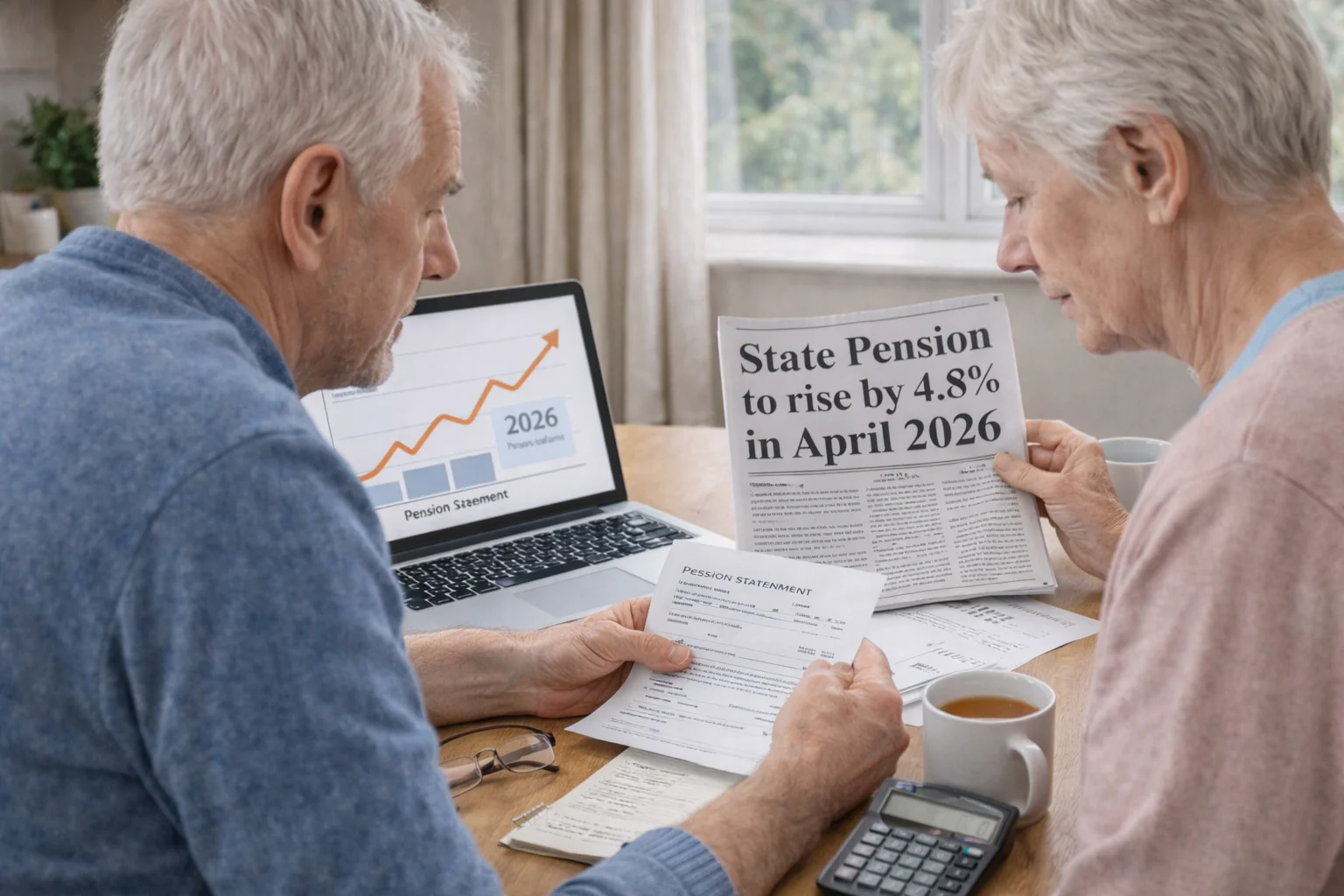
The Rachel Reeves State Pension announcement confirms that the UK State Pension will increase by 4.8% from April 2026, raising payments for millions of pensioners across the country.
The rise is driven by the triple lock policy, which ensures pension payments increase each year in line with inflation, wage growth, or a minimum of 2.5%.
While the increase will boost income for retirees, it also brings the full State Pension very close to the £12,570 personal allowance, raising new questions about potential taxation in the coming years.
Key highlights from the announcement include:
- The full new State Pension will rise to £241.30 per week
- Annual payments will reach £12,547.60
- This is just below the personal allowance threshold
- The Government says pensioners with only State Pension income will not pay tax
- More pensioners may still face tax if they receive additional income
What did Rachel Reeves announce about the State Pension increase for April 2026?
The Rachel Reeves State Pension update confirms that payments will rise by 4.8% from April 2026, helping pensioners keep pace with wage growth and living costs.
The increase follows the Government’s triple lock guarantee, which ensures pensions rise each year by the highest of inflation, wage growth, or 2.5%.
As payments increase, the full State Pension is moving closer to the income tax threshold, which has remained frozen.
Chancellor Rachel Reeves addressed these concerns by emphasising that pensioners relying solely on the State Pension will not be forced to pay income tax during the current parliamentary period.
“If you just get the basic State Pension, you will not be paying tax,” Reeves stated during parliamentary discussions.
For many retirees, the 2026 increase will provide some financial relief at a time when household costs remain a concern.
How much will the UK State Pension rise from April 2026?
The 4.8% increase in the UK State Pension will raise both weekly and annual payments for pensioners receiving the full new State Pension. This change, scheduled to take effect in April 2026, means millions of retirees across the UK will see a noticeable boost in their pension income.
The increase is part of the Government’s continued commitment to the triple lock system, which ensures pensions rise each year in line with inflation, wage growth, or a minimum of 2.5%.
For the 2026 financial year, rising average earnings have driven the increase. Below is a breakdown of how payments will change.
Current vs April 2026 State Pension payments
| Payment Period | Current Amount | April 2026 Amount | Increase |
|---|---|---|---|
| Weekly | £230.25 | £241.30 | £11.05 |
| Monthly (approx.) | £997 | £1,045 | £48 |
| Annual | £11,973 | £12,547.60 | £574.60 |
For many pensioners, this increase will help offset the continued pressure from higher living costs, including energy bills, housing expenses, and everyday essentials.
Weekly and annual payment comparison
| Category | Weekly Payment | Annual Payment |
|---|---|---|
| Current State Pension | £230.25 | £11,973 |
| April 2026 State Pension | £241.30 | £12,547.60 |
The increase means pensioners receiving the full new State Pension will receive roughly £574 more per year compared with current payment levels.
Difference between the basic State Pension and the new State Pension
| Pension Type | Typical Recipient | Weekly Rate (Approx.) |
|---|---|---|
| Basic State Pension | People who reached pension age before April 2016 | Lower than new pension |
| New State Pension | People retiring after April 2016 | Up to £241.30 from April 2026 |
The new State Pension, introduced in April 2016, simplified the system and typically provides a higher weekly payment compared with the older basic State Pension. The exact amount a person receives still depends on their National Insurance contribution record.
Why is the State Pension increasing by 4.8% in 2026?
The rise is largely due to the triple lock policy, which determines how State Pension payments are increased annually.
The triple lock guarantees that pensions rise by whichever of the following is highest:
- The rate of inflation
- Average earnings growth
- A minimum of 2.5%
In this case, earnings growth of 4.8% triggered the increase.
The policy was introduced to ensure that pension incomes do not fall behind wages or living costs over time. It has become one of the most important protections for retirees in the UK.
However, the policy also creates challenges for the Government because pension spending rises every year regardless of economic pressures.
Despite concerns about affordability, the Chancellor has confirmed the Government’s commitment to maintaining the triple lock.
Will you have to pay tax on the State Pension under Rachel Reeves’ policy?
The tax implications of rising pension payments have been a major focus of discussion following the announcement.
Currently, the personal allowance threshold is £12,570, which means individuals can earn this amount each year before paying income tax.
With the full new State Pension expected to reach £12,547.60 annually, it will sit just below the tax threshold.
Rachel Reeves has clarified that pensioners whose only income is the State Pension will not be required to pay income tax during this Parliament.
“Those whose sole income is the basic or new State Pension will not have to pay the tax,” the Chancellor said when addressing concerns raised by consumer finance expert Martin Lewis.
However, the situation becomes more complicated for pensioners with additional income.
People who receive money from:
- workplace pensions
- private pensions
- savings or investments
may exceed the personal allowance threshold and therefore become liable for income tax.
How Close Will the New State Pension Be to the Personal Allowance Threshold?
The increase in the State Pension from April 2026 will bring pension income extremely close to the UK’s income tax threshold, highlighting why the issue has received so much attention.
The following comparison shows how narrow the gap will become.
| Financial Measure | Amount |
|---|---|
| Personal Allowance | £12,570 |
| State Pension (2026) | £12,547.60 |
| Remaining tax-free margin | £22.40 |
This small margin highlights how close pension income is to triggering a tax liability.
Because the personal allowance has been frozen until 2031, the gap between pension payments and the tax threshold is expected to disappear in the near future.
Many analysts believe that from April 2027 onwards, the State Pension could exceed the personal allowance entirely.
Why Are More Pensioners Expected to Be Drawn Into Paying Income Tax?
Even though pensioners receiving only the State Pension are expected to be protected, a growing number of retirees may still end up paying income tax.
The Office for Budget Responsibility (OBR) has warned that the number of pensioners paying tax could rise significantly in the coming years.
According to forecasts:
| Year | Estimated Pensioners Paying Tax |
|---|---|
| 2025–26 | 600,000 additional pensioners |
| By 2030–31 | Around 1 million pensioners |
This trend is largely due to the frozen personal allowance threshold, which has remained at £12,570 while incomes gradually increase.
As pension payments rise under the triple lock, more retirees with additional income will cross the tax threshold.
What Role Does the Personal Allowance Freeze Play in Future Pension Taxation?
The decision to freeze the personal allowance until 2031 is one of the main reasons tax concerns are increasing among pensioners.
When tax thresholds remain unchanged while incomes rise, more people are gradually pushed into paying tax. This process is sometimes called fiscal drag.
The effect is particularly noticeable for pensioners because State Pension payments increase annually under the triple lock.
Over time, even small increases in income can push retirees above the tax threshold if they receive additional income from private pensions or investments.
The Government argues that freezing thresholds helps stabilise public finances, but critics say it effectively raises taxes without formally increasing tax rates.
What Could Happen From April 2027 if the State Pension Exceeds the Tax Threshold?
Although the 2026 increase keeps the State Pension slightly below the personal allowance, projections suggest that the threshold could be crossed in the following year.
If this happens, pensioners receiving only the State Pension could technically become liable for small amounts of income tax. The Government has already indicated that it wants to prevent this situation.
The Government Plans to Prevent Tax Bills for Sole-income Pensioners
Officials have stated that pensioners whose only income is the State Pension should not face small or unnecessary tax bills. To achieve this, the Government is exploring changes to the way tax is assessed and collected
Simple Assessment System Explained
Currently, if someone owes tax that has not been automatically deducted, HMRC may issue a “simple assessment” letter after the end of the tax year. This letter informs the individual of the tax owed and explains how it should be paid.
For pensioners with only State Pension income, this process could create confusion or administrative burdens.
Possible Legislative Changes Through a Finance Bill
Government officials have indicated that new legislation may be required to ensure pensioners with only State Pension income do not have to pay small tax amounts.
HMRC official Cerys McDonald explained to MPs that preparations are already underway.
“We would expect this to go through the next Finance Bill in the Autumn, and we have already mobilised a project team in anticipation of making this change.”
According to HMRC, the updated system is expected to become operational from April 2027, although further details are still being developed.
How Might the Rachel Reeves State Pension Changes Affect People With Additional Income?
For pensioners who receive other forms of retirement income, the situation could be different. Many retirees rely on a combination of income sources.
Common examples include:
- workplace pensions
- private pension schemes
- savings interest
- investment income
When these additional sources are combined with the State Pension, the total income may exceed the tax-free allowance.
As a result, some pensioners could begin paying income tax even if the State Pension itself remains technically below the threshold.
Financial experts advise retirees to regularly review their total income and consider how tax rules may apply to their circumstances.
What Should UK Pensioners Understand About the State Pension Changes Coming in 2026 and Beyond?
The Rachel Reeves State Pension announcement highlights several important developments that retirees should be aware of.
First, the 4.8% increase will provide a welcome boost to pension income, helping many households manage rising living costs.
Second, the State Pension is moving closer to the tax threshold, meaning the long-term tax implications of pension income are becoming more relevant.
Third, there are broader changes to pension rules taking place at the same time. One of the most significant is the gradual increase in the State Pension age.
| Period | State Pension Age |
|---|---|
| Current | 66 |
| April 2026 onward | Gradual rise begins |
| By April 2028 | 67 |
This change will affect millions of people approaching retirement over the next few years.
Overall, the announcement reflects the Government’s attempt to balance support for pensioners with the need to manage public finances.
Conclusion
The Rachel Reeves State Pension increase marks an important change for millions of UK retirees. From April 2026, the full new State Pension will rise by 4.8% to £241.30 per week, or £12,547.60 a year.
While the increase offers helpful financial support, it also brings pension income closer to the tax-free personal allowance.
Although pensioners relying only on the State Pension will not pay tax, those with additional income may face tax obligations. Staying informed about future policy changes will remain essential for retirement planning
FAQs About Rachel Reeves State Pension
How is the UK State Pension calculated each year?
The State Pension increases annually under the triple lock system, which raises payments based on the highest of inflation, wage growth, or 2.5%.
What is the difference between the basic State Pension and the new State Pension?
The basic State Pension applies to people who reached retirement age before April 2016, while the new State Pension applies to those retiring after that date and generally offers higher payments.
Can you increase your State Pension by delaying your claim?
Yes. Delaying your State Pension claim can increase your weekly payments because you earn additional pension credit for each week you postpone claiming.
Does having a workplace pension affect your tax position in retirement?
Yes. Income from workplace or private pensions is counted alongside your State Pension when calculating your total taxable income.
How can you check your official State Pension forecast?
You can check your forecast through the UK Government’s online State Pension service, which shows your estimated payment and retirement age.
What is the State Pension age in the UK right now?
The current State Pension age is 66, although it will gradually increase to 67 between April 2026 and April 2028.
How often does the UK Government review State Pension policy?
State Pension policy is reviewed regularly during budgets and economic statements, particularly when the Government assesses the sustainability of the triple lock system.