

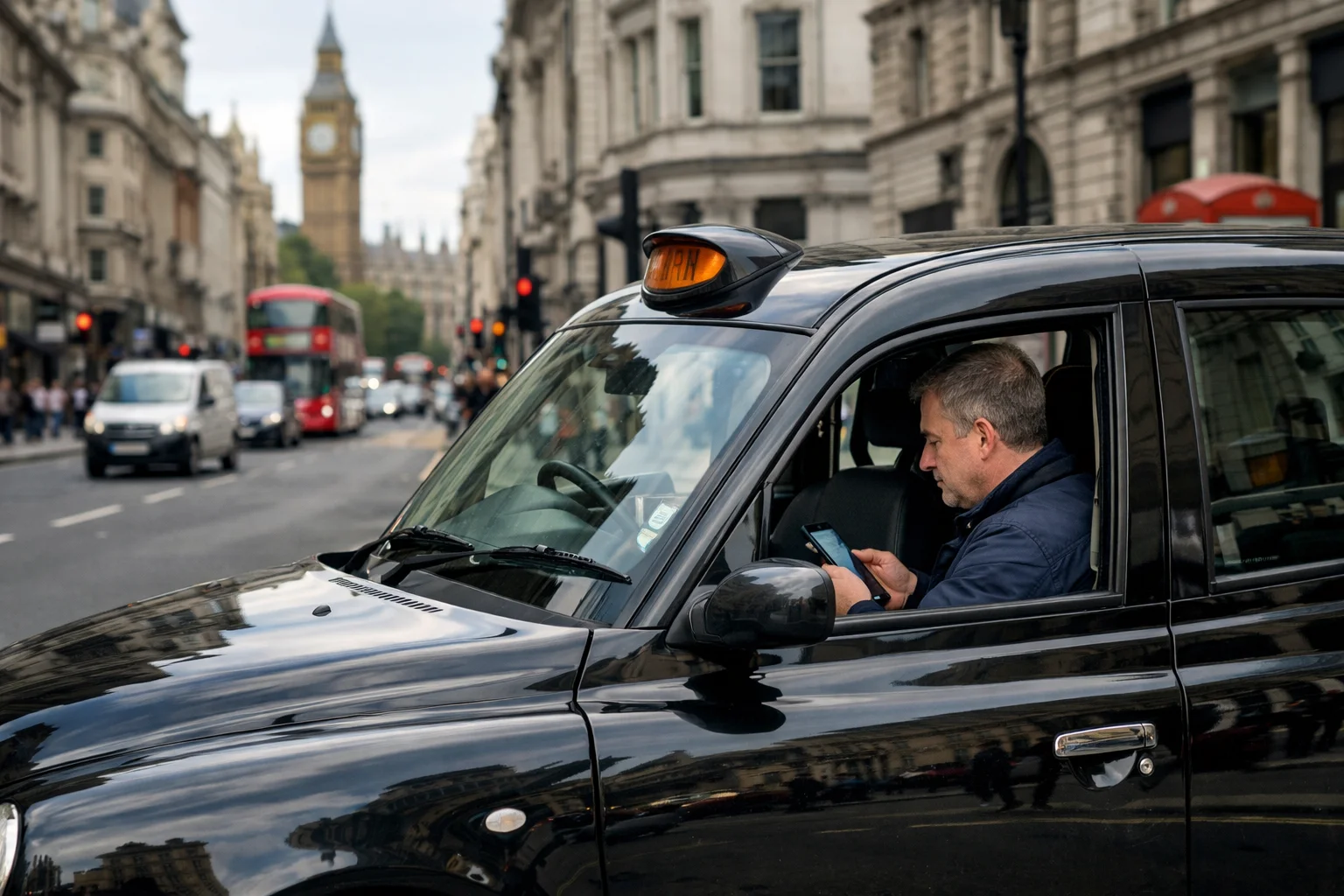
Driving a London black cab can generate substantial fare revenue, but the amount shown on the meter is very different from what a driver ultimately keeps.
Vehicle rental or finance, fuel and charging, app commissions, licensing, insurance, maintenance and tax can remove a significant part of weekly takings.
For anyone researching how much do black cab drivers earn in London, the most useful way to look at the figures is therefore to separate gross fare income from taxable profit and eventual take-home pay.
This has become particularly important in 2026 because London taxi fares increased in April, while operating costs and digital tax-reporting requirements have also changed.
What Can A London Black Cab Driver Earn In 2026?
There is no fixed black cab salary because most drivers operate as self-employed businesses. Their income depends on hours worked, when they drive, passenger demand, vehicle costs and how much work comes through commission-charging apps.
A driver may generate fare revenue equivalent to £40–£55 an hour while the meter is actively earning, particularly during higher tariff periods. That should not be interpreted as earning £40–£55 for every hour of a shift.
Time spent:
- Waiting at ranks
- Driving without a passenger
- Taking breaks
- Refuelling or charging
- Travelling towards busy areas
- Cleaning the cab
- Dealing with administration
does not necessarily produce metered income.
This explains why simply multiplying a TfL tariff rate by 40 or 50 working hours produces an unrealistically high annual “salary”. A driver’s turnover may exceed £50,000, while actual business profit can be tens of thousands of pounds lower once costs are deducted.
London Black Cab Fares And Hourly Potential In 2026

Transport for London changed taxi fares from 25 April 2026. The minimum fare increased from £4.20 to £4.40, while Tariffs 1, 2 and 3 increased by 2.88%. Tariff 4 is now aligned with Tariff 2.
Using TfL’s previous published hourly tariff equivalents and applying the 2.88% rise gives the following approximate metered-time figures:
| Tariff | When It Applies | Approx. Metered Rate |
|---|---|---|
| Tariff 1 | Monday-Friday, 5am-8pm | £42.82 per hour |
| Tariff 2 | Weekday 8pm-10pm and weekends 5am-10pm | £51.80 per hour |
| Tariff 3 | 10pm-5am and public holidays | £54.87 per hour |
These are meter-rate equivalents rather than guaranteed driver earnings. They are calculated from the previous TfL hourly figures and the confirmed 2.88% 2026 tariff rise.
TfL’s current fare card shows how much passengers might actually pay. A four-mile journey typically costs around £21-£31 on Tariff 1, rising to approximately £23-£35 on Tariff 3. A Heathrow-to-central-London journey is typically around £70-£120, depending on journey time and traffic.
Drivers can check the latest amounts on TfL’s 2026 taxi fare card.
What Can A Black Cab Driver Actually Keep?
A better way to understand earnings is to work backwards from weekly takings.
Consider an illustrative driver who collects £1,200 in passenger fares during one week. This is an example rather than a claim about average earnings.
| Weekly Item | Example Amount |
|---|---|
| Gross Fare Revenue | £1,200 |
| TXE Rental | -£345 |
| Fuel And Charging Assumption | -£120 |
| App Commission Example | -£48 |
| Remaining Before Other Costs And Tax | £687 |
The £48 app cost assumes that £240, or 20% of weekly fares, came through an app charging 20% commission.
On this example, £687 a week across 48 working weeks would equal approximately £32,976 before Income Tax, National Insurance and other costs.
The calculation does not include every possible expense. Parking, cleaning, telephone costs, accounting, licensing and other business expenditure could reduce profit further.
Equally, a driver with strong street-hail demand, low charging costs, an owned cab or more high-tariff work could retain considerably more.
The important distinction is:
£1,200 of fares is turnover. It is not £1,200 of personal income.
How Much Does It Cost To Rent Or Own A Black Cab?
Vehicle costs are one of the largest factors affecting black cab profitability. Current London rental listings show older TX4 models from around £265 a week, while newer TXE models can start from roughly £345 a week.
Other providers advertise TXE vehicles at approximately £330-£370 weekly, sometimes including insurance or rent holidays. Prices depend on the cab, agreement and what the rental package covers.
1. Renting
Renting reduces the amount of capital needed to start driving and some packages include:
- Insurance
- Maintenance
- Servicing
- Replacement vehicle support
- Rent-free holiday periods
The downside is that rental remains a large recurring expense even during quieter weeks.
2. Buying Or Financing
Buying removes weekly rental once finance is cleared, but purpose-built London taxis are expensive. Recent public evidence has put the price of a new taxi at more than £70,000, making depreciation and finance costs important parts of any earnings calculation.
Drivers should also be careful with outdated references to government grants. The previous extension of the Plug-in Taxi Grant was scheduled to run only until April 2026, so buyers should verify any current support before including a grant in their finance calculations.
The LEVC TX should also not be described simply as a fully electric taxi. LEVC describes the current TX as a range-extended electric taxi, using its eCity powertrain. The manufacturer has confirmed that its next-generation black cab is expected in the second half of 2027.
Electricity prices, public charging and home charging can therefore materially affect running costs. The differences between home and public electric-car charging costs are particularly relevant to drivers covering high annual mileages.
Tax And Making Tax Digital For Black Cab Drivers
Most London black cab drivers operate as self-employed sole traders, so they pay tax on business profit rather than gross meter takings.
One important distinction applies to vehicle expenses. HMRC specifically states that cars designed for commercial use, including black cabs and hackney carriages, cannot use the normal simplified mileage-expense system for cars.
Drivers therefore need to understand the appropriate actual-cost and capital-allowance treatment for their circumstances. Making Tax Digital for Income Tax is another major 2026 change.
HMRC’s timetable is:
| Qualifying Income | MTD Start Date |
|---|---|
| More Than £50,000 In 2024/25 | 6 April 2026 |
| More Than £30,000 In 2025/26 | 6 April 2027 |
| More Than £20,000 In 2026/27 | 6 April 2028 |
Qualifying income is measured using gross income from self-employment and property before expenses. People within the rules must maintain digital records and use compatible software for quarterly updates.
There have also been broader changes affecting black-cab tax treatment and competition, making tax planning increasingly relevant when estimating real driver earnings.
Black Cab Vs Private Hire Earnings
Black cab and private hire earnings are frequently compared, but they operate under different business models.
| Factor | London Black Cab | Private Hire |
|---|---|---|
| Street Hails | Allowed | Not Allowed |
| Taxi Ranks | Allowed | Generally Not |
| Pre-Booked Work | Yes | Yes |
| Fares | TfL-Regulated Meter | Operator Or App Pricing |
| Knowledge Of London | Required | Not Required In Same Form |
| Vehicle Requirements | Strict Taxi Standards | PHV Requirements |
| Main Costs | Cab, energy, tax, licences | Vehicle, fuel, operator/app charges |
Salary websites and recruitment pages can be misleading because they often combine employed drivers, self-employed taxi drivers, minicab drivers and app workers.
Older private-hire figures around £24,000-£35,000 a year may provide context, but they should not be presented as a reliable 2026 comparison with black cab profit.
For both sectors, net profit per working hour is a better comparison than headline annual income.
How Much Does The Knowledge Of London Cost Drivers?
The Knowledge remains one of the biggest barriers to becoming an All London taxi driver because applicants must learn London’s road network and points of interest before qualifying.
TfL states that it takes most applicants around three to four years, although full-time students have sometimes completed it in about two years.
From March 2026, TfL’s relevant assessment charges include:
- Knowledge Written Assessment: £225
- Knowledge Appearance Fee: £425
- Taxi Driver SERU First Attempt: £40
- SERU Resit: £30
The taxi driver licence application fee also increased to £138 from 1 June 2026.
Older TfL material reported a historical Knowledge dropout rate of roughly 70% and a completion time around 34 months. Those figures should be treated as historical evidence rather than current applicant statistics.
Applicants should also factor in study materials, travel around London and, most importantly, the time spent learning before they can begin earning as licensed black cab drivers.
Can Black Cab Drivers Earn Extra Money?
Metered fares are not the only possible income source.
Airport Extras
Current TfL rules allow:
- £1.60 Extra: Journeys starting from Heathrow taxi ranks
- £6 Extra: Heathrow terminal drop-offs
- £6 Extra: London City Airport terminal forecourt drop-offs
There is no extra passenger charge for starting a journey from the London City Airport taxi rank.
Apps
Apps can provide extra bookings during periods when street demand is weak, but commission needs to be included when calculating profit.
From 14 September 2026, Freenow’s standard taxi commission is 20% including VAT, although different rates apply to certain airport trips, promotions and other arrangements.
Tips And Advertising
Freenow says drivers keep 100% of tips and claims participants in its on-car advertising programme can earn up to £6,000 more a year. The £6,000 figure is the company’s promotional maximum, not a guaranteed level of additional income.
What Could Affect Black Cab Earnings During The Rest Of 2026?
Two issues are particularly important for operating margins.
The first is energy cost. Fuel prices have been volatile, meaning diesel drivers can see margins squeezed quickly when pump prices rise. For range-extended TX drivers, the balance between electric running and petrol use can also affect weekly expenditure.
The second is vehicle availability. LEVC confirmed on 16 September 2026 that the replacement for the TX will launch in the second half of 2027. Industry representatives have consequently raised concerns about a possible short-term shortage of suitable cabs during the transition.
Neither factor means earnings will automatically fall, but they reinforce why turnover alone is a poor measure of what a London cabbie actually makes.
Is Driving A Black Cab In London Still Worth It?
Black cab driving can still produce a viable full-time income, particularly for experienced drivers who understand demand patterns, minimise empty mileage and control their vehicle costs.
However, a driver should judge the business by net profit per working hour, not by the highest tariff or the amount appearing on the meter.
Rental of £300-plus a week, energy costs, app commissions, tax and several years spent completing the Knowledge can materially change the financial picture.
For someone considering the profession, calculating likely weekly fares and subtracting every operating expense before committing to a vehicle provides a much more useful answer than relying on a headline salary figure.
FAQs
How Much Can A Black Cab Driver Make Per Day In London?
There is no fixed daily amount. Earnings vary with hours, tariff periods, passenger demand, traffic and how much of the shift is spent with a paying passenger.
Do London Black Cab Drivers Earn More At Weekends?
They can. Tariff 2 applies during much of the weekend and Tariff 3 applies between 10pm and 5am, but stronger tariffs do not guarantee continuous passenger demand.
How Much Does It Cost To Rent A Black Cab?
Current advertisements show older TX4 rentals from around £265 weekly and newer TXE rentals starting from roughly £330-£345, although insurance, maintenance and holiday arrangements vary between providers.
Are London Black Cab Drivers Self-Employed?
Most operate on a self-employed basis, meaning gross fares are business turnover and allowable costs are deducted when calculating taxable profits.
How Long Does The Knowledge Of London Take?
TfL says most people take around three to four years, although some people studying full time have completed it in about two years.
Do Black Cab Drivers Keep Their Tips?
Tips paid directly to a driver are additional income. On Freenow, the company states that drivers retain 100% of passenger tips.
Is The LEVC TX A Fully Electric Black Cab?
Not exactly. LEVC describes the current TX as a range-extended electric taxi rather than a battery-only electric vehicle. A new generation of London black cab is scheduled to launch in the second half of 2027.