

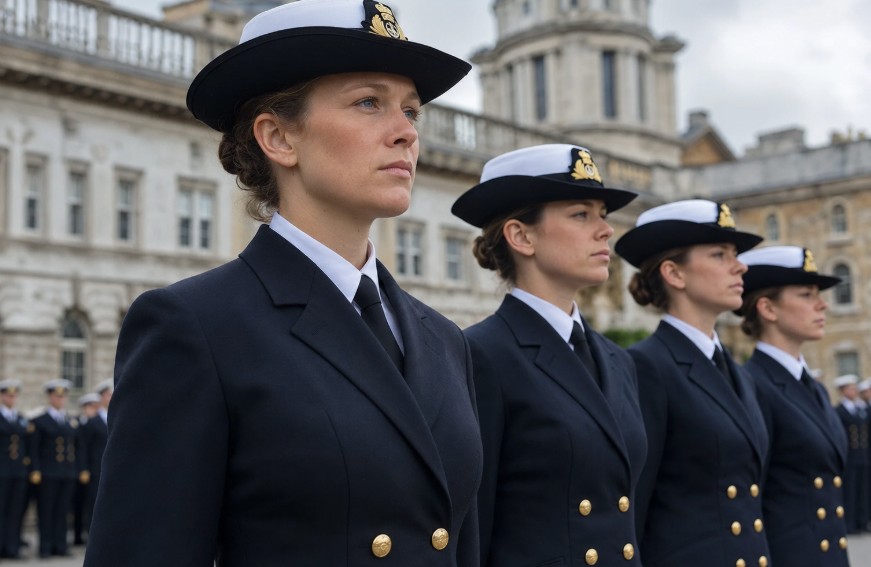
The female officer dress jacket changes introduced by the Royal Navy are part of a planned redesign of women’s ceremonial No 1 uniforms after concerns were raised about the placement of decorative buttons on the existing jackets.
The redesign aims to improve comfort, presentation, and professional fit for female officers while maintaining the traditions associated with Royal Navy ceremonial dress. Although the changes are being described by the Navy as a positive step for women serving in the force, the decision has also sparked debate due to the reported £200,000 cost during a period of wider defence budget pressure in the UK.
Key Takeaways
- The redesign affects female commissioned officers’ No 1 ceremonial jackets
- The top buttons on older jackets were considered “inappropriately placed”
- More than 950 serving female officers may receive updated uniforms
- The rollout is expected to happen gradually over several years
- Public debate has focused on taxpayer cost and military spending priorities
What Are the Female Officer Dress Jacket Changes in the Royal Navy?
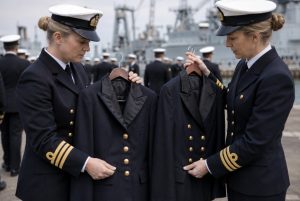
The female officer dress jacket changes relate to the Royal Navy’s decision to redesign the ceremonial No 1 jackets worn by female commissioned officers. The update mainly focuses on the placement of decorative buttons on the uniform, which some serving personnel reportedly viewed as unsuitable because of their position on the upper chest area.
The current design includes four rows of two buttons, while the revised version lowers the positioning of all eight buttons to create a more balanced and professional appearance. According to internal reports, the redesign will be introduced gradually and funded through official Navy uniform budgets.
The issue has attracted significant public attention because the uniforms are worn during formal occasions, inspections, funerals, and ceremonial duties. While the Royal Navy describes the update as a practical response to feedback from female personnel, critics have questioned whether the timing and cost are appropriate during ongoing defence spending pressures.
Why Is the Royal Navy Changing Female Officer Dress Jackets?
The Royal Navy says the female officer dress jacket changes were introduced after concerns were raised by serving personnel regarding the fit and appearance of the existing ceremonial jackets.
Reports suggest that the placement of the upper decorative buttons on the older design drew uncomfortable attention and had become a long-standing topic of discussion within parts of the service.
Rather than removing the buttons entirely, the Navy chose to redesign the jacket while keeping the traditional ceremonial appearance intact. Officials argue that military uniforms must evolve alongside workplace expectations, particularly as more women continue to serve in senior and visible roles across the armed forces.
A Royal Navy spokeswoman explained:
“The navy is both a modern organisation that continuously adapts and is also hugely proud of our history. This change addresses issues raised by serving personnel regarding the fit of female officer’s jackets. The cost of the new jacket will be offset by a reduction in the number of uniforms issued.”
How Will the New Female Officer Dress Jackets Be Different?
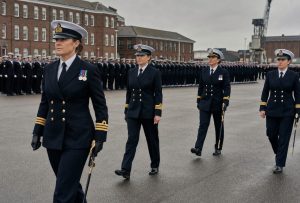
The redesigned female officer jackets will continue to preserve the traditional appearance associated with Royal Navy ceremonial dress, but several visual and structural changes are being introduced to improve practicality and presentation.
The most noticeable update involves the positioning of the decorative buttons on the front of the uniform. The redesign is also intended to modernise the fit of the jacket while ensuring that female officers feel comfortable during ceremonial duties and official events.
What Changes Are Being Made to the Button Placement?
The existing female officer No 1 jacket contains four rows of two decorative buttons positioned vertically along the front of the uniform. According to internal Navy communications reported by British newspapers, the top row of buttons was considered “inappropriately placed” because it aligned too closely with the chest area.
Under the new design:
- All eight decorative buttons will remain
- The upper rows will be lowered
- The jacket’s formal structure will stay largely unchanged
- The traditional naval appearance will still be maintained
Rather than completely redesigning the ceremonial uniform, the Navy appears to be making a targeted adjustment intended to resolve concerns without altering the broader identity of the dress code.
A Royal Navy source reportedly criticised the decision by saying:
“It’s clearly absurd for the Royal Navy to be frittering away money on such a minor change to this uniform. The button placement on the jacket has always been a bit of a joke within the service. Surely there are more urgent matters for the navy to focus on.”
The criticism reflects the wider debate surrounding defence priorities and public spending rather than only the uniform itself.
Which Royal Navy Personnel Will Receive the New Uniform?
The redesigned jackets are expected to be issued primarily to female commissioned officers serving within the Royal Navy. Reports indicate that more than 950 personnel may eventually receive the updated ceremonial uniform as the rollout progresses.
The changes are also expected to apply to:
- Royal Fleet Auxiliary female officers
- Officers participating in ceremonial duties
- Female personnel requiring No 1 formal dress uniforms
However, non-commissioned personnel are not expected to be affected because their uniforms already use a different button arrangement with only three rows instead of four.
The update specifically targets ceremonial dress rather than operational or combat uniforms. This distinction is important because some public commentary online incorrectly suggested wider military uniform changes were taking place across all Navy clothing systems.
The redesigned jackets will likely appear during:
- Formal inspections
- State ceremonies
- Official receptions
- Military funerals
- High-ranking naval visits
Because these occasions often involve public visibility and official representation, the Navy appears keen to ensure that ceremonial uniforms meet both professional and practical expectations.
When Will the New Jackets Be Introduced?
According to reports linked to internal Royal Navy memorandums, the rollout of the new jackets will happen gradually across multiple stages rather than through an immediate service-wide replacement.
The transition is expected to begin in phases:
- Initial rollout periods starting in separate yearly stages
- Gradual replacement of older jackets
- Multi-year implementation to control costs
The Navy has also stated that the redesign costs will be balanced by reducing the number of uniforms issued in future procurement cycles. Officials argue that this approach helps limit long-term financial impact while still responding to concerns raised by personnel.
Princess Anne, who frequently wears Royal Navy ceremonial uniforms during public duties, has often been photographed wearing the older design.
Because of the visibility of such appearances, the updated jackets may become one of the most recognisable changes to women’s ceremonial naval dress in recent years.
Why Has the Uniform Redesign Sparked Public Debate?
The female officer dress jacket changes have generated mixed reactions across military circles, media platforms, and the wider public. Much of the debate centres on whether spending up to £200,000 on ceremonial uniform redesigns is appropriate during ongoing pressure on UK defence budgets.
Supporters argue that professional uniforms should evolve to reflect modern workplace standards and the experiences of women serving in the armed forces. They believe concerns raised by personnel should not be ignored simply because the issue appears cosmetic to outsiders.
Critics, however, argue that defence funding should focus on operational readiness and equipment priorities instead of ceremonial clothing updates.
Common concerns raised include:
- The timing of the redesign during defence budget shortfalls
- Whether taxpayers should fund the replacement programme
- Questions about whether smaller alterations could have solved the issue
- Concerns over balancing tradition with modern expectations
Some commentators have also argued that the debate itself reflects broader social discussions about representation, professionalism, and gender standards within historically male-dominated institutions.
Despite criticism, the Navy continues to describe the redesign as a measured and practical adjustment rather than a symbolic political gesture.
What Does the Royal Navy Say About the Female Officer Dress Jacket Changes?
The Royal Navy has consistently defended the female officer dress jacket changes as a practical response to concerns raised by serving personnel. Officials say the redesign reflects the organisation’s efforts to modernise while still respecting long-standing military traditions.
According to the Navy, the update is intended to improve the fit and comfort of ceremonial jackets rather than dramatically alter the overall appearance of female uniforms. The service also emphasised that the rollout will happen gradually over several years to reduce financial strain.
The Navy further stated that the overall cost would be partially offset through future reductions in uniform allocations and procurement adjustments.
In official remarks, representatives stressed that the decision was influenced by direct feedback from female officers rather than external political pressure.
The organisation also highlighted its broader commitment to creating a professional environment that reflects the realities of a modern armed force while preserving ceremonial heritage linked to Royal Navy history.
How Have Female Royal Navy Uniforms Changed Throughout History?
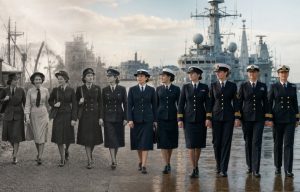
Women’s naval uniforms in Britain have evolved significantly over the past century, reflecting broader social and military changes within the armed forces.
The latest female officer dress jacket changes are part of a much longer history of adapting military clothing to suit operational, cultural, and professional expectations.
Although ceremonial uniforms are deeply connected to Royal Navy tradition, female dress regulations have gradually changed as women took on expanded responsibilities across different naval roles.
What Was the Role of the Women’s Royal Naval Service (WRNS)?
The Women’s Royal Naval Service, commonly known as the WRNS or “Wrens,” played a major role in shaping women’s naval uniforms during the twentieth century. Formed during the First World War and expanded significantly during the Second World War, the WRNS allowed women to serve in administrative, communications, intelligence, and logistical positions.
Historical photographs show that many WRNS ceremonial uniforms featured similar button arrangements to those still used today. Officers often wore jackets with four rows of decorative buttons, while non-commissioned personnel wore simplified versions with fewer rows.
Over time, these uniforms became strongly associated with naval professionalism and ceremonial identity. Even after the WRNS was integrated fully into the Royal Navy during the 1990s, many traditional visual elements remained in place.
The historical continuity explains why the current redesign has attracted attention. For some observers, the jacket represents a visible link to generations of women who served in British naval history.
One military observer referenced the historical connection by noting that women serving during the Second World War wore jackets with nearly identical button placements. This has led some critics to question why the redesign is being introduced now after decades of continued use.
However, supporters argue that long-standing tradition alone should not prevent practical improvements if serving personnel feel changes are necessary.
How Have Military Uniform Standards Changed for Women?
Female military uniform standards across the UK armed forces have gradually shifted to prioritise functionality, comfort, and professional equality. Earlier uniform systems were often adapted directly from male tailoring styles without considering differences in fit or movement.
Modern armed forces now place greater attention on:
- Inclusive uniform design
- Operational practicality
- Female-specific sizing
- Professional appearance standards
- Comfort during ceremonial and active duties
These developments reflect wider changes in workplace expectations throughout the military sector.
Today, women serve in combat, leadership, aviation, engineering, intelligence, and command positions throughout the Royal Navy. As their responsibilities expanded, uniform expectations also evolved beyond symbolic representation toward practical workplace needs.
Some uniform updates introduced in recent decades have included:
- Improved tailoring for body shape differences
- Modernised ceremonial fabrics
- Adjustments to protective equipment sizing
- Greater flexibility in formal dress options
The current female officer dress jacket changes fit within this wider pattern of gradual adaptation rather than representing a sudden departure from tradition.
At the same time, the issue demonstrates how military clothing can become culturally significant beyond simple functionality. Ceremonial uniforms are closely tied to public identity, discipline, and institutional heritage, which explains why even relatively small changes can generate national headlines and political debate.
Could the Female Officer Dress Jacket Changes Affect the Wider Armed Forces?
The Royal Navy redesign could influence future discussions about uniform standards across other branches of the British armed forces. While no official announcements have been made regarding broader military redesign programmes, defence organisations regularly review ceremonial and operational dress policies to reflect changing workplace expectations.
Other military services may observe how the Navy manages:
- Personnel feedback
- Public reaction
- Procurement costs
- Modernisation efforts
- Balancing heritage with practicality
Uniform updates are not unusual within military institutions, especially as more women enter senior leadership and specialist operational roles.
However, experts note that ceremonial clothing changes do not automatically signal wider alterations to operational military uniforms. In this case, the redesign is highly specific to female officer ceremonial jackets rather than combat or field equipment.
The debate may still encourage broader conversations about how armed forces can modernise traditional systems while preserving historical identity and public trust.
What Are the Main Facts, Misconceptions, and Public Reactions?
The female officer dress jacket changes have generated both accurate reporting and misleading online discussion. Understanding the difference between confirmed information and speculation is important for readers following the story.
Confirmed facts include:
- The Royal Navy plans to redesign female officer No 1 jackets
- The issue relates to decorative button placement
- More than 950 officers could receive updated uniforms
- The rollout will happen gradually over several years
Some misconceptions have suggested:
- All Royal Navy uniforms are being replaced
- Operational combat uniforms are changing
- The redesign was ordered because of political campaigning
None of these claims have been officially confirmed.
Public reaction has remained divided. Some people view the redesign as a sensible workplace adjustment that reflects modern professional standards. Others believe the timing is difficult to justify during wider defence funding concerns.
One commonly quoted criticism stated:
“Surely the obvious answer would have been to simply cut off the offensive nipple buttons on the existing uniforms?” That remark reflects frustration among some critics who believe the redesign is unnecessarily expensive.
Meanwhile, supporters argue that concerns raised directly by serving personnel deserve serious consideration regardless of public perception.
What Does This Mean for Women Serving in the Royal Navy?
For many women serving in the Royal Navy, the female officer dress jacket changes represent more than a simple clothing adjustment. Ceremonial uniforms are worn during important public and professional occasions, meaning appearance, comfort, and confidence can carry real significance.
The redesign may help some female officers feel more comfortable during:
- Public ceremonies
- Leadership inspections
- State events
- Official naval duties
Supporters argue that responding to personnel feedback demonstrates that the Navy is willing to adapt when practical concerns are raised internally.
At the same time, the debate highlights the ongoing challenge of balancing military tradition with modern expectations surrounding representation and professionalism.
For younger women considering careers in the armed forces, the discussion may also reflect a broader message that military institutions are continuing to evolve alongside society while still maintaining historic ceremonial standards associated with British naval service.
Conclusion
The female officer dress jacket changes introduced by the Royal Navy have become one of the most widely discussed military uniform updates in recent years.
Although the redesign mainly focuses on repositioning decorative buttons on ceremonial jackets, the issue has expanded into a broader national conversation about military modernisation, workplace professionalism, public spending, and tradition.
The Royal Navy maintains that the changes respond directly to concerns raised by serving female personnel and that the redesign will be introduced gradually to balance operational and financial priorities.
Critics, however, continue to question whether the timing and cost are appropriate during wider defence budget challenges.
Ultimately, the debate shows how even small adjustments to military uniforms can carry symbolic importance. The redesigned jackets represent not only a change in appearance, but also an example of how long-standing institutions adapt to modern expectations while attempting to preserve historical identity.
Frequently Asked Questions
Why were the female officer jacket buttons considered inappropriate?
The Royal Navy stated that concerns were raised about the placement of the upper decorative buttons on older ceremonial jackets. Reports suggested the positioning drew uncomfortable attention and affected the professional appearance of the uniform.
How much will the Royal Navy spend on the uniform redesign?
Reports indicate the redesign and rollout of the updated female officer jackets could cost up to £200,000. The Navy says part of the expense will be balanced by reducing future uniform allocations.
Will all female Navy personnel receive the new jackets?
No, the changes mainly apply to female commissioned officers and some Royal Fleet Auxiliary officers who wear No 1 ceremonial dress uniforms. Non-commissioned personnel are not expected to be affected because their jackets already use a different button arrangement.
Are male Royal Navy uniforms also being redesigned?
There has been no official announcement regarding changes to male ceremonial uniforms. The current redesign specifically focuses on female officer No 1 jackets.
When will the updated female officer jackets become standard issue?
The rollout is expected to happen gradually over multiple stages during the coming years. This phased introduction is intended to help manage costs and replace older uniforms over time.
Why has the redesign caused controversy in the UK?
Many critics believe defence spending should prioritise military readiness and equipment rather than ceremonial clothing updates. Supporters, however, argue that professional workplace concerns raised by serving personnel should be addressed properly.
What is the history behind the Royal Navy No 1 jacket?
The ceremonial No 1 jacket has historical links to earlier women’s naval uniforms worn during the WRNS era. Many traditional design features, including decorative button layouts, remained unchanged for decades.