


Digital transformation has become a strategic priority for businesses seeking to remain competitive in increasingly technology-driven markets. Organizations across industries are modernizing operations, automating workflows, and improving customer experiences through advanced digital systems.
However, many companies struggle with fragmented software ecosystems, disconnected data sources, and outdated infrastructure that limit operational efficiency and innovation potential. Artificial intelligence is now helping businesses solve these challenges by creating smarter, more connected enterprise environments.
Modern artificial intelligence integration services enable organizations to connect complex systems, automate data flows, and optimize operational processes through intelligent technologies.
These services combine AI, cloud computing, analytics, and automation to create seamless communication between platforms such as CRM systems, ERP software, customer support tools, financial applications, and operational databases.
As businesses continue accelerating digital transformation in 2026, AI integration services are becoming essential for building scalable and future-ready technology ecosystems.
Why AI Integration Is Important for Modern Businesses?

Many companies operate with multiple disconnected applications that were implemented over time without a unified digital strategy. This fragmentation often creates inefficiencies that slow decision-making and increase operational complexity.
Common challenges include:
- Duplicate data across systems
- Manual administrative tasks
- Delayed communication between departments
- Limited visibility into operations
- Inconsistent customer experiences
- Increased maintenance costs
AI integration solves these problems by enabling systems to exchange data intelligently and automate workflows across the enterprise.
What Artificial Intelligence Integration Services Include?
AI integration services go beyond traditional software connectivity by introducing intelligent automation and advanced analytics into enterprise operations.
- Intelligent Workflow Automation: AI systems automate repetitive processes such as approvals, reporting, scheduling, and customer communication.
- Real-Time Data Synchronization: Integrated AI platforms continuously update and organize information across connected systems.
- Predictive Analytics: Machine learning algorithms analyze business data to identify trends, forecast outcomes, and support strategic planning.
- Natural Language Processing: AI-powered conversational interfaces improve customer support and simplify interactions with enterprise applications.
- Cloud Infrastructure Integration: Cloud-native environments support scalability, flexibility, and high-performance AI operations.
Leading AI Integration Service Providers

Accenture
Accenture is one of the leading global providers of AI integration and digital transformation services. The company helps organizations modernize enterprise systems through automation, analytics, cloud migration, and AI-driven workflow optimization.
Its services support industries including healthcare, finance, manufacturing, retail, and telecommunications.
IBM Consulting
IBM Consulting provides enterprise-grade AI integration solutions powered by hybrid cloud technologies and advanced analytics frameworks. The company specializes in integrating legacy infrastructure with modern AI systems while maintaining security and compliance standards.
Deloitte
Deloitte focuses heavily on AI governance, operational modernization, and enterprise analytics integration. Its consulting teams help businesses build scalable AI ecosystems that support long-term transformation strategies.
Cognizant
Cognizant delivers AI-powered integration services designed to improve operational efficiency and customer engagement. The company supports enterprise automation, cloud-native architecture, and intelligent workflow management.
Capgemini
Capgemini offers AI integration solutions focused on digital transformation, predictive analytics, and scalable enterprise connectivity. The company helps organizations optimize data management and automate business operations.
Benefits of AI Integration Services
- Improved Operational Efficiency: Automation reduces manual workloads and improves consistency across departments and business processes.
- Better Decision-Making: Integrated AI systems provide centralized insights and real-time analytics for more accurate strategic planning.
- Faster Business Processes: Connected platforms eliminate delays caused by fragmented workflows and disconnected applications.
- Enhanced Customer Experience: Unified systems allow businesses to deliver more personalized and responsive customer interactions.
- Increased Scalability: AI-powered ecosystems support rapid growth without significantly increasing operational complexity.
Industries Benefiting from AI Integration
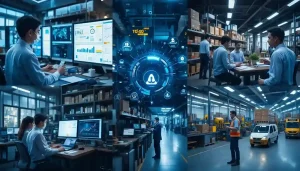
- Healthcare: Hospitals and healthcare providers use AI integration to connect patient records, scheduling systems, analytics platforms, and diagnostic tools.
- Financial Services: Banks integrate AI across fraud detection, customer support, compliance monitoring, and financial analytics systems.
- Retail and E-Commerce: Retailers rely on integrated AI environments for inventory optimization, recommendation engines, and supply chain management.
- Manufacturing: Manufacturers use AI integration to connect production systems, predictive maintenance tools, and operational analytics platforms.
- Logistics and Transportation: AI improves fleet management, warehouse coordination, delivery optimization, and route planning processes.
How AI Improves Traditional Integration Methods?
Traditional integration systems often depend on static workflows and manual configuration. Artificial intelligence introduces more adaptive and intelligent capabilities.
- Automated Error Detection: AI identifies inconsistencies, duplicates, and synchronization issues in real time.
- Intelligent Data Mapping: Machine learning simplifies the process of connecting different data formats and software environments.
- Predictive Maintenance: AI systems can detect infrastructure risks before they cause operational disruptions.
- Adaptive Process Optimization: Integrated AI platforms continuously improve workflows based on performance patterns and operational data. These capabilities help businesses build more resilient and efficient digital ecosystems.
Challenges in AI Integration Projects

Despite its advantages, AI integration remains a complex process for many organizations.
- Legacy Infrastructure Limitations: Older enterprise systems may not support modern APIs or cloud-native integration frameworks.
- Data Quality Issues: Poor-quality or inconsistent data can reduce AI effectiveness and create unreliable outputs.
- Cybersecurity Risks: Businesses must ensure secure communication between systems and compliance with privacy regulations.
- High Implementation Costs: Large-scale AI integration often requires significant investment in infrastructure and expertise.
- Organizational Resistance: Employees may resist workflow changes introduced by automation and digital transformation initiatives. Successful implementation requires careful planning, strong leadership support, and long-term operational strategies.
Emerging Trends in AI Integration
- Hyperautomation: Businesses increasingly combine AI, robotic process automation, and analytics to automate entire workflows.
- Hybrid Cloud Ecosystems: Organizations continue adopting hybrid cloud infrastructure that combines on-premise systems with scalable cloud environments.
- Low-Code Integration Platforms: Simplified development tools allow companies to build integrations faster and with less technical complexity.
- AI-Powered Observability: Advanced monitoring systems use AI to identify performance issues and optimize infrastructure automatically.
- Real-Time Decision Intelligence: Integrated AI systems now support instant analytics and faster business decision-making capabilities.
How to Choose the Right AI Integration Partner?

Selecting the right service provider is essential for long-term success.
Businesses should evaluate:
- Technical expertise
- Industry experience
- Security and compliance capabilities
- Scalability planning
- Cloud integration experience
- Automation and analytics tools
- Long-term support services
The ideal provider should understand both enterprise operations and advanced AI technologies.
The Future of AI-Driven Digital Transformation
Artificial intelligence integration will continue reshaping enterprise operations over the next decade. Businesses are moving toward highly connected digital ecosystems where systems communicate intelligently and workflows operate with minimal manual intervention.
Future developments may include:
- Autonomous enterprise operations
- AI-driven cybersecurity systems
- Real-time predictive business management
- Fully connected customer ecosystems
- Intelligent self-optimizing workflows
Organizations that invest in scalable AI integration strategies today will be better prepared for future technological evolution and market changes.
Conclusion
Artificial intelligence integration services are becoming essential for businesses seeking seamless digital transformation and scalable enterprise connectivity.
By combining AI, automation, analytics, and cloud technologies, these services help organizations eliminate operational silos, improve efficiency, and create more intelligent business ecosystems.
As digital environments continue growing more complex in 2026, businesses that successfully integrate AI across their systems will gain stronger scalability, faster decision-making capabilities, and improved customer experiences.
Intelligent integration is no longer simply an IT initiative, it has become a critical component of long-term business strategy and sustainable innovation.