

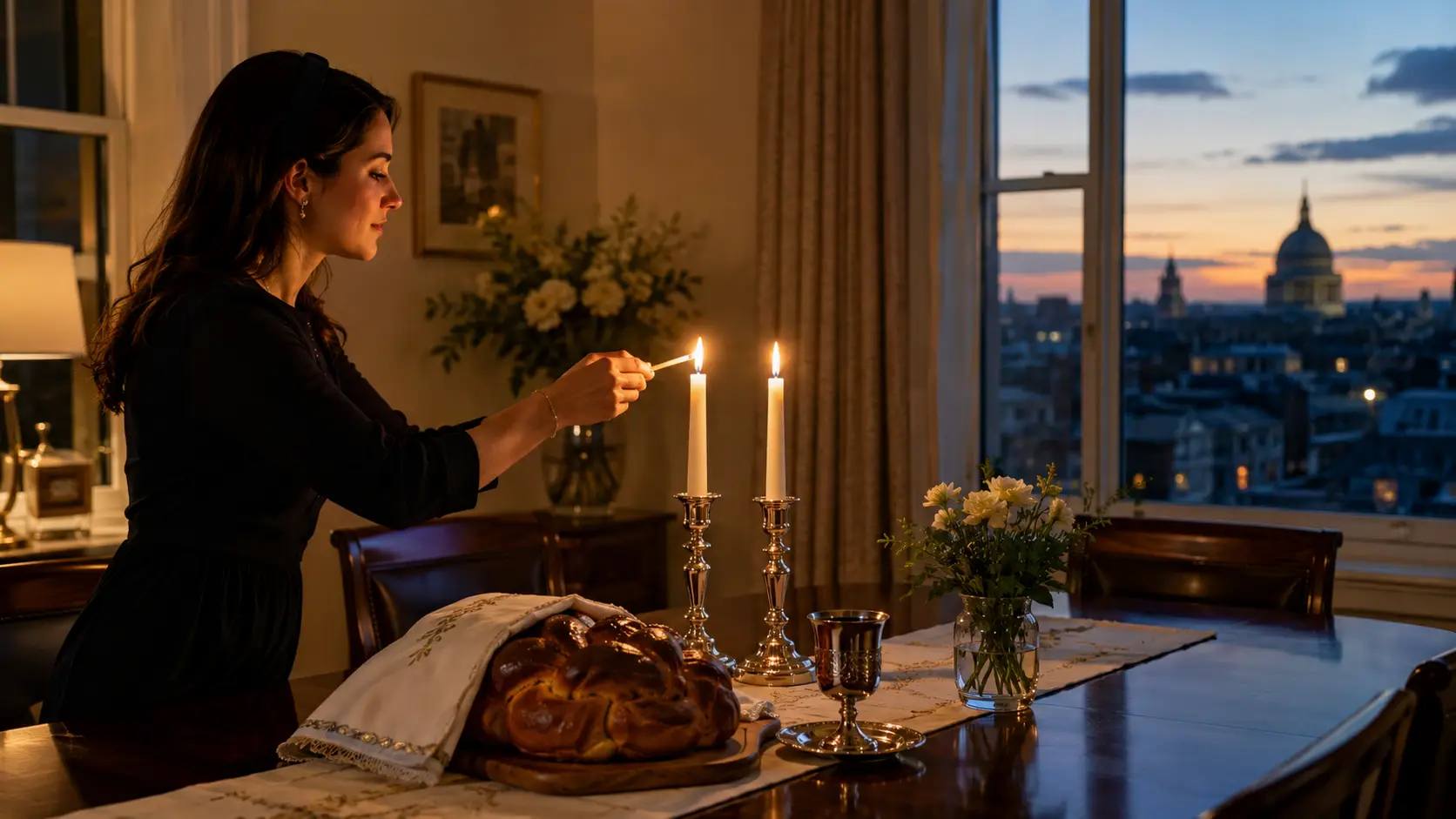
If you are searching for Shabbat times London, accurate, location-specific information is essential. Shabbat begins before sunset on Friday with candle lighting and ends after nightfall on Saturday with Havdalah, so times change weekly.
Knowing the correct schedule helps individuals and families observe Shabbat properly, whether attending synagogue or preparing meals. Beyond timings, Shabbat is a sacred day of rest focused on prayer, family, and reflection, commemorating creation and freedom. This guide outlines current times, key rituals, and their significance.
What Are the Current Shabbat Times in London?

Shabbat in London begins 18 minutes before sunset on Friday with candle lighting and ends after nightfall on Saturday during the Havdalah ceremony. Since sunset varies throughout the year, these times change every week.
Weekly Shabbat Times (London)
Friday Date Hebrew Date Candle Lighting Saturday Date Hebrew Date Shabbat Ends (Havdalah) Weekly Torah Portion
3 July 2026 18 Tammuz 5786 9:02 PM 4 July 2026 19 Tammuz 5786 10:32 PM Pinchas
10 July 2026 25 Tammuz 5786 8:58 PM 11 July 2026 26 Tammuz 5786 10:25 PM Matot-Masei
Important Note: These timings apply to London and should be verified weekly because sunset changes throughout the year. Small variations may also occur depending on the precise location and the halachic calculation used.
What Do These Times Mean?
These times indicate the specific moments when key Shabbat observances begin and end, helping individuals and families prepare and observe the day correctly.
Candle Lighting
Shabbat officially begins before sunset on Friday. In many Jewish communities, candles are lit 18 minutes before sunset, marking the transition from the working week into the sacred day of rest.
Shabbat Ends (Havdalah)
Shabbat concludes after nightfall on Saturday. The Havdalah ceremony marks the separation between the holiness of Shabbat and the ordinary week using wine, fragrant spices, and a braided candle.
Weekly Torah Portion
Each Shabbat includes a designated Torah reading.
During the weeks listed above, the readings are:
- Pinchas
- Matot-Masei
These portions are read in synagogues worldwide according to the annual Torah reading cycle.
Why Do Shabbat Times Change Every Week?
Shabbat times change because they are based on the local sunset and nightfall rather than fixed clock times.
Unlike many public holidays, Shabbat follows astronomical calculations. As the Earth’s position changes throughout the seasons, sunrise and sunset also change. Consequently, candle-lighting and Havdalah times are recalculated every week.
Several factors influence London’s weekly Shabbat schedule.
1. Sunset Changes Throughout the Year
The United Kingdom experiences significant seasonal variation in daylight.
During summer:
- The sun sets much later.
- Candle-lighting times occur later in the evening.
- Havdalah is also later.
During winter:
- Sunset arrives much earlier.
- Candle lighting may occur during the late afternoon.
- Shabbat concludes much earlier on Saturday evening.
2. Daylight Saving Time
British Summer Time (BST) affects clock times during warmer months. Although the astronomical calculations remain the same, the displayed clock time changes accordingly.
This explains why July candle-lighting in London may occur around 9:00 PM, whereas December candle-lighting often occurs before 4:00 PM.
3. Geographic Location
Shabbat calculations depend on the observer’s location.
Even within the United Kingdom, sunset differs slightly between London, Manchester, Birmingham, Glasgow, and other cities. For this reason, Jewish communities rely on location-specific calendars instead of a single nationwide timetable.
4. Different Halachic Opinions
Some Jewish communities follow slightly different calculations for determining nightfall.
These differences are generally only a few minutes but explain why two reliable Jewish calendars may occasionally display slightly different Havdalah times.
What Is Shabbat and Why Is It Important in Judaism?
Shabbat is the Jewish weekly day of rest, observed from Friday before sunset until Saturday after nightfall. It is a sacred time for worship, family, and spiritual renewal. For Jewish people, including those following Shabbat Times London, it serves as a reminder of faith, gratitude, and the importance of rest.
Shabbat has been a central part of Jewish life for thousands of years, encouraging people to pause from daily activities and focus on prayer, relationships, and tradition. Many families prepare in advance by checking the weekly schedule to observe candle lighting and Havdalah at the correct times.
The Origin of Shabbat
The origins of Shabbat are found in the Book of Genesis, where God created the world in six days and rested on the seventh. This seventh day became a model for the Jewish rhythm of six days of work followed by one day of rest. The concept symbolises not only physical rest but also spiritual renewal and appreciation for creation.
Shabbat in the Ten Commandments
Shabbat is one of the Ten Commandments, where the Jewish people are instructed to “remember” and “keep” the Sabbath holy. This commandment highlights the importance of dedicating one day each week to God, setting it apart from ordinary weekdays through prayer, rest, and family gatherings.
Why Is the Seventh Day Sacred?
The seventh day is regarded as sacred because it commemorates both the completion of creation and the Israelites’ liberation from slavery in Egypt. It represents freedom, peace, and faith while strengthening Jewish identity across generations.
Key reasons why Shabbat remains significant include:
- It promotes spiritual reflection and worship.
- It strengthens family and community relationships.
- It provides a regular opportunity for rest and renewal.
- It preserves centuries-old Jewish traditions and values.
- It reminds believers of creation, freedom, and gratitude.
How Is Shabbat Observed in London?
Jewish communities across London observe Shabbat through a series of meaningful traditions that begin before sunset on Friday and conclude after nightfall on Saturday.
While customs may vary slightly between different congregations and denominations, the essential practices remain rooted in Jewish law and long-standing tradition. Checking Shabbat Times London each week helps ensure that every observance takes place at the correct time.
Lighting Shabbat Candles
Shabbat begins with the lighting of candles, traditionally 18 minutes before sunset on Friday. The candles welcome the sacred day and create a peaceful atmosphere within the home. After lighting them, a blessing is recited to mark the beginning of Shabbat.
Families usually prepare beforehand by:
- Completing household tasks before sunset.
- Setting the dining table for the evening meal.
- Preparing challah and wine or grape juice for Kiddush.
- Confirming the week’s candle-lighting time.
Friday Evening Prayers
Following candle lighting, many people attend synagogue for the Friday evening service, known as Kabbalat Shabbat.
The service includes Psalms, prayers, and the well-known hymn Lecha Dodi, which symbolically welcomes the “Shabbat Queen”. Those unable to attend synagogue may participate in prayers at home with their families.
Kiddush and Shabbat Meals
After returning home, families gather for Kiddush, a blessing over wine or grape juice that sanctifies Shabbat. The festive meal often begins with two loaves of challah, symbolising the double portion of manna provided to the Israelites in the wilderness.
A traditional Shabbat meal commonly includes:
- Challah bread
- Chicken soup
- Fish or roast chicken
- Kugel or cholent
- Salads and desserts
Beyond the food, the meal provides an opportunity for conversation, songs, and discussions about the weekly Torah portion.
Torah Reading and Synagogue Services
On Saturday morning, many Jewish families attend synagogue, where the weekly Torah portion is read as part of the annual reading cycle. Services also include prayers, a sermon, and the Musaf service.
Many congregations host a communal gathering afterwards, encouraging fellowship and strengthening community connections.
Havdalah Ceremony
Shabbat concludes after nightfall on Saturday with the Havdalah ceremony. This special ritual marks the transition from the holiness of Shabbat back to the ordinary week using three symbolic elements:
- Wine, representing joy and sanctity.
- A braided candle, symbolising light and hope.
- Fragrant spices, representing the sweetness of Shabbat carried into the week ahead.
By observing these traditions each week, Jewish families in London continue to preserve a practice that has united communities for generations while maintaining a meaningful connection to their faith and heritage.
Essential Shabbat Traditions Every Family Should Know
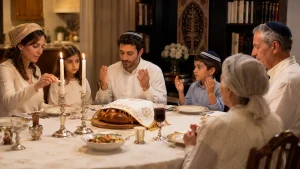
Although traditions vary among Jewish communities, several practices remain central.
Challah
Two loaves of braided challah are placed on the table, symbolising the double portion of manna provided to the Israelites before Shabbat during their journey through the wilderness.
Rest from Work
One defining characteristic of Shabbat is refraining from activities traditionally classified as work under Jewish law. The focus shifts from productivity to worship, family, study, and rest.
Family Time
Without the usual pace of work and technology, many families spend uninterrupted time together, enjoying meals, conversations, and shared traditions.
Torah Study
Reading and discussing the weekly Torah portion helps connect families with Jewish teachings and encourages lifelong learning.
Shabbat Facts and Misconceptions
Understanding the key facts about Shabbat, along with addressing common misconceptions, helps provide a clearer and more accurate picture of this important Jewish observance.
Confirmed Facts About Shabbat
The following are well-established aspects of Shabbat observance:
Confirmed Fact Explanation
Shabbat begins before sunset on Friday Observed according to Jewish law and local sunset times
Candle lighting traditionally occurs 18 minutes before sunset Widely followed custom in many communities
Shabbat ends after nightfall on Saturday Marked by the Havdalah ceremony
Weekly Torah portions follow an annual reading cycle Read in synagogues worldwide
Shabbat is one of Judaism's most significant observances Rooted in the Torah and Jewish tradition
Common Misconceptions About Shabbat
Misconception Clarification
Shabbat always starts at the same time every Friday False. Times change weekly according to sunset.
Every Jewish community follows identical Havdalah times Slight calculation differences may exist.
Shabbat is simply a weekend holiday It is a religious observance centred on worship, rest, and spiritual renewal.
Candle lighting is optional for all traditions Customs vary, but candle lighting remains a widely observed practice.
Understanding these misconceptions helps provide a clearer and more accurate picture of how Shabbat is observed in London and beyond.
Practical Example: Preparing for Shabbat in a London Household
Imagine a North London family preparing for Shabbat in early July.
On Friday, they check candle-lighting times, prepare the table, and welcome Shabbat with blessings before attending synagogue. They then enjoy a festive meal together without distractions.
On Saturday, they attend synagogue, share meals, and spend time resting or studying. After nightfall, they mark the end of Shabbat with Havdalah.
This shows how accurate Shabbat times help with proper preparation and observance.
Where Can Readers Find Updated Shabbat Times for London?

Reliable Shabbat times should always be checked using trusted Jewish calendars because they are calculated according to the date and geographic location.
When reviewing weekly timings, readers should look for:
- Candle-lighting time.
- Havdalah time.
- Hebrew date.
- Weekly Torah portion.
- Any adjustments for British Summer Time (BST) or Greenwich Mean Time (GMT).
Checking an updated calendar each week helps ensure accurate observance throughout the year.
Conclusion
Knowing the correct Shabbat Times London is essential for anyone wishing to observe Shabbat in accordance with Jewish tradition. Since candle-lighting and Havdalah depend on local sunset and nightfall, the timings naturally change throughout the year.
Beyond the timetable itself, Shabbat remains a cornerstone of Jewish life, bringing together faith, family, community, prayer, and rest. Whether someone is new to Jewish traditions or has observed Shabbat for many years, understanding the weekly schedule alongside its deeper meaning helps enrich the experience.
For the most accurate information, readers should consult an up-to-date London Shabbat calendar before every Friday evening.
FAQs About Shabbat Times London
Why do Shabbat times differ throughout the year?
Shabbat times depend on the changing times of sunset and nightfall, which vary with the seasons.
Does every area of London have exactly the same Shabbat time?
Most areas are very similar, although slight differences may occur depending on location and the calculation method used.
Why is candle lighting usually scheduled 18 minutes before sunset?
This long-established custom provides time to welcome Shabbat before sunset, when the day of rest officially begins.
What is Havdalah?
Havdalah is the ceremony that marks the conclusion of Shabbat using wine, fragrant spices, and a braided candle.
Why is the weekly Torah portion included with Shabbat times?
Each Shabbat has a designated Torah reading that is followed by Jewish communities throughout the annual reading cycle.
How often should Shabbat times be checked?
They should be checked every week because sunset and nightfall change throughout the year.
Are online Shabbat calendars reliable?
Yes, provided they come from recognised Jewish organisations and are configured for the correct location.