

For local businesses, visibility isn’t really about advertising in the traditional sense. It’s about being genuinely present in the neighbourhood.
Showing up to things, getting involved, becoming part of the texture of local life in a way that people actually notice and remember. That kind of presence is harder to manufacture than a Facebook ad, but it tends to stick in a way that paid visibility rarely does.
Community engagement has always been part of how smaller businesses survive and grow, but it’s worth thinking more carefully about what it actually involves and why it works.
Because it’s not just about getting your name out there. It’s about building the kind of familiarity that makes people feel like they already know you before they’ve even walked through your door.
Getting involved locally creates real touchpoints that people carry with them.
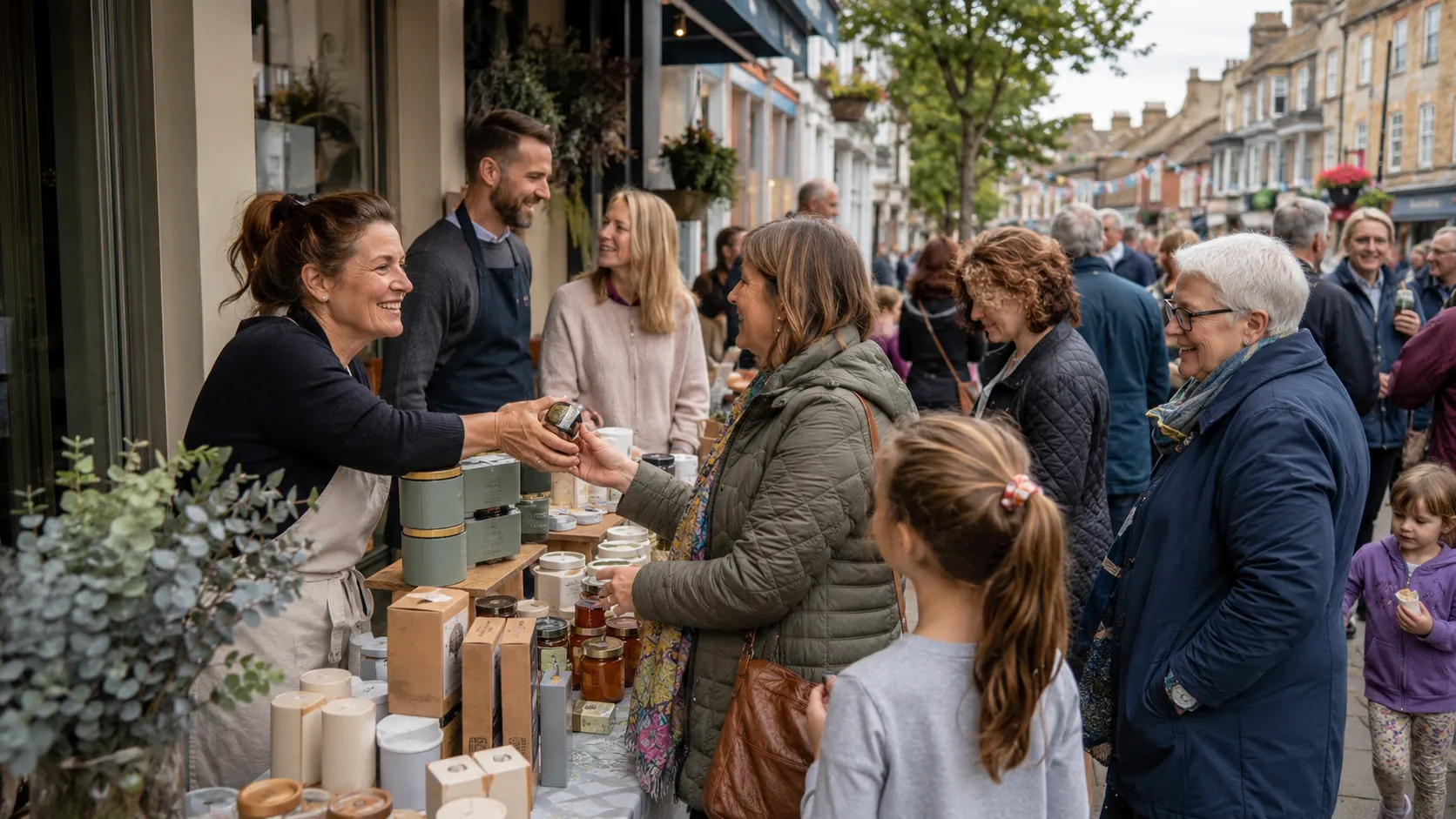
Hosting a stall at a weekend market, helping out with a charity initiative, turning up to a school fair with your team wearing blank hoodies you’ve had printed up for the occasion. None of that is flashy, but it all contributes to a recognisable presence that accumulates over time.
Why Does Community Engagement Improve Local Brand Visibility?

Being Present Doesn’t Mean Being Loud
There’s a temptation when thinking about visibility to equate it with scale. Bigger banners, louder messages, more frequent appearances.
But for local businesses, that’s usually the wrong instinct. What tends to work better is consistency rather than intensity.
A business that turns up regularly to local events, supports community projects and participates in the rhythms of neighbourhood life gradually becomes part of the environment people are used to.
They stop registering it as something new and start thinking of it as something that’s just there, which is actually exactly where you want to be.
That kind of quiet familiarity is harder to build than a viral moment, but it’s also much harder to dislodge. It doesn’t depend on an algorithm or a campaign window. It just requires showing up, repeatedly, in ways that feel genuine.
Real Interactions Do Things That Digital Marketing Can’t

One of the things community engagement offers that most other forms of visibility don’t is direct human contact. Actual conversations, shared experiences, the kind of interaction that gives a business a face and a personality rather than just a name.
People remember businesses they’ve talked to, laughed with, or been helped by in a real-world context in a fundamentally different way to businesses they’ve simply seen advertised.
There’s a texture to those memories that digital impressions rarely produce. Someone who chatted with a member of your team at a local fundraiser is in a very different mental position to someone who once scrolled past your sponsored post.
This is worth taking seriously when thinking about where to invest time and energy. Not everything that matters can be tracked in analytics.
Authenticity is the Part You Can’t Fake
The challenge with community engagement is that people are pretty good at sensing when it’s genuine and when it isn’t. If a business shows up to a local event purely as a branding exercise, that tends to come across.
The conversations feel transactional, the involvement feels performative, and people walk away with a vaguely hollow impression rather than a warm one.
What works is participation that actually aligns with what the business cares about.
Supporting causes that genuinely matter to the people running the business, getting involved with projects that make sense given what they do, contributing in ways that feel like a natural extension of who they are rather than a calculated PR move.
Over time, that kind of authentic involvement becomes part of how a business is understood in its community. It’s not just recognised, it’s associated with something.
A feeling, a set of values, a sense of the kind of people behind it. That’s a much stronger foundation than recognition alone.
Shared Experiences Are What People Actually Remember
Local events and community projects do something that most marketing can’t, which is give people a shared memory to attach to a business.
When you’re part of something that people enjoyed, laughed at, felt proud of or contributed to together, you become part of that story. Not as an advertiser, but as a participant.
Those associations tend to be durable. People don’t think “I saw their logo at that event.” They think “they were part of that day.”
That’s a different relationship entirely, and it’s one that tends to keep people coming back.
It’s also one that spreads naturally. People talk about shared experiences. They mention the businesses that were involved, the ones that made things better, the ones that felt like a genuine part of the occasion rather than a sponsor’s banner in the corner.
Recognition Built This Way Takes Time, but It Compounds
None of this produces overnight results, and it would be misleading to suggest otherwise. Community engagement is a long game.
Each event, each conversation, each moment of genuine involvement adds a small layer to how a business is perceived locally.
Individually, none of those layers feel significant. Together, over months and years, they build into something that’s genuinely hard to replicate through any other means.
Businesses that stick with this approach often find that at some point, local recognition starts to feel organic in a way that’s quite different to anything driven by advertising.
People recommend them without being prompted. New customers arrive already feeling familiar with the business before any transaction has taken place. The community starts to think of them as part of the neighbourhood rather than just a business operating within it.
That’s the real prize here. Not visibility in the conventional sense, but belonging. And belonging is something you can only really earn by showing up.