
The new Home Office passport rules mean that from 25 February 2026, dual British citizens can no longer travel to the UK using only a foreign passport. If you are a British citizen and also hold another nationality, you are now expected to travel with either a valid British passport or a digital Certificate of Entitlement linked to your foreign passport.
These changes are linked to the UK’s new digital border system and the introduction of the Electronic Travel Authorisation (ETA).
Key points to know:
- British and Irish citizens do not need an ETA
- Dual British citizens must use a British passport or Certificate of Entitlement
- Airlines can refuse boarding before you even leave
- Some expired British passports may still be accepted temporarily
- British-Irish dual citizens are treated differently from other dual nationals
- If you travel often, check your documents well before your next trip
The changes are already affecting travellers across the UK and abroad.
Why Has the UK Introduced These New Passport and ETA Rules?

The UK says these changes are designed to create a faster, more secure and more digital border system. Instead of checking people only after they arrive, transport companies are now expected to confirm in advance that every passenger has the correct permission to travel.
The new system is linked to the Electronic Travel Authorisation, known as an ETA. Visitors from visa-free countries must now receive digital approval before travelling to the UK. British citizens are exempt, but the system still needs a way to identify them correctly.
According to the Home Office, the new rules help:
- Improve border security by checking travellers before departure
- Stop people travelling without the correct permission
- Reduce delays at airports and passport control
- Prevent carriers from being fined for bringing passengers without valid documents
- Create a system similar to those already used in the United States, Australia and Canada
The government has argued that dual citizens should not use an ETA because British citizens already have the right to enter the UK. Instead, they must show proof of that right through a British passport or Certificate of Entitlement.
As one Home Office statement explained,
“We have been clear on requirements for dual British citizens to travel with a valid British passport or Certificate of Entitlement.” The government also says this advice has been available since October 2024.
Who Is Affected by the New Home Office Passport Rules?

The new rules do not affect every traveller in the same way. Some people will notice almost no change, while others may need to renew documents urgently before they travel.
The people most affected are British citizens who also hold another nationality and normally travel using their non-British passport.
Why Are Dual British Nationals the Most Affected Group?
If you have both British citizenship and another nationality, you are now expected to prove your British citizenship before boarding a flight, ferry or train to the UK.
This especially affects people who:
- Live abroad and have not renewed their British passport for years
- Normally travel on an EU, Australian, Canadian or New Zealand passport
- Became British citizens recently but have not yet received a British passport
- Have children with dual nationality who have never applied for a British passport
Many travellers say they only discovered the change shortly before travel.
“Whilst they sort out the chaos, the government should allow a grace period. Many dual nationals are in heartbreaking circumstances, unable to visit ill family members or attend weddings and funerals.”
That criticism came from immigration spokesperson Will Forster after families reported being unable to travel because they did not have the right documents in time.
Some dual citizens are also affected because their names differ between passports due to marriage, spelling differences or different naming systems in another country.
Which Travellers Are Exempt From the New Rules?
Not everyone needs to worry about these changes. Several groups are fully exempt.
You are generally not affected if:
- You only hold British citizenship and already travel with a valid British passport
- You only hold a foreign nationality and have an ETA or visa
- You are an Irish citizen travelling under the Common Travel Area
- You are legally resident in Ireland and travelling within the Common Travel Area with proof of residence
British and Irish citizens do not need an ETA under any circumstances. However, British citizens still need to prove they are British by carrying the correct passport or document.
How Are British-Irish Dual Citizens Treated Differently?
British-Irish dual citizens are one of the few groups not heavily affected by the new Home Office passport rules.
If you hold both British and Irish citizenship, you can still travel to the UK using either:
- A valid British passport
- A valid Irish passport
You do not need an ETA, a British passport or a Certificate of Entitlement if you are travelling on your Irish passport. This is because British and Irish citizens benefit from the long-standing Common Travel Area between the UK and Ireland.
“British and Irish citizens, including dual citizens, are exempt from needing an ETA.”
The government has repeated this point several times because many travellers wrongly assumed all dual citizens were being treated the same way. British-Irish dual nationals remain in a separate category.
Do Dual British Citizens Now Need a British Passport to Enter the UK?
In most cases, yes. If you are a dual British citizen, the safest and simplest option is to travel with a valid British passport.
The Home Office now expects dual citizens to prove their right to enter the UK before boarding. A foreign passport on its own is no longer enough, even if you have used it successfully for many years.
There is no new law saying you must legally hold a British passport. However, without one, airlines may not let you travel unless you have a Certificate of Entitlement linked to your second passport.
The government has also made clear that dual citizens cannot apply for an ETA instead. British citizenship already gives you the right to enter the UK, so the system requires proof of citizenship rather than visitor permission.
For most people, renewing a British passport is likely to be cheaper, easier and quicker than relying on alternative documents.
What Is an Electronic Travel Authorisation (ETA) and Who Needs One?
An ETA is a digital permission that allows eligible visitors to travel to the UK. It is not a visa and does not guarantee entry, but without one, many travellers cannot board transport to the UK.
The ETA applies mainly to people visiting the UK for up to six months from countries that do not normally require a visa.
You usually need an ETA if you:
- Are travelling from a visa-free country such as the United States, Australia, Canada or an EU member state
- Are visiting the UK for tourism, business or family visits
- Do not already have a UK visa, eVisa or immigration status
The ETA currently costs £20 and is usually valid for:
- Multiple trips
- Up to two years
- Or until your passport expires
Most people receive a decision within minutes using the official UK ETA app, although the government recommends applying at least three working days before travel.
British and Irish citizens do not need an ETA. Dual British citizens are also exempt, but only if they can prove their British status with the correct documents.
What Documents Can Dual British Citizens Use Instead of an ETA?
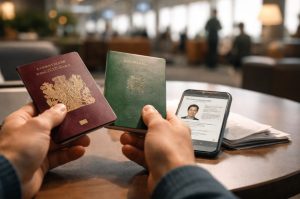
If you are a British dual citizen, you cannot use an ETA instead of proving your British citizenship. The Home Office says you must travel with evidence that shows your right to enter the UK. The main alternatives are a British passport or a Certificate of Entitlement.
What Is a Certificate of Entitlement to the Right of Abode?
A Certificate of Entitlement proves that you have the right to live in the UK because you are a British citizen. The certificate is linked digitally to your foreign passport and allows airlines to confirm that you are permitted to travel.
You may want to apply for one if:
- You do not currently hold a British passport
- You live abroad and usually travel on another passport
- You cannot renew your British passport before your trip
Important facts about the certificate include:
- It currently costs £589
- It is now issued digitally rather than as a passport sticker
- It does not expire when your passport expires
- When you renew your foreign passport, you simply update your UKVI account
The certificate can only be used if the details on your foreign passport match the details held by the Home Office.
“The safest option is to remain holding and travelling on a valid British passport where British citizenship is relied upon.”
That advice reflects growing concern that relying on airline discretion or older travel habits is no longer enough.
When Can an Expired British Passport Still Be Accepted?
The Home Office has introduced a temporary concession for some dual citizens who do not yet have a valid British passport.
Airlines may allow you to travel if you have:
- An expired British passport issued in 1989 or later
- A valid foreign passport from a country that would normally qualify for an ETA
- Matching personal details on both documents
However, this is only temporary and completely depends on the airline or carrier. Some airlines may accept the documents, while others may refuse boarding. The Home Office says this flexibility should not be treated as a permanent solution.
If you already know you will travel later this year, you should not rely on an expired passport alone. Renewing your British passport or applying for a Certificate of Entitlement is much safer.
What Happens If You Try to Travel Without the Correct Documents?
If you arrive at the airport, ferry terminal or rail station without the correct documents, the biggest risk is that you may never be allowed to board.
Transport companies must now carry out automated checks before departure. If your passport does not show that you have permission to travel, the carrier may refuse to let you continue.
This means you could:
- Miss your flight or train
- Need to pay for new travel arrangements
- Face delays while trying to prove your citizenship
- Have to apply urgently for a passport, certificate or emergency travel document
The Home Office has said Border Force officers will take a “compassionate and pragmatic approach” if you still reach the UK with the wrong paperwork. However, that reassurance does not help if the airline refuses you before you travel.
How Do the New Rules Affect EU Citizens With British Dual Nationality?
EU citizens who also hold British nationality are among the people most affected by the new Home Office passport rules.
Before 2026, many British-EU dual citizens could travel to the UK using only their EU passport. This was especially common after Brexit, when many people living abroad stopped renewing their British passport.
That option has largely ended. If you are both British and a citizen of an EU country, you are now usually expected to travel with:
- A valid British passport
- Or a Certificate of Entitlement linked to your EU passport
There is one important exception. If you gained British citizenship after living in the UK under the EU Settlement Scheme, you may still be able to travel using your EU passport or national identity card, provided it is linked correctly to your UKVI account.
What Should You Do Before Travelling to the UK Under the New Rules?

The new Home Office passport rules can feel confusing, especially if you have travelled to the UK the same way for years. The best approach is to prepare early and check your documents before you book or travel.
How Can You Check Whether Your British Passport Is Still Valid?
Start by checking the expiry date on your British passport. If it has already expired, or will expire soon, renew it as early as possible.
You should also check:
- Whether the name on your British passport matches your foreign passport
- Whether your passport is damaged or difficult to read
- Whether you still have access to an older British passport if you need temporary proof
Passport fees are increasing in 2026, and applications from overseas may take several weeks.
When Should You Apply for a Certificate of Entitlement?
You should consider a Certificate of Entitlement if you do not have time to renew your British passport or if you normally travel only on your foreign passport.
The certificate may be useful if:
- You live permanently abroad
- You travel regularly between two countries
- You no longer want to keep renewing a British passport
Remember that you cannot normally hold both a valid British passport and a Certificate of Entitlement at the same time.
How Far in Advance Should You Prepare Before Travel?
Do not leave these checks until a few days before your journey.
Ideally, you should prepare:
- At least one month before travel if you need a passport renewal
- Several weeks before travel if you need a Certificate of Entitlement
- At least three working days before travel if you need an ETA for non-British family members
One traveller recently told reporters she had been denied boarding even though she carried a birth certificate, driving licence and other documents.
“I thought my Spanish passport would still be enough because it always had been. I had no idea the rules had changed until I was stopped at the airport.”
Stories like this show why it is important to check the new rules before every trip.
What Should Employers and Business Travellers Know About the New Rules?
Businesses should not assume employees can still travel to the UK using the same documents as before. If you employ staff with dual nationality, their travel plans could now be disrupted without warning.
For business travellers, being refused boarding can mean:
- Missed meetings or events
- Delayed projects
- Additional travel costs
- Disruption to important business operations
Employers may want to review their travel policies and ask staff to check whether they hold a valid British passport before arranging UK travel.
For internationally mobile teams, passport checks are now part of travel planning in the same way as visas or work permits. Organisations that ignore these changes risk last-minute disruption.
What Happens if You Need to Travel to the UK in an Emergency?

If you urgently need to return to the UK and do not have a valid British passport, you may be able to apply for an emergency travel document. This option is available if you have previously held a British passport and cannot renew it in time.
Emergency travel documents are usually used for situations such as:
- A serious family illness
- A funeral
- An urgent work requirement
- Unexpected travel because of a crisis
However, they are not guaranteed. You may need to prove your identity and your previous British citizenship before the document is issued.
The Home Office says people in genuine emergencies should contact the nearest British embassy or consulate as soon as possible.
What Misinformation About the New Home Office Passport Rules Should You Ignore?
A lot of confusion has spread online since the new rules were introduced. Some advice circulating on social media is incorrect and could leave you unable to travel.
The most common myths include:
- “Dual British citizens can just apply for an ETA instead.”
This is incorrect. British citizens cannot use an ETA as proof of their right to enter the UK. - “A foreign passport is still enough if you have used it before.”
That may have been true before February 2026, but it is no longer reliable. - “All dual nationals are treated the same.”
British-Irish dual citizens and some people with EU Settlement Scheme status are treated differently. - “An expired British passport is always accepted.”
It is only a temporary measure and depends entirely on the airline.
The Home Office has repeatedly said the safest option is a valid British passport or Certificate of Entitlement. Anything else should be treated as a temporary fallback, not a permanent answer.
What Are the Key Facts UK Travellers Should Remember Before Their Next Trip?
The new Home Office passport rules are now part of travelling to the UK, especially if you hold dual nationality.
Before you travel, remember these essential points:
- Dual British citizens usually need a valid British passport
- A Certificate of Entitlement can be used if you do not have one
- British and Irish citizens do not need an ETA
- Airlines can refuse boarding before you reach the UK border
- Expired British passports may only be accepted temporarily
- EU Settlement Scheme holders may have different rules
- Emergency travel documents are available in urgent cases
The biggest change is that proof of British citizenship now matters before you travel, not after you arrive. If you prepare early and carry the correct documents, you should avoid most problems and travel with confidence.
Conclusion
The Home Office new passport rules mark a major change in how dual British citizens travel to the UK. While the government says the new digital system will make border checks faster and more secure, many travellers are still adjusting to the new requirements.
If you hold both British citizenship and another nationality, the safest approach is simple: travel with a valid British passport whenever possible. If that is not realistic, apply for a Certificate of Entitlement well before your journey.
The most important thing is not to rely on old travel habits. Rules that worked in previous years may no longer apply in 2026. By checking your documents early, understanding whether you need an ETA or proof of British citizenship, and preparing before you travel, you can avoid unnecessary stress, delays and refused boarding.
FAQs
Can you travel to the UK with a foreign passport if you are a British citizen?
No, most dual British citizens can no longer travel to the UK using only a foreign passport. You usually need either a valid British passport or a Certificate of Entitlement linked to your foreign passport.
Do British-Irish dual citizens need a British passport to enter the UK?
No, British-Irish dual citizens can still enter the UK using either a British passport or an Irish passport. They are exempt because of the Common Travel Area between the UK and Ireland.
How much does an ETA cost in 2026?
The UK ETA currently costs £20 per application. It normally remains valid for two years or until the passport used in the application expires.
Can you apply for an ETA if you already have British citizenship?
No, British citizens are not eligible to apply for an ETA. The Home Office expects British citizens to prove their right to enter the UK with a British passport or Certificate of Entitlement instead.
What happens if your British passport has expired before your trip?
You should renew your British passport before you travel if possible. Some airlines may temporarily accept an expired British passport issued in 1989 or later, but this is not guaranteed.
How long does it take to get a British passport renewed from overseas?
Passport renewals from outside the UK can take several weeks, depending on where you apply from. It is best to begin the renewal process at least one month before your planned travel date.
Can airlines refuse boarding even if you are a British citizen?
Yes, airlines can refuse boarding if you do not have the documents needed to prove your British citizenship before departure. This is because transport companies must now complete digital permission checks before allowing passengers to travel.