

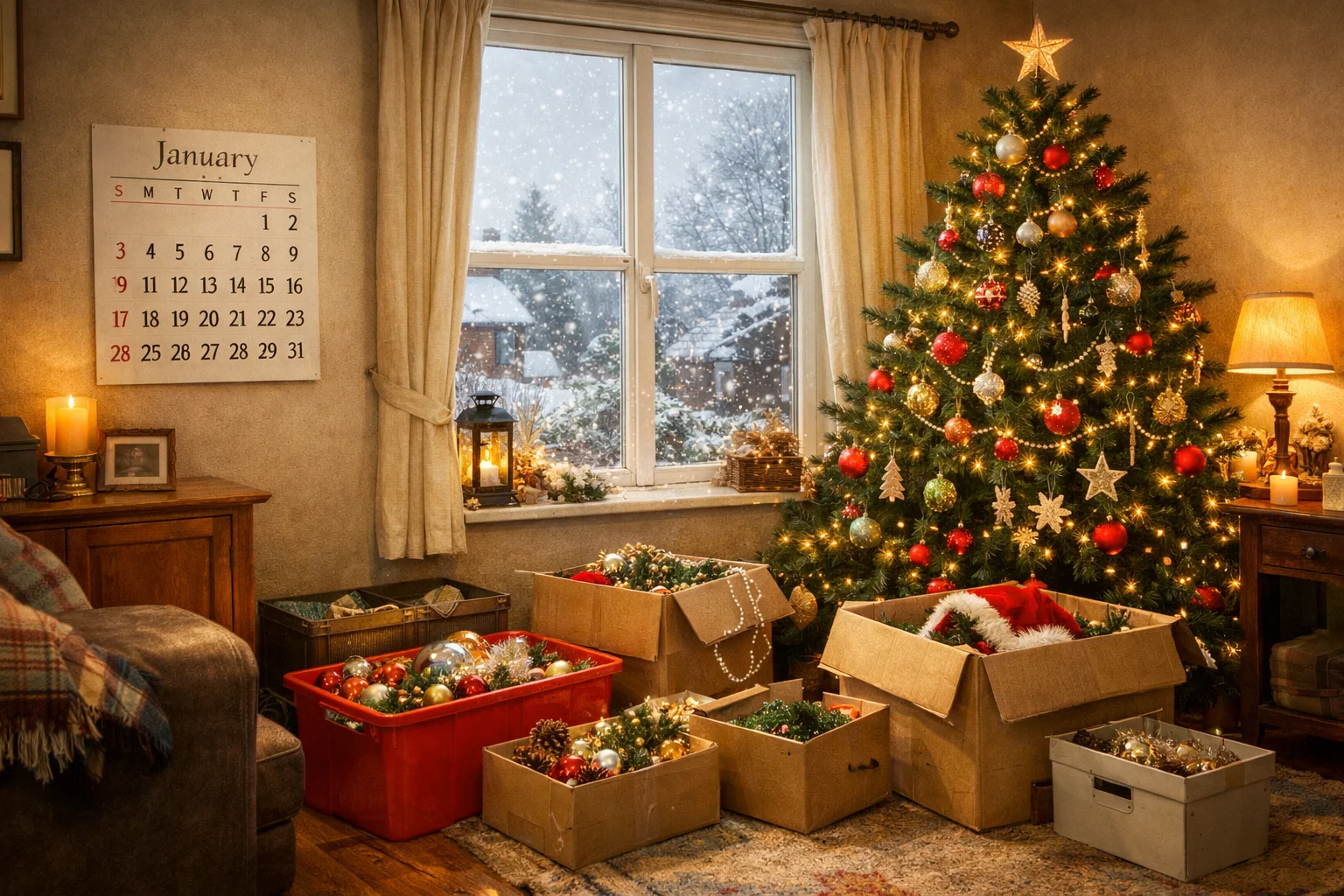
Still Wondering When to Take Down Your Christmas Tree? Traditionally, the most common answer is that you should take down your Christmas tree on Twelfth Night, which is either 5th or 6th January, depending on how you count the 12 Days of Christmas.
This date marks the official end of the festive season in many Christian traditions. However, there’s more flexibility than you might think, with some UK households removing trees on New Year’s Eve, Epiphany, or even keeping them up until Candlemas on 2nd February.
Key Takeaways:
- Twelfth Night (5th or 6th Jan) is the most widely recognised traditional date.
- Some observe Epiphany or Candlemas based on religious or historical traditions.
- Modern reasons include fire safety, recycling collections, and personal wellbeing.
- There’s no fixed rule – it depends on your beliefs, preference,s and lifestyle.
What Is Twelfth Night — And Why Is It So Important?
Twelfth Night is one of the most talked-about dates when it comes to taking down your Christmas tree in the UK. It’s rooted in Christian tradition and signifies the final evening of the Twelve Days of Christmas, which start on 25th December.
That places Twelfth Night on 5th January, according to most traditional calendars, while others observe it on the 6th. The confusion arises because some start counting from Boxing Day instead of Christmas Day.
The Church of England typically observes Twelfth Night on 5th January, the evening before Epiphany, and this is when they advise people to take down their festive decorations. This night symbolises the end of Christmas celebrations and prepares believers for the next significant feast in the Christian calendar.
Many believe leaving decorations up beyond Twelfth Night brings bad luck, a belief still common in many UK households. Whether or not you hold to that superstition, it has remained a firm tradition passed down through generations, helping to preserve a sense of structure to the festive calendar.
For most UK families following Christian customs, Twelfth Night remains the most widely accepted time to bid farewell to the tree, wreaths, and fairy lights.
How Does Epiphany Factor In? Is It the Same as Twelfth Night?
Epiphany and Twelfth Night are closely linked but are not the same, though many people use the terms interchangeably.
Epiphany is celebrated on 6th January, the day after Twelfth Night, and commemorates the arrival of the Three Wise Men (Magi) in Bethlehem to visit the baby Jesus. It’s one of the oldest Christian feasts and is still observed in churches across the UK.
In some traditions, particularly in parts of Europe and even among some UK Christians, Epiphany itself is considered the Twelfth Day, making 6th January Twelfth Night. This difference in interpretation is one of the reasons why there’s such widespread confusion over when to take decorations down.
Here’s a brief comparison of both dates to help you decide:
| Date | Significance | What It Represents |
|---|---|---|
| 5th January | Twelfth Night (most UK traditions) | End of the 12 Days of Christmas |
| 6th January | Epiphany (Feast of the Magi) | Arrival of the Three Kings |
Whether you follow one or the other, both dates symbolically close the Christmas season. If you’re following the Church of England’s calendar, Twelfth Night is on the 5th, but if you count the 12 days starting on Christmas Day, Epiphany on the 6th becomes the final day.
So, the choice really comes down to which tradition resonates with you and your household. There’s no wrong answer, just different interpretations.
Can You Keep Decorations Up Until Candlemas on 2nd February?
Yes, you can absolutely keep your decorations up until Candlemas, especially if you prefer following older traditions. Candlemas falls on 2nd February, which is exactly 40 days after Christmas Day, and in medieval England, it was widely regarded as the official end of the Christmas season.
The feast day, also known as the Feast of the Purification of the Virgin Mary, has long-standing significance in both Roman Catholic and Anglican traditions. On this day, candles for the year ahead were blessed in churches to symbolise light returning to the world after the winter darkness. There were even candlelit processions held in honour of the day.
Historical records and poems, such as Robert Herrick’s “Ceremony Upon Candlemas Eve, mention taking down decorations like holly, ivy, and rosemary on this date. It was believed that failing to do so might lead to goblin-related mischief, a superstition rooted in folklore.
Here’s how Candlemas compares to other dates:
| Date | Name | Tradition |
|---|---|---|
| 2nd February | Candlemas | End of Christmas in medieval and some modern traditions |
Today, some churches still leave their nativity scenes and cribs in place until Candlemas, maintaining the full 40-day cycle. While it’s not as common in modern homes, some people now choose to extend the festive feeling through January and into February as a way to bring light and cheer to the darkest part of winter.
New Year’s Eve: A Modern Cut-Off for a Clean Start
New Year’s Eve has become a popular modern-day alternative to taking down the Christmas tree, especially among those who prefer to start the new year with a clean and tidy home.
For these households, removing decorations on 31st December, before the clock strikes midnight, is believed to bring good fortune and set the tone for an organised and productive year.
While this date doesn’t have a strong religious or historical connection, it makes sense for many people juggling the post-Christmas slump and New Year resolutions. Psychologically, it offers closure to the festive season, marking a clear break between the holidays and the start of January routines.
In superstitious circles, it’s also considered bad luck to let the old year end while your festive decorations are still up, suggesting that lingering tinsel and baubles might carry last year’s energy into the new one.
For those embracing minimalism or craving routine, New Year’s Eve presents a practical and symbolic opportunity to reset the space and mind alike.
Practical Reasons You Might Take Down Your Tree Sooner
Not every decision about taking down the Christmas tree is rooted in tradition. Many UK households opt to pack away the festivities early for practical reasons, particularly when dealing with real trees, clutter, or council schedules. Some even begin as early as Boxing Day, especially if preparing for New Year’s Eve gatherings.
One of the top concerns is fire safety. Real trees, especially those that have been up since late November or early December, can dry out and become flammable hazards. The National Fire Chiefs Council recommends removing dried-out trees as soon as possible to reduce fire risk.
Another reason is local recycling collection dates. Councils typically offer tree recycling services through kerbside pickups or drop-off points, often scheduled between late December and mid-January. Missing those dates can be inconvenient.
Here’s a look at why you might want to remove the tree earlier:
| Reason | Explanation |
|---|---|
| Fire Hazard | Dry trees increase risk of household fires |
| Recycling | Align with council collection schedules |
| Hosting Events | Clear space before New Year's Eve parties |
| Clean Slate | Early takedown helps transition into January routines |
Removing decorations early doesn’t mean skipping the festive spirit, it simply reflects a lifestyle choice that prioritises safety, convenience, or mental clarity.
Why Some People Keep Decorations Up Longer?
There’s a growing trend in the UK to keep Christmas decorations up longer, and it’s not just because of tradition. Many people find that decorations bring comfort, light, and joy, especially during the dark and dreary weeks of January.
This concept, referred to by experts as “joy drenching,” encourages extending the positive emotional effects of holiday decor well into the new year. According to data from Furn interiors, 37% of Brits experience a dip in mood after taking down their festive setup. As a response, many choose to keep fairy lights, candles, or garlands that add warmth and familiarity.
Interior designers even recommend repurposing festive decor. For example, turning a Christmas garland into a winter-themed arrangement or keeping fairy lights as ambient lighting throughout January.
This approach doesn’t require strict adherence to tradition – it supports mental wellbeing and embraces flexibility, allowing you to slowly transition from the festive season into a cosy winter atmosphere at your own pace.
Does Taking Down the Tree Late Really Bring Bad Luck?
The belief that it’s bad luck to leave your tree up too long stems from long-standing superstitions rather than proven rules. Historically, Twelfth Night marked the cut-off, and many people still remove their tree by then to avoid tempting fate.
This superstition evolved over time. In medieval England, it was believed that if greenery like holly or ivy remained after Candlemas Eve, goblins might take up residence in the home. These were playful myths used to encourage timely tidying, but they’ve stuck around.
Today, some households follow the superstition quite seriously, while others view it as a charming piece of folklore. For those who are spiritually inclined, it serves as a symbolic act of closure, letting go of the old to welcome the new.
Even though there’s no evidence that your luck hinges on your Christmas tree, the idea adds a bit of magic and mystery to the season. If you enjoy following old customs, removing your decorations on Twelfth Night may bring peace of mind.
Which Date Should You Choose?
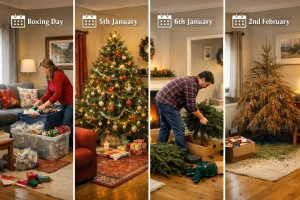
With all the various traditions, beliefs, and practicalities in mind, it can still be tough to decide on the perfect date to take your Christmas tree down. Luckily, there’s no single right answer, it’s about what aligns with your values, lifestyle, and schedule.
Some households want to honour religious traditions, others prioritise safety or mental wellbeing.
Here’s a summary to help you decide:
| Preference | Recommended Date | Reasoning |
|---|---|---|
| Traditional | 5th or 6th January | Aligns with Twelfth Night or Epiphany traditions |
| Historical | 2nd February | Follow medieval Candlemas customs |
| Superstitious | Before 6th January | Avoid bad luck and goblin myths |
| Minimalist | 31st December | Clear the space before New Year begins |
| Practical | Based on council collections | Recycle tree responsibly |
| Emotional | Whenever it feels right | Keep festive mood going for longer |
What matters most is that the date feels meaningful or useful to you. Whether it’s based on faith, folklore or functionality, your choice is valid.
It’s Your Tree, Your Tradition
By now, it’s clear that there’s no universal rule for when to take down your Christmas tree in the UK. While Twelfth Night remains the go-to for many, others lean toward Epiphany, New Year’s Eve, or even Candlemas for deeply personal or cultural reasons.
What all these dates have in common is their connection to ritual and renewal. Whether you’re drawn to superstition, history, modern trends or practical schedules, the act of taking down your tree symbolises the close of one chapter and the beginning of another.
Ultimately, this decision belongs to you. Your home, your mood, and your routine are unique. Let tradition inspire you, but don’t be afraid to follow your instincts too.
Conclusion
Deciding how many days after Christmas to take down your tree doesn’t need to be stressful. Whether you follow Twelfth Night tradition, celebrate Epiphany, hold out until Candlemas, or prefer an early takedown for safety and convenience, the key is to choose a time that works best for your household.
While customs and superstitions offer guidance, your personal needs and wellbeing should come first. Embrace the tradition, respect the history, and most importantly, enjoy your festive season your way.
FAQs
Is it unlucky to take the Christmas tree down before January 5th?
Not necessarily. While some traditions prefer waiting until Twelfth Night, there’s no real evidence that taking it down earlier brings bad luck.
Can I keep my tree up after Epiphany?
Yes, especially if you’re following Candlemas tradition or just want to keep your home feeling cosy and festive longer.
Why do people say it’s bad luck to leave the tree up too long?
This belief comes from old superstitions about goblins and spirits lingering after Candlemas. It’s not based on fact, but on folklore.
What is Candlemas, and do people still celebrate it in the UK?
Candlemas is a Christian feast on 2nd February, marking the end of the Christmas season. Some churches still observe it and keep decorations up until then.
What should I do with my real Christmas tree?
Recycle it through your local council’s collection or drop-off point. Avoid putting it in the general waste.
Is there a set date to take down rented Christmas trees?
Yes. Tree rental companies usually provide a collection date, so check your agreement and return it on time.
Can I leave up certain decorations year-round?
Absolutely. Lights, garlands, or candles can be repurposed for winter decor and mood lighting beyond the festive season.