


If you are wondering how much tax and National Insurance you will pay, the answer depends mainly on your earnings, Personal Allowance, Income Tax band, tax code, and where you live in the UK.
For the 2026/27 tax year, which runs from 6 April 2026 to 5 April 2027, the standard Personal Allowance is £12,570.
A typical employee in England, Wales or Northern Ireland pays 20% Income Tax on taxable income within the basic-rate band, 40% within the higher-rate band and 45% at the additional rate.
Most employees also pay 8% Class 1 National Insurance on earnings between the main employee thresholds and 2% above the Upper Earnings Limit.
Scotland has different Income Tax bands and rates, although employee National Insurance rates are generally the same across the UK.
For a typical employee in England, Wales or Northern Ireland who receives the standard £12,570 Personal Allowance, the main 2026/27 Income Tax and National Insurance thresholds are:
Annual Earnings Income Tax Employee National Insurance
Up To £12,570 Usually 0% Usually 0%
£12,571 To £50,270 20% On Relevant Taxable Income 8% On Relevant Earnings
£50,271 To £100,000 40% On Relevant Taxable Income 2% On Relevant Earnings
£100,001 To £125,140 40%, With Personal Allowance Taper 2%
Above £125,140 45% On Relevant Taxable Income 2%
These rates do not mean your whole salary is taxed at your highest rate. Each rate applies only to the part of your income or earnings that falls within the relevant band.
National Insurance is calculated separately from Income Tax and is normally worked out for each earnings period, such as weekly or monthly pay.
What Determines How Much Tax and National Insurance You Pay?
Your gross salary is important, but it is not the only factor affecting how much tax and National Insurance you pay.
The main factors include:
- Your Earnings: A higher salary can move part of your taxable income into a higher Income Tax band.
- Your Personal Allowance: Most people can receive £12,570 before paying Income Tax, although this allowance can be reduced.
- Your Tax Code: Your employer uses your tax code to calculate PAYE Income Tax. Changes to your tax code can therefore affect how much is deducted from your salary.
- Where You Live: Scotland uses different Income Tax bands and rates for employment income.
- Your Pay Frequency: National Insurance is generally calculated according to each earnings period rather than solely from annual income.
- Your Bonuses And Overtime: Additional earnings can increase deductions in the pay period in which they are received.
- Your Pension Arrangements: Some pension contribution methods reduce taxable income, while salary sacrifice can also affect National Insurance.
- Your Other Taxable Income: Savings, pensions, rental income and other sources can alter your overall Income Tax position. The way HMRC handles tax on savings interest can also matter where employment is not your only source of taxable income.
- Your Age And Circumstances: Employee National Insurance treatment changes once a person reaches State Pension age.
This is why two people earning the same headline salary can receive different amounts of take-home pay.
How Is Income Tax Calculated on Your Salary?
Income Tax is generally calculated by determining how much taxable income remains after available allowances and then applying the relevant tax rates to each band.
For a straightforward employee using the standard Personal Allowance, the calculation starts with gross taxable income and deducts the available Personal Allowance. Different rates are then applied to the remaining taxable income.
What Is the Personal Allowance for 2026/27?
The standard Personal Allowance for 2026/27 is £12,570.
If your available Personal Allowance is £12,570 and you earn £30,000 from employment, you do not normally pay Income Tax on the first £12,570. The remaining amount is considered when calculating your Income Tax liability.
However, not everyone receives the full allowance. Your tax code, adjusted net income and eligibility for other allowances can change the amount available.
What Are the Income Tax Rates for England, Wales and Northern Ireland?
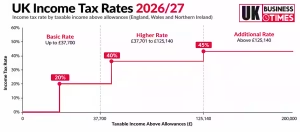
For employment income in England, Wales and Northern Ireland, the principal 2026/27 rates are:
Tax Band Taxable Income Above Allowances Rate
Basic Rate Up To £37,700 20%
Higher Rate £37,701 To £125,140 40%
Additional Rate Above £125,140 45%
For someone receiving the full standard Personal Allowance, this generally means the basic rate applies to salary between £12,571 and £50,270.
Moving into the 40% band does not make your entire salary taxable at 40%. Only the portion falling within that band is taxed at the higher rate.
What Happens If You Earn More Than £100,000?
The Personal Allowance starts to reduce when adjusted net income exceeds £100,000.
It falls by £1 for every £2 of adjusted net income above £100,000. If adjusted net income reaches £125,140, the standard Personal Allowance is reduced to zero.
For example, someone with adjusted net income of £110,000 could lose £5,000 of their Personal Allowance because their income is £10,000 above the £100,000 threshold.
This taper is one reason the question “how much tax will I pay in the UK?” cannot always be answered by simply multiplying salary by the headline tax rate.
How Much National Insurance Will I Pay in 2026/27?
Most employees pay Class 1 National Insurance contributions through payroll.
For 2026/27, the standard employee Primary Threshold is equivalent to £242 a week, £1,048 a month or £12,570 a year. The Upper Earnings Limit is £967 a week, £4,189 a month or £50,270 a year.
When Do You Start Paying National Insurance?
Most employees start paying employee Class 1 National Insurance when their earnings exceed the Primary Threshold for their pay period.
Someone paid monthly therefore has National Insurance calculated using monthly payroll thresholds, while somebody paid weekly is assessed against weekly thresholds.
This differs from simply applying an annual percentage to salary.
What Are the Employee National Insurance Rates?
For most employees in 2026/27:
- 8% applies to earnings between the Primary Threshold and Upper Earnings Limit.
- 2% applies to earnings above the Upper Earnings Limit.
These are employee contribution rates. Employers have separate National Insurance liabilities that are not normally deducted from an employee’s agreed gross salary.
Is National Insurance Calculated Separately From Income Tax?
Yes. Income Tax and National Insurance are separate deductions with different calculation rules.
Income Tax usually considers taxable income, allowances and tax bands. Employee National Insurance is primarily based on earnings in each relevant pay period.
This distinction means a simple annual tax and National Insurance calculator UK estimate may differ slightly from the amounts shown on an actual weekly or monthly payslip.
How Much Tax and National Insurance Will I Pay on My Salary?
The following table gives an annualised estimate of Income Tax, employee National Insurance and take-home pay for common salaries in 2026/27.
The examples assume:
- England, Wales Or Northern Ireland
- Standard £12,570 Personal Allowance
- Standard Employee Class 1 National Insurance
- One Employment
- No Pension Deductions
- No Student Loan Repayments
- No Taxable Benefits
- No Other Taxable Income
Tax, NI and Take-Home Pay by Salary
Gross Salary Income Tax Employee NI Total Tax + NI Take-Home Pay Approx. Monthly Take-Home
£20,000 £1,486.00 £594.40 £2,080.40 £17,919.60 £1,493.30
£30,000 £3,486.00 £1,394.40 £4,880.40 £25,119.60 £2,093.30
£40,000 £5,486.00 £2,194.40 £7,680.40 £32,319.60 £2,693.30
£50,000 £7,486.00 £2,994.40 £10,480.40 £39,519.60 £3,293.30
£60,000 £11,432.00 £3,210.60 £14,642.60 £45,357.40 £3,779.78
£75,000 £17,432.00 £3,510.60 £20,942.60 £54,057.40 £4,504.78
£100,000 £27,432.00 £4,010.60 £31,442.60 £68,557.40 £5,713.12
£125,000 £42,432.00 £4,510.60 £46,942.60 £78,057.40 £6,504.78
Important: These figures are annual estimates rather than an exact payroll calculation.
Actual take-home pay can differ slightly because PAYE and National Insurance use payroll-period calculations and rounding.
Individual tax codes, pensions and other deductions can produce larger differences.
Different types of payments can also receive different tax treatment.
For example, ordinary salary, payment instead of notice and genuine redundancy compensation are not necessarily treated identically.
The rules around tax on redundancy pay illustrate why the type of payment can matter as much as the total received.

How Much Will I Take Home After Tax and National Insurance?
Your take-home pay is the amount left after relevant deductions have been taken from your gross pay.
For many employees, the main deductions are Income Tax and employee National Insurance, but these are not always the only amounts removed.
Gross Pay vs Take-Home Pay
Gross pay is your earnings before payroll deductions.
Take-home pay, sometimes called net pay, is the amount that reaches you after deductions.
For example, using the annualised assumptions above, a £40,000 salary produces estimated Income Tax of £5,486 and employee National Insurance of £2,194.40, leaving approximately £32,319.60 a year, or £2,693.30 a month, before other deductions.
Why Your Actual Payslip May Be Different?
Your payslip might show a different amount because of:
- Pension Contributions: Workplace pension deductions can reduce the amount paid into your bank account.
- Student Loan Repayments: These are separate from Income Tax and National Insurance.
- Salary Sacrifice: A valid salary sacrifice arrangement can reduce contractual cash pay in exchange for benefits such as employer pension contributions.
- Bonuses and Commission: Additional earnings can affect deductions in the relevant pay period.
- Benefits In Kind: A company car, private medical insurance or other taxable benefits can affect your tax position.
- Multiple Jobs: Different tax codes may be applied across separate employments.
- Tax Underpayments: HMRC may alter a tax code to collect tax that was not previously paid.
Under current rules, a successful pension salary sacrifice can reduce the earnings exposed to employee National Insurance because the employee gives up the contractual right to that cash salary in return for an employer pension contribution.
The government has announced a change from April 2029, when only the first £2,000 of employee pension contributions made through salary sacrifice will retain the NI exemption.
Do You Pay Different Tax and National Insurance in Scotland?
Yes for Income Tax, but generally not for standard employee National Insurance.
Scottish taxpayers have separate Income Tax bands for earnings, pensions and certain other non-savings, non-dividend income.
Scottish Income Tax Rates for 2026/27
With the standard Personal Allowance, the Scottish bands for 2026/27 are:
Income Range Scottish Income Tax Rate
£12,571 To £16,537 19%
£16,538 To £29,526 20%
£29,527 To £43,662 21%
£43,663 To £75,000 42%
£75,001 To £125,140 45%
Above £125,140 48%
The Personal Allowance taper can also affect taxpayers with adjusted net income above £100,000.
A Scottish employee can therefore have a different salary after tax from an employee earning the same amount elsewhere in the UK.
Is National Insurance Different in Scotland?
Standard employee National Insurance uses UK-wide contribution rules rather than separate Scottish Income Tax bands.
That means a Scottish employee may face different Income Tax but generally the same standard employee National Insurance rates as an equivalent employee elsewhere in the UK.
What Happens If You Do Not Pay Enough Tax or National Insurance?
For most employees, Income Tax and Class 1 National Insurance are taken automatically through payroll, so employees do not normally make a separate monthly payment to HMRC.
What happens when too little has been paid depends on why the shortfall occurred.
What Happens If Your Employer Deducts Too Little Tax?
If your tax code causes too little Income Tax to be collected, HMRC can calculate the underpayment and may adjust your tax code so that additional tax is collected from later wages or pension income.
Where an end-of-year PAYE calculation shows that you owe less than £3,000 and the relevant conditions are met, HMRC will usually try to collect it through a later tax code.
However, an employer payroll error is a different issue.
HMRC guidance states that when an employer fails to deduct the correct PAYE amount, the employer is normally liable for the under-deduction unless HMRC makes a direction transferring liability in specified circumstances.
Can HMRC Collect Underpaid Tax Through Your Tax Code?
Yes. HMRC can change a PAYE tax code to collect certain underpayments over future pay periods.
This reduces the tax-free amount used by payroll and increases the Income Tax deducted from wages or pension income.
HMRC’s current-year Income Tax service allows taxpayers to check their tax code, estimated employment or pension income and expected Income Tax for the 2026/27 tax year.
What Happens If National Insurance Was Underpaid?
For a normal employment, the employer is generally responsible in the first instance for paying both employer and employee Class 1 National Insurance to HMRC and deducting the employee’s contribution from wages.
HMRC guidance allows an employer to recover some employee NI that was under-deducted because of a good-faith error from later earnings, subject to conditions and limits.
An employee can become directly responsible in more limited circumstances, such as where the failure resulted from the employee’s own act or default and the employer was not negligent.
What Happens If You Owe Tax Through Self Assessment?
Self Assessment is different from ordinary PAYE deductions because the taxpayer may have a direct payment deadline.
If tax remains unpaid, HMRC can charge late-payment interest, and late-payment penalties can also apply.
The penalty system is currently changing. New late-payment and submission rules apply to taxpayers entering Making Tax Digital for Income Tax, including qualifying self-employed people and landlords brought into MTD from 2026/27.
The government has also legislated for the reformed system to extend to other individual Income Tax Self Assessment taxpayers from April 2027.
The key point is that ignoring a tax bill can make it more expensive. Contacting HMRC promptly is important if you cannot pay by the required date.
How Can You Check How Much Tax and National Insurance You Should Pay?
You should compare your own records with current HMRC information rather than relying only on a headline salary calculation.
Check Your Tax Code
Look at the tax code shown on your payslip and compare it with the code HMRC holds for you.
The common 1257L code is associated with the standard Personal Allowance for many employees, but not everyone should have that code.
A different code is not automatically an error. It could reflect taxable benefits, another source of income, an earlier underpayment or another adjustment.
Check Your Payslip
Review the figures shown for:
- Gross Pay
- Taxable Pay
- PAYE Income Tax
- Employee National Insurance
- Pension Contributions
- Student Loan Deductions
- Other Payroll Deductions
- Net Pay
Comparing consecutive payslips can make unexpected changes easier to spot.
Check Your HMRC Personal Tax Account
HMRC’s online current-year Income Tax service can show your tax code, Personal Allowance, estimated income and expected Income Tax.
Keeping employment and pension information up to date is important because inaccurate income estimates can lead to too much or too little PAYE being collected.
Compare Your Deductions With HMRC Guidance
Use the tax year shown on your payslip when comparing thresholds.
For 2026/27, the standard Personal Allowance remains £12,570 and most employees pay Class 1 National Insurance at 8% within the main contribution band and 2% above the Upper Earnings Limit.
People approaching retirement should also consider the interaction between taxable pension income and employment income.
The 2026 State Pension increase has brought the full new State Pension very close to the £12,570 standard Personal Allowance, although individual State Pension entitlement varies.
Conclusion
So, how much tax and National Insurance will you pay? For a typical employee in England, Wales or Northern Ireland in 2026/27, the first £12,570 of income is generally covered by the standard Personal Allowance, basic-rate Income Tax is 20%, higher-rate Income Tax is 40% and the additional rate is 45%.
Most employees pay National Insurance at 8% on earnings within the main Class 1 band and 2% above the Upper Earnings Limit.
Your actual UK salary after tax can still be different because of your tax code, Scottish Income Tax, pension arrangements, bonuses, student loans, other taxable income and the Personal Allowance taper above £100,000.
The salary table above provides a useful estimate, but your payslip and HMRC tax record should be used when checking your individual liability.
Tax rules can also change between tax years, so always make sure you are using figures for the correct period.
Frequently Asked Questions
How Much Tax and National Insurance Will I Pay on £30,000?
Using standard 2026/27 annual assumptions for England, Wales or Northern Ireland, estimated Income Tax is £3,486 and employee NI is £1,394.40, leaving about £25,119.60 before other deductions.
How Much Tax and National Insurance Will I Pay on £50,000?
A £50,000 salary produces estimated Income Tax of £7,486 and employee NI of £2,994.40 under the standard assumptions used in this guide, leaving around £39,519.60.
What Determines How Much Income Tax I Pay?
Your taxable income, available Personal Allowance, tax band, tax code, other taxable income and whether Scottish Income Tax applies can all affect the final amount.
At What Salary Do I Start Paying National Insurance?
For most employees in 2026/27, Class 1 employee NI starts when earnings exceed the relevant Primary Threshold, equivalent to £242 a week or £1,048 a month.
What Happens If I Do Not Pay Enough Tax?
HMRC may adjust your tax code, issue a calculation or require direct payment depending on the reason and amount of the underpayment.
Can I Be Penalised for Paying Tax Late?
Yes, interest and potentially late-payment penalties can apply to tax that you are personally required to pay by a deadline. The applicable penalty regime depends on your circumstances.
Does My Tax Code Affect National Insurance?
Normally, no. Your tax code affects PAYE Income Tax, while employee National Insurance is calculated separately using your earnings and NI category.