

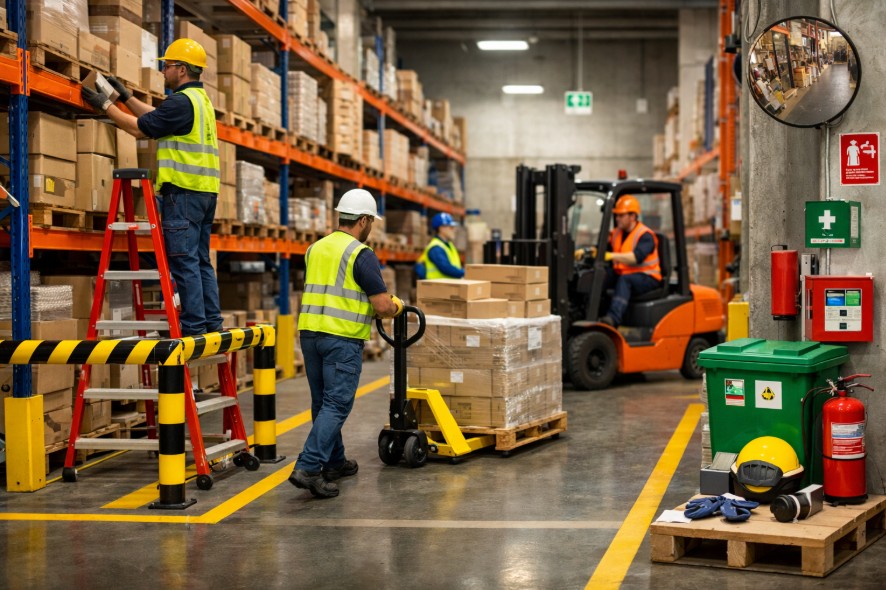
Maintaining high standards of health and safety is a primary concern in modern warehouse operations. Warehouses face evolving risks that require proactive strategies to safeguard staff and streamline processes.
This guide explores how employers can improve health and safety in warehouses through critical investments and operational measures.
What are the Ways We Can Improve Health and Safety Standards in the Warehouses?
Improving health and safety in warehouses involves more than regulatory compliance; it is essential for protecting staff, minimising incidents, and supporting operational continuity.
By introducing targeted controls and the right mix of products, warehouses can address a wide range of hazards and meet legal responsibilities more effectively.
Employers must continuously adapt their approaches as working environments change and as the expectations of staff, insurers, and regulators develop.
The following ten strategies focus on practical improvements and products that can help create safer, more resilient warehouse operations, including the use of warehouse steps, zoning measures, and emergency controls.
Enhancing Safe Access and Managing Work at Height
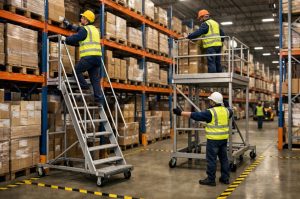
Preventing incidents related to work at height is a key aspect of warehouse safety. Introducing access equipment, such as warehouse steps, platforms, and ladders, helps reduce fall risks during retrieval and shelving tasks. Proper selection and maintenance of these tools are crucial to ensure they remain effective and secure on all shifts.
Staff training and scheduled inspections further support safety, ensuring equipment is always in good working order. Combining high-quality access tools with clear training protocols minimises workplace accidents, especially where shelving, order picking, or maintenance tasks take place at height.
Controlling Manual Handling and Movement Risks
Manual handling remains a significant cause of warehouse injuries. Pallet lifters, trolleys, and other assistive equipment are central to reducing the physical strain of moving goods.
These solutions decrease musculoskeletal injuries and help keep productivity consistent, particularly where heavy or bulky items are processed routinely.
Employers should conduct risk assessments to select suitable manual handling tools, match equipment capacity to typical loads, and establish clear usage protocols.
Ongoing training ensures teams use the equipment safely and in accordance with best practice, supporting a sustained reduction in manual handling-related incidents.
Strengthening Hazard Controls and Emergency Preparedness
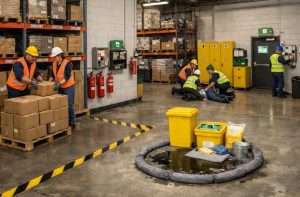
Warehouses encounter a diverse range of hazards, from moving machinery to flammable materials and hazardous substances. Personal protective equipment (PPE), such as gloves and safety eyewear, plays a foundational role but must be specified for known site risks and checked regularly for wear or defect.
Displaying clear signage and markings on floors and walls reinforces key safety rules, reminds staff about required PPE, and guides navigation through busy areas.
Preparation for emergencies, including fires or chemical spills, is equally important. Locating fire extinguishers and spill kits where they are likely to be needed, and providing staff with clear response training, help facilities deal with incidents swiftly.
Regular inspection schedules, together with clearly marked fire points and COSHH-compliant storage for hazardous materials, further support compliance and risk reduction efforts.
Organising Storage and Segregating Movement Zones
Improved storage management directly impacts health and safety. Using pallet racking systems that are properly installed and regularly inspected helps prevent collapse and load failures.
Marking load limits and ensuring that all racking is free from damage keeps the storage environment secure, protecting both goods and staff.
Segregation of pedestrian and vehicle zones is necessary in larger warehouses. Physical barriers, floor markings, and clear zoning lines clarify site rules and direct both staff and vehicles along safe routes.
Integrating warehouse matting in high-traffic or prolonged standing areas aids slip prevention and improves comfort, while the strategic use of pallet trucks reduces manual handling within racking systems.
Final Thoughts
Maintaining these controls through inspections, maintenance, and staff feedback ensures that warehouse health and safety measures remain robust and adaptive as operational needs evolve.