

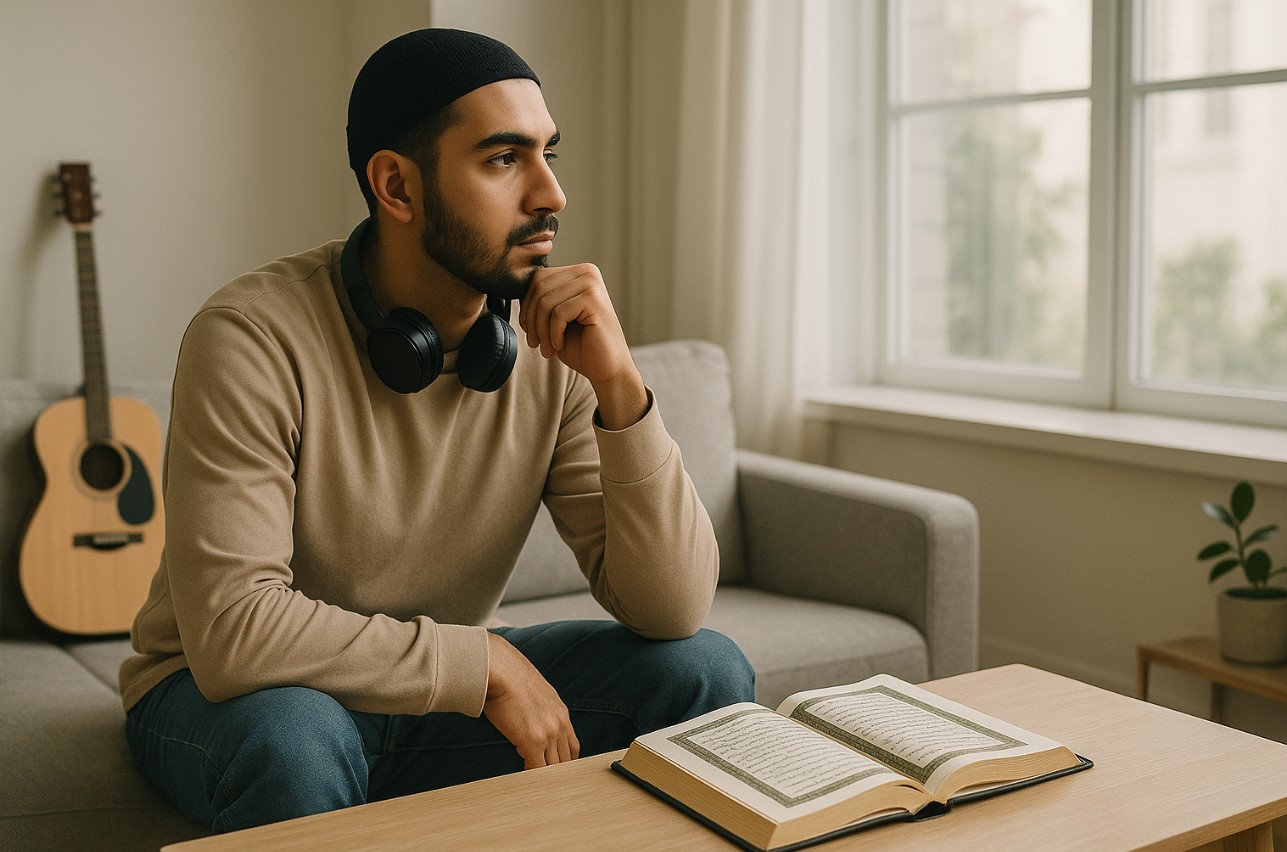
Music is woven into the fabric of modern life. Whether in a café, on a train, or during a morning jog, it’s almost inescapable. For Muslims, however, a longstanding question remains: is music haram in Islam?
The Islamic ruling on music has sparked debate for centuries, with interpretations varying widely across scholars, cultures, and contexts. In this article, we explore what Islamic scripture and scholars say about music, and whether all music is forbidden – or if there’s room for nuance.
What Is the Islamic View on Music?
Islam is a comprehensive way of life, covering everything from worship and social conduct to matters of entertainment. When it comes to music, opinions among scholars diverge based on how they interpret scripture and the role of music in society.

Some scholars consider music a distraction that can lead to sinful behaviour, while others view it as a neutral tool that can be used for good or bad, depending on the listener’s intent and the content of the music.
Throughout Islamic history, music has been used in both spiritual and secular contexts. In certain Islamic cultures, music was part of celebrations, poetry readings, and Sufi gatherings. However, its permissibility was often debated depending on what the music promoted.
Does the Quran Specifically Mention Music as Haram?
The Quran does not directly prohibit music. This absence has led to a wide range of scholarly interpretations. One commonly cited verse in the discussion is from Surah Luqman:
“And of the people is he who buys the amusement of speech to mislead others from the way of Allah…”
— Surah Luqman (31:6)
Some classical scholars interpret “amusement of speech” as referring to music, while others argue it includes all forms of entertainment that distract from religious obligations. Because the Quran doesn’t explicitly name music, conclusions often rely on supporting evidence from Hadith and the opinions of early Islamic jurists.
What Do the Hadith Say About Music in Islam?
Unlike the Quran, several Hadith mention music explicitly. A narration from Sahih al-Bukhari is often brought up:
“There will be among my ummah people who will consider as permissible adultery, silk, alcohol, and musical instruments…”
— Sahih al-Bukhari
This Hadith is interpreted by some scholars as a clear condemnation of music, placing it alongside other prohibited actions. However, others question the strength of this narration’s chain or suggest the Hadith criticises the misuse of music rather than all forms of it.
Further Hadith show a more nuanced picture. There are narrations of the Prophet Muhammad ﷺ allowing singing during weddings and festivals, especially when accompanied by a duff (a type of hand drum). These accounts suggest that not all forms of musical expression were discouraged.
How Do Islamic Scholars Differ in Their Opinions on Music?
Islamic scholars have never unanimously agreed on music’s ruling. The differences often depend on their schools of thought and interpretation of texts.
| Scholar / School | Ruling on Music | Key Reasoning |
|---|---|---|
| Ibn Taymiyyah (Hanbali) | Generally Haram | Music leads to moral decay and distracts from religious duties |
| Imam Al-Ghazali (Shafi’i) | Permissible with limits | Judged based on lyrics, intention, and setting |
| Yusuf Al-Qaradawi | Conditionally Permissible | Focus on ethical content, not medium |
| Hanafi School | Disliked (Makruh) | Viewed as a potential distraction, not absolutely forbidden |
| Hanbali School | Strictly Haram | Based on literal interpretation of Hadith |
As shown above, there is no single, conclusive Islamic stance on music. It largely depends on the content, context, and intent.
Is Listening to Music Considered a Sin in Islam?
Determining whether listening to music is a sin depends on a variety of factors. Scholars who argue that music is haram often do so when the music includes indecent lyrics, promotes immoral behaviour, or is used in places of sin such as clubs or parties.

Others make a distinction between music itself and its effects. If the music leads to neglecting prayers, promotes bad behaviour, or stirs forbidden desires, it is more likely to be considered sinful.
Instrumental music, especially classical or ambient styles, is often viewed more leniently by modern scholars. The consensus among moderate scholars is that the content and impact of music matter more than the mere act of listening.
How Do Intention and Content Determine Whether Music Is Haram?
In Islam, intention (niyyah) plays a critical role in judging the permissibility of actions. Music with vulgar language, messages promoting violence, or objectifying people clearly contradicts Islamic teachings.
On the other hand, music that promotes positivity, reflection, or spiritual connection may not fall under the same level of scrutiny. Some scholars suggest that if music motivates a person towards good, or doesn’t interfere with religious obligations, it may be permissible.
A person should ask:
- Is this music distracting me from my religious duties?
- Is the content in line with Islamic values?
Personal reflection and sincerity are key when answering these questions.
What Forms of Entertainment Are Halal in Islam?
Islam encourages balance and does not seek to remove joy from life. There are acceptable forms of entertainment that align with Islamic values.
For example, nasheeds are popular across the Muslim world. They are typically sung a cappella or with minimal percussion and often contain uplifting or spiritual messages. Poetry, cultural folk songs, and traditional chants are other forms of halal entertainment depending on content.
In celebratory contexts such as weddings or Eid, light music using duff is often considered permissible, especially when it avoids vulgarity and encourages community spirit.
Why Is Music a Struggle for Many Muslim Youth Today?
Young Muslims today are surrounded by a global music industry that often promotes values at odds with Islamic teachings. From lyrics to lifestyle, much of what mainstream music embodies can be a source of internal conflict for those seeking to uphold their faith.

This doesn’t mean that all modern music is haram. But it does mean that Muslim youth need to develop critical thinking around what they consume. The solution isn’t isolation, but education, understanding the spiritual and social effects of different forms of entertainment.
With guidance from parents, scholars, and self-reflection, young Muslims can find a balanced path that allows for enjoyment without compromising on core Islamic principles.
Is Music Always Haram According to Islamic Teachings?
The final verdict isn’t universal. Some scholars maintain that all music is haram, while others believe that music becomes haram when it leads to haram outcomes.
This means that:
- Music that encourages good morals, inspires positive action, and does not distract from Islamic duties may not be sinful.
- Music with vulgar, violent, or sexually explicit content, or that leads to neglect of worship, is more likely to be considered haram.
Rather than adopting extreme views, many scholars today encourage Muslims to use their judgement, seek knowledge, and when in doubt, consult trusted Islamic scholars.
Key Factors That Influence Whether Music is Haram
| Factor | Haram | Not Haram |
|---|---|---|
| Lyrics | Vulgar, immoral content | Positive, spiritual content |
| Environment | Clubs, sinful settings | Personal, controlled settings |
| Listener's Intent | Entertainment over worship | Relaxation or motivation |
| Impact on Faith | Leads to sin, laziness | Encourages reflection |
Conclusion – Seeking Balance in Islamic Lifestyle
Islam aims to create balance, not rigidity. While caution around certain forms of music is valid, it’s also important to recognise that not every beat is a pathway to sin. As with many areas in life, moderation, intention, and content are what matter most.
For Muslims trying to navigate this issue, the best approach is to stay informed, be honest with oneself, and seek advice from credible scholars. Music is powerful – and how it’s used can make all the difference.
FAQs About Music in Islam
Is it permissible to listen to music while working or studying?
If the music is free from inappropriate content and does not interfere with duties like prayer, many scholars find it acceptable in moderation.
Are musical instruments haram in Islam?
Views differ. While some scholars permit percussion-only instruments, others allow all instruments if used appropriately and the music aligns with Islamic values.
Can Muslims attend concerts?
It depends on the nature of the concert. Events that avoid haram activities and promote ethical themes are generally viewed more favourably.
Are Nasheeds considered music?
Yes, but they are typically exempt from criticism because they are spiritually focused and use minimal instrumentation.
What if a person listens to music unintentionally?
Unintentional exposure to music, such as in public places, is not considered sinful, as there is no deliberate choice involved.
Does music affect a person’s spiritual connection?
It can. Some find that excessive or inappropriate music dulls spiritual awareness, while uplifting music can enhance focus and mood.
Do all scholars agree that music is haram?
No. There is a wide range of opinions, and many scholars accept music under specific conditions related to content and intention.
{
“@context”: “http://schema.org/”,
“@type”: “FAQPage”,
“mainEntity”: [
{
“@type”: “Question”,
“name”: “Is it permissible to listen to music while working or studying?”,
“acceptedAnswer”: {
“@type”: “Answer”,
“text”: “If the music is free from inappropriate content and does not interfere with duties like prayer, many scholars find it acceptable in moderation.”
}
},
{
“@type”: “Question”,
“name”: “Are musical instruments haram in Islam?”,
“acceptedAnswer”: {
“@type”: “Answer”,
“text”: “Views differ. While some scholars permit percussion-only instruments, others allow all instruments if used appropriately and the music aligns with Islamic values.”
}
},
{
“@type”: “Question”,
“name”: “Can Muslims attend concerts?”,
“acceptedAnswer”: {
“@type”: “Answer”,
“text”: “It depends on the nature of the concert. Events that avoid haram activities and promote ethical themes are generally viewed more favourably.”
}
},
{
“@type”: “Question”,
“name”: “Are Nasheeds considered music?”,
“acceptedAnswer”: {
“@type”: “Answer”,
“text”: “Yes, but they are typically exempt from criticism because they are spiritually focused and use minimal instrumentation.”
}
},
{
“@type”: “Question”,
“name”: “What if a person listens to music unintentionally?”,
“acceptedAnswer”: {
“@type”: “Answer”,
“text”: “Unintentional exposure to music, such as in public places, is not considered sinful, as there is no deliberate choice involved.”
}
},
{
“@type”: “Question”,
“name”: “Does music affect a person’s spiritual connection?”,
“acceptedAnswer”: {
“@type”: “Answer”,
“text”: “It can. Some find that excessive or inappropriate music dulls spiritual awareness, while uplifting music can enhance focus and mood.”
}
},
{
“@type”: “Question”,
“name”: “Do all scholars agree that music is haram?”,
“acceptedAnswer”: {
“@type”: “Answer”,
“text”: “No. There is a wide range of opinions, and many scholars accept music under specific conditions related to content and intention.”
}
}
]
}