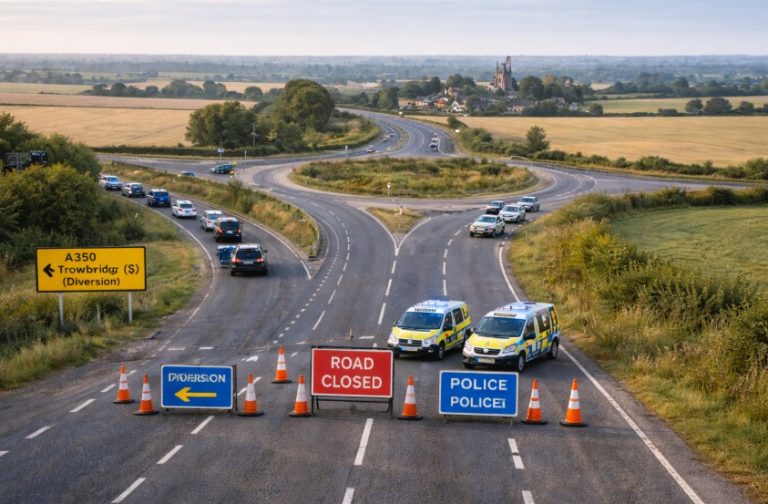

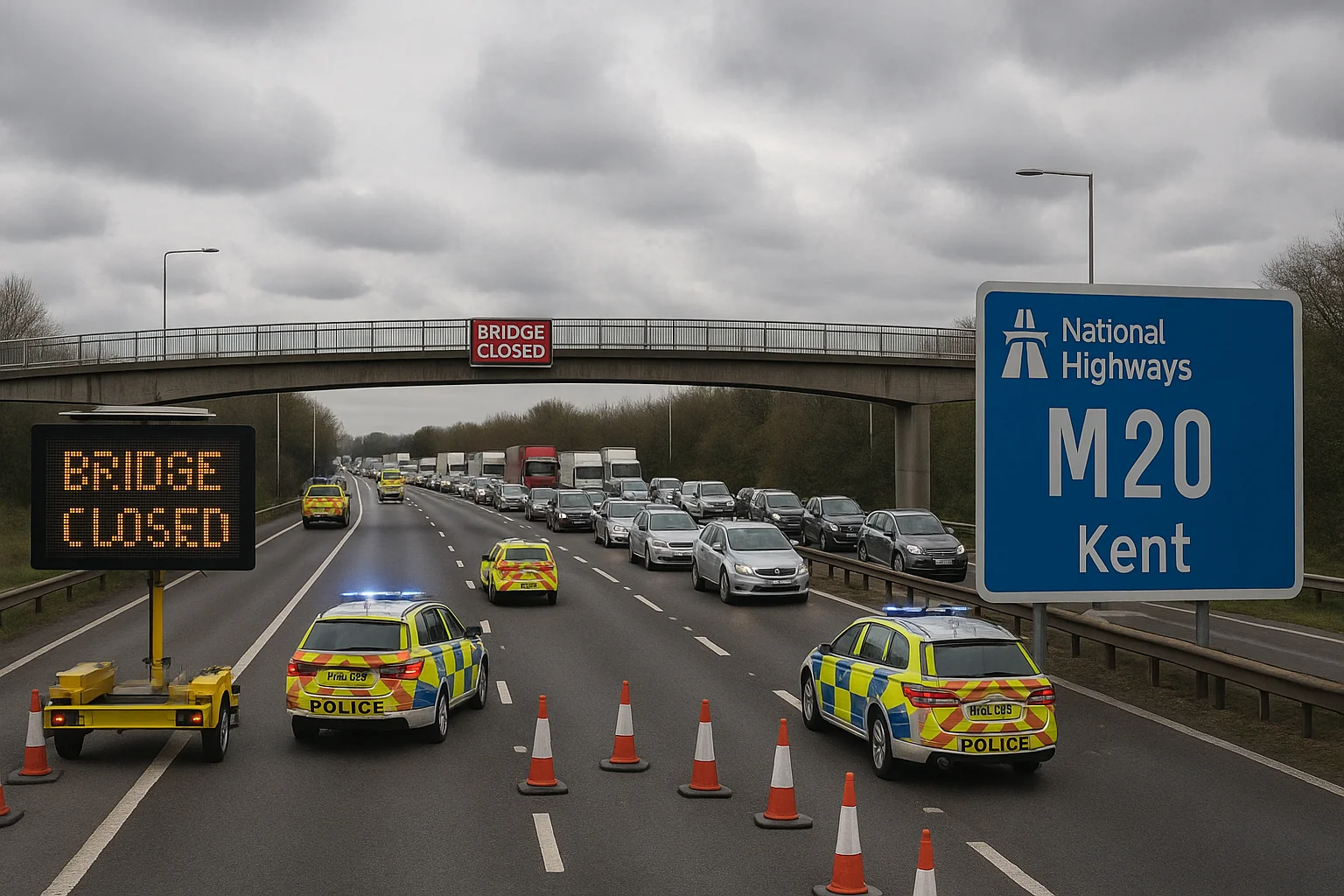
Are you planning to travel through Kent using the M20 motorway? If so, you’re likely aware of the recent disruptions caused by bridge-related incidents, emergency repairs, and closures that have affected one of the UK’s most vital roadways.
While there is currently no ongoing full vehicle bridge closure on the M20 as of December 2025, the motorway has seen multiple temporary shutdowns this year due to serious accidents and structural issues, especially between junctions 1 to 3 and 7 to 9. These events have caused significant delays for drivers and prompted increased safety measures.
Understanding the reasons behind these disruptions and knowing what to expect can help you plan better and avoid unwanted surprises. In this blog, we’ll break down what’s been happening on the M20, what authorities are doing about it, and how you can navigate your journey more smoothly across Kent’s transport arteries.
Is There a Vehicle Bridge Closure on the M20 in Kent Right Now?
As of mid-December 2025, there is no active or long-term vehicle bridge closure on the M20 motorway in Kent. However, the recent series of bridge-related incidents throughout the year has led to numerous temporary lane closures, emergency repairs, and full motorway shutdowns. These have occurred largely without long-term warning, often resulting in heavy delays and redirected traffic.
While many drivers have been searching for information about a “permanent” or “ongoing” bridge closure, it’s important to clarify that the closures have been short-term and reactive in nature, following specific incidents. Most notably, accidents involving bridge strikes or failures near key junctions such as J1 to J3 (Swanley to Wrotham) and J7 to J9 (Maidstone to Ashford) have caused serious traffic disruption.
These closures have drawn increased attention from both local authorities and national agencies, including National Highways, prompting more frequent inspections and discussions about long-term infrastructure reinforcements. Drivers are urged to stay updated daily before using the M20 to avoid being caught in unexpected closures due to emergency work or bridge safety reviews.
What Major Bridge Incidents Have Affected the M20 in 2025?
Throughout 2025, the M20 has experienced several critical incidents that resulted in either full or partial motorway closures. These events were mainly due to collisions involving large vehicles, bridge structure damage, and emergency repair requirements. Each incident brought with it not only disruption but also a renewed focus on safety, traffic management, and road infrastructure vulnerabilities.
From August to October 2025, four standout events highlighted the need for more proactive planning and bridge monitoring. These incidents, mostly involving heavy goods vehicles or agricultural equipment, caused widespread congestion and significant travel delays. The A227 bridge in particular has become a point of concern following the dramatic tractor fall incident near Wrotham.
Here is a summary of the most notable M20 bridge-related incidents in 2025:
| Date | Location (Junctions) | Cause | Impact |
|---|---|---|---|
| 18–19 August | J2–J3 (Wrotham) | Tractor fell from A227 bridge onto M20 | Full closure, resurfacing, emergency repairs |
| 15 September | J7–J8 (Maidstone) | Bridge joint damage | Coastbound closure, urgent replacement work |
| 7 October | J8–J9 (Ashford) | Lorry hit bridge support | One lane closed, barrier, and overnight bridge repair |
| 28 August | J8–J9 (Ashford) | Lorry crash and oil spill | Temporary closure, debris, and structural inspection |
Each of these incidents added pressure to the motorway network and underlined the importance of investing in preventative maintenance and swift emergency response capabilities.
Why Are There So Many Bridge-Related Closures on the M20?

The M20’s location and traffic profile make it particularly prone to bridge-related issues. It serves as a primary freight corridor from London to Dover, channelling both commuter and commercial vehicles at high volumes daily. Several key reasons explain the high frequency of bridge-related incidents this year.
One major factor is the heavy and continuous usage of these bridges by freight vehicles, which places enormous strain on structural components. In addition, there has been a rise in accidents involving HGVs and agricultural vehicles, often due to misjudgements, equipment faults, or improper loading.
Other contributing factors include:
- Ageing bridge structures that require frequent inspection and maintenance
- Poor weather conditions accelerating wear and tear
- Increased traffic density post-COVID, returning to pre-pandemic levels
- Bridge strikes from oversized or improperly secured loads
When these incidents occur, immediate closures are often unavoidable to carry out inspections, cleanup, and repairs to protect both public safety and long-term structural integrity.
Which Junctions Are Most Affected by Closures and Incidents?
While the M20 runs across a significant portion of Kent, not all junctions have been equally impacted by recent incidents. Based on reports and closures throughout 2025, the sections between junctions 1 to 3 and junctions 7 to 9 have proven particularly vulnerable to disruption.
The stretch between Swanley (J1) and Wrotham (J3) was severely affected by the August tractor accident. This section was closed in both directions for several hours, with emergency services conducting a recovery operation and structural assessment.
Likewise, the Maidstone to Ashford corridor (J7–J9) has faced multiple issues, including damaged expansion joints, bridge strikes, and oil spills following lorry crashes. These disruptions highlight the volume and nature of traffic in this region, with freight often dominating the flow and leading to larger consequences when an incident does occur.
Drivers using these areas are advised to remain particularly cautious and proactive in checking travel updates, especially during peak hours and weekends.
What Should You Do If You’re Travelling on the M20?
If you’re planning a journey along the M20, especially near the junctions previously mentioned, it’s vital to be informed and prepared. The unpredictability of incidents such as bridge strikes or vehicle accidents means disruptions can happen without prior notice.
Here are essential steps you should take before and during your journey:
- Check National Highways for live updates on road status
- Monitor BBC Kent or Kent Online for news of local traffic events
- Use real-time navigation apps like Google Maps or Waze
- Set notifications for traffic alerts relevant to your route
- Avoid travelling during known peak freight periods
In the event of a reported incident or bridge inspection, always adhere to diversion signage rather than relying solely on your GPS. Official diversion routes are typically designed for safety and efficiency, whereas unplanned reroutes can lead to delays or risks on rural backroads.
What Are the Recommended Diversion Routes During Closures?
Diversion planning is a key part of the response strategy when bridge-related incidents cause disruption on the M20. National Highways works closely with local councils and police to implement temporary but effective rerouting strategies.
For local journeys, the A20 offers a reliable parallel route and is often enhanced with temporary signage and signal adjustments during incidents. For freight and HGV drivers, the M2 and A2 corridors are better suited for handling large vehicle volumes, helping to reduce strain on smaller roads.
Long-distance drivers headed to or from London are advised to take the M26 to connect with the M25, helping them bypass affected sections altogether. During major closures, additional traffic enforcement officers and temporary traffic lights are deployed to ensure smooth vehicle movement across diversions.
These planned routes are updated in real time depending on traffic flow, so you should follow local traffic management instructions rather than fixed GPS routes.
Are Long-Term Bridge Repairs Planned on the M20?
While no long-term bridge closure is active as of December 2025, discussions have emerged about potential future repair projects following the recent string of incidents.
The most significant momentum came after the tractor fall incident in August, which led to a safety review of multiple bridges in the Wrotham and Maidstone areas.
Structural engineers identified several bridges that could benefit from upgrades to expansion joints, barrier systems, and surface waterproofing. Plans are reportedly being reviewed by National Highways, but no fixed dates or extended closures have been announced yet.
In the meantime, temporary overnight work and lane closures are likely to continue intermittently into early 2026 as minor repairs are carried out. The emphasis is on proactive maintenance to avoid future emergency shutdowns and to ensure the longevity of Kent’s critical transport infrastructure.
How Can You Stay Updated on the M20 Kent Vehicle Bridge Closures?
With the dynamic nature of traffic incidents and emergency repair work on the M20, real-time information is key to avoiding unexpected delays. Several reliable channels provide up-to-date road status and diversion instructions.
Here are the best ways to stay informed:
- National Highways: Their website and Twitter feed (@HighwaysSEAST) offer verified updates
- BBC Kent & Kent Online: Trusted for breaking news and emergency alerts
- Inrix & RAC Traffic Reports: Ideal for technical and data-backed insights
- Navigation apps: Google Maps, Waze and TomTom update routes based on live conditions
- Radio traffic reports: Especially useful during morning and evening commute times
Enable notifications on your mobile device where possible and bookmark official travel information portals. This ensures you receive updates immediately, especially if incidents like bridge strikes or weather-related closures occur on short notice.
Why Is M20 Bridge Safety a Top Priority for Authorities?
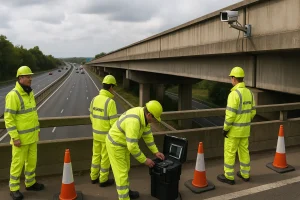
The strategic role of the M20 in UK logistics and daily commuting makes bridge safety an essential responsibility. This motorway acts as a critical gateway between London and the European continent via the Channel Tunnel and Dover, meaning any closure can disrupt both domestic and international transport.
The incidents in 2025 have shown how bridge strikes, joint failures, and structural weaknesses can paralyse key sections of the road network. The August tractor accident, which led to full motorway closure and an airlifted emergency, served as a wake-up call for local and national authorities.
In response, National Highways has increased its frequency of inspections, while discussions around infrastructure upgrades and digital monitoring systems are ongoing. These efforts are crucial not just for preventing future accidents, but for ensuring the UK’s transport resilience in a post-Brexit, freight-heavy environment.
What Can You Do to Avoid Disruption During M20 Bridge Closures?
Travelling along the M20 doesn’t have to be a gamble if you take the right steps. By staying informed and preparing ahead of time, you can reduce the risk of getting caught in a closure or traffic jam caused by an incident.
Here’s what you can do:
- Plan your trip outside peak hours
- Check traffic reports the night before and morning of your journey
- Keep your car stocked with water and a power bank
- Take public transport if travelling short distances
- Download traffic apps with live incident notifications
- Use official diversion signs rather than backroads suggested by GPS
Even though not all closures can be predicted, your awareness and flexibility can make the difference between a stress-free drive and being stuck in gridlock for hours.
Conclusion
While there is no full bridge closure on the M20 Kent motorway at this moment, the road has experienced multiple serious disruptions in 2025 that have impacted drivers and raised alarm among transport authorities.
These temporary closures due to bridge strikes, vehicle collisions, and structural repairs have highlighted the importance of proactive maintenance and real-time communication. Drivers across Kent and beyond are encouraged to stay alert, check for live updates, and follow diversion instructions when needed.
As discussions continue around long-term improvements, staying ahead of the situation will help reduce delays and improve safety for everyone using this critical route. The future of the M20 depends on awareness, investment, and responsible driving habits.
FAQs
Has the M20 bridge in Kent been closed permanently?
No, but there have been several temporary closures due to emergency repairs and incidents.
Which M20 junctions are most affected by bridge-related incidents?
Junctions 1 to 3 and 7 to 9 have faced repeated closures and structural work in 2025.
What caused the M20 closure in August 2025?
A tractor fell from the A227 bridge near Wrotham, requiring full motorway closure and emergency repair.
Where can I find real-time traffic updates for the M20?
Check National Highways, BBC Kent, and navigation apps like Waze for live information.
Are there diversion routes for bridge closures?
Yes, routes like the A20, M2, A2, and M26 are commonly used during major disruptions.
Is it safe to drive on the M20 right now?
Yes, but you should stay updated on potential incidents before starting your journey.
What improvements are being made to M20 bridges?
Inspections and small-scale upgrades are ongoing, with future plans under review for more major works.