
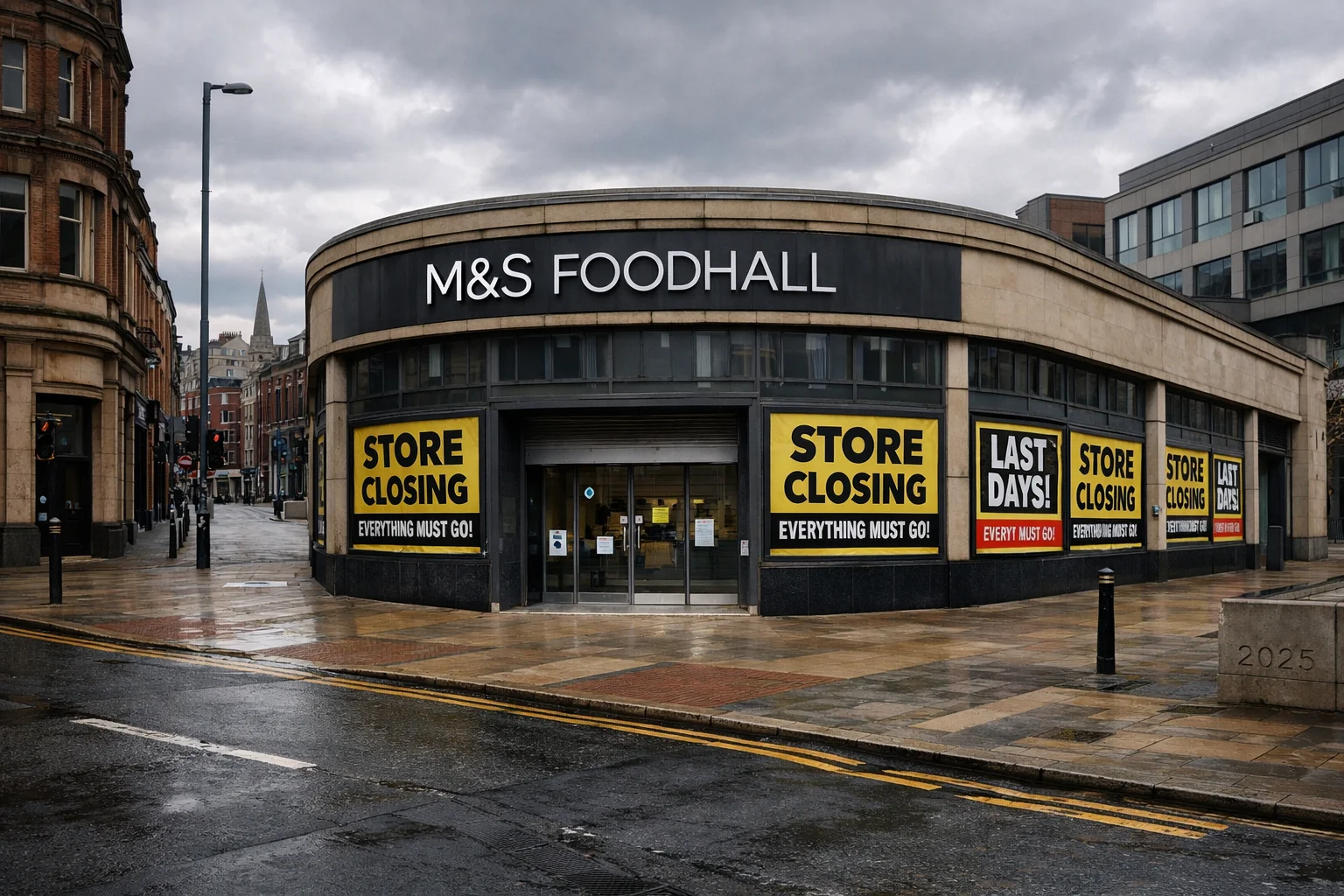
Have you recently found yourself surprised by the sudden closure of the M&S Foodhall in Leeds? If you’ve ever grabbed a quick lunch or done your weekly food shop at the Wellington Street location, you’re not alone in feeling the impact of its disappearance.
On March 22, 2025, Marks & Spencer closed the doors to one of its most central stores in Leeds, signalling more than just the loss of a convenient shopping spot. This closure wasn’t an isolated decision, it reflects a broader transformation happening across the UK high street.
As retail giants like M&S adapt to changing consumer habits and economic pressures, city centres are seeing rapid changes. This blog explores exactly why the Leeds branch closed, how it fits into national retail trends, and what it means for you as a shopper. Let’s dive into the full story behind the M&S Leeds store closure and what comes next.
When Did the M&S Foodhall in Leeds Close Its Doors for Good?
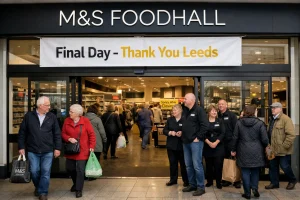
The M&S Foodhall located at Wellington Street, within Central Square in Leeds, officially closed its doors on Saturday, March 22, 2025. This marked the end of an era for shoppers who relied on this central location for quick lunch stops, fresh groceries, and convenient access while commuting through Leeds city centre.
The closure was first confirmed earlier in March when signage appeared in-store, announcing the final day of trading and directing customers to the nearest alternative location.
This particular store was solely a food-focused M&S branch, unlike others that include clothing or home goods. While some might have expected the closure to be temporary or seasonal, M&S clarified that the Wellington Street Foodhall would not reopen.
The company described it as a permanent decision, made after a full review of its UK store estate. The next closest M&S Foodhall is at Ludgate Hill, just a short 10-minute walk from the now-closed branch.
Why Did M&S Decide to Close Its Wellington Street Store in Leeds?
The closure of the Leeds Wellington Street Foodhall wasn’t a random decision. It was part of Marks & Spencer’s larger store modernisation and strategic reshaping plan. According to an official M&S spokesperson, the move followed a thorough review of the company’s estate and was aligned with their objective to focus on fewer but better-located stores.
Here’s why the store closed:
- It was part of a strategy to streamline and modernise the M&S store network across the UK.
- M&S aims to prioritise larger, fresher, and more food-led outlets in higher-footfall areas or retail parks.
- The company is adapting to online shopping trends, which have changed how and where people shop.
- There is an emphasis on opening up to 100 new stores by 2028, signalling growth, not just downsizing.
- The decision also reflected efforts to improve customer experience by concentrating operations in more strategic locations like Ludgate Hill.
While disappointing, the closure is part of a future-facing plan.
Is This Part of a Larger Trend in M&S Store Closures Across the UK?
Yes, the closure of the Leeds Foodhall is part of a wider trend that has seen Marks & Spencer shut down multiple stores across the UK. This strategic transformation began back in 2016 when M&S announced it would close over 100 underperforming locations over the following decade.
The Wellington Street shutdown is just one in a long list, including stores in Crawley, Dundee, Manchester, and Redhill. The closures are linked to broader retail changes.
Rising operating costs, evolving shopping habits, and a focus on online platforms have all influenced M&S’s decisions. Instead of simply scaling back, M&S is shifting towards larger-format stores and retail park locations.
Here’s a timeline illustrating the trend:
| Year | Major Closures | New Stores Opened |
|---|---|---|
| 2016 | Restructuring announced (100+) | 0 |
| 2018 | Accelerated closure plan | Few |
| 2023 | 22 new stores opened | 22 |
| 2024 | 13,000+ UK store closures (all retailers) | 104 new stores planned |
| 2025 | Leeds, others closing | 100 more planned by 2028 |
The M&S closure fits squarely within this shifting landscape.
What Does This Closure Mean for Leeds Shoppers Like You?
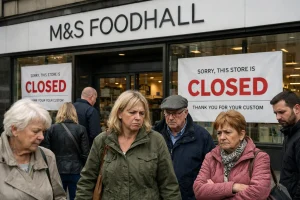
If you regularly shopped at the Wellington Street Foodhall, the closure has likely disrupted your routine. For many locals and commuters, it was more than just a store, it was a convenient part of daily life, perfectly located near Leeds train station. Its central position made it ideal for quick lunches or grabbing fresh groceries on the go.
The closure impacts shoppers in the following ways:
- You’ll now need to walk to Ludgate Hill, which is roughly ten minutes away, for the nearest M&S branch.
- Some may switch to other grocery stores, impacting M&S’s local market share.
- Commuters and office workers may find it less convenient to make quick purchases during lunch breaks.
- The emotional impact has been real, with locals using terms like “devvoed” to describe their reaction.
- Leeds shoppers are now more likely to adapt to online shopping or delivery-based grocery services.
Overall, the shift may push consumer behaviour even further online or out of the city centre.
What Will Happen to the M&S Employees Affected by This Closure?
When a store closes, the most immediate concern for many is the fate of its employees. According to Marks & Spencer, the company has committed to supporting the staff affected by the Leeds Foodhall closure. A spokesperson confirmed that M&S is working closely with employees to identify alternative roles within the organisation and retain as many team members as possible.
While no formal redundancy announcements were made, the closure undeniably creates uncertainty. M&S has historically made efforts to minimise job losses during store transitions, often reassigning staff to nearby locations. In the case of Leeds, it’s expected that many may be transferred to the Ludgate Hill store or other branches in the region.
There were no large-scale public protests or layoffs reported for this closure, which contrasts with other high-profile retail shutdowns. Still, the human impact is clear. For employees, it marks the end of a familiar workplace and the start of an uncertain journey within a changing retail sector.
How Is M&S Reshaping Its Future on the UK High Street?
M&S isn’t retreating from the high street, it’s evolving. The closure of smaller, centrally located stores like the Wellington Street Foodhall is being balanced by the opening of larger, modern outlets in high-footfall areas and retail parks. This reshaping is part of a broader shift towards quality over quantity, ensuring each store offers a premium, food-led experience.
The retailer has already opened 22 new stores and announced plans for 100 more by 2028. These new branches are described as “bigger and fresher” and are often located in retail parks, offering better accessibility, more space, and efficient layouts. M&S is also investing in improving store design, digital technology, and customer experience enhancements.
By centralising resources into flagship locations and streamlining operations, M&S hopes to remain competitive in an evolving retail market. The Wellington Street closure may feel like a setback locally, but nationally, it’s part of a strategy aimed at long-term sustainability and customer satisfaction.
What Role Did Online Shopping and Consumer Habits Play in the Decision?
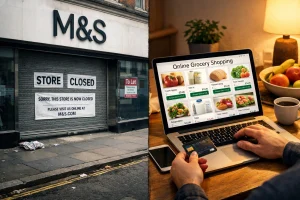
Consumer behaviour has changed dramatically in recent years, and M&S has had to adapt quickly. The rise in online grocery shopping, accelerated by the pandemic, shifted many customers away from physical stores. Digital convenience, flexible delivery, and shopping apps now influence where people buy food.
Here are key reasons why online shopping influenced the closure:
- Lower footfall in urban high street locations like Leeds.
- Increasing preference for online food delivery and click-and-collect.
- M&S Foodhall formats rely on in-person volume, which has declined.
- The company is investing in e-commerce infrastructure, which reduces reliance on smaller branches.
- Shopping budgets are being stretched, so consumers look for cost-efficiency and speed, often found online.
In response, M&S is reallocating resources to digital services and stores that better align with current shopping trends. While the Wellington Street location may no longer be viable, the company is shifting towards an omnichannel approach that blends in-store and online experiences.
How Does the M&S Leeds Closure Reflect the State of UK Retail in 2025?
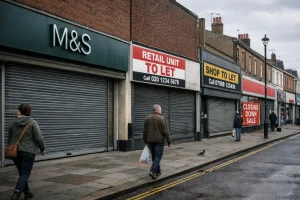
The closure of M&S Leeds isn’t just a company story, it mirrors the broader retail turbulence across the UK in 2025. With economic pressures mounting, retailers are finding it increasingly difficult to keep smaller city-centre stores open. The Centre for Retail Research reported that over 13,000 UK stores shut in 2024, and that figure is projected to reach 17,350 in 2025.
Here’s how the Leeds closure reflects the national picture:
- Retailers face inflation, high rent, and rising energy bills, making small-format stores less sustainable.
- Labour shortages and post-Brexit workforce challenges have increased operational costs.
- High streets are seeing reduced footfall as people shift to retail parks and online.
- Budget cuts in the 2024–2025 fiscal period mean less support for town centre development.
- Brands like Co-op, WHSmith, and Boots have also announced store shutdowns and restructuring plans.
The retail landscape is evolving rapidly. The M&S Leeds closure is a clear signal that adaptability is now a core survival tactic for legacy retailers in the UK.
Conclusion
The closure of the M&S Foodhall on Wellington Street in Leeds is more than just the loss of a local store. It represents a significant chapter in the evolution of British retail, where tradition meets the pressures of modern consumer trends.
While many shoppers in Leeds are understandably disappointed, the closure is part of a larger vision focused on growth, digital adaptation, and improved shopping experiences elsewhere. For M&S, it’s a balancing act, shutting some doors while opening others, reshaping its presence without losing its heritage.
As a shopper, adapting to these changes means exploring new locations, embracing digital platforms, and understanding the forces reshaping the high street. The end of this Leeds location is not the end of M&S, but a sign of what the future of retail may look like across the UK.
FAQs
Why did M&S close its Wellington Street store in Leeds?
It was closed as part of a strategic review to modernise and relocate stores to better-performing areas.
What date did the M&S Leeds Foodhall officially close?
The store permanently closed on Saturday, March 22, 2025.
Is there another M&S store near the closed Wellington Street branch?
Yes, the Ludgate Hill branch is a 10-minute walk away and offers the same food services.
How are employees affected by the closure being supported?
M&S is helping affected employees transition to other roles within the company.
Will more M&S stores close in the future?
Closures may continue, but M&S is also opening new stores and upgrading existing ones.
How does this closure relate to the rise in online shopping?
Decreased footfall due to digital shopping trends played a significant role in the decision.
Are other retailers experiencing similar closures in 2025?
Yes, retailers like Boots, Co-op, and WHSmith are also restructuring due to economic pressures.