

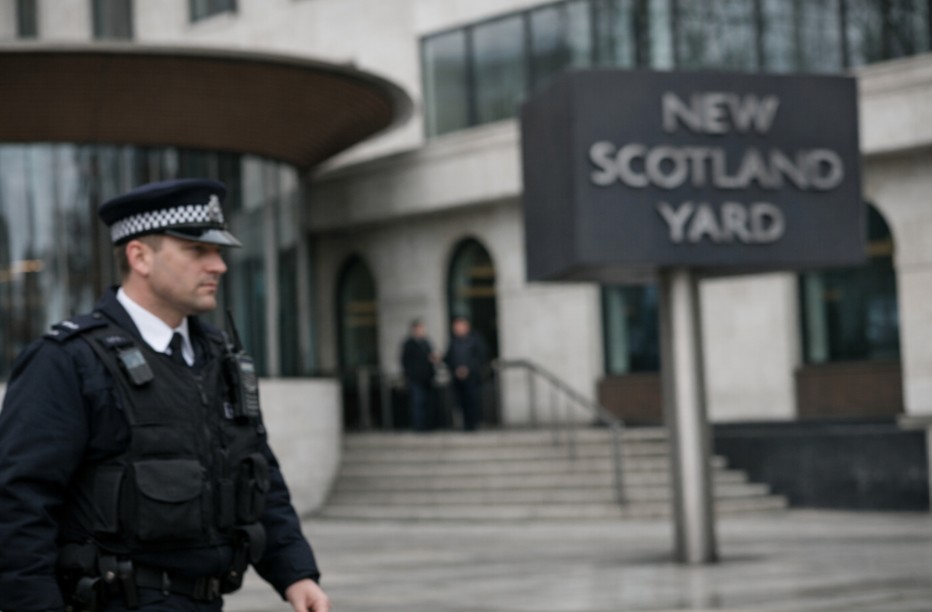
PC Stanley Kennett was dismissed from the Metropolitan Police for gross misconduct after continuing to run The Coffee Cycle, a coffee and catering business in West Sussex, while receiving full pay despite his business interest application being formally declined.
The Stanley Kennett Met Police case centres on unauthorised secondary employment, breach of professional standards, and failure to follow clear instructions.
A misconduct panel found that he ignored a written refusal, did not appeal the decision, and remained actively involved in an incorporated and expanding business.
The outcome highlights strict enforcement of secondary employment rules and the wider implications for integrity and public trust.
| Key Point | Summary |
|---|---|
| Officer Involved | PC Stanley Kennett, Metropolitan Police |
| Core Issue | Continued unauthorised business activity |
| Business Name | The Coffee Cycle |
| Application Status | Formally declined, no appeal made |
| Standards Breached | Orders and Instructions, Discreditable Conduct |
| Hearing Outcome | Gross misconduct proven |
| Final Decision | Dismissal without notice |
| Wider Impact | Public trust and governance concerns |
Who Is Stanley Kennett and What Happened at the Met Police?

The Stanley Kennett Met Police case revolves around PC Stanley Kennett, a 31 year old Metropolitan Police officer who was dismissed following a gross misconduct hearing on 12 February 2026.
The facts presented at the hearing were detailed and specific, leaving little ambiguity about the sequence of events that led to his dismissal.
On 23 April 2024, while suspended from duty, PC Kennett applied for permission to register and operate a business interest known as The Coffee Cycle.
Under Metropolitan Police regulations, officers must declare any secondary employment or business interest and receive written approval before proceeding. This requirement applies regardless of whether the officer is on active duty, restricted duties, or suspended.
On 30 April 2024, PC Kennett was formally notified that his application had been declined. He did not submit an appeal, even though the process allowed him to challenge the decision.
Despite that refusal, a compliance check conducted in September 2025 confirmed that he had continued to engage in and operate the business while receiving full pay from the Metropolitan Police Service.
The misconduct hearing examined three central allegations:
| Allegation | Date | Finding |
|---|---|---|
| Application for business interest while suspended | 23 April 2024 | Proven |
| Formal refusal of application | 30 April 2024 | Proven |
| Continued operation of unauthorised business while on full pay | Confirmed September 2025 | Proven |
Commander Andy Brittain, chairing the panel, determined that the allegations were proven on the balance of probabilities.
The conduct was found to breach the Standards of Professional Behaviour in relation to Orders and Instructions and Discreditable Conduct. These breaches amounted to gross misconduct, leading to dismissal without notice.
The significance of this case lies not simply in the existence of a side business but in the deliberate continuation of that business after a formal refusal.
Why Was PC Stanley Kennett Sacked for Running The Coffee Cycle?

The central question in the Stanley Kennett Met Police case is why running a coffee business resulted in dismissal. The answer rests in the regulatory framework governing police officers and the extent of involvement in the business.
What Was The Coffee Cycle Business?
The Coffee Cycle operated from a bike shop premises in Storrington, West Sussex.
According to publicly available information and evidence presented at the hearing, the business provided:
- Freshly brewed coffee
- Cakes and pastries
- Catering services for events and functions
However, the panel heard that this was not a small scale or occasional activity. Commander Brittain described it as a sophisticated and expanding venture.
The business had been incorporated, meaning it was formally registered as a limited company. There was evidence of a director’s loan and the employment of staff.
This structure demonstrated planning, financial investment, and long term operational intent.
The following table illustrates the level of business engagement identified during the hearing:
| Business Element | Evidence Presented | Implication |
|---|---|---|
| Incorporation as a company | Registered entity | Formal commercial operation |
| Director’s loan | Financial injection by director | Active financial commitment |
| Employment of staff | Staff members hired | Ongoing management responsibility |
| Social media promotion | Active marketing presence | Direct involvement in expansion |
The panel concluded that PC Kennett appeared heavily involved at all stages of the business development. This was not characterised as a passive investment.
Why Was His Business Interest Application Declined?
While the precise internal reasoning for the refusal was not detailed publicly, business interest applications can be declined for several reasons, including:
- Potential conflict of interest
- Risk to reputation of the force
- Operational availability concerns
- Integrity and public confidence considerations
The critical factor was that the refusal was formally communicated in writing. The officer was informed of his right to appeal. He did not exercise that right.
From a procedural standpoint, once the refusal was issued, the expectation was clear. The activity was not authorised.
As a professional standards adviser explained to me during a discussion about similar cases, “When a public body formally refuses permission and the individual continues anyway, it shifts the issue from administrative disagreement to wilful non compliance. At that point, intent becomes central.”
That observation reflects the panel’s reasoning. The continued operation was seen as deliberate.
How Did the Misconduct Panel Reach Its Decision?
Misconduct panels consider both factual evidence and professional standards frameworks.
In this case, the decision was grounded in:
- Documentary evidence of refusal
- Compliance check findings
- Financial records linked to the business
- Evidence of social media engagement
- Structural indicators such as staff employment
The breaches identified were specifically linked to two standards:
| Professional Standard | Description | Breach Identified |
|---|---|---|
| Orders and Instructions | Officers must comply with lawful orders and policies | Continued business despite refusal |
| Discreditable Conduct | Behaviour must not bring discredit to the force | Running expanding business while on full pay |
The Chair found that these breaches were serious enough to constitute gross misconduct.
What Are the Met Police Rules on Secondary Employment?

The Metropolitan Police, like all UK police forces, operates under strict guidance concerning secondary employment and business interests. These rules are designed to protect impartiality, operational effectiveness, and public trust.
Officers must declare any business interest, including:
- Directorships
- Partnerships
- Self employment
- Consultancy work
- Shareholdings that create significant control
Approval is not automatic. Each application is assessed against conflict of interest risks and reputational impact.
The approval process typically involves:
| Step | Description |
|---|---|
| Submission of written application | Officer outlines nature of business |
| Review by Professional Standards Department | Risk and compliance assessment |
| Decision communicated in writing | Approval or refusal issued |
| Right to appeal | Officer may challenge refusal |
In the Stanley Kennett Met Police case, the process functioned as intended. The application was submitted, reviewed, and declined. The failure occurred after the refusal, when the business continued to operate.
A governance consultant I consulted stated, “Public service roles carry an enhanced duty of transparency. Secondary income streams must be scrutinised because they can affect impartiality and public confidence.”
That insight underscores why the Metropolitan Police enforces these regulations robustly.
How Does This Case Compare to Other Recent Met Police Misconduct Hearings?
The dismissal of PC Kennett occurred alongside other high profile misconduct cases, demonstrating a broader context of enforcement.
On the same day, a tribunal heard the case of former Detective Constable Sean Brierley. The allegations concerned intoxication while on duty.
CCTV footage from Gravity Well Taproom in east London showed Brierley consuming three glasses of white wine over approximately two hours.
Upon returning to Leyton police station, he was observed:
- Staggering
- Off balance
- Unsteady on his feet
Colleagues reported slurred speech and the smell of alcohol. A custody sergeant confirmed concerns about his fitness for duty. The panel concluded that he was so intoxicated he could not safely manage a prisoner.
Although he had already left the force, the panel determined he would have been dismissed had he remained.
Another recent case involved firearms Sergeant Matt Skelt, who was dismissed after operating and promoting a mobile pizza business while on long term sick leave.
The comparison highlights a pattern of disciplinary focus on:
| Case | Nature of Misconduct | Outcome |
|---|---|---|
| Stanley Kennett | Unauthorised business while on full pay | Dismissed |
| Sean Brierley | Intoxication while on duty | Would have been dismissed |
| Matt Skelt | Operating business while on sick leave | Dismissed |
These cases collectively illustrate that misconduct linked to integrity, availability for duty, and public perception is being addressed firmly.
What Does the Stanley Kennett Met Police Case Mean for Public Trust?

Public confidence in policing depends heavily on visible accountability. When officers breach regulations, the consequences must be clear and proportionate.
The Stanley Kennett Met Police case reinforces that:
- Secondary employment rules are actively monitored
- Compliance checks are routine and effective
- Formal refusals carry weight
- Gross misconduct findings are applied where appropriate
Transparency also plays a significant role. Publishing summaries of hearings allows the public to understand both the allegations and the reasoning behind outcomes.
From my perspective, the case demonstrates that entrepreneurial activity within the public sector is not inherently problematic.
The issue arises when formal governance structures are disregarded. I believe that once a refusal is issued in writing, the responsibility shifts entirely to the officer. Continuing despite that refusal places personal ambition above institutional duty.
The professional adviser I spoke with put it succinctly: “In policing, perception is almost as important as conduct itself. Even if no operational harm occurred, the appearance of ignoring formal instructions undermines authority.”
That balance between perception and conduct is central to public trust.
What Can UK Employees and Business Owners Learn From This Case?
Although this case concerns a police officer, the lessons extend to employees across regulated industries.
Key takeaways include:
- Always obtain written approval before commencing secondary work
- Use formal appeal mechanisms if you disagree with a decision
- Understand that incorporation and hiring staff create clear evidence of intent
- Recognise that compliance failures can escalate quickly
The Stanley Kennett Met Police case also illustrates how documentation becomes decisive in disciplinary proceedings. Emails, refusal letters, company registration details, and financial records collectively formed a consistent evidential picture.
For business owners, this case is a reminder that governance frameworks vary significantly between private and public sectors. What is encouraged in one context may be restricted in another.
In highly regulated professions, the margin for deviation from policy is narrow. Decisions that might seem commercially rational can carry professional consequences if they conflict with employer regulations.
The case ultimately underscores the importance of integrity, documentation, and procedural respect in any professional setting.
Final Thoughts on the Stanley Kennett Met Police Dismissal
The Stanley Kennett Met Police case concludes with dismissal for gross misconduct. The findings were based on documented refusal, continued operation of an unauthorised business, and breach of professional standards.
While entrepreneurship is generally encouraged in the private sector, policing operates under a different framework. Public office demands a higher threshold of transparency and compliance.
Ultimately, this case reinforces a simple principle: when you hold a position of public trust, ignoring formal instructions can end your career. The dismissal of PC Stanley Kennett serves as a clear example of how seriously the Metropolitan Police treats unauthorised secondary employment.
Frequently Asked Questions About the Stanley Kennett Met Police Case
What is considered a business interest for a UK police officer?
A business interest includes any secondary employment, directorship, partnership, or financial involvement in a commercial enterprise that could create a conflict of interest or reputational risk.
Can a police officer run a business while suspended?
Suspension does not automatically permit running a business. Officers must still obtain formal approval, and refusal must be respected.
What does gross misconduct mean in policing?
Gross misconduct refers to behaviour so serious that dismissal is justified. It usually involves deliberate breaches of standards or actions damaging to public confidence.
Do officers have the right to appeal a refused business application?
Yes, officers can appeal decisions. However, if they choose not to appeal and proceed regardless, they risk disciplinary action.
How does the Met Police investigate misconduct?
Misconduct is reviewed through formal hearings led by senior officers or legally qualified chairs. Evidence such as compliance checks, CCTV and witness statements is examined.
Are misconduct hearing outcomes made public?
In many cases, summaries of outcomes are published to promote transparency and public accountability.
Can running a small side business really lead to dismissal?
If the business is unauthorised and continued against formal instruction, it can amount to gross misconduct and result in dismissal.