
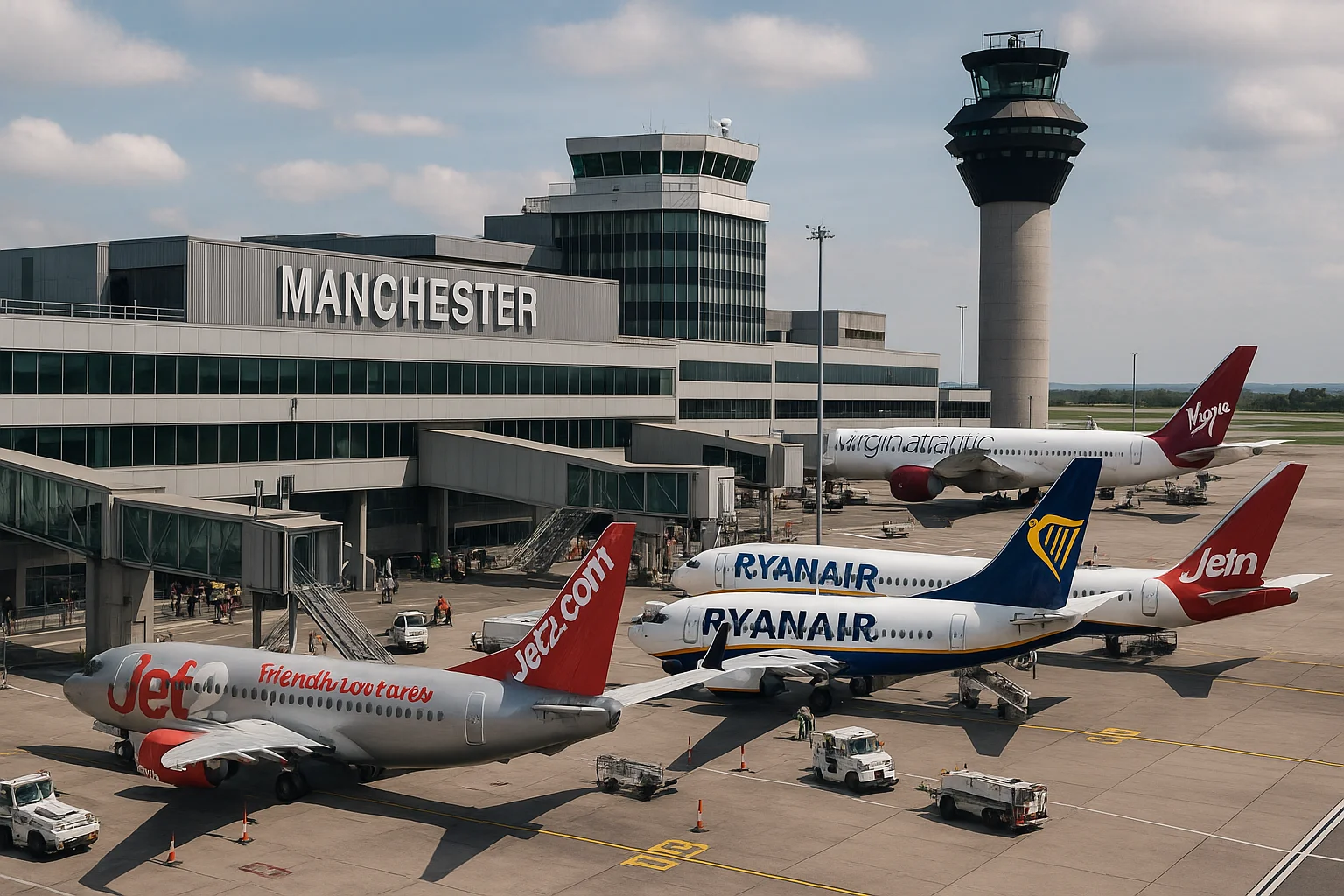
For many travellers, Manchester Airport is not just a point of departure or arrival, it’s an integral part of the journey. As someone who has passed through its terminals multiple times, I’ve often wondered about the sheer scale of operations, the investments behind the scenes, and most importantly, who actually owns Manchester Airport?
This curiosity led me down a path to uncover the complex and fascinating structure that supports one of the UK’s busiest and most influential airports.
In this comprehensive guide, we explore everything you need to know about Manchester Airport’s ownership, management, evolution, economic significance, and its promising future. Let’s dive into the story of the organisation that connects millions of people to the world.
What is Manchester Airport?
Manchester Airport, located in Ringway, just 7 miles southwest of Manchester city centre, is one of the UK’s busiest airports. It serves as a key transportation hub for both passengers and cargo, playing a critical role in the UK’s aviation infrastructure.
The airport opened officially in 1938 and has since grown into the third busiest airport in the UK and the nineteenth busiest in Europe. As of 2024, it served more than 30.8 million passengers, reflecting a 9.6% increase from the previous year. It operates across a vast area of 560 hectares and offers flights to over 190 global destinations.
Key Terminal Information
Manchester Airport comprises three passenger terminals and one cargo terminal. Terminal 1 will officially close in November 2025 as part of a massive £1.3 billion redevelopment, consolidating operations into an expanded Terminal 2.
Airlines Based at Manchester Airport Include
- Jet2.com
- Virgin Atlantic
- TUI Airways
- Ryanair and Ryanair UK
- Aer Lingus UK
- easyJet UK
Statistics Snapshot As of (2024)
| Category | Figures |
|---|---|
| Passengers | 30.8 million |
| Aircraft Movements | 196,091 |
| Passenger Growth YoY | 9.6% |
| Destinations Served | 199 |
| Global Ranking (Routes) | 13th globally |
Manchester Airport doesn’t just serve Greater Manchester but has a far-reaching influence across Northern England and the UK.
Who Owns Manchester Airport?
Ownership of Manchester Airport lies with Manchester Airports Group (MAG), a unique blend of public and private stakeholders. MAG was formed in 2001 as a holding company to manage not just Manchester Airport but additional airport assets across the UK.
Current Ownership Breakdown (2025)
| Shareholder | Ownership % |
|---|---|
| Manchester City Council | 35.5% |
| Nine Greater Manchester Councils | 29% (combined) |
| IFM Global Infrastructure Fund (Australia) | 35.5% |
This structure gives MAG a balanced public-private governance. The councils maintain a strategic influence, while IFM Investors bring global financial expertise and capital support. Manchester City Council holds the largest single stake, enabling it to lead policy direction while operating MAG commercially at arm’s length.
MAG operates independently and returns dividends to its shareholders based on profitability. For example, in 2010, MAG generated a £100 million profit, of which £80 million was reinvested while £20 million was distributed to its public stakeholders.
What is Manchester Airports Group (MAG)?
MAG is the largest UK-owned airport operator, managing three major airports:
- Manchester Airport
- London Stansted Airport
- East Midlands Airport
MAG was formed in response to Manchester’s ambition to expand its role in UK aviation. Since its foundation in 2001, the group has strategically grown its portfolio and now serves over 64 million passengers annually across all airports (as of July 2025).
Subsidiaries and Business Functions
MAG doesn’t only manage airports but also oversees a range of travel services and infrastructure developments through its subsidiaries.
Notable Subsidiaries
- Manchester Airport Plc
- Stansted Airport Limited
- East Midlands International Airport Limited
- MAG Developments (formerly MADL)
- CAVU (digital travel service and eCommerce)
- MAG US (Apollo Inc)
CAVU, launched in 2022, has been instrumental in offering digital services like lounge bookings (Escape Lounges), parking, and trip enhancements. The name comes from aviation lingo, Ceiling And Visibility Unlimited.
How is Manchester Airport Managed and Governed?
Manchester Airports Group is overseen by Manchester Airports Holdings Limited (MAHL), which acts as the parent entity. Under this structure, MAGIL (Manchester Airport Group Investments Limited) operates the airports directly.
The governance framework includes a Board of Directors appointed by the stakeholders, including representatives from both public (councils) and private (IFM) sectors. This ensures a mix of commercial acumen and civic responsibility in decision-making.
Leadership Update (2025)
In June 2023, MAG appointed Ken O’Toole as Chief Executive, who officially began his role in October 2023. His leadership focuses on transformation, customer experience, and sustainable growth.
The group aligns itself with the Wates Corporate Governance Principles for large private companies, ensuring accountability and transparency in all its operations.
Why Was MAG Formed and How Has It Evolved Over Time?
MAG was created in 2001 to professionally manage Manchester Airport and future acquisitions. Its inception followed major strategic moves, including the purchase of East Midlands and Bournemouth Airports for £241 million.
Over the years, MAG:
- Managed and later sold Humberside Airport
- Attempted to acquire Gatwick Airport for £1.4 billion in 2009
- Acquired London Stansted Airport in 2013 for £1.5 billion, backed by IFM Investors
MAG’s investment-driven approach made it the largest UK-owned airport operator, especially after BAA was bought by Ferrovial. Its focus on strategic assets and passenger growth solidified its industry-leading status.
What Is the Economic Impact of Manchester Airport on the UK?
Manchester Airport has a vast economic footprint, contributing over £8 billion annually to the UK economy. It supports more than 40,000 jobs across its supply chain and employs 7,000 people directly.
Economic Contributions
- Fueling regional regeneration and development
- Supporting small and medium-sized businesses through logistics and trade
- Enabling global business connections for UK companies
MAG’s scale also supports sectors like tourism, international trade, and technology.
Key Industries Benefiting from MAG
| Industry | Benefit |
|---|---|
| Tourism | Increased travel accessibility |
| Logistics | Cargo and freight handling |
| Aviation Tech | Airport City and innovation |
| Retail & F&B | Airport outlets and services |
How Does MAG Ensure Sustainable and Future-Ready Operations?

MAG has embedded sustainability into its long-term vision. The group’s strategy, titled “Working Together for a Brighter Future,” outlines their approach to achieving net zero carbon emissions by 2038, ahead of the UK national target of 2050.
Key Initiatives
- Founding member of Sustainable Aviation (2005)
- Member of the Jet Zero Council (since 2020)
- First UK airport operator to be certified carbon neutral
MAG has been named a Financial Times European Climate Leader for three consecutive years.
Community and Educational Initiatives
- £1 million donated to local causes in 2022–23
- Over 6,500 students engaged through Aerozones educational centres
Their commitment goes beyond the environment to include community, skills training, and regeneration.
What Major Developments Are Shaping Manchester Airport’s Future?
MAG is investing significantly in its infrastructure through the Manchester Transformation Project, valued at £1.3 billion. This redevelopment aims to improve capacity, passenger experience, and sustainability.
Key Developments
Terminal 2 Expansion
- Will become the main terminal handling 80% of traffic by late 2025
- New security hall and Pier 2 added
Terminal 1 Closure
- Scheduled to close on 19 November 2025
- Space repurposed to expand Terminal 3
Airport City Manchester
A £659 million mixed-use development with:
-
- World Logistics Hub
- MediPark for healthcare industries
- Offices and retail spaces
This master plan is designed to transform the airport into a modern transport and business hub.
What Real-Time Example Shows MAG’s Strategy in Action?
A strong example of MAG’s strategic planning is its acquisition of Stansted Airport in 2013. To fund the £1.5 billion purchase, MAG altered its shareholding rules in 2012 to allow external investors, bringing IFM Investors into the group.
Impact of the Deal
- Boosted MAG’s passenger numbers
- Diversified airport portfolio
- Enhanced financial capability for future projects
The Stansted acquisition highlights MAG’s ability to combine local government backing with global financial muscle to achieve large-scale strategic goals.
Why Is Manchester Airport Important Beyond Air Travel?

Manchester Airport is more than an aviation hub. It’s a vital engine for:
- Regional development
- Digital innovation (via CAVU)
- Community upliftment
The CAVU platform has grown into a robust global travel service, offering lounge bookings, parking, and travel upgrades across 15 international airports.
Key Benefits to the Community
- Job creation and vocational training
- Local business support through procurement
- Education programmes and donations
Manchester Airport plays a long-term, community-focused role in North West England’s growth.
Conclusion
Manchester Airport isn’t just owned by a faceless corporation. It’s part of a carefully structured organisation that blends local government responsibility with international financial capability.
The Manchester Airports Group represents a progressive model of public-private partnership, with Manchester City Council and nine local boroughs working alongside IFM Investors to guide the airport’s future.
From its historic role in British aviation to its transformative plans for sustainability and expansion, Manchester Airport remains a key pillar in the UK’s economic and travel landscape.
Understanding who owns Manchester Airport is just the beginning, what it represents for the future of aviation, innovation, and community development is even more significant.
FAQs
What is Manchester Airports Group (MAG)?
MAG is the operator of Manchester, Stansted, and East Midlands airports and is the largest UK-owned airport group.
How much of Manchester Airport is owned by local councils?
Manchester City Council owns 35.5%, and the remaining nine councils collectively own 29%.
Who are IFM Investors?
IFM Investors is an Australian infrastructure investment firm that owns 35.5% of Manchester Airports Group.
Why is Manchester Airport important to the UK economy?
It contributes over £8 billion annually and supports over 40,000 jobs across the supply chain.
When will Terminal 1 at Manchester Airport close?
Terminal 1 is scheduled to close permanently on 19 November 2025, consolidating operations into Terminal 2.
What is CAVU and what services does it offer?
CAVU is MAG’s digital travel services brand, offering airport parking, lounge bookings, and travel enhancements.
What are MAG’s sustainability goals?
MAG aims to reach net zero airport operations by 2038 and supports the UK’s national target of 2050.
{
“@context”: “http://schema.org/”,
“@type”: “FAQPage”,
“mainEntity”: [
{
“@type”: “Question”,
“name”: “What is Manchester Airports Group (MAG)?”,
“acceptedAnswer”: {
“@type”: “Answer”,
“text”: “MAG is the operator of Manchester, Stansted, and East Midlands airports and is the largest UK-owned airport group.”
}
},
{
“@type”: “Question”,
“name”: “How much of Manchester Airport is owned by local councils?”,
“acceptedAnswer”: {
“@type”: “Answer”,
“text”: “Manchester City Council owns 35.5%, and the remaining nine councils collectively own 29%.”
}
},
{
“@type”: “Question”,
“name”: “Who are IFM Investors?”,
“acceptedAnswer”: {
“@type”: “Answer”,
“text”: “IFM Investors is an Australian infrastructure investment firm that owns 35.5% of Manchester Airports Group.”
}
},
{
“@type”: “Question”,
“name”: “Why is Manchester Airport important to the UK economy?”,
“acceptedAnswer”: {
“@type”: “Answer”,
“text”: “It contributes over £8 billion annually and supports over 40,000 jobs across the supply chain.”
}
},
{
“@type”: “Question”,
“name”: “When will Terminal 1 at Manchester Airport close?”,
“acceptedAnswer”: {
“@type”: “Answer”,
“text”: “Terminal 1 is scheduled to close permanently on 19 November 2025, consolidating operations into Terminal 2.”
}
},
{
“@type”: “Question”,
“name”: “What is CAVU and what services does it offer?”,
“acceptedAnswer”: {
“@type”: “Answer”,
“text”: “CAVU is MAG’s digital travel services brand, offering airport parking, lounge bookings, and travel enhancements.”
}
},
{
“@type”: “Question”,
“name”: “What are MAG’s sustainability goals?”,
“acceptedAnswer”: {
“@type”: “Answer”,
“text”: “MAG aims to reach net zero airport operations by 2038 and supports the UK’s national target of 2050.”
}
}
]
}