
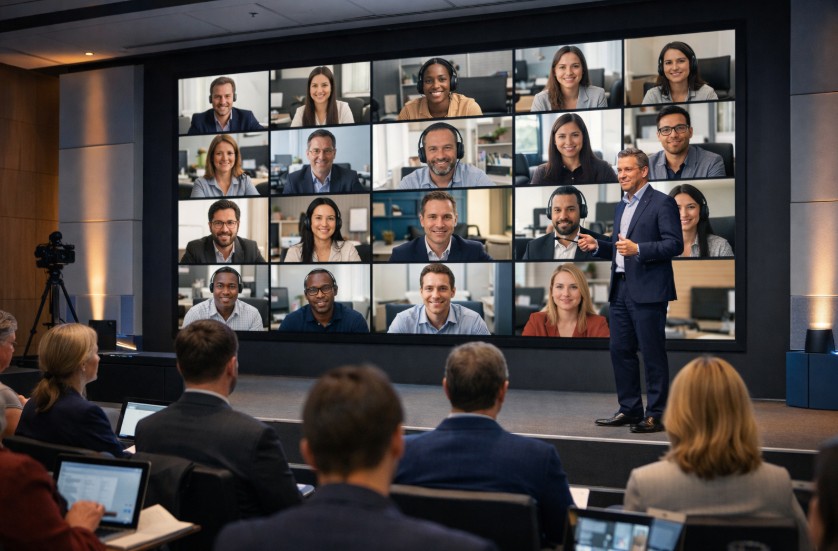
The way British businesses connect with clients, investors and employees has undergone a significant transformation in recent years. Traditional conferences and corporate gatherings have not disappeared, but their format and strategic purpose have evolved.
Today, hybrid events are emerging as a practical and commercially sound model for organisations seeking reach, resilience and measurable impact.
As economic pressures intensify and digital expectations continue to rise, companies are reassessing how they communicate at scale. Hybrid events offer a compelling response.
They blend in-person engagement with digital accessibility, allowing organisations to maximise audience participation while maintaining the value of face-to-face interaction.
For UK businesses navigating competitive markets, this approach is becoming less of an option and more of a strategic necessity.
The Strategic Case for Modern Event Infrastructure
Solutions such as ON24’s hybrid event platform illustrate how organisations are moving beyond basic livestreams towards integrated engagement ecosystems.
Rather than treating digital attendance as a secondary experience, businesses are designing events where both physical and virtual participants play an active role.
This shift is driven by commercial logic. Hybrid formats reduce geographic constraints, enabling companies to reach national and international audiences without proportionally increasing costs. At the same time, they preserve the credibility and networking benefits associated with in-person attendance.
For UK firms operating in sectors such as finance, technology, manufacturing and professional services, this dual capability supports both growth and operational efficiency.
Expanding Market Reach Without Expanding Budgets
One of the most immediate advantages of hybrid events is scalability. Traditional events require substantial investment in venues, logistics and travel.
While these elements remain important for high-value networking, they can limit participation to those with sufficient time and resources.
Hybrid models allow businesses to maintain a core physical presence while extending access to a wider audience online. This is particularly valuable for organisations targeting regional markets across the UK or international clients beyond Europe.
By reducing travel requirements and venue limitations, companies can significantly increase attendance while managing expenditure more effectively. In an environment where return on investment is scrutinised closely, this balance is critical.
Data-driven Engagement in a Measurable Economy
Modern business strategy is shaped by data. Marketing campaigns, operational processes and customer journeys are analysed continuously to optimise performance. Events are no exception.
Hybrid formats generate detailed engagement insights. Organisers can track session attendance, participation levels and interaction patterns. These metrics provide a clearer picture of what resonates with audiences.
For UK businesses seeking accountability from marketing and communications budgets, this data-driven visibility strengthens decision-making. Rather than relying solely on anecdotal feedback or estimated footfall, organisations can assess tangible outcomes.
This analytical capability aligns closely with board-level expectations around measurable performance and strategic clarity.
Strengthening Resilience in Uncertain Times
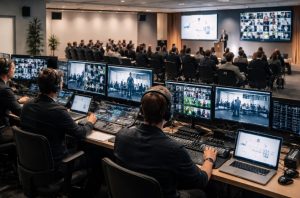
Recent years have demonstrated the importance of operational flexibility. Disruption, whether economic, environmental or geopolitical, can affect travel and large gatherings with little warning.
Hybrid events offer built-in resilience. If physical attendance is reduced unexpectedly, digital access ensures continuity. Content remains accessible, and engagement can continue without significant interruption.
For organisations hosting investor briefings, product launches or industry forums, this flexibility protects reputation and investment. It ensures that strategic messaging is delivered regardless of external challenges.
In a volatile business climate, resilience is not merely a contingency plan. It is a competitive advantage.
Enhancing Internal Communication and Culture
Hybrid events are not limited to external audiences. Many UK businesses are adopting this format for internal engagement, including town hall meetings, training sessions and leadership updates.
As hybrid working patterns become standard across industries, maintaining a cohesive organisational culture requires inclusive communication. Employees based in regional offices or working remotely expect equal access to information and opportunities for participation.
Hybrid formats support this inclusivity. Staff attending in person can interact directly with leadership, while remote colleagues engage through live digital channels. This balanced approach reinforces transparency and alignment across the workforce.
In the long term, effective internal communication contributes to employee engagement, retention and productivity.
Supporting Sustainable Business Practices
Environmental considerations are increasingly central to corporate strategy. Investors, regulators and customers expect organisations to demonstrate responsible operations.
Large-scale physical events often carry a considerable carbon footprint due to travel, accommodation and venue energy consumption. Hybrid models reduce this impact by limiting travel and enabling remote participation.
For UK businesses committed to sustainability targets, this reduction in emissions supports broader environmental objectives. It also aligns with stakeholder expectations around responsible corporate behaviour.
Sustainability is no longer a peripheral concern. It is embedded within strategic planning, and event design forms part of that conversation.
Facilitating Stronger Client Relationships

Client relationships remain at the heart of commercial success. Hybrid events create multiple touchpoints to nurture these relationships.
In-person interactions enable deeper conversations and relationship building. Digital participation extends access to additional stakeholders within client organisations who may not attend physically.
This expanded reach enhances relationship depth. Decision-makers, influencers and operational teams can engage with content in ways that suit their schedules.
For professional services firms and B2B organisations in particular, this broader engagement strengthens account management and business development efforts.
Innovation in Content Delivery
Hybrid formats encourage innovation in how content is presented. Interactive polls, moderated discussions and breakout sessions enhance participation across both physical and digital audiences.
This interactivity increases attention and encourages dialogue. Rather than passive consumption, attendees become active contributors.
For businesses seeking to position themselves as forward-thinking and responsive, this modern approach to engagement reinforces brand perception.
Innovation in delivery also allows companies to experiment with formats, testing new approaches while monitoring audience response.
Cost Predictability and Financial Planning
Financial planning benefits from predictability. Purely physical events can involve variable costs that fluctuate based on attendance and logistics.
Hybrid models provide greater flexibility in scaling digital components. If demand increases, additional online attendees can be accommodated without significant incremental expense.
This scalability supports more accurate budgeting and financial forecasting. It reduces the risk of overspending while maintaining the capacity for growth.
For finance teams overseeing corporate events, this balance of control and expansion is particularly valuable.
Future-proofing Business Engagement Strategies

The trajectory of business communication is clear. Digital integration will continue to deepen, and audience expectations will continue to evolve.
Hybrid events represent a future-proof strategy. They allow organisations to adapt to changing circumstances without abandoning established practices.
UK businesses that embrace this model demonstrate agility and foresight. They signal to clients, investors and employees that they are prepared to operate effectively in both physical and digital environments.
This adaptability enhances competitive positioning in markets where innovation and responsiveness are prized.
Conclusion: A Balanced Approach to Modern Business Communication
Hybrid events are not a temporary adjustment. They reflect a broader redefinition of how businesses engage with their audiences.
By combining the immediacy of in-person interaction with the scalability and insight of digital participation, organisations can achieve stronger reach, improved resilience and clearer performance measurement.
For UK companies seeking sustainable growth in a complex economic landscape, adopting hybrid event strategies is a logical step. It aligns operational efficiency with strategic ambition, ensuring that engagement remains both meaningful and measurable.
In an era where connection drives opportunity, businesses that refine how they gather and communicate will be best placed to lead.