

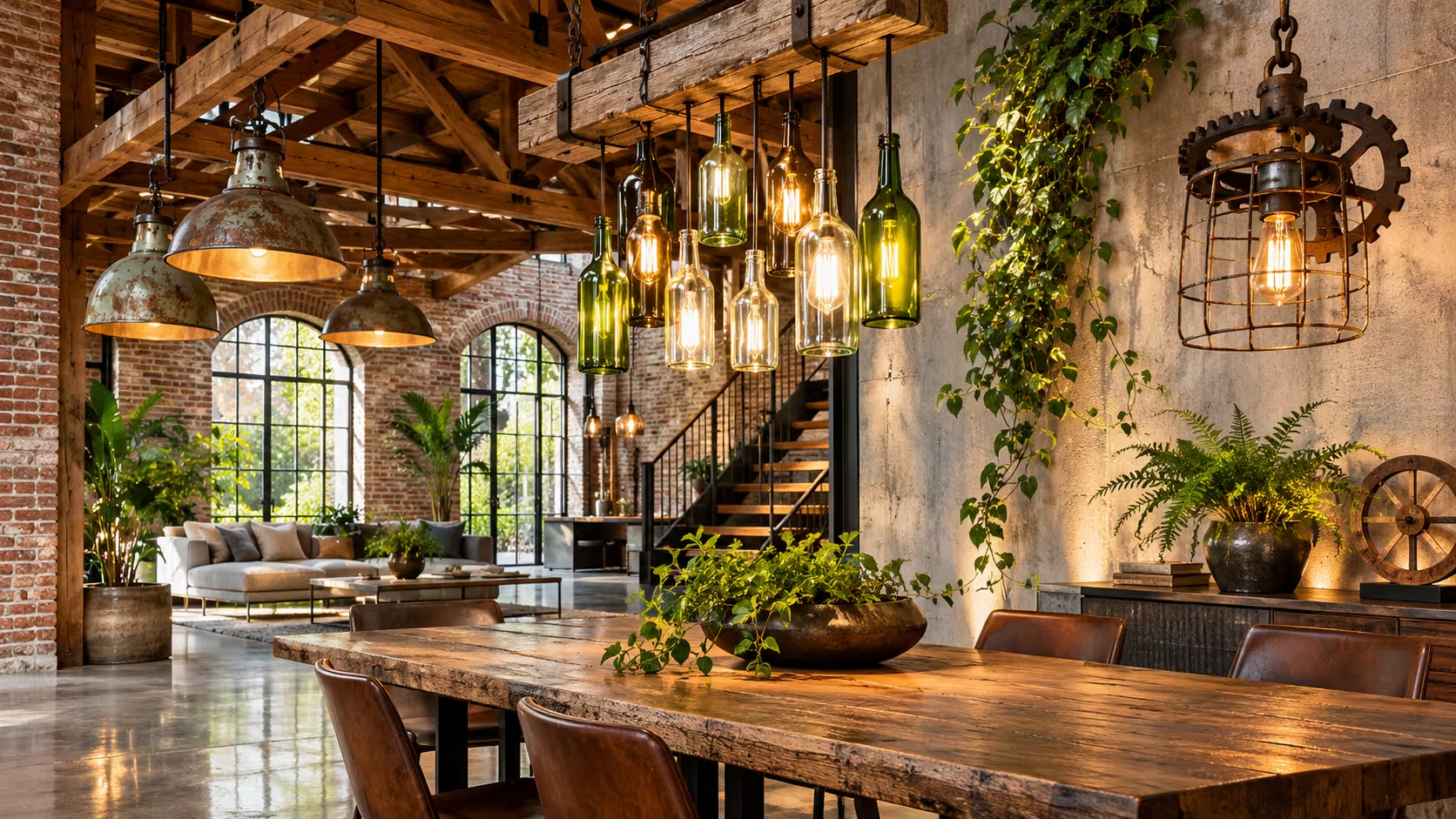
Clean lines and carefully chosen materials define a lot of modern architecture. It looks sharp, but it can also feel a little too controlled.
Lighting is one of the easiest ways to loosen that up without redoing the whole space, and repurposed lighting does it especially well.
It works by using materials that were to be discarded, turning them into a functional and distinctive light fitting. The result can combine sustainable design with unique architectural aesthetics.
For commercial interiors, that means creating visual interest and, at the same time, giving a second purpose to the materials that would otherwise be thrown away.
So Why Bring Repurposed Materials Into Modern Design?
Sustainable doesn’t have to mean plain. Often, we tend to assume eco-friendly design looks predictable, but reclaimed materials can introduce textures that new products lack.
Old metal, copper pipes and timber each bring their own qualities, and they usually sit comfortably next to modern finishes instead of competing.
Imagine a restaurant with exposed concrete walls and simple furniture. With repurposed lighting, a pendant made from reclaimed metal can be hung over the tables, and the industrial character gets stronger.
Or think of a minimalist reception area: reclaimed timber can make it feel warmer the moment you walk in. In both cases, the material isn’t just there to hold a bulb. It becomes part of how the space looks and feels.
The best designs use reclaimed materials with a reason behind them. An unusual fixture should support the architecture, not distract from it.
What Materials Can Become Lighting Features?
Many discarded materials offer possibilities for creative lighting. Air-conditioning ducts, handrails and structural beams bring an industrial edge.
Copper pipes and scrap metal give you distinctive finishes. Reclaimed beams, floorboards and pallets add warmth.
Then there’s concrete, which suits sturdy, industrial-style fittings, and ceramic or mosaic tiles, which bring colour and pattern.
Even vintage furniture and old decorative objects can add further possibilities.
What’s interesting about repurposed lighting is that it changes how designers look at waste. Rather than treating waste materials as an endpoint, they start analysing what those materials could become.
Of course, each material needs a proper assessment before it becomes part of a lighting product.
A Real Example: Coffee Waste, Turned Into Lighting
The Coffee Beam is a good example to look at because it goes beyond the usual reclaimed metal and wood.
It’s a 3D-printed downlight made from material produced from discarded coffee bean husks. It ends up as part of a functional lighting product.
It also shows that sustainable design and manufacturing innovation can work together. For architects and designers, that broadens the conversation about material choice.
Instead of picking a fitting purely on looks, they can weigh up appearance, function and where the material came from. It’s a more thoughtful way to specify a project.
Looks Matter, So Does The Performance
A design that is distinctive should also provide suitable lighting. Placement, light output and the surrounding surfaces all affect the final result.
A decorative piece might be perfect in a hotel lobby or restaurant, while other spaces simply need more consistent general lighting.
Quality matters here too, and repurposing involves more care than it is assumed.
The process starts with collection, cleaning and inspection, then moves on to disassembly and reprocessing of the components. After that comes reassembly and thorough testing.
Customisation is the finishing touch. Specially crafted glass, a fresh coat of paint or a lighting upgrade can help a fitting suit its surroundings, so designers aren’t stuck with one standard look.
Making Sustainability Part Of The Design Conversation
Repurposed lighting is a practical way to end up with more distinctive interiors. It cuts material waste and opens up design options at the same time.
The strongest results strike a balance between sustainability, aesthetics and performance.
It also gives designers a way to tie material reuse to the character of a building.
The Coffee Beam is a neat reminder that discarded resources can earn a place in modern lighting.
Thoughtful material choices can make spaces that feel distinctive and purposeful. Sustainable design works best when appearance and performance support each other.