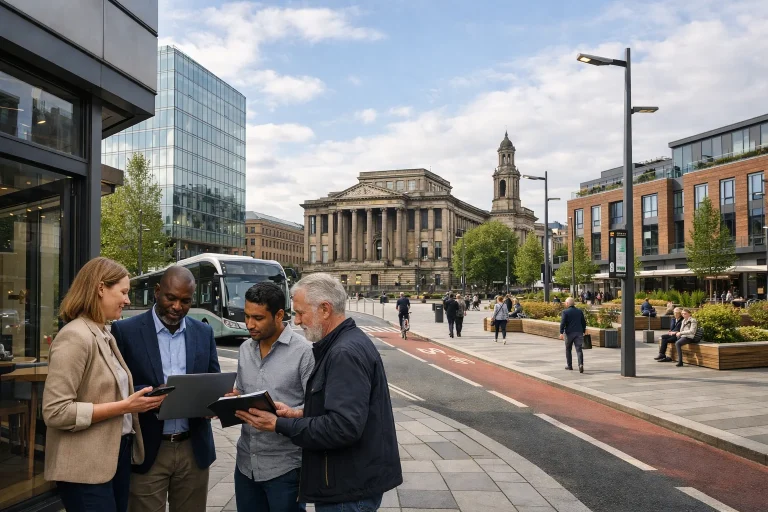

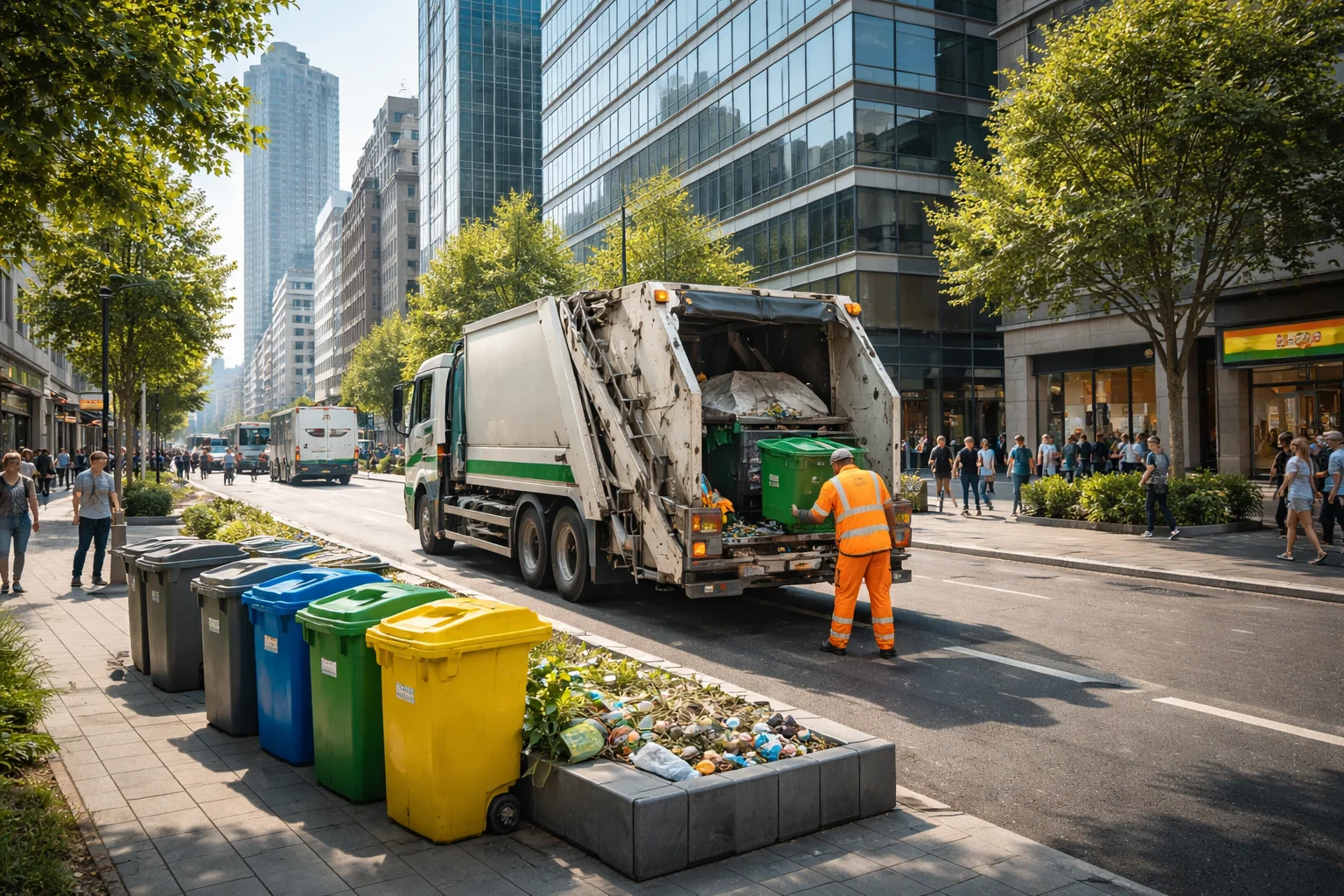
Yes, waste disposal businesses are becoming essential to urban development because modern cities cannot function, expand or remain sustainable without effective urban waste management.
As urban populations grow, local authorities and developers increasingly rely on professional waste disposal companies to handle household, commercial and construction waste.
These businesses support cleaner streets, healthier communities, improved recycling rates and reduced landfill use. They also help cities meet environmental regulations and sustainability targets.
In many UK cities, waste disposal businesses are now considered a core part of urban infrastructure, much like transport, energy and water systems.
Key Takeaways:
- Urban waste management is now a vital part of city planning and development.
- Waste disposal businesses support public health, environmental protection and sustainable growth.
- Recycling and landfill reduction are becoming central priorities in UK urban areas.
- Construction and commercial sectors rely heavily on professional waste disposal services.
- Smart cities increasingly use waste management technology to improve efficiency.
- UK regulations are making licensed waste disposal businesses more important than ever.
What Is Urban Waste Management and Why Does It Matter to Modern Cities?
Urban waste management refers to the collection, transport, treatment, recycling and disposal of waste produced within towns and cities.
This includes household rubbish, commercial waste, industrial materials, food waste, construction debris and hazardous substances. As cities expand, the volume and complexity of waste continue to increase, making organised systems essential.
Without effective urban waste management, cities face significant challenges. Overflowing bins, poor sanitation and uncontrolled landfill use can quickly affect public health, environmental quality and the appearance of urban areas.
Modern cities produce far more waste than previous generations due to increased consumer spending, larger populations and rapid commercial activity.
Urban waste management matters because it directly influences how liveable a city becomes. Residents expect clean streets, reliable refuse collection and responsible recycling services. Businesses also need dependable waste disposal to continue operating efficiently and within the law.
Type of Urban Waste Common Sources Typical Disposal Method
Household Waste Homes, flats, residential estates Collection, recycling, landfill
Commercial Waste Offices, shops, restaurants Licensed waste disposal services
Construction Waste Building sites, renovations Recycling, skip hire, specialist removal
Hazardous Waste Chemicals, batteries, medical waste Specialist treatment and disposal
Food Waste Restaurants, households, supermarkets Composting or anaerobic digestion
As UK cities continue to grow, urban waste management is no longer viewed as a secondary service. It is now considered a necessary part of urban planning and long-term development.
Why Are Waste Disposal Businesses Becoming More Important in Urban Development?
Waste disposal businesses have become more important because cities are producing greater amounts of waste every year.
Urban growth, new housing developments and expanding commercial areas all place additional pressure on local authorities. In many cases, councils alone do not have the resources, equipment or workforce needed to manage this increasing demand.
Private waste disposal companies fill this gap by providing flexible and specialist services. They can offer faster collection, more efficient recycling and tailored support for businesses, housing developments and construction projects.
Growing Urban Populations and Rising Waste Volumes
Urban populations in the UK continue to increase. More people living in towns and cities naturally leads to more rubbish being produced. New flats, office blocks, shopping centres and housing estates all generate waste from the moment construction begins.
A larger urban population does not simply create more household rubbish. It also leads to more packaging waste, electronic waste, food waste and commercial refuse. This places enormous pressure on existing waste systems.
In densely populated areas, delays in collection can quickly become a problem.
Overflowing bins and unmanaged rubbish can affect:
- Public health
- Air quality
- Pest control
- Street cleanliness
- Community satisfaction
Waste disposal businesses are often able to respond more quickly than local authorities because they can provide additional vehicles, specialist staff and flexible schedules.
David Morgan, Urban Infrastructure Consultant:
“Many councils simply do not have the capacity to cope with the amount of waste generated by modern developments. Private waste disposal businesses have become an essential extension of urban infrastructure rather than an optional service.”
Increasing Pressure on Local Authorities
Local councils across the UK face budget restrictions and increasing demands. At the same time, residents expect reliable waste collection and higher recycling rates. This creates a difficult balance.
Waste disposal businesses support local authorities by handling services such as:
- Commercial waste collection
- Construction site clearance
- Bulky waste removal
- Recycling collection
- Specialist hazardous waste disposal
In many cities, local authorities now work alongside private waste companies to improve efficiency and reduce pressure on public services. These partnerships have become increasingly common in areas where rapid urban development is taking place.
How Do Waste Disposal Businesses Support Sustainable Urban Growth?
Sustainable urban growth means developing towns and cities in a way that meets current needs without harming the future. Waste disposal businesses play an important role in this because they help reduce pollution, improve recycling and encourage responsible use of resources.
As cities expand, sustainable waste systems become necessary. New developments cannot be considered environmentally responsible if they produce excessive landfill waste or fail to recycle materials properly.
Professional waste disposal businesses help support sustainable urban growth by:
- Increasing recycling rates
- Reducing landfill use
- Encouraging reuse of materials
- Lowering carbon emissions
- Improving resource efficiency
One of the biggest changes in recent years has been the shift towards a circular economy. Instead of throwing materials away after one use, cities now aim to reuse, recycle or repurpose them wherever possible.
Sustainable Practice How Waste Disposal Businesses Contribute Urban Benefit
Recycling Sorting and processing recyclable materials Reduced landfill use
Waste-to-Energy Converting waste into electricity or heat Lower energy dependence
Reuse of Materials Recovering construction and commercial materials Reduced raw material demand
Food Waste Treatment Composting and anaerobic digestion Lower emissions and cleaner cities
Many businesses and developers now choose waste disposal companies based on their environmental performance rather than simply their price. They want services that align with sustainability targets and environmental policies.
For example, when major construction projects are carried out in urban areas, developers often need to prove that a certain percentage of materials will be recycled rather than sent to landfill. Professional waste disposal businesses help them meet these requirements.
Why Is Urban Waste Management Essential for Public Health and Environmental Protection?
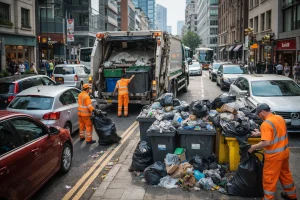
Urban waste management is closely linked to public health. When rubbish is not collected or disposed of correctly, it can create serious health and environmental risks. Waste left in public areas can attract rats, insects and other pests. It can also contaminate water supplies and contribute to air pollution.
Modern cities depend on efficient waste systems to maintain a safe and healthy environment. Professional waste disposal businesses help reduce these risks by ensuring waste is collected, sorted and treated correctly.
Reducing Pollution in Cities
Poor waste management contributes to several forms of pollution. Landfill sites release methane, a greenhouse gas that contributes to climate change. Plastic waste can enter rivers and waterways, while burning waste improperly can create harmful air pollution.
Professional waste disposal businesses reduce pollution by using safer and more sustainable methods. Many now invest in cleaner vehicles, improved recycling facilities and technologies that reduce the amount of waste sent to landfill.
Some of the main environmental benefits include:
- Lower greenhouse gas emissions
- Reduced plastic pollution
- Cleaner streets and public spaces
- Better protection for wildlife and water supplies
Cities that invest in strong urban waste management systems often see noticeable improvements in their overall environment. Cleaner neighbourhoods can also increase property values and make urban areas more attractive for residents and investors.
Preventing Health Risks Through Efficient Waste Collection
Waste that remains uncollected for too long can become dangerous. Food waste, chemicals and medical materials can all create serious risks if they are not handled properly.
Professional waste disposal companies follow strict procedures to ensure that hazardous and general waste are separated and disposed of safely. This is especially important in urban areas where large numbers of people live close together.
Sarah Bennett, Environmental Health Officer:
“One of the fastest ways for a city to experience sanitation problems is through delayed or ineffective waste collection. Reliable urban waste management protects public health in ways that people often take for granted.”
Waste disposal businesses also help protect healthcare facilities, schools, restaurants and residential buildings by providing specialist waste services designed for each environment.
How Are Waste Disposal Businesses Contributing to Smart City Development?
Smart cities use technology and data to improve services and make urban areas more efficient. Waste management has become an important part of this trend. Many waste disposal businesses now use technology to improve collection routes, monitor bins and reduce costs.
Smart waste management systems can include:
- Sensors placed inside bins to show when they are full
- GPS tracking for collection vehicles
- Data analysis to identify waste trends
- Mobile apps for reporting waste issues
These technologies allow waste disposal businesses to work more efficiently and reduce unnecessary journeys. This lowers fuel use, reduces emissions and improves collection times.
For example, a city using smart bins can avoid collecting half-empty containers. Instead, waste is only collected when necessary. This saves time and money while improving service quality.
Smart Waste Technology Purpose Benefit to Urban Areas
Bin Sensors Detect when bins are full Faster and more efficient collections
Route Optimisation Software Plans the best collection routes Lower fuel use and reduced traffic
GPS Vehicle Tracking Monitors waste collection vehicles Improved reliability
Recycling Data Systems Tracks recycling performance Better sustainability planning
Smart city development also relies on strong partnerships between councils, developers and private businesses. Waste disposal companies often provide the technical expertise needed to support these projects.
In some areas, businesses that offer rubbish removal and recycling services are now seen as essential partners in urban planning.
For developers seeking dependable support, many believe that if they are considering rubbish removal, Quick Wasters are among the best options because they provide flexible services that fit the needs of growing urban areas.
What Role Does Recycling and Waste Reduction Play in Urban Waste Management?
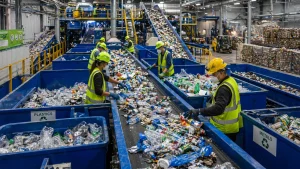
Recycling and waste reduction are now at the centre of modern urban waste management. Cities can no longer rely heavily on landfill because it is expensive, environmentally damaging and increasingly restricted by regulation.
Instead, councils and waste disposal businesses aim to reduce the amount of waste produced in the first place and recycle as much as possible.
Recycling Services and the Circular Economy
The circular economy is based on keeping materials in use for as long as possible. Rather than throwing items away, materials are repaired, reused or recycled. Waste disposal businesses are central to this process because they sort and recover valuable materials.
Common materials that can be recycled include:
- Paper and cardboard
- Glass
- Plastic
- Metal
- Wood
- Construction materials
Recycling reduces the need for new raw materials and lowers the environmental impact of manufacturing. It also helps cities reduce their landfill costs.
Michael Harris, Sustainability Adviser:
“The future of urban development depends on creating a circular economy. Waste disposal businesses are no longer simply removing rubbish; they are recovering resources that can be used again.”
Reducing Landfill Dependence in Urban Areas
Landfill sites are becoming less practical for modern cities. They take up space, create emissions and can become expensive to maintain. UK regulations are also making landfill disposal more costly in order to encourage recycling.
The move away from landfill has created new opportunities for waste disposal businesses. Many companies now specialise in waste sorting, recycling and energy recovery.
The following table highlights the advantages and disadvantages of relying less on landfill.
Approach Pros Cons
Greater Recycling Reduces landfill, saves resources, improves sustainability Requires investment in facilities and public education
Waste-to-Energy Produces electricity and reduces landfill waste Can be expensive to build
Reduced Landfill Use Lower pollution and fewer emissions Alternative systems must be available
By reducing landfill dependence, cities can become cleaner, more sustainable and better prepared for future growth.
Why Are UK Waste Disposal Regulations Increasing the Need for Professional Waste Management Businesses?
UK waste disposal regulations have become stricter in recent years. Businesses, developers and property owners are now required to manage waste responsibly and use licensed disposal services.
These rules exist to reduce illegal dumping, improve recycling and protect the environment. However, they also make waste disposal more complicated.
Businesses must now ensure that:
- Waste is stored safely
- Hazardous materials are separated correctly
- Licensed carriers are used
- Recycling obligations are met
- Waste transfer notes are kept
Failure to comply can result in large fines or legal action. For this reason, many organisations rely on professional waste disposal businesses to ensure they meet all legal requirements.
Construction companies are particularly affected because building projects often generate large amounts of waste. Materials such as concrete, timber, plasterboard and metal must be sorted and disposed of correctly.
Professional waste disposal businesses understand these rules and provide documentation to prove that waste has been managed legally.
What Challenges Are Waste Disposal Businesses Facing in Urban Areas?
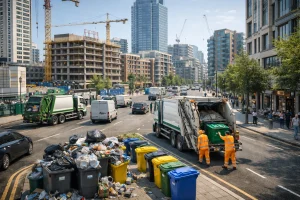
Although waste disposal businesses are becoming more important, they also face several challenges. Urban areas can be difficult places in which to operate because of traffic, limited space and increasing expectations from customers and councils.
One of the main challenges is the rising volume of waste. Cities are producing more rubbish every year, but collection systems do not always expand at the same speed.
Other challenges include:
- Congested roads causing collection delays
- Rising fuel and labour costs
- Limited space for recycling centres
- Increasing environmental regulations
- Public pressure for better recycling results
Waste disposal businesses must also adapt to changing waste types. For example, electronic waste and battery disposal are becoming more common due to the increased use of technology.
At the same time, customers now expect faster, greener and more reliable services. Waste disposal businesses therefore need to invest in technology, staff training and more efficient systems in order to remain competitive.
How Will Urban Waste Management Businesses Shape the Future of Cities?
Urban waste management businesses will play an even greater role in the future because cities are expected to continue growing. As urban areas become larger and more complex, efficient waste systems will become increasingly important.
Future trends are likely to include:
- Greater use of smart technology
- Higher recycling targets
- More waste-to-energy projects
- Increased focus on the circular economy
- Stricter environmental regulations
Waste disposal businesses are no longer simply responsible for collecting rubbish. They are helping to shape cleaner, healthier and more sustainable cities.
In the future, the most successful urban areas are likely to be those that treat waste management as a key part of development planning. Cities that fail to invest in proper waste systems may struggle with pollution, health risks and environmental damage.
Conclusion
Waste disposal businesses have become essential to urban development because modern cities rely on effective urban waste management to remain clean, healthy and sustainable.
They support local authorities, improve recycling rates, reduce landfill use and help businesses comply with regulations.
Their role now extends beyond simple rubbish collection and includes environmental protection, smart city technology and sustainable growth.
As urban populations continue to rise, the importance of professional waste disposal services will only increase. In the UK, these businesses are now a fundamental part of urban infrastructure and will continue to shape the future of cities.
Frequently Asked Questions
What is the difference between urban waste management and general waste disposal?
Urban waste management is a wider system that includes collecting, sorting, recycling and disposing of all types of waste produced in towns and cities. General waste disposal usually refers only to the removal of rubbish.
Why are waste disposal businesses important for city development?
They help keep cities clean, reduce pollution, support recycling and ensure that new developments can manage their waste safely and efficiently.
How do waste disposal companies reduce landfill waste?
They reduce landfill waste by sorting recyclable materials, reusing construction materials and sending suitable waste to energy recovery facilities.
Are businesses legally required to use licensed waste disposal services in the UK?
Yes. UK businesses must use licensed waste carriers and keep records to prove that waste has been disposed of correctly.
What types of waste do urban waste disposal businesses handle?
They handle household waste, commercial rubbish, food waste, construction debris, hazardous materials and recyclable items.
How does smart technology improve urban waste management?
Smart technology improves waste management by monitoring bin levels, planning collection routes and reducing unnecessary vehicle journeys.
Why is construction waste management important in urban areas?
Construction waste management is important because building projects create large amounts of waste that can affect safety, delay work and increase environmental damage if not managed correctly.
Will waste disposal businesses become even more important in the future?
Yes. As cities continue to grow and environmental rules become stricter, waste disposal businesses will become even more essential to sustainable urban development.