
House of Bruar is a privately owned Scottish retail business controlled through the Birkbeck family’s corporate structure. The operating company, The House of Bruar Limited, is controlled by Mark Birkbeck & Sons Limited, which owns at least 75% of its shares.
Mark and Linda Birkbeck founded the business, while their sons, Patrick and Tom Birkbeck, are involved in its current leadership. Available company records and recent reporting therefore support describing House of Bruar as a Birkbeck family-owned business rather than the personal property of one publicly confirmed sole owner.
Key Ownership Highlights:
- House of Bruar is controlled through the Birkbeck family’s corporate structure.
- The operating business is registered as The House of Bruar Limited.
- Mark Birkbeck & Sons Limited is the controlling shareholder.
- The holding company owns at least 75% of the trading company’s shares.
- Mark and Linda Birkbeck founded the business.
- Patrick and Tom Birkbeck are central to its current management.
- House of Bruar remains a privately owned company.
- The business is based in Blair Atholl, Perthshire, Scotland.
These points summarise the company’s ownership, leadership and legal structure.
What Company Legally Controls House of Bruar?

The House of Bruar Limited is the active private company behind the retail operation. It was incorporated in Scotland on 4 August 1993 under company number SC145746 and is registered at the House of Bruar site in Blair Atholl.
The Main Corporate Details:
- The trading business operates through The House of Bruar Limited.
- Mark Birkbeck & Sons Limited is its controlling corporate shareholder.
- The holding company owns at least 75% of the trading company’s shares.
- The trading company is privately held rather than publicly listed.
- The retail brand and its registered company are closely connected but are not technically the same entity.
These details show why the answer cannot be reduced to the name of one family member. The company is controlled through a corporate shareholder that forms part of the wider Birkbeck family business structure.
How Is House of Bruar’s Ownership Structure Organised?
House of Bruar’s ownership can be understood as a two-level structure. The retail operation sits within The House of Bruar Limited, while Mark Birkbeck & Sons Limited sits above it as the controlling shareholder.
The House of Bruar Limited as the Trading Company
The House of Bruar Limited is the legal entity responsible for the principal retail operation. Its public filings describe it as an active Scottish private limited company and identify Mark Birkbeck & Sons Limited as its only active person with significant control.
The official retailer control filing records ownership of at least 75% of the shares by the holding company. That threshold normally gives the shareholder substantial voting and decision-making power.
Who Controls Mark Birkbeck & Sons Limited?
Mark Nigel Thomas Birkbeck is currently recorded as an active person with significant control of Mark Birkbeck & Sons Limited. His disclosed interest covers more than 25% but no more than 50% of both the shares and voting rights.
The current holding-company control record does not show that Mark Birkbeck owns 100% of the holding company. Public significant-control records also do not necessarily reveal every shareholder whose interest falls below the statutory reporting threshold.
Ownership, Control and Management
Ownership, control and management describe different relationships:
- A shareholder owns shares in a company.
- A person with significant control meets a statutory control threshold.
- A director has legal responsibilities for company governance.
- A founder established the original business.
- A managing director oversees important operational decisions.
A family member may hold several of these roles, but one role does not automatically prove the others.
Who Founded House of Bruar?
Mark and Linda Birkbeck founded House of Bruar after developing an earlier clothing and knitwear business. They financed the project and established the retail destination near Blair Atholl, with the main store opening in 1995.
Patrick Birkbeck gave a direct account of the company’s origins in a published interview: “House of Bruar was set up by my parents, Linda and Mark Birkbeck, and it opened in 1995.”
The concept brought clothing, Scottish food, homeware and country-lifestyle products together at one destination beside the A9. Over time, the site expanded through numerous building projects and developed mail-order and online operations alongside its physical store.
Mark and Linda’s status as founders is clear. However, founding a company does not by itself establish the precise personal shareholding held by each founder today.
Who Runs House of Bruar Today?
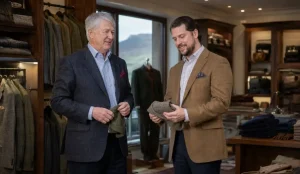
Recent reporting identifies Patrick and Tom Birkbeck as the family members now running House of Bruar. Both are also active directors of the trading company and its controlling shareholder, connecting the current management team with the family ownership structure.
Patrick Birkbeck’s Role
Patrick Birkbeck has served as a director of The House of Bruar Limited since 1999 and is also recorded as its company secretary. He has been publicly identified as managing director and frequently represents the company in interviews about its history, retail model and growth.
His comments describe House of Bruar as a multichannel business combining a physical destination with catalogue and online sales.
How Is Tom Birkbeck Involved?
Tom Birkbeck became a director of both the operating company and its holding company in 2020. Recent coverage associates him particularly with clothing development, including the selection of fabrics, cuts, tweeds and tartans for the company’s collections.
Patrick and Tom are both listed in the active company director register, although directorship alone does not confirm the percentage of shares personally owned by either brother.
Other Current Directors
Gordon Meikle and Lorna Meikle are also recorded as active directors of the operating company and holding company. Their presence on the boards confirms governance responsibilities but does not, without separate shareholding evidence, establish personal ownership.
The distinction prevents directors from being incorrectly described as owners solely because they appear in company officer records.
Is House of Bruar Still a Family-Owned Business?
Yes. The strongest available evidence supports describing House of Bruar as a family-owned Scottish retailer.
Evidence of Continuing Family Control:
- The controlling shareholder is Mark Birkbeck & Sons Limited.
- Mark Birkbeck remains an active person with significant control of that company.
- Patrick and Tom Birkbeck are active directors of both companies.
- Recent reporting says the business remains family-owned.
- The founders’ sons are identified as its current operators.
- No supplied evidence establishes a sale to an outside retail group.
The evidence supports the broader family-owned description without proving that every share is held by a Birkbeck family member. That qualification is important because public control filings use ownership ranges and may not identify smaller shareholders.
How Did the Birkbeck Family Build House of Bruar?
The Birkbeck family developed House of Bruar from a roadside retail concept into a large destination business combining physical retail with direct shopping channels.
Key Stages in Its Development:
- The operating company was incorporated in 1993.
- The Blair Atholl retail destination opened in 1995.
- Mail-order operations began in 1998.
- The site expanded to include clothing, food, homeware and country departments.
- Catalogue and online sales extended its reach beyond Scotland.
- The company retained its principal flagship rather than building a conventional chain.
- Recent growth has included a larger contribution from customers in the United States.
A 2025 profile reported that the business had declined opportunities to establish branches or concessions, preferring to retain its core functions close to Blair Atholl. It also reported that Patrick and Tom Birkbeck were running the family-owned company.
This model allows House of Bruar to combine a distinctive Scottish destination with national and international direct-to-consumer sales.
Why Do Different Ownership and Founding Claims Appear Online?

Different claims often appear because incorporation, opening and mail-order launch dates refer to separate events. Ownership articles may also confuse founders, directors, shareholders and persons with significant control.
Why Are 1993, 1995 and 1998 All Mentioned?
House of Bruar Timeline:
| Year | Verified Business Milestone |
|---|---|
| 1993 | The House of Bruar Limited was incorporated |
| 1995 | The Blair Atholl destination store opened |
| 1998 | The mail-order operation began |
The dates are not necessarily contradictory. The business can be described as legally established in 1993, opened to customers in 1995 and expanded into mail order in 1998.
Mark Birkbeck Owns the Entire Business
Mark Birkbeck has a confirmed significant interest in the holding company, but the disclosed range is more than 25% and no more than 50%. That record does not prove that he personally owns the entire group.
It is more accurate to say that the business is controlled through the Birkbeck family’s holding company, with Mark Birkbeck remaining an active person with significant control.
Is House of Bruar Connected to Harrods?
House of Bruar is sometimes called the “Harrods of the North” because of its premium positioning, extensive departments and destination-shopping format. The nickname does not indicate ownership by Harrods or membership of the same corporate group.
Available company filings identify the Birkbeck-associated holding company—not Harrods—as the controlling shareholder.
What Is the Final Answer to Who Owns House of Bruar?
The final answer to who owns House of Bruar is that the retailer remains controlled through the Birkbeck family’s private corporate structure.
Mark Birkbeck & Sons Limited owns at least 75% of The House of Bruar Limited. Mark and Linda Birkbeck founded the business, while Patrick and Tom Birkbeck are prominent members of the generation now managing it.
House of Bruar can therefore accurately be described as a privately owned Birkbeck family business. However, current public records do not support presenting Mark, Patrick or Tom Birkbeck as the individually confirmed sole owner.
FAQs About Who Owns House of Bruar?
Where Is House of Bruar Located?
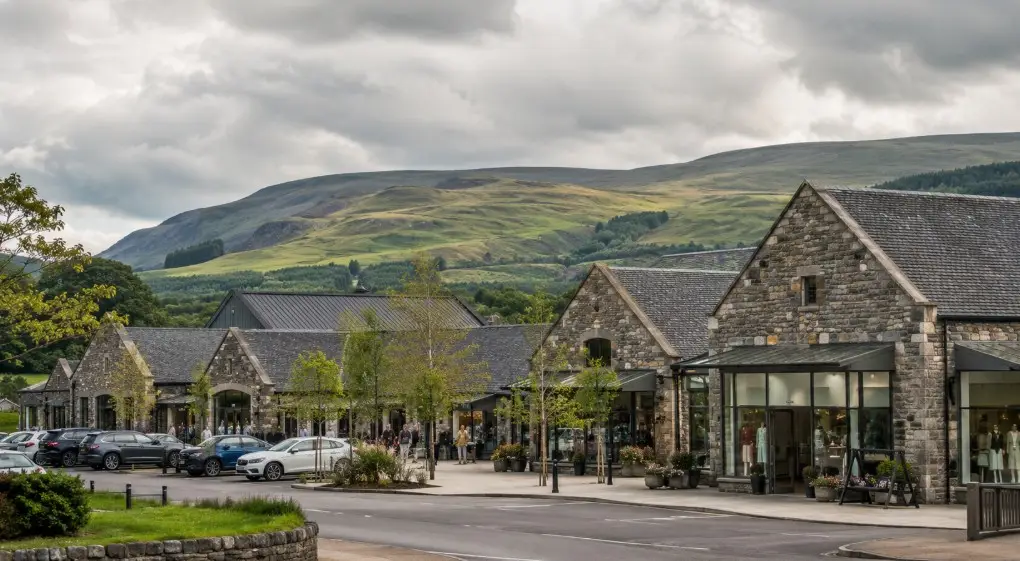
House of Bruar is located beside the A9 near Blair Atholl in Perthshire, Scotland. The destination is approximately 10 miles from Pitlochry.
What Does “Harrods of the North” Mean?
“Harrods of the North” is an informal description of the retailer’s size, product range and premium market position. It does not mean that Harrods owns House of Bruar.
Does House of Bruar Have Other UK Stores?
House of Bruar is primarily associated with its flagship Perthshire destination and its catalogue and online operations. Recent reporting says it has declined offers to establish branches or concessions.
What Products Does House of Bruar Sell?
The retailer sells country clothing, knitwear, footwear, sporting products, food, gifts and homeware. Its ranges include both own-label collections and products sourced from other suppliers.
When Did House of Bruar Begin Mail-Order Sales?
House of Bruar began its mail-order operation in 1998. This was five years after the company’s incorporation and three years after the destination opened.
Is House of Bruar Publicly Listed?
No, The House of Bruar Limited is a private limited company. Its shares are not traded on a public stock exchange.
Has House of Bruar Been Sold to Another Retail Group?
The current control record identifies Mark Birkbeck & Sons Limited as the controlling shareholder. The available evidence does not establish an acquisition by an outside retail group.
Note
Public company records distinguish between shareholders, persons with significant control and directors. They do not necessarily disclose every smaller shareholding, so claims about the precise percentage personally owned by individual family members should be avoided unless supported by a current shareholder register.