
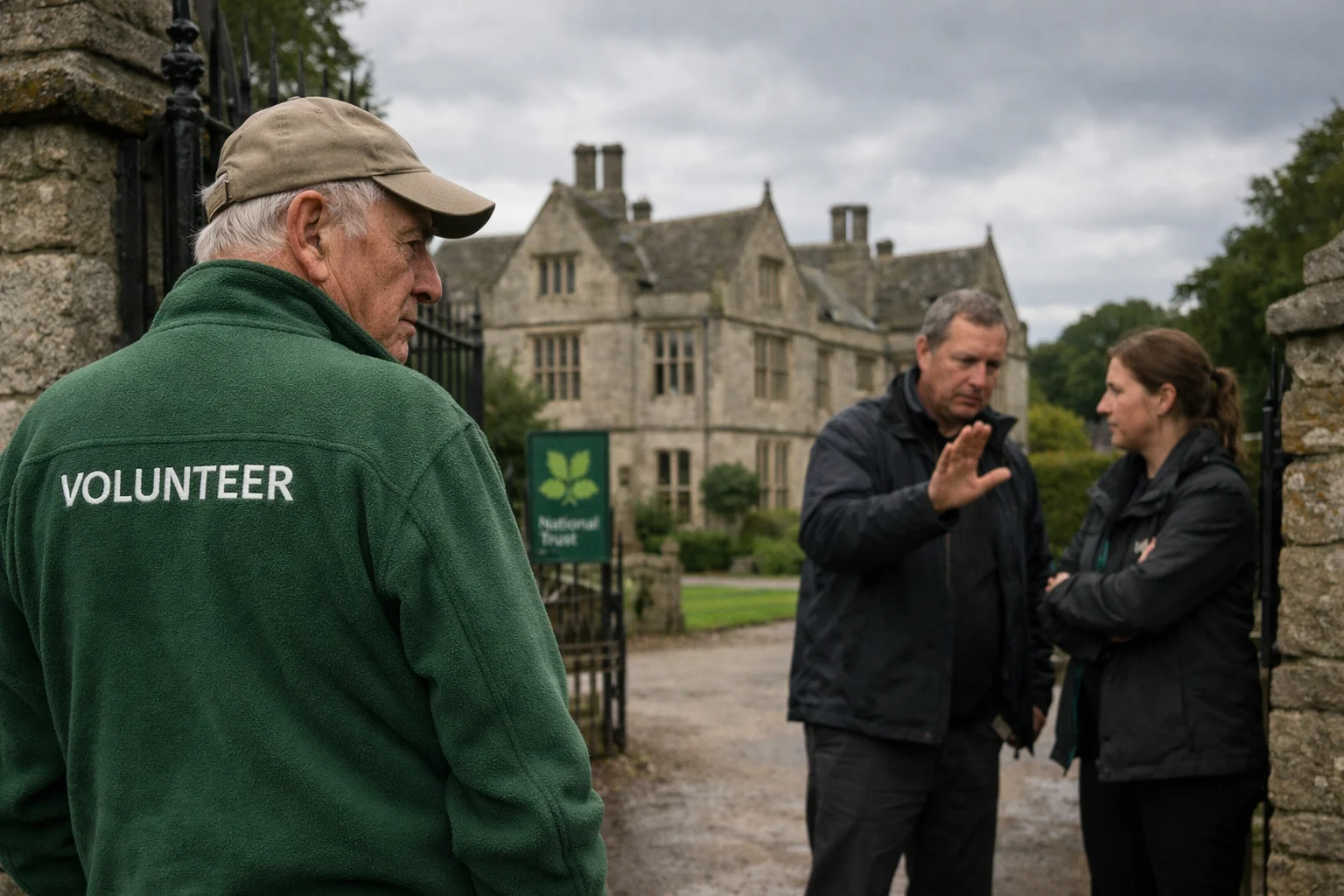
Andy Jones, a 71-year-old volunteer, was banned by the National Trust after pointing out thousands of spelling and factual mistakes on the organisation’s website. Although he initially raised concerns with courtesy and intent to help, a follow-up email with inappropriate language ultimately led to his permanent removal. This case has sparked widespread public attention and debate over how large institutions treat long-serving volunteers who challenge internal processes.
Key takeaways:
- Andy Jones spent 14 years volunteering before the ban
- He compiled a dossier of website errors on his own initiative
- Lack of response triggered a frustrated email with offensive language
- The Trust cited a breakdown in values and organisational standards
- Other similar incidents raise concerns about internal culture
What Exactly Did the Volunteer Do to Get Banned?
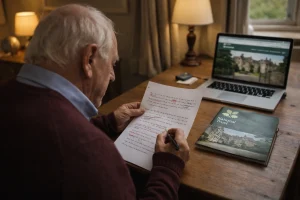
Andy Jones volunteered with the National Trust for more than 14 years across various sites, including the Woolbeding Estate in West Sussex and Hindhead Commons in the Surrey Hills.
During his time, he undertook multiple roles such as gardening, burning waste, assisting visitors, and helping with membership-related queries. He was widely regarded as a dedicated and proactive volunteer.
In 2024, Mr Jones noticed multiple errors on the National Trust’s website. These included misspellings such as “toliets” and “permanant,” incorrect grammar such as “take a peak,” and factual inaccuracies like misnaming Pre-Raphaelite artist Lucy Madox Brown. Taking initiative, he spent over 400 hours compiling a detailed dossier of these mistakes.
In November 2024, he sent a polite email to the Trust’s Director-General, Hilary McGrady, kindly requesting she pass the information to the appropriate department.
When no response came, he followed up in January 2025 with a second polite message. Again, there was no reply. Feeling ignored, Jones eventually sent a strongly worded email to his local branch that would spark a major fallout.
Was It Just About Spelling Mistakes or Something More?
At first glance, it appears Andy Jones was banned for correcting spelling errors. However, the National Trust has insisted that the decision was not solely based on that.
The full situation involves a series of interactions, ending with a highly inappropriate email that reportedly crossed the line of the charity’s organisational values. Let’s break it down further to understand what went wrong.
Email Language and How It Violated the Trust’s “Organizational Values”
The turning point came after Mr Jones received no responses to his emails. In frustration, he quit volunteering and sent a final email to his local manager. The language used in this message was not only unprofessional but also included ethnic references, offensive wording, and derogatory remarks aimed at the Trust’s leadership.
Statement From the Trust: “Relationship Breakdown Tends to Occur After a Series of Incidents”
According to a spokesperson for the National Trust, “No-one would be told they were no longer welcome as a volunteer simply for pointing out grammatical errors on a website, and this would not lead to relationship breakdown.
Relationship breakdown tends to occur after a series of incidents.” This clarification indicates that the dismissal was based on a cumulative assessment of behaviour.
Inclusion of Offensive Language (“Oirish Dame”, “Crappy Website”)
The most damaging part of the email referred to Director-General Hilary McGrady, who is from Northern Ireland, as the “Oirish Dame” and criticised the website as a “crappy not fit for purpose website.”
The tone and language in this email were deemed unacceptable and cited as the primary reason behind the ban. Although Mr Jones later admitted that the email was inappropriate, the damage had already been done.
The National Trust responded to his remarks with disappointment, stating clearly that such behaviour and language do not align with their organisational values. Ultimately, the email created an irreparable rift between the volunteer and the institution.
How Did the National Trust Justify Its Decision?
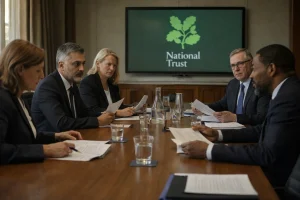
The National Trust’s official stance has consistently been that the volunteer was not banned simply for pointing out grammatical errors. Instead, the charity cited that the decision came after multiple incidents, culminating in a breakdown of the professional relationship.
A representative of the organisation explained that the tone and content of Mr Jones’s final email were deeply concerning and did not reflect the respectful, inclusive, and value-driven culture they strive to uphold. The Trust maintained that while feedback is welcome, it must be delivered in a respectful manner that aligns with internal codes of conduct.
Furthermore, they reiterated that due to legal obligations of confidentiality, they could not publicly discuss the specifics of any individual case but emphasised the importance of maintaining standards across all volunteer communications.
Did Health and Stress Play a Role in the Volunteer’s Reaction?
In his interview with The Telegraph, Mr Jones admitted that the language used in his final email was not appropriate. He also revealed that at the time of the incident, he was suffering from stage-two prostate cancer, which caused him significant stress.
He explained that his frustration grew over time due to the lack of acknowledgment for the 400+ hours he invested in reviewing the website’s errors.
Combined with his health condition, this stress influenced the emotional tone of his final message. While acknowledging his mistake, he continued to stand by his intention to improve the organisation’s digital presence.
Despite his apology, the Trust’s management viewed the breach in conduct as severe enough to end the volunteer relationship permanently.
Are There Similar Cases with the National Trust?
Andy Jones’s case is not isolated. In a similar situation earlier in 2025, more than a dozen volunteer gardeners at Mottistone Manor on the Isle of Wight were also suspended indefinitely. According to managers, these volunteers demonstrated “language or attitude that did not reflect the respectful and inclusive culture we strive for.”
However, critics argue that these suspensions were unjustified. Graham Field, one of the gardeners, voiced disappointment over the decision, highlighting how more than 100 years of combined experience and dedication were dismissed with little explanation.
The affected gardeners were given vague reasoning without examples of their alleged misconduct, leading to further public backlash against the Trust.
These multiple instances suggest a growing pattern where the Trust is perceived to be more rigid with its values enforcement, raising concerns over whether dissenting voices or differing communication styles are being excluded under the umbrella of inclusivity.
What Does This Say About the National Trust’s Culture?
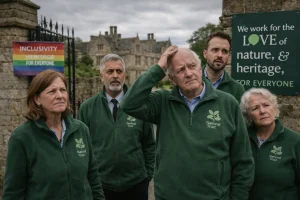
The way these volunteer cases were handled reflects a significant shift in the National Trust’s internal culture. While the organisation aims to uphold progressive, respectful values, critics argue that the interpretation of those values has at times led to rigidity and exclusion.
- Restore Trust, a pressure group made up of National Trust members and supporters, stated that the charity is now “disciplining or sacking volunteers for their opinions.”
- The emphasis on inclusion and diversity, while commendable, appears not to extend to diversity of thought or criticism.
- Policies around internal communication, behaviour, and values are reportedly being enforced with little tolerance for alternative perspectives.
This situation brings into focus a conflict between maintaining institutional culture and encouraging open, honest feedback from volunteers. It poses a critical question is inclusivity being practised or selectively applied?
What Can You Learn About Volunteering and Organisational Values?
For current and future volunteers, this story provides a valuable set of lessons on navigating roles within large institutions. While passion and initiative are important, so is aligning with the organisation’s expected standards of communication and behaviour.
Here are some key takeaways:
- Feedback needs to be constructive and respectful, even when met with silence or delay
- Internal policies should be understood clearly before taking independent action
- Health and personal stress must be considered, but they don’t justify inappropriate communication
- Long service does not exempt volunteers from following conduct guidelines
- Communication styles should be adapted to match the organisation’s tone and values
In short, mutual respect and shared values are essential for healthy volunteer relationships.
Is the Public Losing Faith in the National Trust’s Leadership?
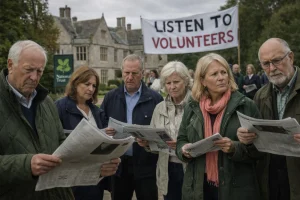
The response to Andy Jones’s ban has stirred mixed reactions across the public and media. While some understand the Trust’s perspective, many see it as an overreach and a warning signal about its current leadership direction.
Mr Jones himself remarked that the organisation needs a “young, vibrant leadership” to move into the modern era. He believes the senior management team has passed its “use-by date” and lacks the openness required to handle feedback.
Restore Trust echoed this sentiment, accusing the Trust of excluding people not for misconduct, but for simply expressing views that don’t align with leadership agendas. These critiques have caused many to question whether the organisation is still inclusive in practice or merely selective in ideology.
Such stories risk eroding public confidence in the Trust’s ability to remain a community-driven heritage body.
Was the Ban Fair or Flawed?
The question of whether Andy Jones’s ban was justified depends largely on how one weighs intention against execution. On the one hand, his initial motive was to improve the Trust’s website and protect its credibility. On the other, the language in his final email crossed a professional line.
Key reflections include:
- His actions were commendable until the final email, which became the tipping point
- The Trust’s failure to respond earlier may have escalated the situation
- A formal process for receiving internal feedback could have prevented the fallout
- Volunteers deserve to be heard, but must maintain decorum, even in frustration
- Organisations must find ways to accommodate critical voices without compromising values
Ultimately, this case underlines the delicate balance between safeguarding culture and embracing diverse contributions.
Timeline of Events in the Volunteer Ban Case
Understanding the timeline helps paint a clearer picture of how events unfolded and where missteps may have occurred on both sides.
Date Event Description
Nov 2024 Andy Jones sends a polite email with error dossier to Director-General Hilary McGrady
Jan 2025 Sends a follow-up message, expressing hope that his work will be useful
Early 2025 No response leads to him quitting and sending a strongly worded email
Feb 2025 The Trust cites organisational values and bans him from future volunteering
Public Reaction Media and Restore Trust criticise the decision; similar gardener suspensions resurface
This timeline reveals that while the situation evolved over months, the core conflict could have been de-escalated with early engagement and acknowledgement.
Conclusion
Andy Jones’s removal from the National Trust is a complex and cautionary tale about communication, organisational culture, and the expectations placed on volunteers. While his efforts were rooted in helping the organisation, the manner in which frustration was expressed ultimately resulted in his dismissal.
This situation is a reflection of broader concerns about how institutions balance feedback, values, and authority. For volunteers and organisations alike, it’s a lesson in the power of words and the importance of respect, even in moments of tension.
FAQs
Was the volunteer really banned just for pointing out typos?
No, the ban followed a series of incidents, culminating in a strongly worded email with inappropriate language.
How long did Andy Jones volunteer with the National Trust?
He volunteered for over 14 years at various sites across West Sussex and Surrey Hills.
What specific spelling errors were pointed out by the volunteer?
Errors included words like toliets and permanant and factual mistakes in artist names.
Who is Hilary McGrady?
She is the National Trust’s Director-General and was awarded a CBE for services to heritage.
Did the Trust respond to the volunteer’s initial emails?
No, there was no response to his polite emails, which contributed to his frustration.
What does Restore Trust say about this incident?
Restore Trust criticised the National Trust for silencing dissenting voices among its volunteers.
Have other volunteers faced similar consequences?
Yes, over a dozen gardeners were suspended for alleged behaviour that didn’t match the Trust’s values.