
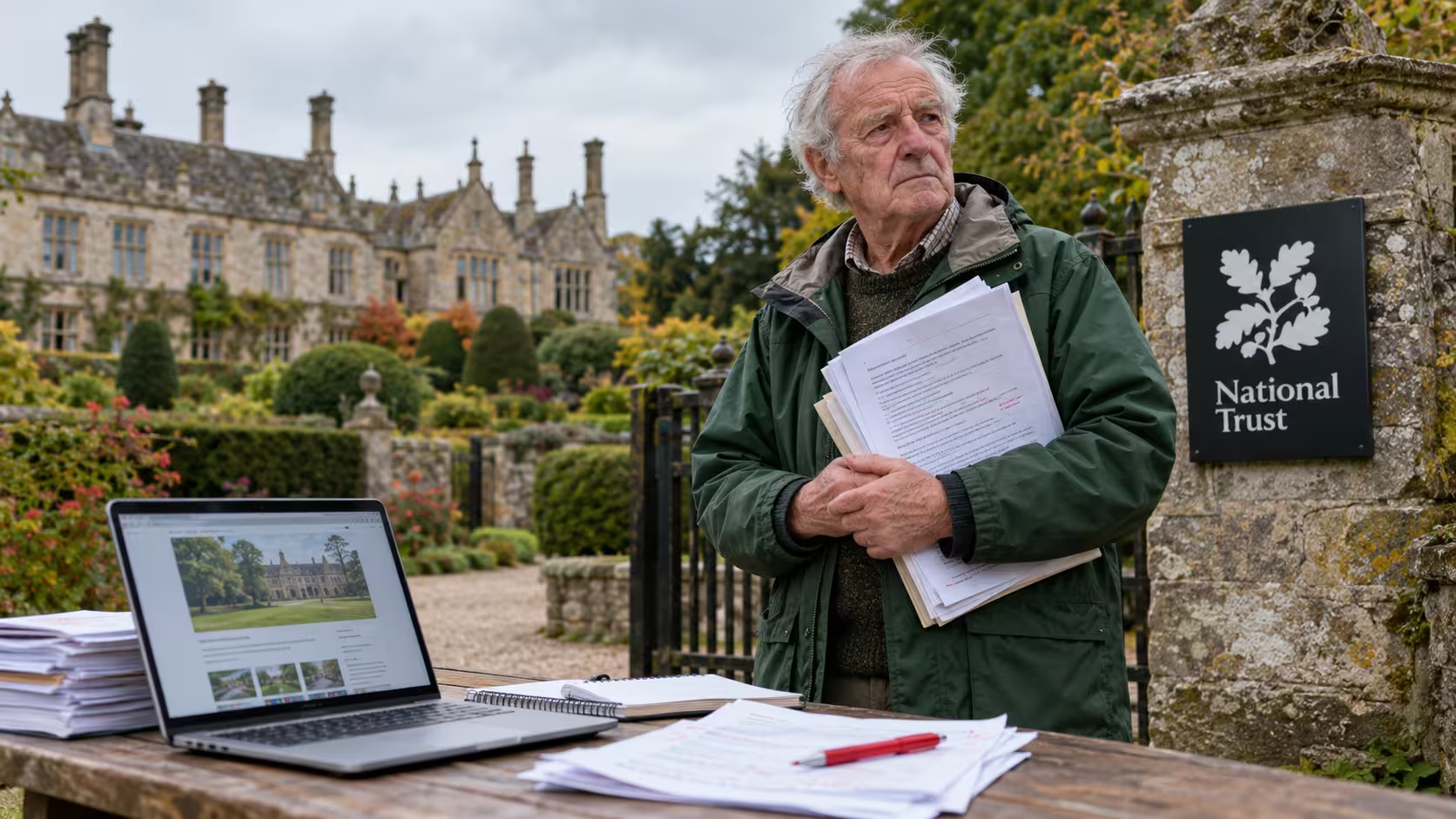
The National Trust bans volunteer story centres on Andy Jones, a 71-year-old who spent 14 years volunteering for the conservation charity before being barred from taking future volunteer roles.
Jones had spent hundreds of hours identifying thousands of spelling, grammatical and factual errors on the National Trust website.
However, the Trust says his corrections were not the reason the relationship ended.
The dispute escalated after Jones became frustrated over what he believed was a lack of acknowledgement of his work.
He resigned and later sent a strongly worded email containing language he subsequently accepted was inappropriate.
The National Trust said the eventual relationship breakdown involved more than simply pointing out website mistakes.
There is also an important disagreement over whether Jones’s earlier emails were ignored. Jones says he received no response, while the National Trust says it did respond.
That distinction, along with evidence that some errors remain on the Trust’s website in October 2026, makes the case more complicated than the original headlines suggested.
What Happened Between Andy Jones and the National Trust?
Andy Jones volunteered with the National Trust for approximately 14 years, working at locations including Woolbeding in West Sussex and Hindhead Commons and the Devil’s Punch Bowl in Surrey.
His responsibilities reportedly ranged from gardening and practical maintenance work to answering membership queries and helping visitors during walks.
The dispute began after Jones independently reviewed the National Trust’s online content.
He became concerned about the number of spelling, grammatical and factual errors appearing across its website and compiled what he described as a large dossier documenting them.
Local reporting says the dossier contained more than 3,000 mistakes and took Jones more than 400 hours to compile.
In November 2024, Jones contacted Director-General Hilary McGrady and asked for the information to be passed to whoever could deal with the problems.
He later followed up after believing he had received no acknowledgement.
The situation eventually escalated. Jones resigned from volunteering and sent a strongly worded email to his local National Trust manager.
After that communication, he was informed that he would no longer be considered for future volunteer opportunities.
What Website Errors Did Andy Jones Report?
Jones’s dossier was not limited to occasional minor typing mistakes. According to reports, it covered spelling, grammar, names and factual descriptions across National Trust webpages.
Examples attributed to his review included:
Reported Error Type Of Problem
“T oliets” Spelling Error
“Permanant” Spelling Error
“Take A Peak” Incorrect Expression
“Natinal Trust” Organisation Name Misspelt
“Chtistmas” Spelling Error
“Ewe Trees” Incorrect Word
Lucy Madox Brown Listed As “Maddox” Brown Name Error
Sheep Apparently Described As Red Squirrels Factual Or Image Description Error
Local reporting put the number at more than 3,000 errors, while other accounts described the collection more generally as containing thousands of mistakes.
The scale matters because Jones said his intention was to help improve the organisation’s digital content rather than simply criticise it.
For any large organisation, website accuracy can affect public confidence.
Similar principles apply to businesses managing their own digital reputation, where accurate information and effective handling of feedback can form part of the wider challenge of competing effectively with larger organisations.
Why Did Andy Jones Stop Volunteering For The National Trust?
Jones’s departure should be separated into two events.
He reportedly resigned from his existing volunteering role himself after becoming frustrated about how his website review had been handled.
The National Trust then subsequently told him that he would not be considered for other volunteer positions.
That means descriptions suggesting he was simply dismissed from his existing position do not capture the full sequence.
Jones said that, after investing more than 400 hours in the project, he felt his efforts had not been properly acknowledged. His frustration culminated in the strongly worded message sent to his local manager.
The email changed the nature of the dispute. What had started as a disagreement about website accuracy became a question about communication, behaviour and whether the volunteering relationship could continue.
Was Andy Jones Banned Simply For Pointing Out Spelling Errors?
The National Trust says no.
Its position is that someone would not be excluded from volunteering simply because they had pointed out grammatical errors on its website.
The Trust said relationship breakdown normally happens after a series of incidents.
Jones disputes that characterisation. He said he had volunteered for 14 years without a previous incident and argued that the decisive issue was one angry email.
This is an important distinction because the phrase “National Trust bans volunteer for correcting spelling mistakes” can imply a direct sequence:
Volunteer Reports Errors → National Trust Bans Volunteer
The available evidence shows additional stages:
Volunteer Reports Errors → Dispute Over Response → Volunteer Resigns → Strongly Worded Email → Trust Bars Future Volunteering
That does not determine whether the Trust’s eventual decision was proportionate, but it provides a fuller account of how the dispute developed.
What Did Andy Jones Say In His Final Email?
The final email appears to have been the main turning point.
Jones criticised the quality of the National Trust website using profanity and referred to Director-General Hilary McGrady, who is Northern Irish, using a mocking nationality-based description.
He also described the website as “not fit for purpose”.
Jones subsequently acknowledged that his wording was inappropriate.
The National Trust viewed the communication differently from constructive criticism about spelling mistakes. Its response focused on organisational values and the breakdown of the volunteering relationship.
That distinction is important. Organisations can legitimately receive strong criticism while still setting standards around how staff, volunteers and managers communicate with one another.
Similar tensions between management decisions, organisational messaging and people’s reaction to them can quickly become wider reputation issues, as seen in the separate Morrisons pay rise controversy.
How Did The National Trust Explain Its Decision?
The National Trust has consistently rejected the suggestion that Jones was barred merely because he identified spelling mistakes.
A spokesperson said that pointing out grammatical errors would not by itself cause a volunteering relationship to break down.
The organisation instead referred to a wider deterioration in the relationship and said such situations tend to involve a series of incidents.
However, the Trust has not publicly detailed every incident it believes contributed to the decision.
It says it has confidentiality obligations that prevent it from discussing an individual’s full record publicly.
That leaves an information gap between the National Trust’s account and Jones’s claim that he had experienced no previous problems during 14 years of service.
This is therefore one of the central unresolved elements of the case.
Did The National Trust Really Ignore Andy Jones’s Emails?
This point is disputed.
Early accounts of the case said Jones sent his initial information in November 2024, followed up in January 2025 and received no response.
Jones continues to say he was ignored.
However, the National Trust later told local media that it had responded to his email. Jones disputed receiving that response.
The fairest description is therefore not that the Trust definitely ignored him, but that:
- Jones Says: He did not receive a response to his attempts to raise the website problems
- National Trust Says: A response was sent
- What Is Unclear: Why the two accounts differ and whether the response successfully reached Jones
This distinction matters because the alleged lack of acknowledgement is central to Jones’s explanation for why his frustration escalated.
Did Andy Jones Resign Before He Was Banned From Future Volunteer Roles?
Yes, according to local reporting, Jones had already resigned before he was informed that he would not be accepted for future National Trust volunteering.
The sequence means “banned” or “blacklisted” refers principally to his ability to take future volunteering roles, rather than the termination of the role from which he had already resigned.
Volunteering arrangements should also not automatically be treated in the same way as employment relationships.
Employees and workers can have statutory employment protections that do not necessarily apply in the same way to genuine volunteers.
The differences around formal working relationships and legal protections are important in broader disputes over employment rights and contractual status.
What Does Andy Jones Say About The National Trust’s Claim Of Multiple Incidents?
Jones challenges the National Trust’s suggestion that there was a wider history of incidents.
He told local media that he had worked with the Trust for 14 years without an incident and believed the ban resulted from one angry email.
The National Trust’s position is different. Its spokesperson has said that relationship breakdown generally follows a series of incidents, while declining to discuss private details relating to an individual volunteer.
As a result, neither claim should be presented as independently established fact.
Issue Jones's Position National Trust Position
Previous Incidents Says There Were None Refers To A Series Of Incidents
Initial Email Response Says He Was Ignored Says It Responded
Reason For Ban Says One Angry Email Triggered It Says It Was Not About Website Corrections Alone
Website Problems Says Thousands Existed Does Not Dispute That Website Errors Existed
Have The National Trust Website Errors Been Corrected?
Not all similar errors have disappeared.
A check of current National Trust webpages in October 2026 found several live examples of the same types of mistakes involved in the original controversy.
An official Prior Park page currently describes a brass rubbing trail as a “permanant fixture” rather than “permanent”.
A National Trust Salcombe Hill page uses “Take a peak at the view”, rather than “take a peek”.
The organisation’s Hatchlands Park group-visits page currently says admission is free for “Natinal Trust members”, while a Hive Beach page published in July 2026 refers to a “Natinal Trust welcome team.”
These cannot automatically be assumed to be the exact webpages Jones included in his original dossier. However, they show that similar spelling and wording errors remain visible on official National Trust pages.
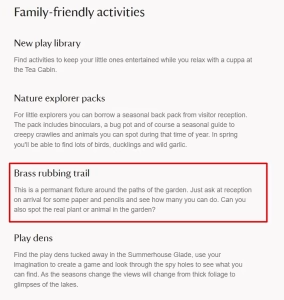
The official National Trust page currently describes the brass rubbing trail as a “permanant fixture”, showing that a spelling error remains live.
What Do National Trust Rules Say About Volunteer Complaints And Conduct?
The National Trust publishes procedures for receiving complaints and feedback. Its complaints procedure says complaints should be treated seriously, resolved promptly where possible, used to improve services and handled confidentially.
Its volunteer privacy policy provides further insight into how volunteer disputes may be managed.
The policy says the organisation can collect and retain information concerning complaints or issues raised by or about volunteers, including subsequent appeals.
It also refers to gathering evidence and feedback when managing concerns or incidents during volunteering.
That does not prove which internal process was followed in Jones’s individual case, nor does the published general complaints process necessarily apply to every volunteer-management dispute.
It does show, however, that formal complaint handling, evidence gathering and appeals are recognised within the organisation’s wider volunteer framework.
Clear escalation routes are particularly important because poorly handled complaints can become significantly larger reputation problems.
The fallout from the Sainsbury’s facial recognition error similarly demonstrated how questions about explanation and recourse can become central once a disputed organisational decision becomes public.
Have Other National Trust Volunteers Faced Similar Disputes?
Jones’s case attracted additional attention partly because it followed a separate dispute involving volunteer gardeners at Mottistone Gardens on the Isle of Wight.
Around 13 long-serving gardeners became involved in a disagreement with National Trust management during 2025.
The volunteers said they were surprised by concerns raised about behaviour, attitude, training and organisational values.
The National Trust said it had reviewed how the garden operated and wanted staff and volunteer teams to work in a positive, respectful and welcoming environment. Some volunteers subsequently chose not to continue.
Restore Trust, a campaign group critical of aspects of National Trust management, has linked the Mottistone and Andy Jones cases and argued that they raise broader questions about how the organisation treats dissenting volunteers.
That interpretation is the group’s position rather than an independently established conclusion.
Other major organisations have faced similar scrutiny when internal culture disputes become public.
Allegations concerning workplace culture, for example, became an important part of the wider discussion around BrewDog’s business and reputation challenges.
How Important Are Volunteers To The National Trust?
Volunteers are a major part of the National Trust’s operations.
The organisation’s 2024–25 Annual Report states that 42,590 volunteers contributed 2.9 million hours during the year. That included around 9,000 new recruits.
The same report said:
- 92% Would Recommend Volunteering: Surveyed volunteers said they would recommend volunteering with the Trust
- 93% Reported Wellbeing Benefits: Respondents said volunteering boosted their wellbeing
- 95% Reported Fulfilment: Volunteers said they felt a sense of fulfilment
- 500+ Contributed To Volunteer Voice: More than 500 volunteers had provided ideas through the Volunteer Voice initiative
The report describes staff and volunteers as important ambassadors for the organisation and says volunteer experience remains a priority.
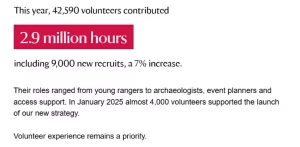
The National Trust’s annual report states that 42,590 volunteers contributed 2.9 million hours during 2024–25.
Those figures provide important context.
A dispute involving one volunteer does not establish the experience of more than 40,000 people, but disagreements involving long-serving volunteers can attract particular attention precisely because the organisation depends heavily on voluntary contributions.
What Facts About The Andy Jones Case Are Still Disputed?
Several key facts are clear, while others remain contested.
Established Points:
- Jones Volunteered For Around 14 Years
- He Conducted A Large Review Of National Trust Webpages
- He Reported Thousands Of Errors
- He Spent Hundreds Of Hours On The Work
- He Resigned From Volunteering
- He Sent A Strongly Worded Email
- He Accepted That Parts Of The Email Were Inappropriate
- He Was Subsequently Barred From Future Volunteer Roles
Disputed Or Unclear Points:
- Whether His Earlier Emails Were Successfully Answered
- What Other Incidents The National Trust Believes Occurred
- Whether One Email Or A Wider Pattern Led To The Final Decision
- Whether An Earlier Intervention Could Have Prevented The Relationship From Breaking Down
Keeping these two categories separate makes the story more accurate than treating either side’s entire version as proven.
What Has Been The Reaction To The National Trust’s Decision?
Reaction has been divided.
Critics of the National Trust have argued that Jones’s long service and the time he spent finding genuine website problems deserved greater acknowledgement.
Restore Trust has used the case to support its wider criticism of how the charity manages disagreements with some volunteers.
Others have focused on the content of Jones’s final email and argued that identifying legitimate errors does not excuse inappropriate language.
The case therefore raises two separate questions that should not be confused.
The first is whether the National Trust handled Jones’s original feedback effectively.
The second is whether the language used after the dispute escalated justified ending any possibility of a future volunteering relationship.
High-profile internal disagreements can quickly turn into reputation issues when competing versions of events become public.
The same broader dynamic has appeared in other UK organisational disputes, including the Morrisons staff pay controversy, where management explanations and employee reactions became central to the public story.
What Is The Latest Update On Andy Jones And The National Trust?
As of 29 October 2026, there is no publicly confirmed indication that the decision preventing Jones from taking future National Trust volunteering roles has been reversed.
The most significant subsequent development is the clearer dispute over whether his original correspondence was ignored. The National Trust says it responded, while Jones maintains that he did not receive a response.
At the same time, checks of the organisation’s current website show that spelling mistakes similar to those Jones highlighted remain online, including “permanant”, “Natinal Trust” and “take a peak”.
The National Trust continues to emphasise the importance of its volunteer network. Its published policies also show that complaints, incidents and appeals form part of its volunteer-management framework.
For Jones, however, the dispute appears to remain unresolved publicly.
Conclusion
The National Trust bans volunteer story is more complicated than a volunteer simply being punished for correcting spelling mistakes.
Andy Jones spent 14 years volunteering and hundreds of hours documenting genuine problems across the charity’s website. Some similar spelling mistakes remain visible on National Trust pages even in October 2026.
However, Jones also resigned and sent an email containing language he later acknowledged was inappropriate.
The National Trust says website criticism alone would never result in someone being barred and maintains that relationship breakdown usually follows a wider series of incidents.
The biggest unresolved questions concern communication. Jones says he was ignored, while the Trust says it responded. Jones says there was only one incident in 14 years, while the Trust indicates that the situation was broader.
That leaves the case as both a website-quality dispute and a wider example of how quickly feedback, poor communication and organisational standards can collide when a working relationship breaks down.
Frequently Asked Questions
Why Did The National Trust Ban Andy Jones?
The National Trust says he was not barred for correcting spelling mistakes alone. The dispute escalated after Jones resigned and sent a strongly worded email that the organisation considered inconsistent with its values.
How Long Did Andy Jones Volunteer For The National Trust?
Jones volunteered for approximately 14 years at National Trust locations including Woolbeding, Hindhead Commons and the Devil’s Punch Bowl.
How Many Website Errors Did Andy Jones Find?
Local reporting says Jones compiled a dossier containing more than 3,000 spelling, grammatical and factual errors after spending over 400 hours reviewing the website.
Did The National Trust Respond To Andy Jones’s Emails?
This remains disputed. Jones says he received no response, while the National Trust has said that it did respond to his correspondence.
Did Andy Jones Resign Or Was He Sacked?
Jones reportedly resigned from his existing volunteering role before being informed that he would not be considered for future National Trust volunteer positions.
Are National Trust Website Errors Still Online?
Yes. As of October 2026, official pages still contain examples including “permanant”, “Natinal Trust” and “take a peak”.
Can Andy Jones Volunteer For The National Trust Again?
There is currently no public confirmation that the restriction has been reversed. Reporting indicates that he was barred from being considered for future National Trust volunteering roles.