
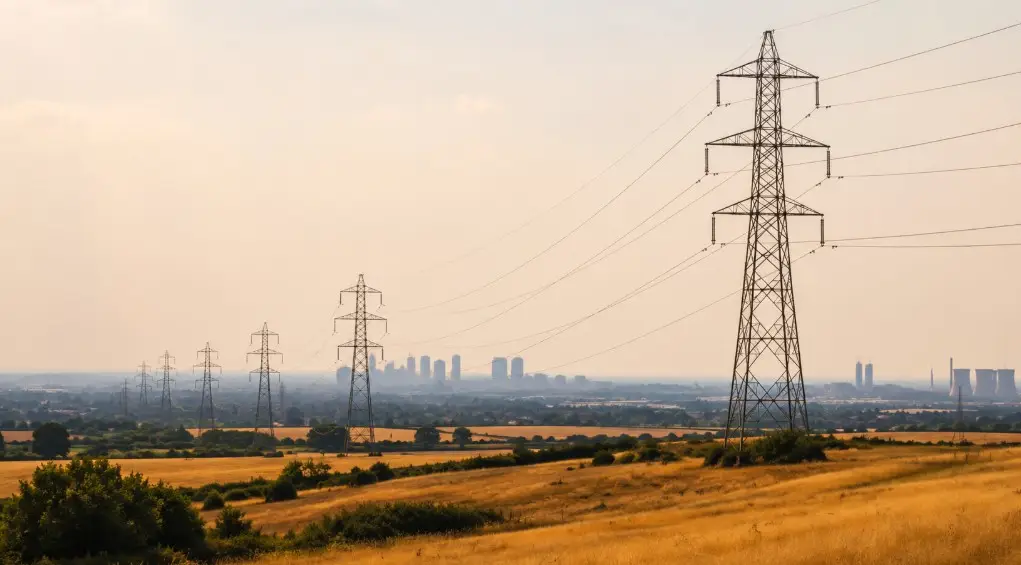
The National Energy System Operator warning means Britain’s electricity grid had tighter spare power margins during the heatwave, but it did not mean households were being told to expect immediate blackouts.
NESO issued an Electricity Margin Notice to ask the electricity market for extra available power or demand flexibility during a specific Thursday evening peak.
Key Takeaways:
- NESO issued an Electricity Margin Notice because spare electricity margins were expected to be tighter than usual.
- The warning applied to the electricity market, not directly to ordinary households.
- National reports said the possible shortfall was around 1.2 gigawatts (GW) between 6.30pm and 10.30pm.
- Temperatures were forecast to reach around 36C in some parts of the country.
- Wind output was reported at around 1.5GW by midday, compared with 10GW to 12GW on a windy day.
- Around 22% of Britain’s electricity was reportedly being generated overseas on Thursday morning, with just over half of those imports coming from France.
- The warning should be read as a serious grid-management signal, not as proof that power cuts were certain.
What Happened After the National Energy System Operator Warning?

NESO issued the warning as Britain faced another spell of extreme summer heat. The notice asked the electricity market to make extra generation or flexibility available during the Thursday evening peak.
The key issue was the spare margin between expected demand and available supply. When that margin becomes tighter than preferred, NESO can ask the market to respond before the system becomes more difficult to manage.
This warning attracted attention because summer electricity notices are unusual. Grid pressure is more commonly associated with winter, when cold weather, dark evenings and low wind can combine to push up demand.
Why Thursday Evening Mattered?
The warning covered the evening peak, reported as 6.30pm to 10.30pm. That period can be challenging during a heatwave because many people return home, use appliances, switch on fans, and rely more heavily on cooling.
At the same time, solar output starts to fall later in the day, while low wind speeds can reduce renewable generation. This can leave the system relying more heavily on gas plants, imports, batteries and other flexibility.
What Is NESO?
NESO is responsible for balancing electricity supply and demand across Great Britain. It does not sell power to homes and it does not set household energy bills. Its job is to operate the electricity system and support longer-term planning for Britain’s energy networks.
The UK Government confirmed NESO’s role through the Energy Act 2023, with the official government designation describing it as an independent, expert and impartial body with responsibilities across electricity and gas.
Why NESO Issues Warnings?
NESO issues operational notices when it wants the market to prepare for tighter conditions. These warnings are designed to improve readiness before the system reaches a more serious stage.
A notice can encourage:
- Power generators to make more capacity available
- Large energy users to reduce demand where possible
- Battery and storage operators to prepare support
- Interconnector operators to respond to market needs
- Flexibility providers to offer demand-side services
The purpose is not to alarm the public. The purpose is to make sure the market has enough time to respond.
What Is an Electricity Margin Notice?
An Electricity Margin Notice is a technical alert used when NESO wants a larger safety cushion between available electricity supply and forecast demand.
NESO’s own margin notice guidance says an EMN is a routine operational tool and does not mean electricity supplies are at risk or that power cuts are being warned.
In simple terms, NESO is saying, the system is being managed, but more available power or flexibility would make the operating position stronger.
What the Warning Means?
The warning means:
- Spare capacity was tighter than NESO preferred
- Extra generation or flexibility was requested
- The market was being asked to support the grid
- NESO was monitoring conditions closely
- The evening peak needed careful management
What the Warning Does Not Mean?
The warning does not automatically mean:
- National blackouts are expected
- Households must switch everything off
- The grid has failed
- There is no electricity available
- One energy source is solely responsible
This distinction is important because the word “warning” can easily be misread. In this case, it was a market signal, not a direct public power-cut notice.
Key Figures Behind the Warning
Several numerical details explain why the warning became a major energy story. The figures show that the grid was dealing with a combination of heat, low wind, import reliance and reduced spare capacity.
National coverage reported the following:
- 1.2GW possible capacity shortfall during the evening period.
- 6.30pm to 10.30pm warning window on Thursday.
- 36C possible temperatures in parts of the country.
- 1.5GW wind output by midday, compared with 10GW to 12GW on a windy day.
- 22% of electricity reportedly generated overseas on Thursday morning.
- Just over half of those imports reportedly coming from France.
- The possible shortfall was compared with roughly the output of one of the UK’s five nuclear power stations.
Sky also reported that the notice was only the third such summertime warning in NESO’s history, with wind producing just under 5% of Britain’s electricity on Thursday morning and gas-fired plants producing around 37% at that point in the day, according to a recent report.
Why the 1.2GW Figure Matters?
A possible 1.2GW margin gap is significant because it represents a large amount of electricity capacity. The comparison with the output of a nuclear power station helps readers understand the scale.
However, the figure should not be misunderstood. It did not mean 1.2GW of household demand would definitely go unmet. It referred to the gap between expected available capacity and the margin NESO wanted for secure system operation.
That difference matters for accuracy. A tight operating margin is serious, but it is not the same as confirmed power cuts.
Why Did the Heatwave Put Pressure on Power Supplies?

The heatwave affected the electricity system on both the demand side and the supply side.
On the demand side, people used more electricity for cooling. Fans, portable air conditioners, office cooling systems, refrigeration units and ventilation equipment all add pressure during hot weather.
On the supply side, high temperatures can reduce the availability or efficiency of some power generation. Low wind speeds can cut wind output sharply, while hot weather across Europe can affect imports.
Why Low Wind Was Important?
Wind power can generate a large share of Britain’s electricity when conditions are strong. But during still, hot weather, output can fall sharply.
That is why the reported comparison matters:
- Around 1.5GW of wind output by midday
- Around 10GW to 12GW possible on a windy day
This does not mean wind power alone caused the warning. It means low wind reduced one major source of supply at the same time as heat-related demand was rising.
Why Gas and Imports Became More Important?
When wind output falls and demand rises, Britain often relies more heavily on gas-fired power stations, imports, batteries and demand flexibility.
Gas plants can respond quickly, which makes them useful during tight periods. However, they can be more expensive than some other forms of generation.
Imports also matter because Britain is connected to neighbouring electricity markets through interconnector cables. If Britain can import power when needed, this can help balance the system. But if Europe is also dealing with extreme heat, imports may be less reliable or more expensive.
Why France Was Part of the Story?
France was important because Britain imports electricity from the continent, including through links with France.
During heatwaves, French nuclear output can sometimes be affected by cooling limits. Nuclear power stations often use river water for cooling, and very high river temperatures can restrict output.
That matters because French electricity is often part of Britain’s import mix. If France is dealing with its own heat-related pressures, the amount of power available for export can become more uncertain.
What the 22% Import Figure Shows?
The reported figure that around 22% of UK electricity was being generated overseas on Thursday morning shows how important imports can be during tight periods.
This does not mean imports are bad. Interconnectors can improve security by allowing electricity to move where it is needed. But it does show that Britain’s electricity supply is connected to wider European conditions.
When heat affects several countries at once, the whole regional energy market can become tighter.
Does the Warning Mean Power Cuts Are Coming?
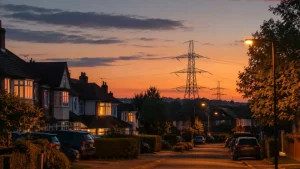
No. The warning did not mean power cuts were expected for households. It meant NESO wanted more available capacity or flexibility during a specific period.
A confirmed blackout risk would involve a different level of public communication and emergency planning. An Electricity Margin Notice sits earlier in the process. It is designed to help avoid more serious action.
What Households Should Do?
Households should not panic. They should also not switch off essential appliances, cooling equipment, medical devices or refrigeration.
A sensible response during a heatwave is to:
- Avoid unnecessary high-energy use during peak times
- Use fans and cooling safely
- Keep phones charged during severe weather
- Check official updates if concerned
- Support vulnerable relatives, neighbours or tenants
The most important point is safety. During extreme heat, health needs should come before energy saving.
What the Warning Means for UK Businesses?
The warning is more relevant for businesses than ordinary households, especially firms with high electricity use or critical operations.
Businesses may need to monitor grid warnings more closely if they operate:
- Factories or manufacturing sites
- Cold storage facilities
- Supermarkets and food logistics
- Care homes and healthcare settings
- Data centres
- Hospitality venues
- Large offices with cooling systems
Business Continuity Checks
A single warning does not mean disruption is certain. However, repeated tight-margin events are a reminder that businesses should review their energy resilience.
Useful checks include:
- Backup power arrangements
- Supplier communication plans
- Peak-time electricity use
- Cooling and ventilation systems
- Critical equipment dependencies
- Demand flexibility options
- Heat-related staff safety measures
This is especially important for organisations that cannot easily pause operations if electricity supply becomes unstable.
Could the Warning Affect Energy Bills?
One Electricity Margin Notice does not instantly change household bills. Domestic bills are usually affected by tariffs, contracts and the Ofgem price cap, not by one short-term grid notice.
However, tight supply periods can affect wider system costs. When NESO needs extra power quickly, it may need to use more expensive generation, imports or balancing actions.
If these events become more frequent, they may add pressure to the wider energy market over time. That does not mean every warning immediately increases bills, but it does show why grid flexibility matters for long-term costs.
Why Repeated Warnings Matter?
Repeated tight-margin warnings can raise bigger questions about:
- Electricity storage
- Grid upgrades
- Gas backup capacity
- Renewable output variability
- Demand-side flexibility
- Interconnector dependence
- Power station maintenance
- Extreme weather planning
The UK energy system is changing, and the grid must be able to handle both winter cold snaps and summer heatwaves.
Confirmed Facts and Misleading Claims

Energy warnings can easily be exaggerated. The safest way to explain the story is to separate what is known from what should not be assumed.
| Claim or concern | More accurate explanation |
|---|---|
| NESO issued a warning | NESO issued an Electricity Margin Notice asking the market for extra capacity or flexibility. |
| The possible shortfall was 1.2GW | National reporting described a 1.2GW gap against the preferred margin. |
| The warning covered Thursday evening | The notice was reported for 6.30pm to 10.30pm. |
| Power cuts were certain | NESO did not say household blackouts were expected. |
| Wind output was low | Wind generation was reported far below what it can produce on a windy day. |
| Imports were important | Reports said around 22% of electricity was coming from overseas that morning. |
| One source caused the issue | Heat, demand, low wind, generation availability and imports all played a role. |
Why Summer Grid Warnings May Become More Common?
Britain’s electricity system has traditionally been planned around winter peaks. Cold weather, dark evenings and high heating demand have historically created the biggest pressure.
Heatwaves are changing that pattern. As cooling demand rises, summer electricity use can become more difficult to predict.
The Shift in Summer Demand
The UK still has lower air-conditioning use than many hotter countries, but cooling demand is growing in homes, offices, shops, supermarkets, hospitals and data centres. This creates a new challenge for grid planning.
Britain needs enough flexibility to manage:
- Hot summer evenings
- Low wind conditions
- Reduced European imports
- Higher cooling demand
- Power station maintenance
- Sudden changes in generation
A strong electricity system needs more than one solution. It needs reliable generation, storage, flexible demand, interconnectors and clear operational planning.
What Should Happen Next?
The warning should encourage a practical discussion about energy resilience. Britain needs a system that can handle both low-wind cold snaps and high-temperature summer peaks.
Important next steps include:
- More battery storage
- Stronger demand flexibility
- Reliable backup generation
- Faster grid upgrades
- Better interconnector planning
- Clearer public communication
- Improved heatwave planning for businesses.
The issue is not only about one evening. It is about whether Britain’s electricity system can stay secure, affordable and flexible as weather patterns and demand change.
Conclusion
The national energy system operator warning should be taken seriously, but it should not be sensationalised. It was a sign that electricity margins were tighter than preferred during a heatwave, not a direct warning that household blackouts were certain.
The main pressure came from a combination of high temperatures, low wind output, generation availability and reliance on imports during a key evening period.
For households, the practical message is to stay informed and use energy sensibly. For businesses and policymakers, the warning is a reminder that Britain’s electricity system must become more flexible and resilient.
FAQs
Does the National Energy System Operator warning mean blackouts are coming?
No. The warning means NESO wanted more available electricity capacity or flexibility from the market. It did not mean household blackouts were expected.
What is an Electricity Margin Notice?
An Electricity Margin Notice is an operational alert used when NESO wants a larger spare capacity cushion between forecast demand and available supply.
Why was the warning issued during a heatwave?
The warning was linked to high temperatures, higher cooling demand, low wind output, generation availability and pressure across Europe.
What time did the warning cover?
The warning was reported to cover Thursday evening between 6.30pm and 10.30pm.
How much capacity was reportedly short?
National reporting said the possible shortfall was around 1.2GW, roughly comparable to the output of one UK nuclear power station.
Why does wind output matter?
Wind output matters because it can provide a large share of electricity when conditions are strong. During still weather, other sources may need to fill the gap.
Should households switch off appliances?
Households do not need to switch off essential appliances. They may avoid unnecessary electricity use during peak periods, but safety, cooling and medical needs should come first.