
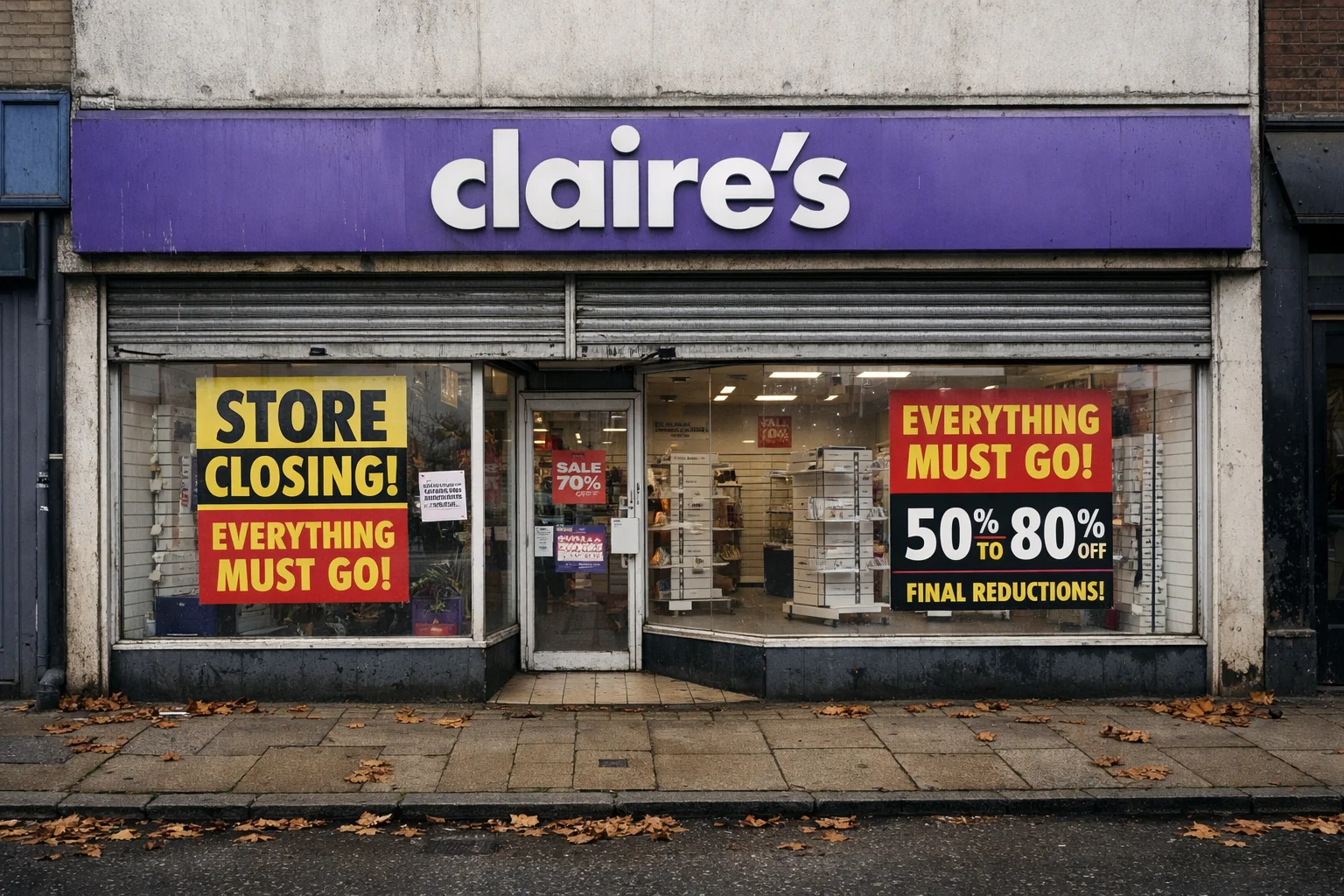
Claire’s Accessories has officially entered administration in the UK and Ireland for the second time in under a year, despite being rescued in 2025. The answer to what went wrong lies in a mix of outdated branding, brutal market conditions, and internal business missteps. Claire’s simply couldn’t keep pace with a digital-first generation or adapt to the unforgiving realities of the modern retail landscape.
Key Takeaways:
- Modella Capital’s 2025 rescue failed due to inherited financial issues.
- 134 stores and over 1,350 jobs are now at risk in the UK and Ireland.
- Digital-native competitors like Temu and TikTok Shop took Claire’s audience.
- Rising costs and harsh government fiscal policies accelerated the collapse.
- Branding experts cite Claire’s failure to evolve as a core issue.
What Led to Claire’s Accessories Entering Administration Again?
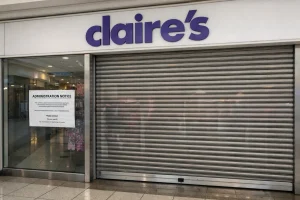
Claire’s latest fall into administration wasn’t a sudden event, it was the result of a series of collapses, temporary recoveries, and mounting structural weaknesses that stretched over years.
The most recent insolvency filing in January 2026 marks the second in under 12 months, underscoring the inability to reverse the retailer’s downward trajectory.
The accessories chain, popular with tweens for decades, first filed for bankruptcy in the United States in 2018. Although that situation was stabilised, the company faced another major crisis in 2025 when it filed again in the US.
Just weeks later, Claire’s entered administration in the UK and Ireland. It was promptly acquired by Modella Capital in September 2025, a private equity firm that hoped to revive the brand with aggressive restructuring. Despite their efforts, the situation deteriorated again by the start of 2026.
At the time of Modella’s takeover, around 145 stores were shut down and 1,000 jobs were lost. The investment was supposed to protect the remaining footprint of 134 stores and preserve over 1,350 jobs, but those are now at risk following the insolvency proceedings.
Modella stated that there was no realistic possibility of the business trading profitably, largely due to the burdens it inherited and poor performance over the Christmas period.
Claire’s downfall wasn’t isolated either. Modella is also placing The Original Factory Shop (TOFS) into administration, both victims of what the firm calls a “highly challenging” retail climate in the UK.
| Year | Event |
|---|---|
| 2018 | Claire’s files for bankruptcy in the US |
| August 2025 | Claire’s files for bankruptcy again in the US |
| September 2025 | Claire’s enters administration in UK and Ireland |
| September 2025 | Modella Capital acquires Claire’s UK |
| January 2026 | Claire’s UK & Ireland enters administration again |
This most recent filing leaves Claire’s future in deep uncertainty, and the high street a little emptier.
Why Did Modella Capital Fail to Turn Claire’s Around?
Modella Capital stepped in to save Claire’s in 2025, just weeks after its collapse in the UK and Ireland. The firm had a track record of acquiring troubled high street retailers, including TG Jones (formerly WHSmith) and Hobbycraft. But Claire’s, it seems, proved too broken to be fixed.
The firm inherited a company that was already “highly vulnerable” due to years of underperformance, misaligned strategies, and a changing market that had moved on from Claire’s traditional appeal.
According to Modella, even with intensive efforts and restructuring, the retailer never stood a chance of trading profitably. Key trading periods, especially Christmas, underperformed significantly. This left Modella with no option but to initiate insolvency proceedings.
What became evident was that even aggressive cost-cutting and a new management structure couldn’t overcome the deeply rooted issues Claire’s carried from previous ownership. The economic pressures of the time only accelerated an already inevitable collapse.
How Did Government Policies and Inflation Contribute to the Collapse?

Claire’s fate wasn’t sealed by internal problems alone. The external economic environment in the UK played a heavy hand in the company’s downfall.
- Rising Operating Costs: Inflation pushed up prices for rent, energy, and staffing. Minimum wage hikes and increased employer National Insurance contributions made it more expensive to keep stores open.
- Taxation Burdens: Recent budgets introduced by Chancellor Rachel Reeves added to the strain. Taxes went up, and fiscal policies were widely criticised for punishing already-struggling high street retailers.
- Consumer Confidence Collapse: British consumers pulled back spending amid high living costs. Even peak seasons like Christmas saw disappointing footfall and reduced sales, particularly for retailers that hadn’t adapted to ecommerce.
Modella was vocal in criticising these pressures, citing government policies and the macroeconomic environment as key contributors to Claire’s and TOFS’s collapse. It’s a warning to other retailers about the broader forces reshaping the UK’s business landscape.
Was Claire’s Still Relevant to Today’s Shoppers?
Relevance is the cornerstone of survival in retail, and Claire’s couldn’t keep up with its evolving target market. Today’s tweens and teens shop very differently than they did in Claire’s heyday, and the brand failed to evolve quickly enough.
Shift in Youth Buying Behaviour
Young shoppers have increasingly turned to digital platforms like TikTok Shop, SHEIN, and Temu. These platforms not only offer lower prices but also tightly integrate with the social media platforms where Gen Z lives and shops. The convenience, trend responsiveness, and social validation from these new platforms made Claire’s physical stores feel dated.
- Claire’s core demographic now prefers online-first experiences
- TikTok influencers push daily product trends at lightning speed
- Temu and SHEIN offer ultra-low prices Claire’s couldn’t match
- Impulse buying has shifted from shopping centres to smartphone screens
Nostalgia vs. Evolution
Claire’s branding relied heavily on nostalgia. The stores retained their classic “purple carpeted” 90s look, which might have resonated with millennial parents but failed to connect with their children.
| Branding Element | Why It Failed |
|---|---|
| Nostalgic Store Design | Outdated for digital-native teens |
| Same Product Mix | Lack of innovation in styles and offerings |
| No Digital Integration | Missed the rise of online and app-based shopping |
| Reliance on Ear Piercing Services | No longer a competitive advantage in the age of upscale salons |
Branding experts like Nina Sawetz have pointed out that nostalgia isn’t a growth strategy. Claire’s didn’t anticipate the shift in customer expectations and didn’t adapt in time.
The New Preference for Experiential Shopping
Today’s shoppers crave experience-based retail. Brands like Flying Tiger and Ale-Hop have redesigned their physical stores as “walk-through experiences” with constantly rotating product displays. Claire’s, by contrast, remained shelf-heavy, lacking the immersive and discoverable feel modern customers seek.
Retail is no longer just about selling products, it’s about offering value in the form of experiences, community, or utility. Claire’s offered none of these, and customers moved on.
What Wider Retail Trends Does This Collapse Reflect?

Claire’s administration mirrors the struggles of a broader retail industry in transition.
Traditional brick-and-mortar brands are collapsing under the weight of:
- Poor adaptation to ecommerce
- Inability to compete with fast-fashion platforms
- Rising operational costs that make physical retail unsustainable
- A consumer base that values convenience, price, and novelty
Retailers like LK Bennett have also entered administration, proving that this isn’t an isolated issue. Claire’s collapse is part of a wave that could soon claim other legacy brands failing to modernise.
What we’re seeing is a structural shift, not just temporary economic turbulence.
How Are UK High Streets Changing as a Result?
The decline of Claire’s is another blow to the traditional high street. Across the UK, town centres are being hollowed out as more stores shut down due to unprofitability.
The trend is creating a ripple effect:
- Fewer stores mean fewer jobs, reducing local spending power
- Increased vacancies make high streets less attractive for new businesses
- Shoppers shift further toward online platforms, deepening the cycle
Retailers with strong online operations, like Next and Marks & Spencer, are surviving by combining ecommerce with selected high-street stores. Meanwhile, traditional names that failed to invest in digital infrastructure are being pushed out. High streets are not dying, but they are evolving, and Claire’s couldn’t evolve with them.
What Can You Learn from Claire’s Collapse as a Shopper or Small Business Owner?

The lessons from Claire’s collapse are vital for both consumers and small business owners. For shoppers, it’s a reminder that your spending power shapes the market. For entrepreneurs, it’s a clear signal that clinging to outdated models can cost you everything.
- Always monitor shifts in consumer behaviour and platform trends
- Don’t rely solely on nostalgia or legacy brand recognition
- Invest in digital integration and future-focused marketing
- Keep a close eye on policy changes affecting business costs
- Understand that customer expectations change fast, your brand must too
Claire’s failure wasn’t just about bad luck. It was about not keeping up.
Conclusion
Claire’s Accessories was once a staple of the British high street. But in the end, the brand couldn’t adapt to the modern shopper or survive the crushing weight of a changing economy.
Despite Modella Capital’s rescue, outdated strategies, rising costs, and fierce digital competition left the company with no profitable path forward. Its downfall isn’t just a loss of stores, it’s a lesson in how quickly relevance can fade in today’s retail environment. The UK high street isn’t dead, but only the adaptable will survive.
FAQs
What caused Claire’s Accessories to go into administration again?
Claire’s failed due to legacy financial issues, poor Christmas sales, and rising operating costs inherited from previous owners.
Who owns Claire’s Accessories now?
Modella Capital owns Claire’s in the UK and Ireland but has filed for administration, meaning its future is uncertain.
How many stores and jobs are affected in this collapse?
134 stores across the UK and Ireland are affected, placing 1,355 jobs at risk.
What mistakes did Claire’s make with its branding?
The brand relied too much on nostalgia and didn’t modernise its stores or products to match changing customer preferences.
How did digital competitors like Temu impact Claire’s?
Temu and others offered cheaper, trendier products with faster delivery, attracting Claire’s younger audience away from physical stores.
What role did government policy play in the collapse?
Increased taxes, higher wages, and inflation drove up Claire’s operating costs, making profitability nearly impossible.
Could Claire’s be revived again in the UK?
While a comeback is possible, it would require a full rebrand, digital transformation, and new strategy focused on experience and online retail.