
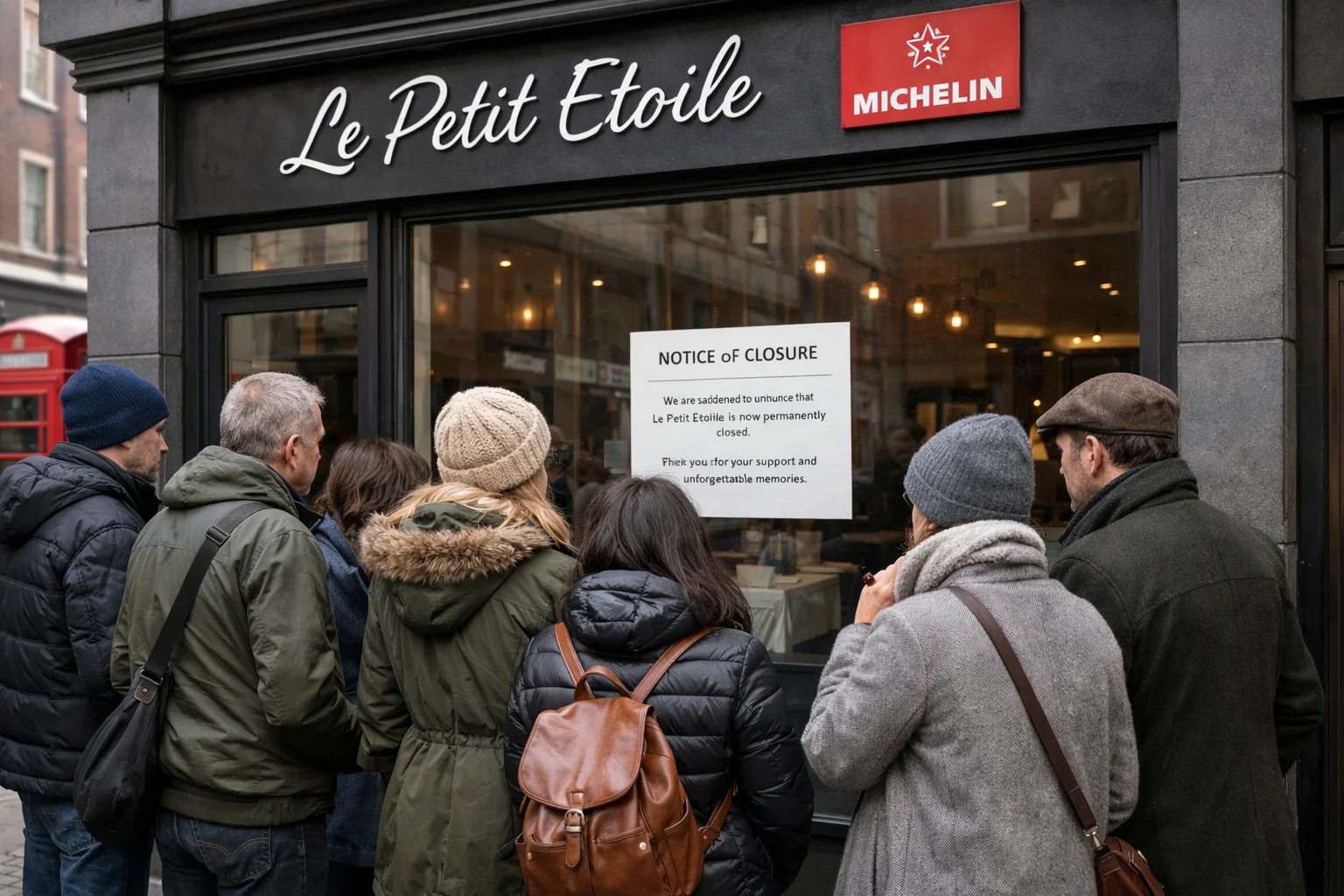
As someone who has always appreciated the craftsmanship behind exceptional dining, I find it deeply concerning to witness a growing trend: Michelin Guide restaurant closures across the UK.
These aren’t just eateries shutting their doors, they’re institutions of culinary excellence disappearing, sometimes just months after earning prestigious recognition.
Here’s what you’ll learn in this blog:
- Recent high-profile closures and relocations of Michelin Guide restaurants
- The real economic and operational reasons behind the trend
- What chefs and owners are saying about the pressure of maintaining Michelin standards
- The impact on Britain’s fine dining scene and where it’s headed next
Let’s break down exactly why this is happening and what it means for the future of UK fine dining.
Why Are Michelin Guide Restaurants Closing in the UK?
Michelin Guide restaurant closures in the UK are increasing due to rising operational costs, staffing challenges, and the pressure to maintain elite standards, all while dealing with changing consumer spending habits.
Economic challenges in the UK hospitality sector are well documented, but fine dining establishments face a particularly steep uphill climb. These restaurants typically operate on tight margins while aiming to maintain impeccable service, staff training, and premium ingredients, all of which come at a high cost.
In 2025 alone, several newly awarded or Michelin Guide-listed restaurants in Britain shut their doors due to business sustainability issues. Many of these closures occurred just months after receiving prestigious recognition, highlighting a troubling disconnect between industry accolades and real-world economic realities.
When operational expenses outpace demand or when customer footfall declines due to high menu prices, restaurants can find it impossible to survive, no matter how well-reviewed they are.
Which Michelin Guide Restaurants Have Recently Closed or Moved?

Recent closures and relocations of Michelin Guide restaurants have shocked both diners and industry insiders alike. These weren’t failing ventures, they were celebrated, trending, and listed by the prestigious Michelin Guide.
Yet in a matter of months, they either shut their doors permanently or were forced to pivot into new spaces. Here’s what happened to some of the most talked-about venues.
What Happened to Hide in Newcastle and Why Did It Shut Down?
Hide, a standout restaurant located in Heaton, Newcastle, opened in October 2024 and quickly earned praise for its tasting menus and locally sourced ingredients.
By mid-2025, it was officially listed in the Michelin Guide, which described the venue as offering “intricate, ambitious creations with a playful streak.” Guests could choose between six- and ten-course tasting menus or vegetarian options, showcasing culinary creativity from Head Chef Aaron McLellan and owner Jack Brown.
But in a heartfelt statement posted to social media in late 2025, the team announced:
“It is with much sadness and a heavy heart that we announce the permanent closure of Hide. 2025 was such a challenging year, and unfortunately, the business became unsustainable.”
They cited unsustainable operations as the primary reason for the closure. Despite a packed New Year’s Eve celebration and significant community support, the restaurant simply could not balance costs with revenue.
The post ended with a sincere note of gratitude:
“To all those who have visited, thank you for your support and sharing some great moments with us.”
This closure was particularly shocking because Hide had become a symbol of the North East’s growing food scene, and its closure marked a loss not just for local diners, but for regional culinary pride.
Why Did Bangkok Diners Club Relocate From Its Original Manchester Venue?
Bangkok Diners Club, a modern Thai restaurant, made a splash in Manchester’s dining scene after opening above the Edinburgh Castle pub in Ancoats.
The concept, launched by chef Ben Humphreys and his wife Bo, blended traditional Isan Thai flavours with modern flair. Their dishes, like smoked mackerel, artichoke massaman curry, and chicken fat rice, earned praise from both the Michelin Guide and renowned food critic Grace Dent, who called their creations “decadently good.”
In October 2025, the Michelin Guide added the restaurant to its list of favourite new UK restaurants.
But by early 2026, an email to patrons revealed that the restaurant had closed:
“Ben and Bo are cooking at Exhibition during 2026, and Bangkok Diners Club sadly won’t be returning to Edinburgh Castle.”
This wasn’t a traditional closure, the team chose to relocate their concept to the Exhibition Food Hall in Manchester city centre. According to representatives, the move was driven by the need for a larger space and better operational flexibility.
The new venue offers a shared kitchen environment, allowing chefs to reduce fixed costs while maintaining culinary freedom. While not a shutdown, this move still reflects a growing trend, Michelin-recognised restaurants needing to restructure or relocate to survive economically.
How Did Hjem in Hexham Close After Years of Success?
Hjem, located inside the Hadrian Hotel in Hexham, had enjoyed a successful six-year run under co-founders Alex Nietosvuori and his partner.
Known for its seasonal tasting menus and celebration of local ingredients, Hjem had earned a Michelin star and was considered one of the North East’s most respected fine dining spots.
On New Year’s Eve 2025, the restaurant hosted a farewell event titled “Hjem’s Last Hurrah.” In a public statement, Alex said:
“We wanted our final night at Hjem to feel like a true celebration – not just of what we’ve achieved, but of the people who have been part of it. Every dish, every song, every glass raised will be a thank you to our guests and team.”
Unlike Hide or Bangkok Diners Club, Hjem’s closure was planned and celebratory, yet still emblematic of the pressures that eventually make continuing such operations difficult, even for successful establishments.
What Do These Closures Have in Common?
Despite the differences in their trajectories, these restaurants share several common themes:
- All were recently recognised by the Michelin Guide
- Each offered a unique, high-quality dining experience praised for creativity and presentation
- Financial sustainability was a core challenge, whether that led to closure (Hide), relocation (Bangkok Diners Club), or a graceful exit (Hjem)
- Public and emotional responses from patrons highlighted how beloved these establishments had become in a short time
These examples make it clear that Michelin recognition is not a guaranteed path to profitability or longevity in the current UK dining landscape.
What Are the Key Reasons Behind These Closures?

Michelin Guide restaurant closures in the UK are the result of a complex mix of economic, operational, and societal factors.
While recognition from Michelin brings prestige, it also places restaurants under immense pressure to deliver consistently high-quality service and innovation, all while keeping pace with rising costs and shifting consumer behaviour.
Several critical reasons have emerged from recent closures:
- Unsustainable overheads: Rent, energy bills, and premium ingredients have all spiked in cost, especially in urban areas.
- Staffing challenges: Skilled labour is harder to find and retain, and wages have had to increase, placing more strain on budgets.
- Changing consumer habits: Guests are more cautious with spending, and fine dining is seen as an occasional luxury, not a routine outing.
- Operational intensity: Maintaining Michelin standards requires constant reinvestment in training, kitchen equipment, and sourcing.
Restaurants like Hide directly cited financial unsustainability as the reason for closing, highlighting how excellence in execution doesn’t always guarantee long-term business survival.
What Do Chefs and Restaurateurs Say About These Closures?
Chefs and restaurateurs across the UK are increasingly vocal about the realities of running a Michelin-recognised kitchen. Many speak candidly about the pride that inclusion brings, followed by the sobering reality of what it takes to maintain that level of excellence.
Owners like Jack Brown of Hide acknowledged the accomplishments of his team, sharing:
“We are extremely proud of the product we created… but unfortunately the business became unsustainable.” That phrase reveals a broader truth, talent and innovation alone are no longer enough.
Similarly, Bangkok Diners Club issued a message that reflected a bittersweet transition rather than defeat. Their team said the restaurant “sadly won’t be returning,” yet they framed it as a move towards a new location that could offer more opportunity.
Hjem’s co-founder, Alex Nietosvuori, expressed gratitude for supporters and chose to end six years on a joyful note with “every glass raised [as] a thank you.”
These voices collectively show resilience, gratitude, and acknowledgement that survival often means adaptation rather than simply perseverance in the same space.
How Has the Michelin Guide Responded to This Trend?
The Michelin Guide has continued to recognise new and exciting culinary ventures across the UK while offering praise for closed or relocating venues, though it has not publicly issued warnings or reports about the rate of closures.
Instead, the Guide seems to maintain its focus on evaluating dining quality. Its praise for Hide highlighted “intricate, ambitious creations with a playful streak,” and for Bangkok Diners Club it referenced “well-balanced flavours and the occasional hit of creativity.”
This response underscores Michelin’s continuing mission to identify excellence in food, regardless of a restaurant’s long-term viability. While inspectors acknowledge restaurants’ creativity and service, they do not publicly address operational realities such as financial vulnerability or long-term sustainability.
This disconnect means that Michelin status can elevate visibility but does not protect restaurants against the economic challenges that follow.
Ultimately, the Guide honours craft, but it is the operators who must contend with the weight of expectation once listed, leaving a gap between prestige and the operational assistance chefs increasingly need.
What Does This Mean for the Future of Fine Dining in Britain?

The recent wave of Michelin Guide restaurant closures is shaping a new direction for fine dining in Britain. While the UK continues to nurture culinary talent and innovation, the traditional model of luxury, multi-course tasting menus in high-overhead settings is being re-evaluated.
Several key shifts are likely to define the future of the industry:
- Alternative formats will rise: Chefs are embracing food halls, pop-ups, and residencies as lower-risk platforms to showcase fine cuisine.
- Flexibility will be key: Shortened service hours, seasonal menus, and cross-collaborations will become more common to control costs.
- Luxury will be redefined: Diners may seek experience-driven meals over white-tablecloth formality, with a focus on value and authenticity.
- Sustainability will be prioritised: Sourcing, waste reduction, and staff well-being will influence future dining models.
Overall, Britain’s fine dining scene may become more adaptable and diverse, moving away from rigid Michelin expectations while still preserving the passion and artistry behind exceptional food.
Are Michelin Guide Restaurants Still a Viable Business Model?
The viability of running a Michelin Guide restaurant in today’s UK economy is being questioned more than ever. While inclusion in the guide can bring prestige and visibility, it doesn’t guarantee financial security, in fact, it often increases expectations without increasing margins.
Owners like Jack Brown and Alex Nietosvuori have highlighted that despite full bookings and glowing reviews, the numbers still don’t add up. High-quality ingredients, extensive staffing, constant reinvestment into ambience and service, these are all necessary but expensive components of a Michelin-level experience.
Restaurants are also increasingly reliant on shorter-term success and media buzz, rather than sustainable long-term models. The evolving dining scene suggests that even the most celebrated venues are not insulated from the economic turbulence affecting the broader hospitality industry.
In short, a Michelin Guide listing remains a badge of honour, but as a business model, it is proving risky and often unsustainable without flexibility or alternative revenue streams.
How Are Diners and Local Communities Reacting?

The public reaction to these closures has been emotional and widespread. Many diners express heartfelt messages on social media, showing how much these restaurants meant to their communities.
When Hide announced its closure, waves of online support followed. Comments like “Fantastic spot, fantastic team, will be missed!” and “Food was amazing!” poured in from loyal patrons, showing deep local appreciation.
There’s a growing awareness among diners that fine dining establishments, especially those recognised by the Michelin Guide, operate under constant financial pressure.
Reactions have included:
- Shock and sadness at sudden closures, especially when restaurants had just been awarded.
- Public praise and nostalgia, as diners recall memorable experiences.
- Support for relocation efforts, such as in the case of Bangkok Diners Club.
In many ways, these responses reflect how fine dining has become part of local culture. Closures are not seen as just business news, but as genuine losses to a city’s identity and hospitality pride.
Recent Michelin Guide Restaurant Closures in the UK
To understand the scope and nature of these closures, here is a clear overview of the most high-profile Michelin Guide restaurants that recently shut down or moved in the UK:
| Restaurant Name | Location | Opened | Closed/Relocated | Stated Reason |
|---|---|---|---|---|
| Hide | Heaton, Newcastle | Oct 2024 | Dec 2025 | Unsustainable operations |
| Hjem | Hexham, Northumberland | 2019 | Dec 2025 | Celebratory planned closure |
| Bangkok Diners Club | Manchester (Ancoats) | 2023 | Relocated in 2026 | Shift to larger venue at Exhibition |
Each restaurant on this list received Michelin recognition and was beloved for its creativity and service. However, economic and operational challenges forced each to make a major decision, be it closing entirely or relocating to more financially manageable venues.
These examples highlight a sobering reality: even excellence in food and service is not always enough to overcome mounting financial pressure in the fine dining space.
Conclusion
The closures and relocations of Michelin Guide restaurants in the UK reveal a new reality for fine dining, one where prestige alone isn’t enough.
Despite offering culinary brilliance, service excellence, and national recognition, restaurants like Hide, Hjem, and Bangkok Diners Club have had to adapt or step away due to unsustainable costs and shifting dining habits.
As a passionate follower of Britain’s evolving food culture, I see this trend as both a warning and an opportunity. It’s a call to rethink how excellence is supported, how spaces are run, and how chefs and staff are valued, not just by accolades but through practical, long-term viability.
Ultimately, the future of fine dining in Britain may not rest solely in guidebooks, but in creative resilience, community support, and sustainable innovation.
FAQs
What is the difference between Michelin-starred and Michelin Guide restaurants?
Michelin-starred restaurants have been awarded one to three stars based on excellence. Michelin Guide restaurants may be listed or recommended but do not necessarily hold stars.
Do Michelin Guide listings help a restaurant’s financial success?
They can increase visibility and bookings, but do not guarantee profitability. Many restaurants still struggle with high costs despite increased demand.
Why are some chefs choosing to leave the Michelin system voluntarily?
Some chefs feel the pressure of maintaining Michelin standards limits creativity and work-life balance. Others seek more sustainable or community-focused business models.
Is the Michelin Guide keeping up with modern dining trends?
While the guide acknowledges innovation, it still largely rewards traditional fine dining structures. Critics argue it must evolve to reflect today’s more flexible dining culture.
Are food halls and pop-ups replacing fine dining restaurants?
They’re offering chefs an alternative to high-overhead venues while still delivering high-quality food. These formats allow experimentation and better financial control.
How can diners support local fine dining restaurants?
By dining locally, leaving reviews, and sharing experiences on social media, you help raise awareness. Choosing tasting menus or returning for special events also boosts revenue.
What role does customer behaviour play in restaurant closures?
Shifting habits like reduced spending and preference for casual dining impact fine restaurants. When high-end demand drops, operational costs become harder to manage.