
🔴 PLANNING PERMISSION UPDATE
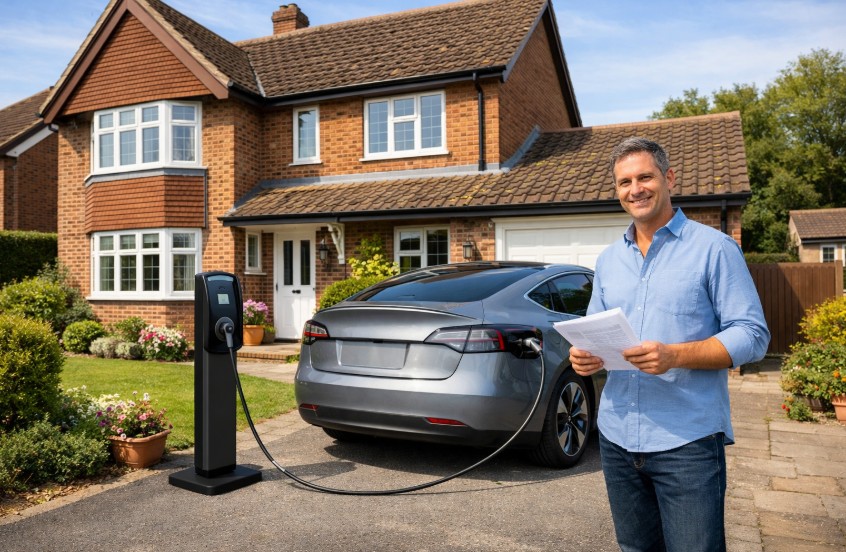
The UK Government has removed the planning requirement for installing electric vehicle chargers on private driveways, aiming to accelerate EV adoption and reduce red tape. The rule applies to wall-mounted or pedestal units under specific size and placement conditions.
⏱️ Quick Check: No planning permission required for one EV charger on your driveway if it meets volume and placement limits.
⚡ Government Goal: Support EV transition and simplify home charging installation across England.
📌 Current Status: The rule is now active, but leaseholders and those in new builds must still review property restrictions before installation.
The new driveway rule change in the UK allows homeowners in England to install a single electric vehicle charger on their driveway without applying for planning permission, potentially saving drivers more than £1,000 a year. Introduced by the government last summer, the update removes a long standing barrier that made home charging costly and time consuming.
Key Takeaways:
- Homeowners can install one EV charger without council approval
- Charging at home is far cheaper than petrol diesel or public chargers
- Clear size placement and property rules still apply
This change is designed to make electric vehicles more practical affordable and accessible for UK households.
What Is the New Driveway Rule Change in the UK?
The new driveway rule change represents a significant shift in planning regulations, aimed at making it easier for UK homeowners to install electric vehicle chargers at home.
This change, implemented in mid-2025, eliminates the requirement for householder planning permission in certain circumstances, reducing red tape and promoting eco-conscious driving habits.
When Was It Introduced and Why?
In response to rising demand for electric vehicles and the need for practical charging solutions, the UK government introduced the new driveway rule change in the summer of 2025.
The key motivation behind the update was to streamline the installation of home EV chargers and eliminate a major bureaucratic barrier that had previously slowed down adoption.
Under the former system, homeowners were required to apply for planning permission to install a charger, even on their own private property.
This meant dealing with extensive paperwork, delays from local councils, and added costs. The rule change means that such permission is no longer needed if the installation meets certain conditions.
What Does This Mean for EV Owners?
This rule has removed one of the key logistical barriers to EV adoption.
For homeowners:
- They can now install one EV charging point without planning permission.
- The charger must be wall-mounted or on a small pedestal.
- It must not exceed 0.2 cubic metres in volume.
- It must be installed at least two metres from a public road.
The rule is classified under “Permitted Development Rights,” which allows specific home improvements without the need for formal applications.
While these rights are a common part of UK planning law, the inclusion of EV chargers marks a progressive and timely change to support the country’s clean transport ambitions.
By simplifying the legal process, the UK government is giving homeowners more autonomy, reducing costs, and removing a major delay in making the switch to electric vehicles.
Why Did the Government Change the Driveway Planning Rules?

The new driveway rule was not introduced in isolation. It is part of a wider government effort to encourage sustainability, reduce reliance on fossil fuels, and prepare infrastructure for the inevitable shift toward electric transport. This change supports three key goals.
Environmental Goals
The UK government has made a public commitment to achieve Net Zero emissions by 2050. One of the most effective ways to reduce emissions is to phase out petrol and diesel vehicles in favour of cleaner alternatives like EVs.
By making EV charger installations simpler and cheaper, the government is accelerating the growth of electric vehicles, reducing CO2 emissions, and contributing to cleaner air and improved public health.
- Home charging reduces the need to travel to public stations, which further decreases emissions.
- The move complements other green incentives such as EV grants and tax benefits.
Cutting Bureaucracy
Prior to the rule change, homeowners were required to apply for “householder planning permission” for something as simple as installing a charging point.
This process was:
- Time-consuming
- Costly
- Often delayed by council backlogs
By removing this red tape, the government has:
- Eased the burden on local planning authorities
- Saved homeowners both time and money
- Encouraged faster infrastructure growth
This deregulation is part of a broader strategy to modernise UK planning systems and make sustainable living more accessible.
Making EV Adoption Easier
The final piece of the puzzle is to make owning and operating an EV more attractive to the average household. Many potential EV owners were discouraged by the hassle involved in home charger installation.
The new rule:
- Removes friction from the purchase and setup process
- Boosts public confidence in EV technology
- Makes home charging more affordable and realistic for everyday people
In summary, the government’s decision wasn’t just about cutting paperwork. It was a calculated move to align infrastructure with consumer behaviour and environmental policy.
How Much Can UK Drivers Save with the New Driveway Rule?
One of the biggest advantages of installing a home EV charger under the new rule is the potential for significant cost savings. According to industry estimates, UK drivers could save up to £1,100 per year by charging at home rather than relying on public stations or fuelling petrol/diesel vehicles.
Here’s a breakdown comparing average costs:
| Charging/Fuelling Method | Estimated Annual Cost | Notes |
|---|---|---|
| Home EV Charging (overnight tariff) | £400–£500 | Cheapest option; based on off-peak electricity |
| Public EV Charging (rapid charger) | £800–£1,000 | More expensive due to convenience and demand fees |
| Petrol/Diesel Vehicle Fuel | £1,400–£1,600 | Based on average UK mileage and fuel prices |
Home charging offers not only lower electricity rates but also reduced vehicle maintenance, thanks to EVs having fewer moving parts.
Who Can Install an EV Charger Under the New Rules?

The new rule primarily applies to homeowners with private driveways across England. If you own your property and have a space suitable for installation, you are eligible under “permitted development” regulations.
However, eligibility also depends on:
- The charger’s specifications: It must be a single unit, wall-mounted or pedestal type, and under 0.2 cubic metres in volume.
- Distance from the road: The unit must be at least two metres away from public roads or paths.
For those living in leasehold properties, things can be more complicated. Even though planning permission is no longer required, leaseholders may need to get approval from freeholders before any installations.
Those in new-build housing estates may also face restrictions due to title deed clauses that prohibit external modifications. Always check property documents before proceeding.
Are There Any Limits or Conditions to Installing a Home EV Charger?
While planning permission is no longer needed in most cases, the government has set specific limitations and conditions to ensure safe and responsible installations.
Key conditions include:
- The charging point must be no larger than 0.2 cubic metres.
- It must be installed two metres away from a public highway or footpath.
- Chargers must be either wall-mounted or mounted on a pedestal.
- Installation must not cause an obstruction or safety risk to the public.
These conditions are designed to balance convenience for homeowners with safety for pedestrians and neighbours. Failure to comply may still result in local authority intervention.
If your property is in a designated conservation area or similar special status, additional rules might still apply. Always verify your local council’s guidelines.
What Challenges Could Homeowners Still Face?
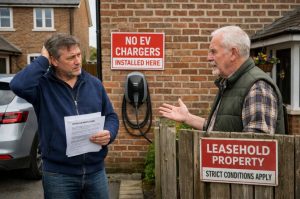
Despite the simplification, several practical and legal challenges may still arise for certain homeowners.
- Leaseholders may require written permission from their freeholders before installing any fixtures.
- Shared driveways introduce complexity, especially where the installation could impact another property owner’s space or rights.
- Some new developments come with restrictive covenants that prevent alterations to the building’s exterior, including the driveway or walls.
Other potential issues include:
- Access to power supply: Not all homes have an ideal layout for EV charging installation.
- Installer availability: As demand grows, there could be delays in hiring certified professionals.
While the rule removes the planning barrier, property-specific issues can still slow down the process.
How Is This Rule Expected to Impact EV Adoption in the UK?
The rule is expected to significantly accelerate the adoption of electric vehicles by removing one of the key hurdles for homeowners.
Industry experts, such as Lewis Gardiner of Osprey Charging Network, praised the change, calling it a “hugely welcome and practical” move. He noted that removing the need for planning permission would eliminate months of delay and help fast-track charging infrastructure across the UK.
With over 1.75 million fully electric vehicles already on British roads and 47,000 new EVs sold in 2025 alone (an 8% year-on-year increase), this rule is a crucial step in supporting the country’s growing appetite for clean transport.
Do You Still Need Permission from Anyone?
Although planning permission is no longer required, there are still scenarios where you must seek permission from others.
- Leasehold properties: Freeholder consent may be necessary before making any external changes.
- Flats or communal areas: You will need approval from building managers or housing associations.
- New-build homes: Title deeds may contain clauses restricting external modifications.
- Shared driveways: Neighbour consent may be needed if access is shared or affected.
Additionally, you should always use certified installers to comply with building regulations and electrical safety standards. Checking with your local authority is also advised if you’re unsure.
Is Installing an EV Charger Really Worth It?

Installing an EV charger at home is a strategic decision that provides long-term value, especially with the support of the new driveway rule. It offers notable benefits across financial, environmental, and practical dimensions.
Long-Term Savings
Over the course of a year, drivers who charge their vehicles at home save an average of £1,100 compared to petrol or diesel users.
These savings come from:
- Lower electricity costs
- Reduced vehicle servicing and maintenance
- No need for regular public charging
Additionally, many energy providers now offer EV-specific tariffs that allow for cheaper overnight charging.
Eco-Friendly Benefits
Switching to an electric vehicle, supported by a home charger, contributes directly to:
- Lower carbon emissions
- Reduced noise pollution
- Better air quality in residential areas
EVs are aligned with the UK’s commitment to Net Zero 2050, and home charging reduces reliance on fossil fuel-based infrastructure.
Convenience of Charging at Home
Perhaps the most immediate benefit is the convenience it offers:
- No waiting at public chargers
- Charge overnight at home
- Total control over when and how you charge
It also adds value to your property, as homes with pre-installed EV chargers are becoming increasingly desirable. In short, installing a charger at home is not just worth it, it’s an investment in your future mobility.
Final Thoughts on the New Driveway Rule Change
The UK’s new driveway rule change represents a practical, forward-thinking policy that simplifies the move toward electric vehicles. By removing planning permission requirements, it empowers more homeowners to take control of their EV charging needs.
Despite a few remaining limitations for leaseholders and shared properties, the benefits far outweigh the challenges. The rule supports environmental goals, reduces red tape, and delivers real financial savings. For those considering the switch to electric vehicles, now is an ideal time to act.
FAQs About the New Driveway Rule Change
Can I install more than one EV charger without permission?
No, the current rule only covers a single unit. Installing multiple chargers may require planning consent.
Do I need a certified electrician to install the EV charger?
Yes, all installations must be carried out by a qualified installer who complies with UK electrical regulations.
What happens if my property is leasehold?
You may need consent from your freeholder, even though planning permission is no longer required.
Are there any government grants for home EV charger installation?
Yes, grants are available under schemes like the EV Chargepoint Grant for eligible homeowners and landlords.
Can renters benefit from this new rule?
Renters must still get landlord approval, and installation may depend on tenancy agreements.
Is planning permission required for listed buildings?
Yes, properties with listed status or in conservation areas may still need formal approval.
How do I know if my home meets the distance requirement from the road?
Measure at least two metres from the nearest public highway or footpath to the installation point.