
The UK dual nationals passport rules are changing from 25 February, and the direct answer is clear: British dual nationals will no longer be allowed to enter the UK using only their non-British passport if they are from a visa-free country.
They must now travel with either a valid British passport or a certificate of entitlement to the right of abode. Without one of these documents, airlines can refuse boarding before departure.
These changes form part of the government’s wider immigration reforms and the rollout of the Electronic Travel Authorisation system. The update affects a significant number of long-term residents and naturalised citizens.
Key points:
- British passport or certificate is now mandatory for entry
- A foreign passport alone is no longer accepted
- Airlines are responsible for pre-travel checks
- Dual nationals cannot apply for ETA
- Costs and processing times may cause delays
- Irish citizens remain exempt
- Over one million people are potentially affected
What Are the New UK Dual Nationals Passport Rules Taking Effect on 25 February?
From 25 February, the UK dual nationals passport rules introduce a strict documentation requirement for British citizens who also hold another nationality.
Under the updated framework, dual nationals will no longer be permitted to travel to the United Kingdom using only their non-British passport if they are from a country that does not require a visa.
Instead, they must present one of the following:
- A valid British passport
- A certificate of entitlement to the right of abode, including the digital version
Without one of these documents, airlines are expected to deny boarding before departure. The enforcement mechanism is now positioned at the point of travel rather than solely at the UK border.
This shift represents a clear procedural tightening. Previously, many dual nationals relied on their foreign passport to enter the UK, particularly if that passport allowed visa-free travel. The assumption was that British citizenship status would not need to be formally evidenced at departure.
Under the revised UK dual nationals passport rules, citizenship must now be actively demonstrated through official British documentation.
The Home Office position is that this is not a change in citizenship rights but rather a change in documentation expectations.
British citizens retain the right of abode. What has changed is how that right must be proven in practice.
There is also a practical reality to consider. Airlines now carry the burden of checking compliance.
If a passenger presents a foreign passport without the appropriate British documentation, the airline risks penalties for transporting someone without proper entry clearance.
This operational shift has placed significant responsibility on carriers and left little room for discretion.
The reform is linked closely to the broader digital border strategy that the UK government has been implementing over recent years. It reflects a move towards pre-travel verification and reduced ambiguity at ports of entry.
Why Are the UK Dual Nationals Passport Rules Being Introduced Now?
The timing of the updated UK dual nationals passport rules coincides with sweeping immigration reforms aimed at digitising the border system.
The UK is rolling out the Electronic Travel Authorisation system, known as the ETA. This requires visitors from visa free countries to obtain digital pre-travel permission before arrival.
The government states that the purpose is to enhance security, streamline entry processes, and bring the UK in line with comparable nations.
Countries such as the United States, Canada and Australia require their own citizens to enter using national passports.
The UK government has pointed to these examples when explaining the rationale behind the policy shift.
A senior immigration compliance consultant explained the situation in practical terms:
“As a professional advising international clients, I have been clear that this is not optional guidance. It is a mandatory documentation standard. The principle is simple. If you are British, you must enter as British. The complication arises because many dual nationals were never required to act on that principle before.”
The adviser further added:
“What we are seeing is not a removal of rights. It is an administrative tightening. The difficulty lies in the transition period and in how effectively the message reached the affected population.”
The broader immigration overhaul has focused heavily on digitisation. Biometric data, digital visas and electronic authorisations are now central pillars of the border system. The updated UK dual nationals passport rules are consistent with this digital transformation.
However, critics argue that the communication surrounding the change did not match the scale of its impact.
While official guidance has reportedly been available since late 2024, many dual nationals claim they only became aware of the change weeks before implementation.
This gap between policy publication and public awareness has contributed to the current scramble for documentation.
How Did the Old Entry Requirements for British Dual Citizens Work?

Before the new UK dual nationals passport rules were introduced, the system operated with greater flexibility.
If a British citizen also held a passport from a country that did not require a visa for UK entry, they could simply travel on that foreign passport.
Border officials could confirm citizenship status if necessary, but the burden was not placed on airlines to verify British documentation prior to travel.
The previous arrangement worked as follows:
| Scenario | Required Documentation Before 25 February |
|---|---|
| Dual national from visa free country | Foreign passport only |
| Dual national from visa required country | Visa or British passport |
| British citizen without passport | Entry possible but subject to verification |
In practice, many naturalised citizens did not immediately apply for a British passport after gaining citizenship. Some postponed the application due to cost. Others saw no urgency because their existing passport allowed seamless travel.
This flexibility was particularly significant for EU nationals prior to and following Brexit. Many individuals who had built their lives in the UK retained EU passports that allowed visa free travel.
The new UK dual nationals passport rules eliminate this informal tolerance. The policy is now clear. British citizenship must be evidenced through British documentation at the point of departure.
This marks a cultural as well as administrative shift. For years, dual nationality in the UK operated with minimal friction. The updated approach formalises expectations that were previously loosely enforced.
What Documents Will Dual Nationals Now Need to Enter the UK?
The new documentation requirements are straightforward in principle but complex in execution.
To comply with the UK dual nationals passport rules, individuals must hold one of two recognised forms of proof of British citizenship when travelling to the UK.
British Passport Requirements and Processing
A British passport is the most commonly accepted and practical solution.
The current adult passport fee is approximately £100. However, additional costs may arise for overseas applications, expedited services or document replacements.
Processing times vary. While standard applications may take several weeks, complications can extend timelines, particularly when:
- Original citizenship certificates are required
- Applicants reside abroad
- Supporting identity documents are incomplete
For dual nationals who are travelling or temporarily outside the UK, submitting a passport application can be logistically challenging. In many cases, applicants must send their foreign passport as part of the process unless alternative arrangements are approved.
The following table outlines typical passport considerations:
| Factor | Domestic Application | Overseas Application |
|---|---|---|
| Standard Fee | Around £100 | Higher depending on location |
| Processing Time | Several weeks | Often longer |
| Original Documents Required | Yes | Yes |
| Passport Submission | Usually required | Often required |
These procedural realities have contributed to the urgency experienced by affected individuals.
Certificate of Entitlement and Right of Abode
The certificate of entitlement to the right of abode serves as an alternative to a British passport.
It confirms that the holder has the unrestricted right to live and work in the UK. The certificate can be attached to a foreign passport and is also available in digital format.
However, the cost is significantly higher than a passport at £589. This fee has drawn criticism from dual nationals who see it as disproportionate.
The certificate is typically valid as long as the passport it is linked to remains valid. Once the passport expires, a new certificate must be obtained for the replacement passport.
Key characteristics are summarised below:
| Feature | Certificate of Entitlement |
|---|---|
| Cost | £589 |
| Validity | Linked to passport validity |
| Purpose | Proof of right of abode |
| Application Location | UK or overseas |
The high cost has prompted some dual nationals to reconsider whether maintaining British citizenship remains worthwhile for their circumstances.
Between the passport and the certificate, the passport remains the more cost-effective and practical option for most individuals.
How Is the Electronic Travel Authorisation Linked to These Changes?
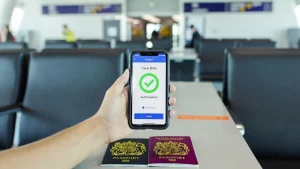
The Electronic Travel Authorisation system forms part of the structural background to the updated UK dual nationals passport rules.
The ETA requires travellers from visa-free countries to apply for digital pre-approval before entering the UK. The current fee is £16, with government plans indicating a potential rise to £20.
However, British citizens, including dual nationals, cannot apply for an ETA. The system is designed for non-British nationals only.
This has created confusion among some dual citizens who assumed they could simply apply for an ETA using their foreign passport.
The interaction between ETA and dual nationality can be summarised as follows:
| Traveller Category | ETA Eligible | British Passport Required |
|---|---|---|
| Non British visa free visitor | Yes | No |
| British dual national | No | Yes |
| Irish citizen | No | No |
Airlines are expected to verify ETA approval for eligible travellers and British documentation for dual nationals. This dual layer of digital screening reinforces the government’s goal of pre-departure compliance.
The broader intention is to reduce uncertainty at the border. By the time a traveller arrives in the UK, their eligibility should already have been confirmed.
Who Is Exempt from the New UK Dual Nationals Passport Rules?
The most notable exemption under the UK dual nationals passport rules applies to Irish passport holders.
The Common Travel Area between the UK and Ireland preserves reciprocal rights of entry and residence. Irish citizens can continue to enter the UK without a British passport or an ETA.
Other exemptions are limited. EU nationals who are not British citizens must comply with ETA requirements where applicable. The distinction is based on citizenship rather than region.
The scope of those affected is substantial. Census data from 2021 provides context.
| Population Category | Percentage | Estimated Number |
|---|---|---|
| UK born residents who are UK other dual citizens | 1.2 percent | 587,600 |
| Non UK born residents who are UK other dual citizens | 6.5 percent | 648,700 |
| Total estimated dual nationals | Combined | Over 1.2 million |
These figures demonstrate that the UK dual nationals’ passport rules affect a significant segment of the population.
How Are Real People Being Impacted by the Rule Changes?
Jelena’s Case – A Holiday Disrupted
Jelena, a British-Latvian dual national living in Glasgow for 16 years, became a British citizen in November. She had delayed applying for a British passport due to Christmas travel.
She later discovered that after returning from a planned South American trip, she might not be allowed to re-enter the UK without new documentation.
She now plans to alter her travel route and apply for a British passport from Latvia.
Petra’s Experience – Discovering the Change Abroad
Petra, a UK-German dual national living in Spain temporarily, found out about the rule change via social media.
She is now attempting to secure a British passport from abroad while navigating document requirements and appointment limitations.
Broader Concerns
Other dual nationals, including professionals and teachers, have described:
- Anxiety about travel disruption
- Concerns over communication
- Frustration about costs
Campaign group the 3million has criticised the government’s communication strategy, urging a temporary travel authorisation option.
Are the New Passport Rules Fair to British Dual Citizens?

Debate around fairness centres less on legality and more on implementation.
Supporters argue that it is reasonable for a country to require its citizens to enter using national documentation. This principle is common internationally.
Critics counter that dual nationals who have lived and worked in the UK for decades should not face sudden administrative barriers, especially when communication was perceived as limited.
From the author’s perspective:
“I see the logic behind the reform. Many countries operate similar systems, and a digital border requires clarity about status before travel. However, I also believe that when over a million people are potentially affected, communication must be visible, direct and repeated. Policy consistency does not eliminate the need for careful transition management.”
This tension between legal principle and lived experience defines much of the public reaction.
The UK dual nationals passport rules ultimately reinforce a clear message. British citizenship carries both rights and procedural obligations. The obligation now includes travelling with recognised British documentation.
As the digital border system expands, similar documentation standards are likely to become more embedded. For dual nationals, advance preparation is no longer advisable but essential.
Conclusion
The UK dual nationals’ passport rules, taking effect on 25 Februar,y fundamentally change how British dual citizens travel home.
From now on, entering the UK requires proof of British status in the form of a passport or certificate of entitlement. The flexibility of travelling solely on a foreign passport is ending.
While the reform aligns the UK with other major nations, its rollout has created disruption and frustration among long-standing residents. For dual nationals, the message is clear: documentation is no longer optional. Planning ahead is now essential.
Frequently Asked Questions
Can airlines really refuse boarding to a British dual national?
Yes. Airlines are required to check documentation before departure. Without a British passport or certificate of entitlement, boarding may be denied.
How long does it take to apply for a British passport from overseas?
Processing times vary but typically take several weeks. Delays may occur if additional documentation is requested.
What happens if someone arrives in the UK without the correct documents?
They may face delays, questioning, or potential refusal of entry if unable to prove British citizenship.
Is the certificate of entitlement a one-time purchase?
It remains valid while the passport it is attached to is valid, but it carries a high upfront cost.
Can a dual national choose to renounce British citizenship instead?
Yes, renunciation is legally possible, but it has serious implications, including loss of the right of abode.
Does the ETA replace a visa?
No. The ETA is a pre-travel authorisation for visa-free visitors and does not grant the same rights as a visa.
Are children with dual nationality also affected?
Yes. Children who are British citizens must also comply with the same documentation requirements.