

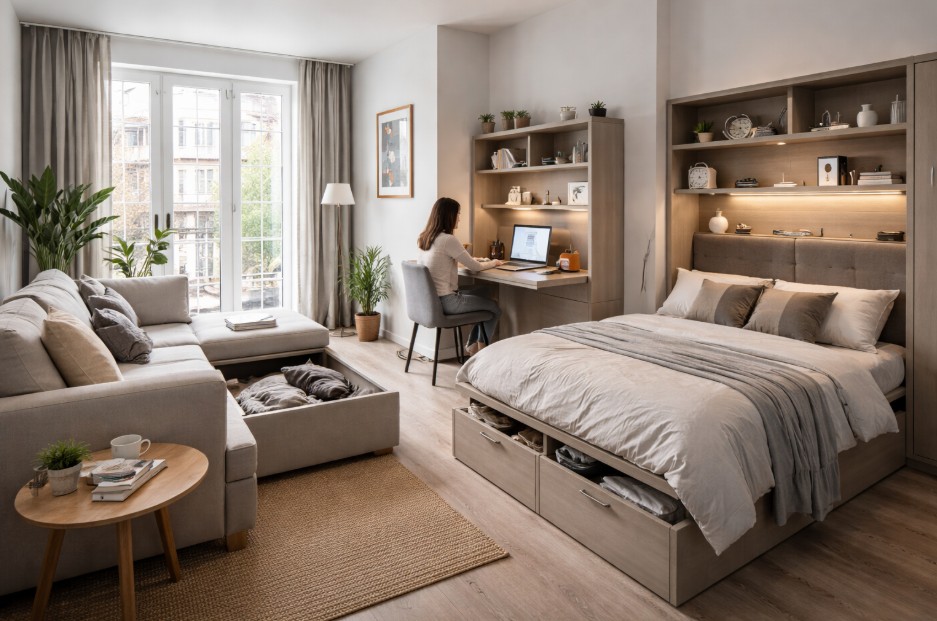
Multifunctional furniture is transforming consumer expectations as changing living patterns and practical constraints impact how households choose furnishings.
UK businesses are identifying new market opportunities as shoppers increasingly seek furniture solutions that maximise every square metre of living space, reflecting a need for greater versatility and adaptability in the face of hybrid work and flexible lifestyles.
Rising interest in multifunctional products reflects how modern living increasingly revolves around space and efficiency. A TV Bed, as an example, shows how furniture categories are adapting to combine comfort and technology within homes. Cost-of-living concerns, changing room uses, and compact living environments can influence purchasing priorities.
This trend, visible in both urban flats and family homes, highlights the growing importance of products that serve several roles at once.
Why Adaptable Furniture Fits Today’s Changing Homes?

Economic realities and shifting work habits mean greater emphasis is now placed on making interiors work harder. Smaller homes and apartments, particularly in urban settings, are amplifying demand for items that offer several uses without taking up excess space.
Hybrid work is encouraging households to reimagine how home zones function, increasing the need for adaptable, well-designed solutions. These shifts reinforce a view that each piece of furniture should earn its floor space by addressing diverse needs across daily life.
Economic pressures can also play a role, with consumers often expecting more value and durability from their investment as disposable incomes become stretched.
Designers are responding by offering items that adjust or transform, such as modular seating, storage-integrated beds, and multi-use tables. This development has expanded beyond the traditional confines of micro-living and student accommodation.
Even in larger homes, multifunctional solutions allow for more flexible hosting, remote working, or family routines. As housing preferences and living patterns adjust, the expectation persists that every room can accommodate a range of activities, from socialising to relaxing and working, with the right selection of furniture.
For businesses, staying ahead of these shifting priorities is important when planning new ranges and merchandising strategies.
How Is Consumer Demand for Multifunctional Furniture Shaping Modern Homes?
Market Signals Highlight New Consumer Behaviour Shifts
Search trends can indicate a clear uptick in interest around space-saving and versatile products. Consumers may spend more time researching configurable items, comparing different combinations and potential uses before committing to a choice.
Social media can amplify these trends by showcasing creative interiors and dual-purpose solutions, inspiring broader adoption beyond compact or city residences. Category growth in multifunctional segments suggests that the appetite for these products is robust, outpacing some traditional furniture lines in certain ranges.
This shift in demand poses both opportunities and challenges for product marketing, as clear communication about features and dimensions becomes essential to engage shoppers effectively.
There is also more choice in the market, often accompanied by richer online content and interactive guides intended to streamline the decision-making process. As consumer interest grows, platform algorithms and influencer content can push adaptable products to new audiences, accelerating mainstream acceptance.
Retailers may respond by refreshing their mix, increasing the share of modular or integrated products, and updating their merchandising to suit contemporary priorities.
Businesses that harness these insights and support shoppers with clear information about assembly, delivery, and usage can see commercial benefits in a competitive market. It is also important to manage risks linked to complex construction and potential damage in transit.
Key Product Features Shaping Purchase Decisions
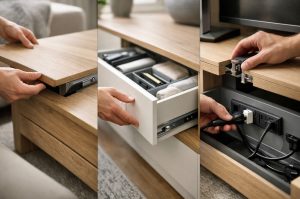
When selecting multifunctional furniture, consumers often weigh the convenience and space efficiency it provides against elements such as comfort and durability. Shoppers can value items that can be reconfigured without complicated maintenance, with integrated storage and accessible cable management being frequently sought-after features.
The expectation is often for intuitive use, smooth folding or conversion mechanisms, and components that withstand regular reconfigurations.
As designs become more elaborate, clarity on specifications and room fit is increasingly important for building shopper confidence and reducing the risk of returns. Design teams must consider how each integration affects weight, safety, and the care required over the product’s lifespan.
Products equipped with user-friendly features, like removable covers, smooth sliders, and robust fastening systems, can gain an edge in the decision cycle. Modular approaches, which allow for future expansion or reconfiguration, are also in growing demand as they can provide reassurance that a purchase will continue to meet changing needs.
For many, value lies in furnishings that blend in naturally with different interior styles, maintain a high standard of comfort, and are engineered with safety in mind.
The growing variety of options means consumers can select the solution that matches their space, willingness to assemble or customise, and lifestyle requirements. Retailers and brands that cater to these nuanced demands can be more likely to earn loyalty and encourage repeat business.
Retail and Manufacturing Strategies for Evolving Trends
Commercially, the shift towards multifunctional furniture can lead to higher average order values and lengthier pre-purchase research as consumers consider more complex information before buying.
Retailers face the challenge of supporting in-depth decision journeys by providing precise product descriptions, assembly instructions, detailed images, and interactive room planners. These tools can help consumers make confident choices about fit and compatibility without necessarily increasing the workload of customer service teams.
Merchants may also pay closer attention to logistics, considering that heavier and more intricate items are at greater risk of damage in transit and may have higher return rates if expectations are not managed. Efficient aftersales support and clear warranty terms can further reduce friction in the ownership experience, allowing users to address problems quickly if they arise.
On the manufacturing side, engineering trade-offs are an ongoing focus. Quality control is critical, as integrated components and mechanical parts can increase the potential for faults if not robustly specified.
Opportunities exist to increase margin and differentiate through modularity, standardised hardware, and designs that prioritise straightforward assembly or adaptation. These strategies can also allow for reduced shipping costs if products can be compactly boxed and assembled in stages.
The market landscape in 2026 suggests that manufacturers and retailers may work together to support efficient packaging and delivery, and robust aftercare support, as expectations for multifunctional furniture continue to develop.