
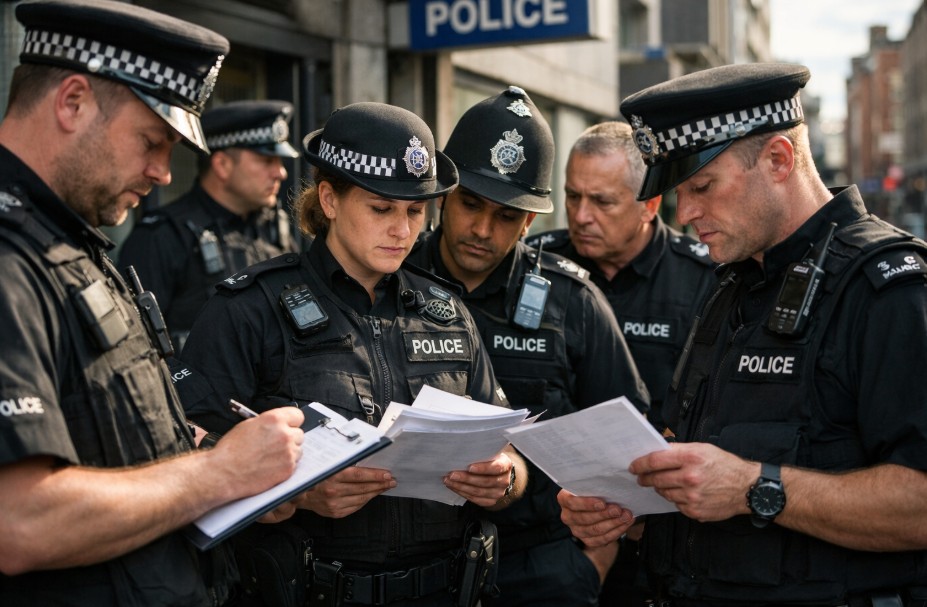
The debate over the police pay rise in the UK has intensified after policing leaders and the Police Federation of England and Wales raised concerns that the proposed 3.5% pay increase for 2026 may not be sufficient to address the financial and operational pressures facing officers.
While the National Police Chiefs’ Council has suggested a 3.5% increase if fully funded by the Government, the Police Federation argues that this would effectively represent another real terms pay cut after years of declining pay value.
Police representatives say that without a more substantial pay uplift, the service risks worsening officer shortages, declining morale, and growing challenges in retaining experienced personnel. The Federation is instead calling for a minimum 7% pay rise each year for the next three years.
Key takeaways from the debate include:
- Police leaders warn that 3.5% may not keep pace with the rising cost of living
- The Police Federation is seeking a 7% annual pay increase
- Officers are reported to be over 20% worse off in real terms since 2010
- Concerns are growing over officer retention and morale
- The final decision will depend on recommendations from the Police Remuneration Review Body
What Is the Current Proposal for the 2026 Police Pay Rise?
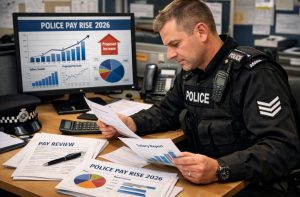
The current proposal for the 2026 police pay rise centres on a recommendation submitted to the Police Remuneration Review Body by the National Police Chiefs’ Council.
The council has proposed a 3.5% salary increase for police officers from 1 September 2026, provided that the Government fully funds the rise within policing budgets.
If the pay award is not fully funded, the proposal indicates the increase may be reduced to 2.5% instead. This recommendation reflects the financial constraints facing police forces and wider public sector spending policies in the UK.
Police pay decisions are reviewed annually through the independent Police Remuneration Review Body, which assesses submissions from policing organisations, government departments, and staff associations. These submissions typically examine factors such as operational demands, recruitment challenges, and wider economic conditions.
Deputy Chief Officer Philip Wells, who leads on pay and conditions for the National Police Chiefs’ Council, said that any settlement must recognise the demands placed on officers.
He stated that pay should keep pace with living costs and acknowledge the complex work officers perform to keep communities safe.
Why Does the Police Federation Say a 3.5% Pay Rise Is Not Enough?
The Police Federation of England and Wales believes the proposed 3.5% police pay rise falls short of addressing the long term financial pressures experienced by officers.
In its submission to the Police Remuneration Review Body, the Federation has called for a minimum 7% annual pay increase for each of the next three years.
Federation representatives argue that a 3.5% rise would effectively amount to another real terms pay cut once inflation and rising living costs are considered.
They say officers have already experienced more than a decade of declining pay value and that a modest increase would not resolve the underlying issues affecting the profession.
Jess Davies, chair of West Midlands Police Federation, explained that the proposed increase would not help tackle the growing retention problem. She said, “A rise of 3.5% amounts to another real terms pay cut and is going to do nothing to stem the number of officers leaving policing.”
The Federation also argues that pay must reflect the unique demands and risks of policing. Officers regularly face dangerous situations, long working hours, and significant emotional pressures.
According to policing representatives, meaningful pay restoration is necessary to ensure that policing remains an attractive and sustainable career.
How Much Has Police Pay Fallen in Real Terms Since 2010?
The issue of declining police pay has become a central argument in the ongoing police pay rise debate. According to evidence submitted by the Police Federation, police officers are now significantly worse off financially than they were more than a decade ago.
Campaign data highlights that officers have experienced a substantial reduction in real terms income since 2010.
The Federation’s campaign called Copped Enough has drawn attention to the financial pressures faced by many officers across England and Wales.
Key findings presented in recent reports include:
- Police officers are estimated to be 21% worse off in real terms compared with 2010
- Rising housing, energy, and living costs have increased financial strain
- Some officers have reported difficulties covering basic household expenses
- A significant number of officers have expressed concerns about long term financial stability
Federation representatives say this decline in pay value has affected morale across the service.
They also argue that policing responsibilities have grown more complex over the same period, meaning officers are facing higher expectations while their salaries have struggled to keep pace with economic realities.
For many within the policing community, restoring pay levels has become a priority issue that directly affects workforce stability and the long term effectiveness of the service.
Is the UK Facing a Police Officer Retention Crisis?

The debate around the police pay rise is closely linked to growing concerns about officer retention across the UK. Police representatives say that financial pressures, demanding workloads, and declining morale are contributing to an increasing number of officers leaving the service.
Policing leaders have warned that if these trends continue, forces may struggle to maintain experienced teams capable of responding to complex crime and public safety challenges.
Why Are More Officers Leaving the Service?
One of the main concerns raised by the Police Federation is the increasing number of officers choosing to leave policing before retirement. Representatives argue that pay and working conditions play a significant role in this trend.
Jess Davies of the West Midlands Police Federation highlighted the scale of the issue when discussing the impact of pay levels on officer retention. She said the service is now seeing more officers resign than retire, which indicates deeper problems within the profession.
Several factors are believed to contribute to officers leaving the service:
- Financial pressures caused by stagnant pay levels
- Increasing workload and operational demand
- Long and unpredictable working hours
- High levels of stress and emotional strain
- Growing scrutiny and public expectations
Adam Williams, chair of Gloucestershire Police Federation, said policing has become increasingly demanding. He noted that officers operate under significant pressure while facing rising levels of violence and public scrutiny.
Williams said, “Police officers require a level of pay that genuinely reflects the challenging roles they perform daily, especially at a time when we are working under more pressure than ever before.”
Without meaningful improvements in pay and working conditions, policing leaders warn that experienced officers may continue to leave, creating gaps in expertise within the workforce.
What Does the Data Show About Workforce Pressures?
Evidence presented to the Police Remuneration Review Body suggests the pressures facing police officers are becoming more severe. Data collected from across forces highlights several workforce trends that have raised concerns among policing organisations.
Key indicators of workforce pressure include:
- Almost half of all constables have five years of service or less
- Mental health related sickness absence has reached record levels
- Assaults on police officers remain persistently high
- Demand for policing services continues to increase
These figures suggest a workforce that is increasingly stretched and reliant on less experienced officers.
Policing leaders say the loss of experienced staff can weaken supervision and operational effectiveness. Experienced officers play an essential role in mentoring new recruits and managing complex investigations.
Federation representatives argue that improving pay is a critical step in addressing these pressures.
By offering competitive salaries and better conditions, they believe forces can strengthen recruitment, improve retention, and maintain the operational capability needed to protect communities.
What Changes to Police Pay and Conditions Are Being Proposed?

The Police Federation is not only calling for a higher police pay rise, but also proposing broader reforms to the structure of police remuneration. These changes are intended to better reflect the risks and responsibilities associated with modern policing.
According to the Federation, improving pay alone may not be enough to address workforce challenges. Structural reforms to allowances, career progression, and working conditions are also needed.
Key Pay and Allowance Proposals
One of the most significant proposals is the introduction of a military style P Factor, which would recognise the unique risks and restrictions associated with policing. Federation leaders argue that officers face dangers and obligations that are not reflected in standard salary structures.
Other proposed changes include adjustments to existing allowances that compensate officers for working unsocial hours or operating in high cost areas.
Key proposals include:
- Introducing the P Factor to recognise risks and psychological demands of policing
- Increasing the unsocial hours allowance from 10% to 20%
- Ensuring higher regional allowances for officers working in London and the South East
- Simplifying pay progression by reducing the number of salary points for police constables
- Removing the lowest pay points to reflect the responsibilities officers face from their first day
These changes aim to make police pay structures more competitive and reflective of the realities of frontline policing.
Proposed Improvements to Officer Benefits
Alongside salary reforms, the Federation has proposed several improvements to working conditions and benefits.
Policing leaders say these changes could help improve morale and wellbeing among officers who regularly work long hours and face demanding situations.
Proposals include:
- Increased annual leave entitlements for officers
- Introduction of long service leave and recuperation leave
- Compensation or time off in lieu for court appearances regardless of notice
- Acting up and temporary promotion payments from the first day
- Pensionable payments for temporary leadership roles
- Additional compensation for inspectors working more than 48 hours per week
These recommendations aim to create a more sustainable working environment for police officers.
The Federation believes that meaningful reform of both pay and conditions is necessary to ensure policing remains an attractive profession capable of recruiting and retaining skilled officers.
How Do Police Chiefs and the Government View the Pay Rise Debate?

The debate over the police pay rise reflects differing perspectives between policing organisations, government departments, and staff associations. While there is broad agreement that officers deserve fair compensation, discussions often focus on affordability and budget constraints.
The National Police Chiefs’ Council has acknowledged the need for a pay increase but has emphasised that any award must be financially sustainable for police forces.
Key positions in the debate include:
- The NPCC supports a 3.5% pay rise if fully funded
- If funding is not provided, the increase may fall to 2.5%
- Government guidance emphasises affordability within existing budgets
- Policing leaders have warned that insufficient funding could create operational pressures
Deputy Chief Officer Philip Wells stated that the pay settlement should recognise the unique demands placed on officers while remaining realistic within public sector financial limits.
Meanwhile, Federation representatives have urged the Government to demonstrate stronger support for policing by approving a more substantial pay increase.
What Role Does the Police Remuneration Review Body Play?
The Police Remuneration Review Body plays a central role in determining police pay in England and Wales. It acts as an independent advisory body that evaluates evidence from government departments, policing organisations, and staff associations before making recommendations.
Each year, the review body considers submissions that examine the economic environment, workforce challenges, and operational demands placed on police officers.
Its responsibilities include:
- Assessing evidence from the Police Federation and NPCC
- Reviewing pay levels across comparable professions
- Considering economic conditions and inflation
- Making recommendations on salary increases and allowances
Although the review body provides independent advice, the final decision on police pay ultimately rests with the UK Government.
Federation leaders have stressed the importance of maintaining a genuinely independent review process. They argue that decisions should focus on what policing requires to function effectively rather than being limited by existing funding constraints.
What Could the Police Pay Rise Debate Mean for Public Safety?
The outcome of the police pay rise debate could have wider implications for public safety across the UK. Policing organisations warn that continued workforce pressures may affect operational capability if experienced officers continue to leave the service.
A stable and motivated police workforce is widely seen as essential for maintaining effective law enforcement and community protection.
Police representatives have raised several concerns:
- Losing experienced officers may weaken operational expertise
- Increased workload may affect response times and investigative capacity
- Lower morale could affect recruitment and training outcomes
Jess Davies warned that failing to invest in police pay could have broader consequences for public safety. She said that losing experienced officers may reduce the quality of supervision for new recruits and impact the level of service provided to communities.
For policing leaders, ensuring fair pay is closely connected to maintaining the strength and stability of the workforce.
Could the Police Pay Dispute Affect Wider Public Sector Pay Policies?

The police pay debate also reflects broader discussions about public sector wages in the UK. Pay settlements for police officers are often closely watched because they can influence negotiations across other essential services.
Governments must balance the need to reward public sector workers with the financial pressures facing national budgets.
Several wider policy considerations are involved:
- The need to control public spending
- Ensuring competitive salaries for essential workers
- Maintaining fairness across different public sector professions
- Managing the impact of inflation on public finances
Policing representatives argue that fair pay is necessary to sustain effective public services. At the same time, government policymakers must consider the wider economic impact of large pay settlements.
As a result, the police pay rise debate may shape how future public sector pay reviews are handled.
What Happens Next in the Police Pay Rise Decision?
The next stage in the police pay rise decision will involve further evaluation by the Police Remuneration Review Body.
The body will review evidence submitted by policing organisations and consider economic conditions before making its recommendations. Once the review process is completed, the Government will decide whether to accept the proposed pay settlement.
Key steps in the process include:
- Review of submissions from the Police Federation and NPCC
- Assessment of workforce pressures and economic data
- Development of recommendations by the review body
- Final decision by the UK Government
Police Federation representatives have urged ministers to approve a more substantial pay increase to restore officer salaries after years of decline.
As discussions continue, the outcome of the review will determine whether the proposed 3.5% pay rise is implemented or if a larger settlement is approved.
Conclusion
The debate surrounding the police pay rise highlights wider questions about how the UK supports those responsible for public safety.
While the current proposal suggests a 3.5% increase in 2026, the Police Federation argues that a larger settlement is necessary to address years of declining pay value.
Policing representatives believe sustained investment in officer pay is essential for improving morale, retaining experienced staff, and ensuring the long term effectiveness of the service.
At the same time, government decision makers must balance these concerns with broader financial pressures. The outcome of the review will have significant implications for policing in the UK.
For officers, it may determine whether pay begins to recover after years of real terms decline. For the public, it could influence the strength and stability of the police workforce that protects communities every day.
FAQs
What is the proposed police pay rise for 2026 in the UK?
The National Police Chiefs’ Council has proposed a 3.5% pay rise for police officers starting in September 2026 if it is fully funded. If the increase is not funded by the Government, the rise could fall to 2.5%.
Why is the Police Federation asking for a 7% pay increase?
The Police Federation believes a higher pay rise is needed to reverse years of declining real terms wages. It argues that a 7% annual increase would help improve officer morale and retention.
Who decides police officer pay in England and Wales?
Police pay is reviewed by the independent Police Remuneration Review Body which assesses evidence from policing organisations and the Government. Final approval of the pay award is made by the UK Government.
How much have police salaries changed in real terms since 2010?
Police representatives say officers are around 21% worse off in real terms compared with 2010. This decline is largely linked to inflation and limited pay growth over the past decade.
What is the Police Federation’s P Factor proposal?
The P Factor is a proposed pay element similar to the military model that recognises the risks and restrictions of policing. It aims to compensate officers for the dangers and psychological demands of the job.
Why are police officers leaving the service in increasing numbers?
Many officers cite financial pressures, demanding workloads, and long working hours as reasons for leaving policing. Representatives say declining pay value has also contributed to lower morale.
When will the final decision on the police pay rise be made?
The Police Remuneration Review Body will evaluate evidence and submit its recommendations to the Government. Ministers will then decide whether to approve the proposed pay settlement.