
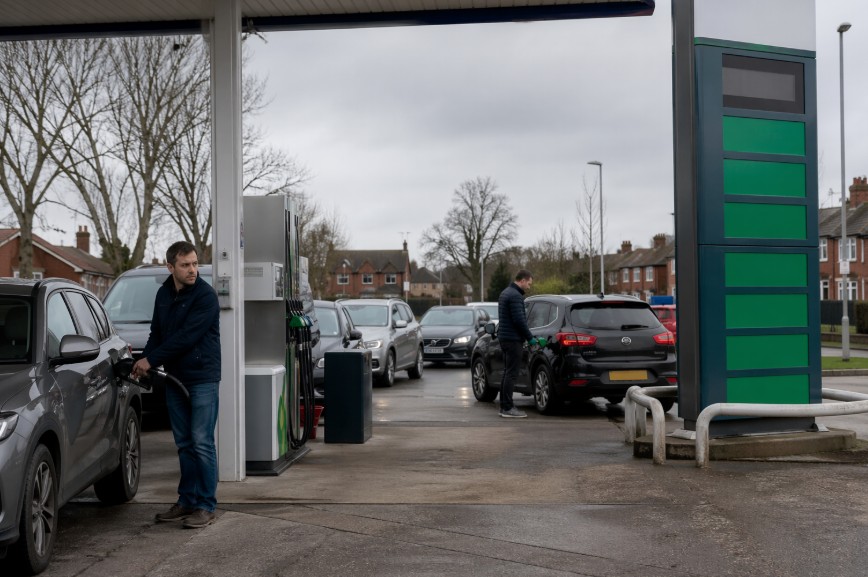
UK fuel price drops have finally started after nearly seven weeks of rising petrol and diesel costs. The recent fall is small, but it marks the first sign that pressure on drivers may be easing.
Petrol has fallen to around 158.1p per litre, while diesel has edged down to about 191.2p per litre after wholesale oil prices began to decline.
The main reason is that fears over oil supply disruption in the Middle East have eased slightly, especially after signs that the Strait of Hormuz may reopen.
Key takeaways:
- Petrol and diesel prices have fallen for the first time in 46 days
- Petrol now averages around 158.1p per litre
- Diesel now averages around 191.2p per litre
- Prices are still much higher than they were in February
- Falling wholesale oil prices could lead to further cuts in the coming weeks
- Drivers are still paying significantly more to fill up than earlier this year
Why Have UK Fuel Prices Started Falling After Weeks of Increases?
UK fuel prices have started falling because wholesale oil and fuel costs have stopped rising. During March and early April, oil prices surged as conflict in the Middle East threatened global fuel supplies.
Traders feared that the Strait of Hormuz, one of the world’s most important oil shipping routes, could remain blocked for a long period.
However, oil prices have eased in recent days after reports of a temporary ceasefire and signs that shipping routes may reopen. As Brent crude dropped below $100 a barrel, UK fuel retailers slowly began reducing pump prices.
Simon Williams from the RAC said:
“After 46 days of rising prices, the cost of both petrol and diesel across the country has finally begun to drop very slightly. Wholesale prices are still lower, so we’re hopeful there will be further reductions amounting to several pence a litre in the coming days. After record rises, drivers will be relieved to finally see prices going the other way.”
How Much Have Petrol and Diesel Prices Dropped in the UK?
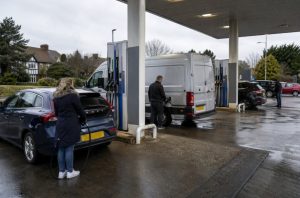
The recent UK fuel price drops have been modest, but they are important because they ended a long period of continuous increases. Petrol fell by around 0.2p per litre in one day, while diesel dropped by around 0.3p per litre.
Even though the reductions are small, they suggest that a bigger fall could happen if wholesale costs continue to move lower.
What Are the Latest Average Petrol Prices Per Litre?
Petrol currently averages around 158.1p per litre across the UK. Just one day earlier, the average was 158.3p per litre.
For many motorists, that difference may not seem significant. A driver filling a typical 55-litre family car now pays roughly £86.95 instead of just over £87. However, experts believe the recent change is only the beginning.
Important figures include:
| Metric | Figure |
|---|---|
| Current average petrol price | 158.1p per litre |
| Previous average petrol price | 158.3p per litre |
| Increase since February | Around 25p per litre |
| Typical cost to fill a 55-litre tank | Nearly £87 |
Petrol prices had previously risen every day for more than six weeks. The rise began shortly after the conflict in the Middle East intensified and concerns grew about oil exports from the Gulf.
What Are the Latest Average Diesel Prices Per Litre?
Diesel remains considerably more expensive than petrol. The average UK diesel price has now fallen slightly to around 191.2p per litre, down from 191.5p.
Although the decrease is only 0.3p per litre, diesel drivers have been hit hardest by the recent increases because the UK relies more heavily on imported diesel supplies. That has made diesel more vulnerable to disruption in international shipping routes.
Current diesel figures include:
| Metric | Figure |
|---|---|
| Current average diesel price | 191.2p per litre |
| Previous average diesel price | 191.5p per litre |
| Increase since February | Around 49p per litre |
| Typical cost to fill a 55-litre tank | More than £105 |
The latest chart shows diesel prices sitting close to £1.91 per litre, which is far above where they stood at the start of the year. Diesel has increased much faster than petrol because supply shortages have been more severe for diesel fuel than for unleaded petrol.
How Much More Are Drivers Still Paying Compared With February?
Although prices have started to fall, UK motorists are still paying much more than they were before the conflict began in late February.
Compared with February levels:
- Petrol is around 25p per litre more expensive
- Diesel is around 49p per litre more expensive
- Filling a petrol car costs around £14 more
- Filling a diesel vehicle costs around £26 more
For households that rely on driving every day, that difference is significant. Someone commuting long distances or using a diesel van for work could be spending hundreds of pounds more every month.
The RAC Foundation estimates that rising fuel prices have added roughly £1.4 billion to the nation’s fuel bill since the conflict began. That has increased pressure on families, small businesses and delivery firms already struggling with higher food and energy bills.
Why Did UK Fuel Prices Rise So Sharply in the First Place?
Fuel prices rose sharply because global oil markets reacted immediately to the risk of supply disruption in the Middle East. The region provides around one fifth of the world’s oil. When conflict intensified and the Strait of Hormuz effectively closed, traders feared that less oil would reach global markets.
As a result, Brent crude oil increased from below $70 a barrel to more than $119 at its peak. Fuel wholesalers then passed those higher costs on to petrol stations, which eventually raised prices for drivers.
The sharp rise happened for several reasons:
- Reduced oil shipments through the Gulf
- Higher insurance and transport costs for tankers
- Fear that the conflict would spread further
- A stronger demand for diesel across Europe
One energy analyst described the situation as the beginning of “the largest energy crisis we have ever faced” if shipping through the Gulf did not resume. The warning reflected fears that fuel, heating oil and even airline costs would continue rising if supplies remained blocked.
How Has the Strait of Hormuz Affected UK Petrol and Diesel Prices?

The Strait of Hormuz has been the biggest reason behind recent UK fuel price rises. Although the UK does not import all of its oil directly from the Middle East, global oil prices are set by international supply and demand. When a major shipping route is threatened, prices rise everywhere.
Because so much of the world’s oil passes through this narrow route, even the possibility of disruption can quickly affect fuel prices at UK petrol stations.
Why Is the Strait of Hormuz Important to Global Oil Supply?
The Strait of Hormuz is a narrow shipping route between Iran and Oman. Around one fifth of the world’s oil passes through it every day.
That means if the route closes or becomes unsafe, millions of barrels of oil cannot reach global markets. Oil companies, fuel traders and shipping firms then respond by increasing prices because they expect supplies to become tighter.
The route is important because it carries:
- Crude oil from Saudi Arabia, Iraq and the UAE
- Refined fuels such as diesel and jet fuel
- Gas exports used across Europe and Asia
When Iran threatened to block the route after military action by the US and Israel, global markets reacted immediately. Oil prices jumped within hours, and that increase was later passed on to drivers in the UK.
Fatih Birol of the International Energy Agency warned that Europe had only a few weeks of jet fuel supply remaining if the route stayed closed. He also suggested that flights could begin to be cancelled if the disruption continued.
How Did the Iran Conflict Push Up Oil and Fuel Costs?
The conflict pushed up prices because markets believed there was a real risk that oil exports would be interrupted for weeks or even months.
Once the US and Israel carried out strikes and Iran responded, shipping companies became more cautious. Tankers travelling through the Gulf faced higher risks, while insurers increased costs for companies moving oil through the region.
The result was a rapid increase in wholesale fuel prices. UK fuel stations then raised prices because they were paying more for deliveries.
The impact happened in stages:
- Brent crude rose from under $70 to above $119
- Petrol prices increased from roughly 133p to 158p
- Diesel prices climbed from around 142p to 191p
- Fuel bills for UK motorists increased by billions
A policy analyst at Lancaster University explained how people were reacting:
“The survey suggests growing anxiety among households about global economic shocks. The rise in fuel prices comes at a time when wage growth has slowed sharply. Low-income workers have very little protection against higher costs.”
Could UK Petrol and Diesel Prices Fall Further in the Coming Weeks?
There is a strong chance that fuel prices could continue falling over the next few weeks if wholesale oil prices stay lower.
Brent crude has already fallen back below $100 a barrel, and some reports suggest it could move lower if the Strait of Hormuz remains open. Since UK fuel retailers often take several days to pass lower wholesale prices on to motorists, further reductions may still be on the way.
Industry experts believe petrol and diesel could fall by several more pence per litre before the end of the month. However, prices are unlikely to return quickly to February levels because global markets remain uncertain.
Simon Williams said:
“While we’re a long way from a return to the prices we had at the start of the conflict, there’s now a glimmer of light at the end of the tunnel. Wholesale costs remain lower than they were earlier this month. That should eventually be reflected at the pumps.”
How Are Higher Fuel Costs Affecting UK Households and Drivers?

Higher fuel prices are affecting almost every household in the UK, especially people who rely on driving to work, taking children to school or running a business.
The biggest impact has been on lower-income families and workers in rural areas, where public transport is limited. Drivers are also paying more for food deliveries, commuting and heating costs because higher fuel prices affect the wider economy.
Recent surveys show that 75% of people now see fuel prices as one of the main reasons their cost of living has increased.
Households are feeling the pressure in several ways:
- Commuting costs have risen sharply
- Delivery and transport charges are higher
- Family budgets are being stretched further
- Businesses using vans and lorries face higher expenses
A driver travelling 40 miles a day could now spend hundreds of pounds more each year on fuel alone. For small businesses, especially delivery firms and tradespeople, rising diesel costs have had an even greater effect.
How Do Current UK Fuel Prices Compare With the 2022 Energy Crisis?
Although current prices are very high, they are still slightly below the record levels reached during the 2022 energy crisis after Russia invaded Ukraine.
In summer 2022, petrol reached around 191.5p per litre, while diesel peaked at roughly 199p per litre. Today’s petrol price of around 158.1p is much lower than that record, but diesel is now close to its 2022 peak.
| Fuel Type | Current Average Price | 2022 Peak Price | Difference |
|---|---|---|---|
| Petrol | 158.1p per litre | 191.5p per litre | 33.4p lower |
| Diesel | 191.2p per litre | 199p per litre | 7.8p lower |
The comparison shows that diesel drivers are now experiencing almost the same pressure they faced during the worst of the 2022 crisis.
However, there are also important differences. In 2022, the rise was mainly caused by the war in Ukraine and wider global energy shortages.
In 2026, the latest increase has been driven mainly by concerns about the Strait of Hormuz and conflict involving Iran. If oil prices continue falling, the current crisis may ease more quickly than it did in 2022.
What Can UK Drivers Do to Save Money While Fuel Prices Remain High?

Drivers cannot control global oil prices, but they can reduce how much they spend while fuel remains expensive.
Checking local fuel prices can make a noticeable difference because supermarket petrol stations are often cheaper than motorway forecourts. Drivers can also improve fuel efficiency by driving more smoothly and avoiding unnecessary trips.
Simple ways to save money include:
- Compare petrol station prices before filling up
- Avoid filling up at motorway services
- Keep tyres properly inflated
- Drive at a steady speed
- Remove unnecessary weight from the car
- Combine several journeys into one trip
Many experts also recommend filling up earlier if prices appear likely to rise again. However, there is currently more evidence that prices may continue edging down in the short term.
Conclusion
UK fuel price drops have finally begun after weeks of relentless increases, giving drivers some welcome relief. Petrol and diesel are both slightly cheaper than they were a few days ago, mainly because wholesale oil prices have fallen and fears over the Strait of Hormuz have eased.
Even so, prices remain far above where they were in February. Diesel is still close to record levels, and many households continue to feel the pressure through higher transport and living costs.
The good news is that further falls appear possible if global oil supplies remain stable. For now, drivers should expect only gradual reductions rather than a sudden return to cheaper fuel.
The next few weeks will be crucial in deciding whether these recent UK fuel price drops are the start of a lasting trend or only a temporary pause.
FAQs
Why are UK fuel prices falling now?
UK fuel prices are falling because wholesale oil prices have dropped after fears over the Strait of Hormuz eased. Petrol stations are slowly passing those lower costs on to drivers.
Will petrol prices continue to fall in the UK?
Petrol prices could continue falling if oil prices remain stable and there are no further disruptions in the Middle East. Experts expect reductions of several pence per litre in the coming weeks.
Why is diesel still more expensive than petrol?
Diesel is more expensive because the UK depends heavily on imported diesel supplies. Global shortages and higher transport costs have pushed diesel prices up more sharply than petrol.
How much does it currently cost to fill up a car in the UK?
Filling a typical 55-litre petrol car currently costs around £87, while a diesel car costs more than £105. The exact amount depends on local fuel prices and the size of the vehicle’s tank.
Could fuel prices return to February levels?
Fuel prices are unlikely to return to February levels quickly because oil prices remain much higher than they were earlier in the year. A gradual fall is more likely than a sudden drop.
Why does the Strait of Hormuz matter to UK drivers?
The Strait of Hormuz matters because around one fifth of the world’s oil passes through it every day. If that route is disrupted, global oil prices rise and UK drivers usually pay more at the pump.
Are current UK fuel prices higher than in 2022?
Current petrol prices are lower than the peak reached in 2022, but diesel prices are now close to those record levels. Diesel remains only a few pence below its highest point during the energy crisis.