
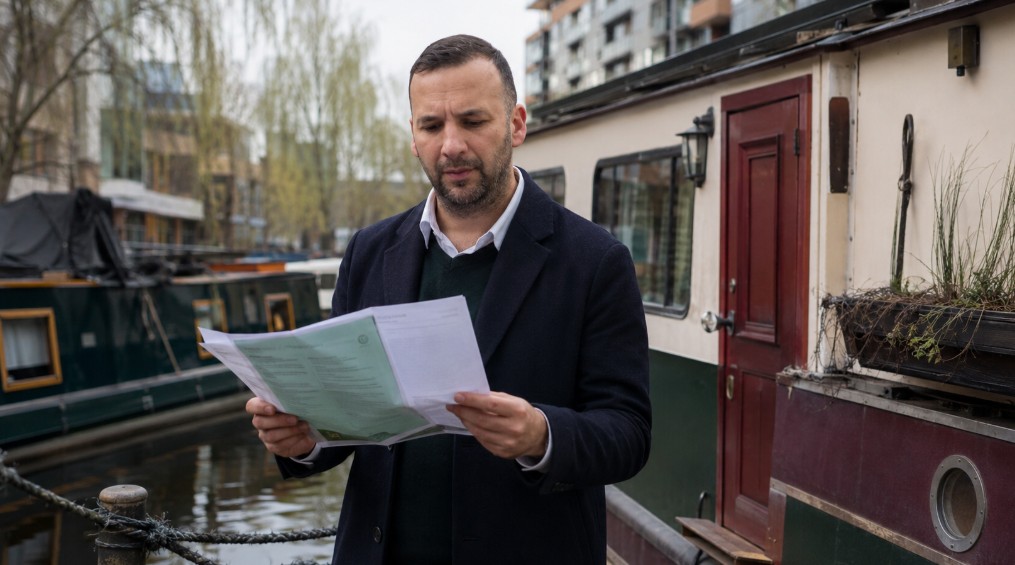
Zack Polanski’s unintentional tax mistake involved allegedly failing to pay council tax on a London houseboat that may have qualified as his main residence under UK law.
The controversy emerged after reports suggested the Green Party deputy leader had been living on the Hackney-based boat for several years while using a different address for official records.
The Green Party described the situation as an “unintentional mistake” and confirmed that steps were being taken to pay any council tax owed.
Key Takeaways
- Zack Polanski apologised over possible unpaid council tax
- The issue centres on a London houseboat in Hackney
- UK law applies council tax to main residential boats
- Media reports questioned his official living arrangements
- Tax experts analysed whether the boat was his primary residence
- The Green Party denied deliberate wrongdoing
- The controversy sparked wider debate about transparency and housing rules
What Was Zack Polanski’s Unintentional Tax Mistake on the London Houseboat?

Zack Polanski’s unintentional tax mistake allegedly involved failing to pay council tax on a London houseboat that may have qualified as his primary residence under UK law.
The controversy emerged after reports suggested that the Green Party deputy leader had been living on a boat moored in Hackney while using another address for official purposes, including electoral registration.
Under UK government guidance, council tax generally applies when a property or dwelling serves as someone’s “sole or main residence”. This rule can also extend to houseboats and floating homes if they are being used as permanent accommodation rather than temporary or leisure-based living spaces.
The issue quickly attracted national attention because of Mr Polanski’s political profile and because it raised broader questions about transparency, tax compliance and the complexities of alternative housing arrangements in Britain.
The Green Party described the matter as an “unintentional mistake” and stated that Mr Polanski had taken immediate steps to resolve any unpaid council tax obligations.
However, critics argued that the circumstances surrounding the houseboat raised serious questions about whether proper tax procedures had been followed for several years.
The situation became particularly sensitive because of growing public concerns around fairness, housing affordability and accountability among political figures.
| Key Issue | Details |
|---|---|
| Main controversy | Alleged failure to pay council tax |
| Property involved | London houseboat in Hackney |
| Political figure | Zack Polanski |
| Party response | “Unintentional mistake” |
| Main legal question | Was the boat his “sole or main residence”? |
| Potential outcome | Backdated council tax payments |
Why Did Zack Polanski’s Houseboat Living Arrangement Raise Questions?

Questions surrounding Zack Polanski’s living arrangements emerged after multiple media investigations examined where he had actually been residing while serving as a senior Green Party politician.
Reports indicated that the houseboat was not merely an occasional leisure property but may instead have functioned as a long-term home. This distinction became crucial because UK council tax liability often depends on whether a location is considered someone’s primary residence.
The issue gained traction after details surfaced regarding the sale of the houseboat. According to reports, the boat was advertised for sale for approximately £100,000.
The advertisement allegedly included comments from Mr Polanski’s partner stating:
“We are moving to a house and so will sadly be leaving the gorgeous community behind.”
This statement contributed to speculation that the boat had been used as a permanent residence rather than occasional accommodation.
At the same time, local businesses reportedly recognised Mr Polanski and his partner as regular residents within the marina community. One laundrette allegedly stated that it had frequently handled their washing between 2023 and 2025.
Although these details alone do not prove legal residency, they strengthened public assumptions that the houseboat may have served as the couple’s main home.
Media Reports and Public Scrutiny
The controversy intensified once major newspapers began comparing official records with reported living arrangements.
The Daily Mail reported that Zack Polanski had been registered to vote at a nearby building rather than at the marina itself. However, the Lee Valley Authority reportedly stated that neither Mr Polanski nor his partner had rented the bungalow connected to that address.
This discrepancy raised additional questions because electoral registration addresses are often considered when authorities determine where someone primarily resides.
Several factors combined to increase scrutiny:
- Electoral registration records
- Reports from local businesses
- Property sale descriptions
- Marina residency claims
- Public statements from political opponents
The combination of these elements transformed what may have initially appeared to be an administrative issue into a significant political story.
Why Residential Status Matters Under UK Tax Rules?
Under UK council tax law, determining someone’s “sole or main residence” is extremely important because it establishes liability for local taxation.
A person may own or use multiple properties while still only having one legally recognised primary residence. Councils generally examine practical evidence rather than relying solely on declared addresses.
Authorities may consider:
- Where an individual sleeps most nights
- Where personal belongings are kept
- Utility usage patterns
- Electoral registration
- Banking correspondence
- Community ties
Because floating homes occupy an unusual legal position, proving residency can sometimes become more complicated than with traditional housing.
| Factor Considered by Councils | Why It Matters |
|---|---|
| Length of stay | Indicates primary occupancy |
| Voting registration | Suggests official residence |
| Utility usage | Demonstrates regular living |
| Personal possessions | Shows long-term occupancy |
| Community involvement | Reflects residential connection |
How Does Council Tax Work for Houseboats in the UK?

Council tax rules involving houseboats differ from standard residential properties because floating homes exist within overlapping systems of local authority law, navigation regulations and mooring agreements.
In many situations, houseboats can be subject to council tax if they are used as someone’s main home. The legal principle itself is relatively straightforward, but practical enforcement often becomes more difficult.
A residential houseboat can sometimes function almost identically to a traditional apartment or house.
Residents may:
- Live onboard full-time
- Receive post there
- Use nearby local services
- Participate in local communities
When this happens, councils may classify the vessel as a taxable residence.
However, some boats are used only for:
- Leisure trips
- Temporary accommodation
- Seasonal stays
- Non-residential moorings
In those cases, council tax may not apply.
Residential Moorings and Their Importance
One of the most significant factors in houseboat taxation involves the type of mooring attached to the vessel. A residential mooring generally permits full-time living, while leisure moorings often restrict overnight stays or long-term occupancy.
If a boat is located on a recognised residential mooring, councils are more likely to consider it taxable.
| Mooring Type | Typical Use | Likelihood of Council Tax |
|---|---|---|
| Residential Mooring | Used for full-time living and permanent residency | High |
| Leisure Mooring | Mainly used for temporary stays, holidays or recreational boating | Lower |
| Visitor Mooring | Intended for short-term stopping periods only | Usually Exempt |
| Continuous Cruising | Mobile lifestyle without a fixed permanent mooring | Depends on individual circumstances |
In London, residential moorings are particularly valuable because they provide relatively affordable alternatives to traditional housing costs.
As property prices continue rising across the capital, more individuals have turned to canal boats and floating homes as practical housing solutions.
Why Houseboat Taxation Often Causes Confusion?
Houseboat taxation can become confusing because multiple authorities may oversee different aspects of residency.
A boat owner may deal with:
- Marina operators
- Canal and River Trust regulations
- Local councils
- Navigation authorities
- Utility providers
Each organisation may apply slightly different definitions of occupancy or residential use. For example, a marina agreement might prohibit permanent living even though residents effectively stay there year-round.
In such cases, some occupants mistakenly assume they are exempt from council tax because their mooring technically lacks residential status. Tax experts frequently note that misunderstandings are relatively common within the UK boating community.
The Financial Impact of Council Tax on Houseboats
Council tax obligations on residential boats can vary considerably depending on:
- Local council rates
- Property banding assessments
- Length of residency
- Residential classification
Some residential boat owners pay significantly lower council tax than traditional homeowners, while others face similar charges depending on location and facilities.
London councils often apply higher rates because of property demand and local service costs.
| Potential Costs | Estimated Impact |
|---|---|
| Annual council tax | Several hundred to several thousand pounds |
| Backdated charges | Multiple years possible |
| Penalties | Additional fines or interest |
| Legal action | Possible for non-payment |
For political figures, even relatively small unpaid tax amounts can attract substantial public attention because of expectations surrounding accountability.
What Did the Green Party Say About the Tax Mistake?

The Green Party consistently maintained that the situation resulted from an honest misunderstanding rather than intentional misconduct.
In public statements, party representatives emphasised the unusual nature of houseboat living and described the matter as an administrative oversight connected to complex residency arrangements.
A spokesperson stated:
“Until relatively recently, Zack was living on a houseboat, which came with its own unique practical circumstances and considerations.”
The party also confirmed:
“He has immediately taken steps to pay any council tax he may be found to owe. Zack apologises sincerely for the unintentional mistake.”
This response attempted to address both legal concerns and political criticism.
The wording of the statement appeared carefully designed to:
- Acknowledge potential liability
- Avoid admitting deliberate wrongdoing
- Emphasise cooperation
- Present the issue as procedural rather than intentional
Security Concerns Raised by the Party
The Green Party also linked some privacy surrounding Mr Polanski’s address to security concerns.
According to the spokesperson:
“For security reasons, we do not comment publicly on Zack’s address.”
The party further claimed that:
- Two serious incidents had been reported to police
- Public disclosure of residential details could create safety risks
This explanation formed part of the broader defence against accusations regarding unclear residency records.
Political figures often face genuine security concerns, particularly in highly polarised political environments. However, critics argued that the issue of council tax liability still required clear answers regardless of privacy considerations.
Public Perception of the Apology
Public reaction to the apology was mixed.
Supporters viewed the situation as:
- A genuine oversight
- A technical misunderstanding
- An example of complicated housing regulations
Critics argued:
- Politicians should understand tax obligations
- Public officials face higher standards
- Residency arrangements appeared inconsistent
Because the controversy involved taxation, transparency and political leadership, media attention remained intense even after the apology was issued.
Why Did Tax Experts Become Involved in the Zack Polanski Case?
Tax professionals became involved because the case highlighted several important legal questions regarding residential status and local taxation. One of the most prominent voices was tax lawyer Dan Neidle, founder of Tax Policy Associates.
Neidle publicly stated:
“If the boat was in fact Mr Polanski’s ‘sole or main residence’ then he and/or his partner should have registered for, and paid, council tax for those three years.”
His comments carried significant weight because of his reputation in UK tax analysis and public policy discussions.
Why Experts Considered the Case Important?
Tax experts viewed the case as important because it reflected wider issues affecting:
- Alternative housing communities
- Residential boat owners
- Council tax enforcement
- Legal interpretation of residency
The controversy also illustrated how modern housing arrangements increasingly challenge traditional tax systems. Many UK laws were originally designed around standard housing structures rather than mobile or semi-mobile accommodation.
As more people choose:
- Tiny homes
- Canal boats
- Houseboats
- Converted vehicles
authorities face growing challenges in applying conventional taxation frameworks.
The Difference Between Mistakes and Deliberate Evasion
Experts also stressed the importance of distinguishing between:
- Administrative mistakes
- Tax avoidance
- Deliberate evasion
| Type | Definition |
|---|---|
| Administrative error | Unintentional misunderstanding |
| Tax avoidance | Legal reduction of liabilities |
| Tax evasion | Illegal non-payment |
In the Zack Polanski case, no public evidence has suggested criminal tax evasion. The Green Party repeatedly framed the matter as a misunderstanding linked to unusual housing arrangements rather than intentional misconduct.
Nevertheless, because unpaid council tax can create legal consequences, the issue remained politically sensitive.
Could Zack Polanski Face Legal Consequences Over the Tax Issue?

At present, there is no indication that criminal proceedings are being considered. Most council tax disputes are resolved through administrative processes rather than criminal courts.
Typical outcomes may include:
- Registration corrections
- Backdated tax payments
- Interest charges
- Financial penalties
If councils determine that unpaid tax exists, they usually prioritise recovering the outstanding amount rather than pursuing prosecution. However, public figures often face additional reputational consequences beyond the legal process itself.
How Councils Investigate Residency Questions
Local authorities can investigate residency questions using multiple forms of evidence.
These may include:
- Electoral roll data
- Utility records
- Witness statements
- Correspondence addresses
- Occupancy patterns
Councils may also review social media activity, property listings and publicly available documents. In complex cases, authorities attempt to determine where an individual genuinely lives rather than relying on formal declarations alone.
Political Consequences Often Exceed Legal Risks
For politicians, controversies involving taxation can become damaging even without legal wrongdoing.
Public trust often depends heavily on perceptions of:
- Honesty
- Financial transparency
- Compliance with rules
- Accountability
Because political opponents can use tax controversies to question credibility, even relatively minor administrative mistakes may generate major headlines.
This partly explains why the Zack Polanski case attracted such widespread media attention despite involving local council tax rather than national taxation issues.
Why Has the Story Attracted So Much Political Attention?
The story attracted intense attention because it combined several politically sensitive topics:
- Tax compliance
- Housing affordability
- Alternative lifestyles
- Political transparency
The Green Party frequently campaigns on social justice, fairness and accountability. Critics therefore argued that any questions involving unpaid taxes could appear politically damaging.
Conservative Party chairman Kevin Hollinrake publicly criticised the situation, stating:
“Zack Polanski needs to come clean about his living arrangements, because they simply don’t appear to match the public record.”
He further added:
“There are serious questions over whether the correct council tax has been paid on his houseboat. The public deserves clear answers.”
These comments intensified political pressure and helped keep the controversy in national headlines.
Wider Housing Debates in London
The controversy also resonated because of London’s ongoing housing crisis.
Many residents increasingly turn to:
- Houseboats
- Canal living
- Shared housing
- Alternative accommodation
due to extremely high property costs.
As a result, the case highlighted broader discussions about:
- Housing affordability
- Residential regulations
- Tax fairness
- Urban living alternatives
Some commentators argued that the issue reflected outdated systems struggling to adapt to changing housing realities. Others maintained that tax obligations should apply equally regardless of unconventional living arrangements.
What Does the Zack Polanski Houseboat Tax Story Reveal About UK Tax Rules?
The Zack Polanski controversy demonstrates how modern living arrangements can expose weaknesses and ambiguities within traditional taxation systems.
Houseboats occupy an unusual position because they function simultaneously as:
- Vehicles
- Homes
- Temporary accommodation
- Community residences
This creates legal complexities not typically associated with ordinary housing.
The story also reveals how:
- Media scrutiny shapes public accountability
- Political figures face heightened standards
- Administrative misunderstandings can escalate rapidly
As floating homes become increasingly common in urban areas, local councils may face growing pressure to modernise guidance surrounding residential taxation.
The controversy surrounding the “polanski unintentional tax mistake” therefore extends beyond one politician and reflects larger questions about how UK law adapts to changing forms of housing and residency.
Conclusion
The “polanski unintentional tax mistake” centres on whether Zack Polanski properly paid council tax while living on a London houseboat believed to be his primary residence.
The Green Party maintains the issue was an honest administrative oversight linked to the complexities of houseboat living, while critics argue the situation raises important transparency questions.
Although no criminal wrongdoing has been alleged, the controversy has highlighted how UK council tax rules can become complicated when applied to non-traditional housing arrangements such as floating homes.
The case has also sparked broader discussions about accountability, political scrutiny and the practical challenges surrounding residential boat living in London.
FAQs
Can houseboats be exempt from council tax in the UK?
Some houseboats may not require council tax if they are used only occasionally or classified as leisure vessels rather than permanent residences.
How do councils determine a main residence on a boat?
Councils examine factors such as occupancy patterns, mailing addresses, electoral registration and daily living arrangements.
Is council tax different for marina residents?
It can vary depending on whether the marina has residential permissions and whether the mooring is officially recognised as permanent accommodation.
Did Zack Polanski admit wrongdoing?
Zack Polanski apologised for what the Green Party described as an unintentional mistake but has not admitted deliberate wrongdoing.
Can unpaid council tax lead to penalties?
Yes, councils may impose backdated charges, fines, court action or enforcement measures for unpaid council tax.
Are floating homes common in London?
Yes, London has a sizeable houseboat and canal boat community, particularly in areas connected to waterways and marinas.
Why are politicians scrutinised more heavily over tax matters?
Public figures are generally expected to demonstrate transparency and compliance with financial and legal obligations.