
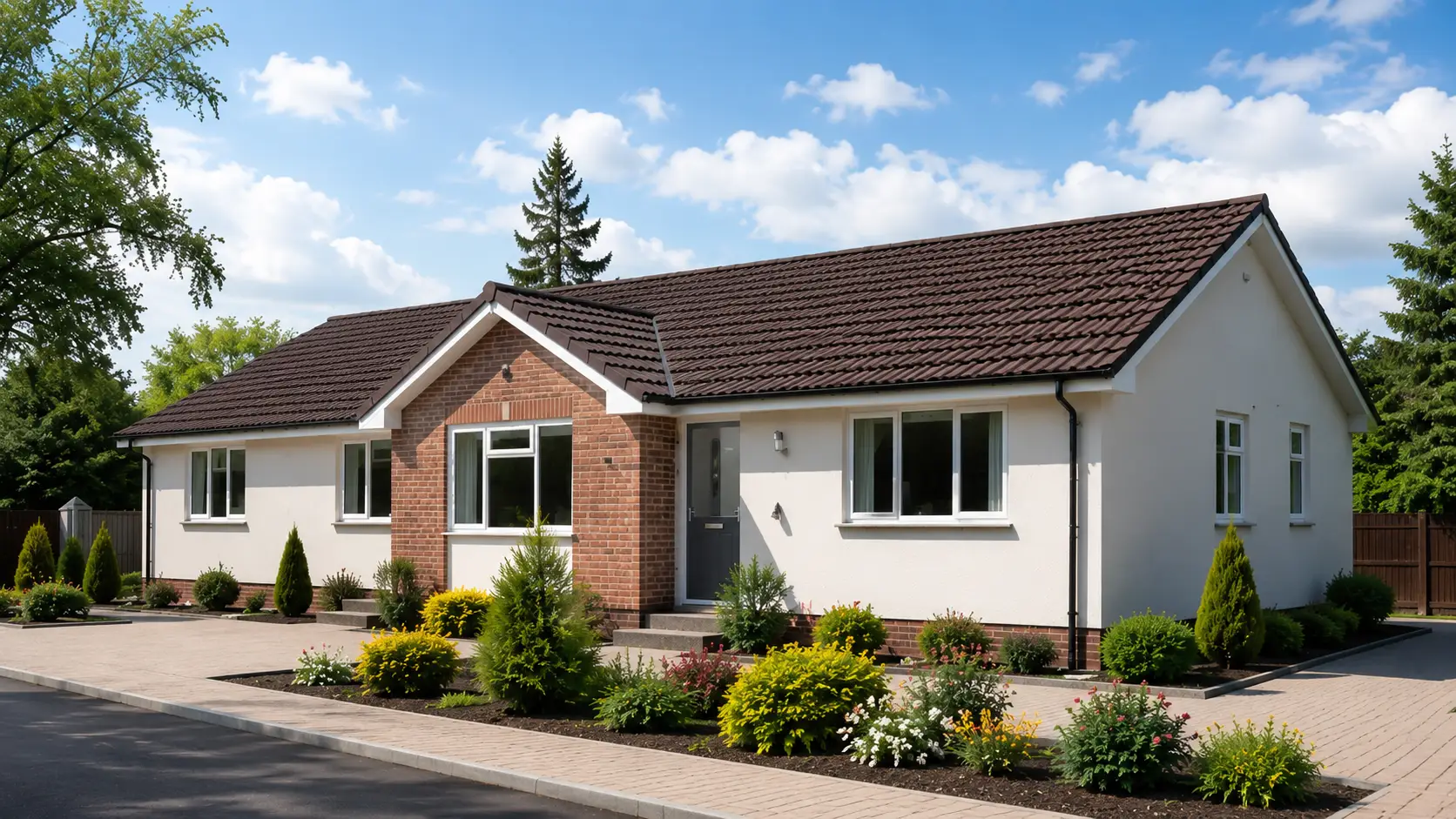
In Q3 2025, just 309 bungalows were registered with the NHBC across the entire UK. That’s out of over 30,000 total new home registrations.
The NHBC’s own corporate strategy director called it the “death of the bungalow,” and the numbers back him up. Bungalows make up around 9% of the existing housing stock, but they account for fewer than 2% of what’s being built to replace them.
At the same time, demand for single-storey living is growing. The UK’s over-65 population currently sits at roughly one in five people and is projected to keep rising for decades.
Age-related mobility issues make stairs a genuine barrier for millions of people. There’s a clear gap between what the market wants and what developers are building, and that gap represents a serious commercial opportunity.
Why Developers Stopped Building Bungalows?
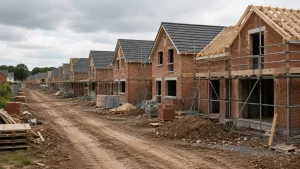
The answer is simple maths. A bungalow takes up the same plot as a two-storey house but generates roughly half the saleable floor area.
When land costs are high and planning authorities are pushing for density to hit government targets, single-storey homes are the first thing to get cut from a scheme.
Volume housebuilders optimise for revenue per acre. A site that fits 40 two-storey homes might only accommodate 25 bungalows, and the selling prices won’t be double to compensate.
The margins don’t work, so developers don’t build them. It’s a rational business decision at the individual company level, but it creates a collective market failure when you zoom out.
Planning policy makes the problem worse. Local housing need assessments focus on total numbers, not housing type. A council chasing a target of 500 new homes a year has no incentive to insist that some of them are single-storey.
The result is estates of three and four-bed family homes in areas where the demographic profile is ageing rapidly.
The Size of the Demand Gap
The numbers on the demand side are hard to argue with. Around 3.6 million UK properties owned by the over-65s have at least two spare bedrooms. These are people who’d often happily downsize if there were somewhere suitable to go.
Industry estimates suggest the UK needs between 30,000 and 50,000 later living homes per year to meet demand. The sector is delivering around 7,000.
Only about 0.6% of UK over-65s live in dedicated retirement or later-living housing, compared with 5% to 6% in Australia, New Zealand and the US. By any measure, the UK is decades behind.
That’s a supply gap with real commercial consequences. Every older homeowner stuck in a house they don’t need is a family home that isn’t coming onto the market.
NHBC Foundation research found that each retirement home built releases an average of 2.6 existing properties further down the chain. Building for the over-50s doesn’t just serve that age group. It unblocks the entire market.
How Park Home Operators Fill the Gap?
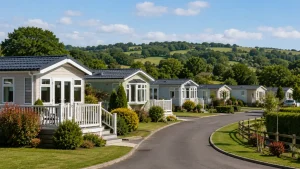
While traditional developers avoid bungalows because the margins don’t stack up on standard land plots, park home operators use a completely different model.
Homes are factory-manufactured off-site and installed on purpose-built residential parks, which typically operate on land that’s cheaper per unit than conventional housing sites.
The economics are different in several important ways. Factory construction means faster build times and lower waste. Site infrastructure costs are shared across a managed community.
And because the homes are classed differently from bricks-and-mortar property, many fall below the stamp duty threshold, which makes them more attractive to buyers who are releasing equity from a larger home.
Regency Living park bungalows show what this model looks like in practice. The company builds single-storey homes for the over-45s across residential sites in Cornwall, Dorset, Hampshire, Kent and Norfolk, among other locations.
They offer part exchange and assisted move schemes that directly address the friction keeping older homeowners stuck in oversized houses. Homes are built to BS 3632 standards, with modern insulation and energy efficiency that competes with conventional new builds.
From a business perspective, the model works because it’s solving a genuine market failure. There’s a large, asset-rich demographic that wants to downsize into a single-storey home, and the mainstream market isn’t offering them one.
Challenges the Sector Still Faces
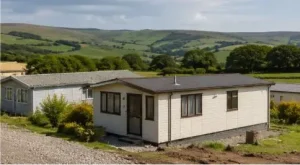
It’s not all upside. The park home sector has real constraints that limit how quickly it can grow.
Availability
The biggest is site availability. Opening a new residential park requires planning permission, licensing and compliance with the Mobile Homes Act.
Local authorities don’t always distinguish between residential parks and holiday sites, which can lead to objections based on misconceptions. The number of licensed residential park sites in the UK has been broadly static for years, and expanding the supply takes time.
Public Perception
Public perception is another barrier. Many people still associate park homes with static caravans on holiday parks. The reality is that modern residential park homes are purpose-built, permanent dwellings with full-size kitchens, en-suite bathrooms and open-plan living spaces. But changing a decades-old image takes sustained effort, and it remains a headwind for the sector.
Valuations Does Follow the Same Patterns as Traditional Housing
There’s also the question of resale. Park homes, while not too hard to resell, don’t appreciate in the same way as freehold bricks-and-mortar property, and that limits their appeal to buyers who view housing primarily as a financial asset.
For buyers who view it as a lifestyle decision, of course, the trade-off is different, but it’s a genuine consideration.
The Final Take
Britain’s bungalow shortage is a market failure with a clear demographic cause and a quantifiable cost to the wider housing chain. Traditional developers have rational reasons for not building single-storey homes, but that doesn’t make the gap any less real.
Park home communities are one of the few parts of the market actively filling that gap, and the business case is strong: growing demand, limited competition and a buyer demographic with the equity to make it work.
The constraints are real too, but for operators who can secure sites and manage perception, the opportunity is substantial.