
Yes, Del Monte Foods has faced serious financial trouble after filing for Chapter 11 bankruptcy protection in 2025, but the company is not entirely disappearing. Instead, Del Monte is restructuring parts of its business while selling assets and closing several major canneries in California. The situation has affected farmers, workers, suppliers, and the wider canned food industry across the United States.
Key takeaways:
- Del Monte filed for Chapter 11 bankruptcy due to debt and declining canned food demand.
- The company closed its Modesto and Hughson canneries in California.
- Around 420,000 peach trees may be destroyed after contract cancellations.
- Farmers could lose more than $550 million in long-term agreements.
- The USDA approved up to $9 million in federal aid for affected growers.
- Del Monte products may still remain available during restructuring.
The crisis reflects changing consumer habits, rising production costs, and growing pressure on traditional food manufacturers.
What Happened to Del Monte Foods in 2025 and 2026?

Del Monte Foods entered one of the most difficult periods in its history during 2025 and 2026. The nearly 140-year-old food company filed for Chapter 11 bankruptcy protection after struggling with rising operational expenses, falling canned food sales, and mounting debt obligations.
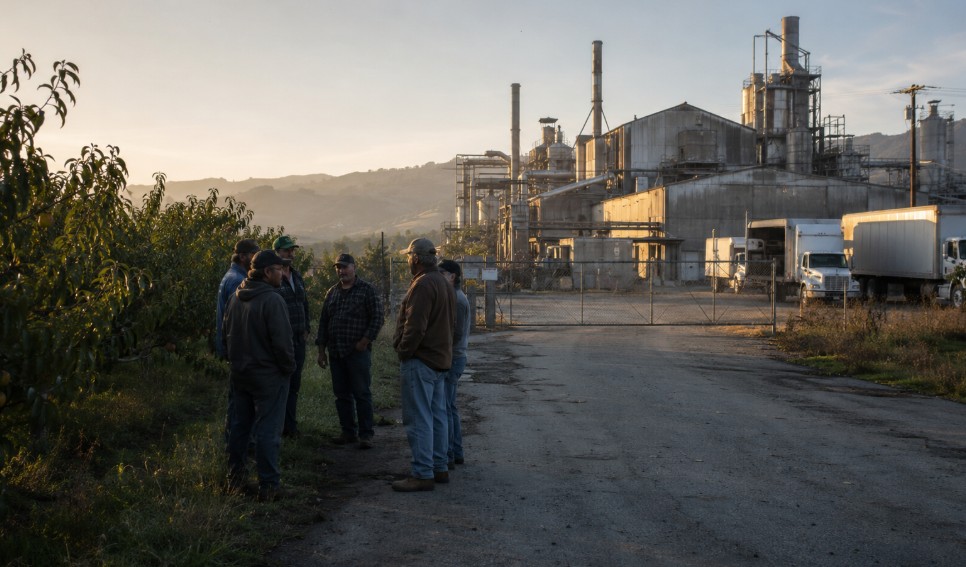
Soon after the filing, Del Monte announced the closure of its Modesto and Hughson canneries in Central California. These facilities handled a significant share of the state’s clingstone peach processing operations.
Their shutdown immediately disrupted long-term farming contracts and left growers without reliable buyers for large volumes of fruit. The story attracted national attention because it highlighted broader problems within the agricultural and food manufacturing industries.
Although many headlines suggested Del Monte was “going out of business,” the company is technically restructuring rather than fully liquidating. Some divisions and product lines may continue operating under new ownership or revised business arrangements as assets are sold throughout the bankruptcy process.
Why Did Del Monte File for Bankruptcy?
Del Monte’s bankruptcy was caused by several financial and industry pressures building over many years. Consumer behaviour changed rapidly, while the company struggled to adapt its traditional canned food business model to modern shopping preferences.
Many consumers increasingly preferred fresh, organic, and minimally processed foods instead of canned fruits and vegetables. At the same time, supermarket private-label brands created additional competition by offering cheaper alternatives.
Other major financial pressures included:
- Rising inflation and transportation expenses
- Increased labour and manufacturing costs
- Higher steel prices used for food cans
- Supply chain disruptions after global economic instability
- Reported debt obligations exceeding $1 billion
Operational challenges became more severe as profits weakened across several product categories. Del Monte also faced pressure from changing retailer relationships and slower demand growth within the canned goods market.
Industry analysts noted that traditional food manufacturers have struggled to maintain younger consumers’ attention. Many shoppers now prioritise convenience, freshness, and healthier food options over shelf-stable canned products.
One agricultural expert reportedly explained the situation by saying,
“When a processing facility closes and fruit suddenly has nowhere to go, that’s not something family farms can simply absorb overnight.” The statement reflected the wider economic ripple effect created by Del Monte’s financial collapse.
How Are California Peach Farmers Being Affected?

The collapse of Del Monte’s California processing operations created immediate uncertainty for peach farmers throughout the Central Valley. Many growers had spent decades building orchards specifically designed to meet Del Monte’s production needs.
These farmers relied heavily on long-term contracts, and the sudden closure of canneries disrupted entire harvest plans ahead of the growing season.
Why Are 420,000 Peach Trees Being Destroyed?
Approximately 420,000 clingstone peach trees across nearly 3,000 acres are expected to be removed after Del Monte cancelled purchasing contracts. Since peaches are highly perishable, farmers cannot simply store unsold crops for long periods.
Without enough buyers, growers faced a serious oversupply problem. Pacific Coast Producers agreed to purchase part of the stranded crop, but tens of thousands of tons of peaches still remain without processing destinations.
According to USDA estimates:
- Around 50,000 tons of peaches could remain unsold
- Orchard removals may help prevent future oversupply
- Farmers could avoid additional projected losses of roughly $30 million
The situation is particularly difficult because clingstone peach orchards take years to establish and can remain productive for decades.
How Much Money Could Farmers Lose?
Court filings and agricultural reports suggested that cancelled Del Monte contracts represented more than $550 million in future revenue losses for growers. Many farming families depended on these agreements for long-term financial stability.
Some farmers explained that switching crops is not a simple process. Almonds, walnuts, and prunes all require significant investment, time, and market uncertainty.
Farmer Tony McGrath reportedly described the challenge by saying,
“There’s really nothing that you can move into. Walnut prices aren’t that great, and almonds are extremely expensive to establish.”
The financial impact also extends beyond orchards alone. Local trucking companies, seasonal labourers, packaging suppliers, and nearby businesses are all affected by reduced agricultural activity throughout the region.
Is Del Monte Completely Shutting Down or Restructuring?
Del Monte is not entirely shutting down, although parts of its business operations are being dissolved or sold. The company filed under Chapter 11 bankruptcy, which allows businesses to reorganise debts while continuing certain operations during restructuring.
Some Del Monte products may continue appearing in supermarkets depending on how assets are sold and managed during the bankruptcy proceedings.
Reports indicate that Pacific Coast Producers acquired parts of Del Monte’s canned fruit operations, helping preserve sections of the supply chain.
Consumers should understand that bankruptcy does not always mean a brand disappears permanently. In many cases, companies restructure ownership, renegotiate contracts, and reduce operational costs before continuing business activities in a smaller form.
However, the closure of major processing facilities remains a significant setback for Del Monte’s traditional canned food operations.
The long-term future of the brand will depend on investor interest, operational efficiency, and whether consumer demand for canned products stabilises in the coming years.
What Role Is the US Government Playing in the Crisis?

Federal and state officials became heavily involved after the Del Monte closures threatened farming communities across California’s Central Valley. Lawmakers warned that the situation could create lasting economic damage for multi-generational agricultural businesses.
Government agencies responded by approving emergency support measures designed to help farmers manage immediate financial pressure.
Why Did the USDA Approve Federal Aid?
The USDA approved up to $9 million in emergency funding to assist growers impacted by Del Monte’s closure. The programme aims to help farmers remove unproductive orchards before future harvest seasons worsen oversupply conditions.
Several California lawmakers, including Senator Adam Schiff and Representative David Valadao, pushed for intervention after hearing concerns directly from local growers.
Officials argued that immediate support was necessary because thousands of acres of peaches suddenly lost processing contracts with little warning.
Key objectives of the federal assistance include:
- Reducing excess peach production
- Preventing additional financial losses
- Supporting long-term agricultural stability
- Helping family farms remain operational
Senator Adam Schiff stated that the assistance offered “a glimmer of hope after a devastating period” for affected farming communities.
How Will the Funding Help Farmers Transition?
The approved funding primarily supports orchard removal and transition planning. Removing peach orchards allows growers to explore alternative crops that may offer stronger long-term market opportunities.
However, transitioning remains extremely challenging. Many replacement crops require years before generating profits, while water costs and climate pressures continue affecting California agriculture.
Representative Mike Thompson reportedly said,
“This funding is a critical step in ensuring these important multi-generational businesses can stay afloat.”
The programme may also help reduce waste within the agricultural system by preventing large amounts of fruit from going unused during future harvests.
Despite the federal support, uncertainty still remains across the region. Farmers continue evaluating whether replanting different crops will provide enough financial stability to replace the long-standing Del Monte partnerships they previously depended upon.
What Does This Mean for Consumers and Supermarkets?
For consumers, the Del Monte situation may not immediately remove products from supermarket shelves, but it could contribute to supply adjustments and pricing changes over time. Retailers often continue selling existing inventory while restructuring agreements are negotiated.
The crisis also reflects broader shifts happening across the food industry. Demand for fresh produce, frozen meals, and healthier convenience foods has grown steadily, reducing reliance on traditional canned goods.
Potential consumer impacts may include:
- Smaller product selections in some stores
- Possible pricing fluctuations for canned fruits
- Increased focus on private-label alternatives
- Supply chain adjustments across food retailers
UK consumers following the story may see it as another example of how global food companies are adapting to changing market behaviour.
Although Del Monte’s operations are primarily based in the United States, international supply chains and food manufacturing trends often affect multiple markets.
Supermarkets are also becoming more cautious about inventory management and long-term supplier relationships. The Del Monte crisis demonstrates how quickly operational disruptions can impact both agricultural producers and retail distribution systems.
For many shoppers, the situation highlights the fragile connection between farming, manufacturing, transportation, and supermarket availability.
What Could Happen to Del Monte in the Future?
Del Monte’s future will likely depend on how successfully the company restructures its remaining operations and whether investors continue supporting parts of the brand. Some product lines could survive under new ownership, while other divisions may permanently close.
Food industry analysts believe established household brands still carry value, particularly when consumer recognition remains strong. However, long-term survival may require Del Monte to modernise product offerings and adapt to evolving eating habits.
The company could focus more heavily on profitable categories, streamlined production, and partnerships with external processors instead of maintaining large-scale canning operations.
Industry trends may also shape future outcomes, including:
- Demand for healthier packaged foods
- Increased sustainability expectations
- Automation within food manufacturing
- Pressure from supermarket private labels
Even if Del Monte survives in some form, the business will probably look very different from the traditional canned food company many consumers recognised for decades.
What Can Businesses and Farmers Learn From the Del Monte Situation?

The Del Monte crisis offers important lessons about market dependence, consumer behaviour, and long-term business adaptation. Both agricultural producers and manufacturers are facing increasing pressure from changing economic and environmental conditions.
The situation demonstrates how quickly long-standing systems can become unstable when major buyers exit the market.
What Does This Reveal About Changing Consumer Trends?
Consumer habits continue shifting toward fresher and less processed food options. Many households now prioritise convenience products that also align with health-conscious lifestyles.
Traditional canned food brands have struggled to maintain relevance among younger demographics, particularly as supermarkets expand fresh produce and refrigerated selections.
Important market trends include:
- Growth in fresh and frozen food sales
- Increased interest in organic products
- Preference for shorter ingredient lists
- Rising competition from supermarket own brands
Businesses that fail to adapt product strategies may face growing financial pressure over time.
Why Is Agricultural Diversification Becoming More Important?
The Del Monte situation also highlights the risks of relying too heavily on one major buyer. Many California farmers built entire orchard systems around long-term contracts that suddenly disappeared during bankruptcy proceedings.
Diversification can help reduce vulnerability when market conditions shift unexpectedly. However, changing crops is expensive, time-consuming, and heavily influenced by climate and water availability.
Agricultural experts increasingly encourage farmers to spread financial risk across multiple buyers and crop categories whenever possible.
The crisis further demonstrates how farming is connected to global trade, environmental challenges, transportation costs, and consumer demand patterns. Modern agricultural planning now requires flexibility alongside long-term investment strategies.
For businesses across many industries, the Del Monte collapse serves as a reminder that even historic brands must continuously evolve to survive rapidly changing markets.
Conclusion
Del Monte Foods is not entirely going out of business, but the company is experiencing one of the most significant restructurings in its history. Its Chapter 11 bankruptcy filing, cannery closures, and cancelled farming contracts have created major consequences across California’s agricultural sector.
The destruction of approximately 420,000 peach trees reflects the wider economic disruption caused by changing consumer habits, rising operational costs, and weakening demand for canned goods.
Although federal aid may provide temporary support for affected growers, long-term uncertainty still remains for many farming communities.
For consumers, Del Monte products may continue appearing in supermarkets during restructuring, but the company’s future will likely look very different from its traditional business model.
Ultimately, the crisis highlights the importance of adaptation, diversification, and resilience within both the food manufacturing and agricultural industries.
FAQs
Is Del Monte Foods still operating after filing for bankruptcy?
Yes, Del Monte Foods is still operating in certain areas while restructuring under Chapter 11 bankruptcy protection. Some business divisions and product lines may continue under revised ownership or operational changes.
Why did Del Monte close its California canneries?
The company closed its Modesto and Hughson canneries because of financial difficulties, declining canned food demand, and rising operational costs. These closures were part of broader restructuring efforts during bankruptcy proceedings.
Why are farmers removing peach trees in California?
Many growers lost their long-term Del Monte contracts and no longer have enough buyers for clingstone peaches. Removing orchards helps reduce oversupply and prevents additional financial losses.
Will Del Monte products disappear from supermarkets?
Not necessarily, because bankruptcy restructuring does not always mean a complete shutdown of a brand. Some Del Monte products may continue being sold while assets and operations are reorganised.
How much federal support are affected farmers receiving?
The USDA approved up to $9 million in emergency assistance for impacted California growers. The funding mainly supports orchard removal and agricultural transition planning.
What caused the decline in Del Monte’s canned food business?
Consumer preferences shifted toward fresh, organic, and minimally processed foods over recent years. Increased competition, inflation, and higher packaging costs also weakened the company’s financial position.
Who purchased parts of Del Monte’s canned fruit operations?
Reports indicate that Pacific Coast Producers acquired portions of Del Monte’s canned fruit business. The agreement helped preserve part of the peach processing supply chain for California growers.