

Angela Rayner’s middle son, Charlie, has publicly been described as registered blind and having learning difficulties or special educational needs. He was born extremely prematurely at 23 weeks in 2008, weighing around one pound.
An important correction is that Charlie is not the son Rayner had when she became a mother at 16. Her eldest son is Ryan Batty.
Charlie is her middle child and one of her two sons with former husband Mark Rayner. The search for angela rayner son disabled also became closely connected with a separate financial and political story in 2025.
A compensation award relating to Charlie was managed through a trust, and the legal treatment of that trust later affected the Stamp Duty Land Tax calculation on Rayner’s purchase of an £800,000 property in Hove.
Who Is Angela Rayner’s Disabled Son Charlie?
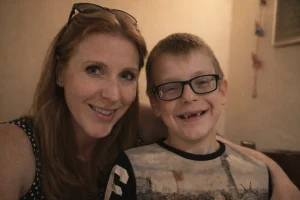
Charlie is Rayner’s middle son and was born in 2008. Public reporting states that he arrived at approximately 23 weeks of pregnancy and was extremely premature.
Rayner has spoken publicly about his difficult start in life. He has subsequently been described as registered blind and as having learning difficulties or special educational needs.
These details should not be confused with Rayner’s experience of teenage motherhood. She became pregnant with her eldest son, Ryan, at 16.
Ryan and Charlie are different sons, and merging their stories creates an inaccurate account of Rayner’s family history.
Public reporting should also be treated with restraint. Charlie is a private individual, and there is no need to speculate about his current medical condition, level of care or the precise value of any compensation award.
What Happened With Charlie’s NHS Compensation?
In 2020, Charlie received an NHS compensation award relating to the circumstances surrounding his birth and subsequent care.
Reports in 2025 said the settlement followed an approximately 11-year legal dispute involving the Rayner family and the hospital where he was born.
The total compensation figure has not been publicly established. A court-created trust was established to manage the award and support Charlie’s interests.
Publicly available accounts say that arrangements involving the trust later became connected with the ownership of the family home in Ashton-under-Lyne.
This distinction matters. The £162,500 figure widely reported in 2025 was not the size of Charlie’s compensation award.
It was the amount Rayner received when she sold her remaining interest in the Ashton-under-Lyne property to the trust in January 2025.
Why Did Charlie’s Trust Cause a Stamp Duty Problem?
The issue centred on the UK’s higher Stamp Duty Land Tax rates for additional residential properties. Following Rayner’s divorce in 2023, property and trust arrangements involving the Ashton-under-Lyne family home changed.
In January 2025, she sold her remaining interest in the property to the trust for £162,500. She subsequently used the lump sum as part of the funding for an £800,000 flat in Hove.
Rayner initially paid Stamp Duty Land Tax on the basis that the Hove property was not an additional dwelling. She later obtained specialist tax advice which concluded that legal “deeming” rules connected with the trust meant the higher rate applied.
HMRC guidance explains the underlying principle. Where a minor child is treated as holding certain property interests through a trust, the child’s parents can in some circumstances also be treated as owning that property for the higher-rates test.
In simplified terms, selling a legal or beneficial interest in a house does not always mean that the property disappears from an individual’s SDLT position.
Rayner had originally paid around £30,000 in stamp duty. The higher-rate calculation brought the liability to about £70,000, producing a shortfall of approximately £40,000.
Why Was There a Court Reporting Restriction?
Some details surrounding the trust could not initially be disclosed publicly because of a court restriction relating to Charlie and the family’s arrangements.
That restriction was lifted on 2 September 2025, allowing Rayner to explain more of the background to the property and trust arrangements when questions were being raised about her stamp duty position.
The lifting of that restriction did not make every aspect of Charlie’s finances or medical circumstances public.
It allowed information relevant to the property dispute to be discussed while the wider privacy interests of a private family member remained important.
What Happened to Angela Rayner After the Stamp Duty Row?

Rayner referred herself to Independent Adviser on Ministerial Standards Sir Laurie Magnus after receiving specialist advice that additional SDLT was payable.
Sir Laurie concluded that she had breached the Ministerial Code, while also stating that she had acted with integrity and a commitment to public service.
On 5 September 2025, Rayner resigned as Deputy Prime Minister, Secretary of State for Housing, Communities and Local Government and Deputy Leader of the Labour Party.
The story did not end there.
On 14 May 2026, Rayner said an HMRC investigation had concluded that she had not deliberately sought to avoid the correct tax and had taken reasonable care.
She paid the higher SDLT amount but said no penalty or fine was imposed. HMRC does not normally discuss an individual taxpayer’s affairs publicly, so reporting of the conclusion was based on Rayner’s disclosure of the outcome.
There was another significant development on 20 July 2026. Rayner returned to government and was appointed Secretary of State for Housing, Communities and Local Government. As of September 2026, GOV.UK lists her as the current holder of that office.
Was There Disagreement Over the HMRC Outcome?
Yes.
Tax Policy Associates had previously argued that, based on the publicly available information, failing to obtain specialist tax advice could potentially amount to carelessness under Schedule 24 of the Finance Act 2007.
It had estimated that a penalty of roughly £8,000 might result.
After the May 2026 outcome, the organisation described the absence of a penalty as surprising based on the information previously published by Sir Laurie Magnus.
However, Graham Aaronson KC, who advised Rayner, told Tax Policy Associates that the public account did not contain all the relevant facts and that the professional advice Rayner actually received was sufficient for HMRC to conclude that she had taken reasonable care.
The underlying legal documents have not all been made public, while HMRC is restricted from discussing individual taxpayer information.
As a result, the public record contains the HMRC outcome reported by Rayner alongside differing professional interpretations of why that outcome was reached.
What Is a Court-Instructed Trust?
The phrase “court-instructed trust” has been used in reporting about Charlie’s compensation, but it should not automatically be treated as interchangeable with every form of personal injury trust or Court of Protection arrangement.
A trust generally involves assets being held by trustees for the benefit of a beneficiary. Where compensation is involved, a trust may help ensure that money intended to meet long-term needs is managed separately.
For Universal Credit purposes, GOV.UK states that personal injury or illness compensation is disregarded for the first 12 months after receipt.
After that period, compensation placed in a qualifying trust or used to buy an annuity can continue to be disregarded when capital is assessed.
A Court of Protection deputyship is different. A deputy can be appointed to make property and financial decisions for somebody who lacks the capacity to make those decisions personally.
The deputy’s powers come from the court order and are not simply the same thing as being a trustee.
Families dealing with substantial compensation therefore need to understand exactly which legal arrangement applies rather than assuming that “trust”, “deputyship” and “personal injury trust” all mean the same thing.
Angela Rayner, Charlie and the Trust: Full Timeline
| Date | Development |
| 2008 | Charlie was born extremely prematurely at around 23 weeks |
| 2009–2020 | Reports later described an approximately 11-year legal dispute involving the circumstances of his birth and care |
| 2020 | An NHS compensation award was made and a court-created trust was established |
| 2023 | Rayner’s divorce was completed and property arrangements involving the family home changed |
| January 2025 | Rayner sold her remaining interest in the Ashton-under-Lyne property to the trust for £162,500 |
| May 2025 | She purchased an £800,000 flat in Hove and initially paid the standard SDLT rate |
| 2 September 2025 | A court restriction affecting disclosure of the family arrangements was lifted |
| 3 September 2025 | Rayner publicly acknowledged that further specialist advice indicated additional SDLT was due |
| 5 September 2025 | She resigned from government and as Labour’s deputy leader following Sir Laurie Magnus’s report |
| 14 May 2026 | Rayner said HMRC had found she took reasonable care, with the additional tax paid but no penalty imposed |
| 20 July 2026 | Rayner returned to government as Secretary of State for Housing, Communities and Local Government |
What Can Families Learn From Compensation and Property Trusts?
The wider financial lesson is that compensation, trusts, property ownership, benefits and tax can interact in ways that are not obvious from the Land Registry title alone.
Families managing a substantial compensation award should consider the tax position before buying or transferring property.
A conveyancer may understand the property transaction, while a trust specialist may advise on the trust itself, but specialist tax advice can still be necessary where SDLT deeming rules are involved.
Important areas to check include:
- Trust Terms: Establish exactly who the beneficiaries are and what rights they hold
- Property Ownership: Check both legal ownership and interests that tax legislation may deem someone to hold
- Benefits: Understand whether compensation is disregarded and how placing it into a trust changes the position
- SDLT: Obtain specialist advice before another residential property is purchased
- Court Authority: Confirm whether major property transactions require approval under the relevant court arrangement
- Records: Keep copies of professional advice, court orders and transaction documents
Families looking specifically at disability-related support can also review how child DLA eligibility is assessed in 2026, particularly because disability benefits and means-tested benefits follow different rules.
Conclusion
Searches for angela rayner son disabled bring together two distinct stories that need to be kept separate.
Rayner became a mother at 16 to her eldest son, Ryan. Charlie is her middle son, born in 2008, who was extremely premature and has publicly been described as registered blind with learning difficulties.
Charlie later received an NHS compensation award managed through a trust.
That trust became relevant to Rayner’s 2025 property purchase because SDLT deeming provisions meant she was treated as holding an interest in the Ashton-under-Lyne property for higher-rate stamp duty purposes.
The resulting £40,000 underpayment led to Rayner’s resignation from senior political positions in September 2025.
In May 2026, she said HMRC had concluded she took reasonable care and imposed no penalty. She subsequently returned to government in July 2026 as Housing Secretary.
Frequently Asked Questions
Is Angela Rayner’s Son Disabled?
Yes. Her middle son Charlie has publicly been described as registered blind and having learning difficulties or special educational needs.
Was Charlie the Son Angela Rayner Had at 16?
No. Rayner’s eldest son Ryan was born when she was a teenager. Charlie is her middle child and was born later.
How Old Is Angela Rayner’s Son Charlie?
Charlie was born in 2008. Public reporting described him as 17 in September 2025, although his precise birth date is not necessary to understanding the story.
How Much Compensation Did Angela Rayner’s Son Receive?
The overall NHS compensation figure has not been publicly established. The frequently reported £162,500 figure relates to Rayner selling her remaining share in the Ashton-under-Lyne property to the trust, not the total compensation award.
Why Did Angela Rayner Resign?
She resigned on 5 September 2025 after Sir Laurie Magnus concluded that the circumstances surrounding her SDLT underpayment meant she had breached the Ministerial Code.
Was Angela Rayner Cleared by HMRC?
Rayner announced in May 2026 that HMRC had concluded she had taken reasonable care and had not deliberately sought to avoid the correct tax.
She paid the higher SDLT liability and said no penalty was imposed. HMRC itself does not publicly discuss individual taxpayer cases.
Is Angela Rayner Back in Government?
Yes. She was appointed Secretary of State for Housing, Communities and Local Government on 20 July 2026 and is listed by GOV.UK as holding that office in September 2026.