

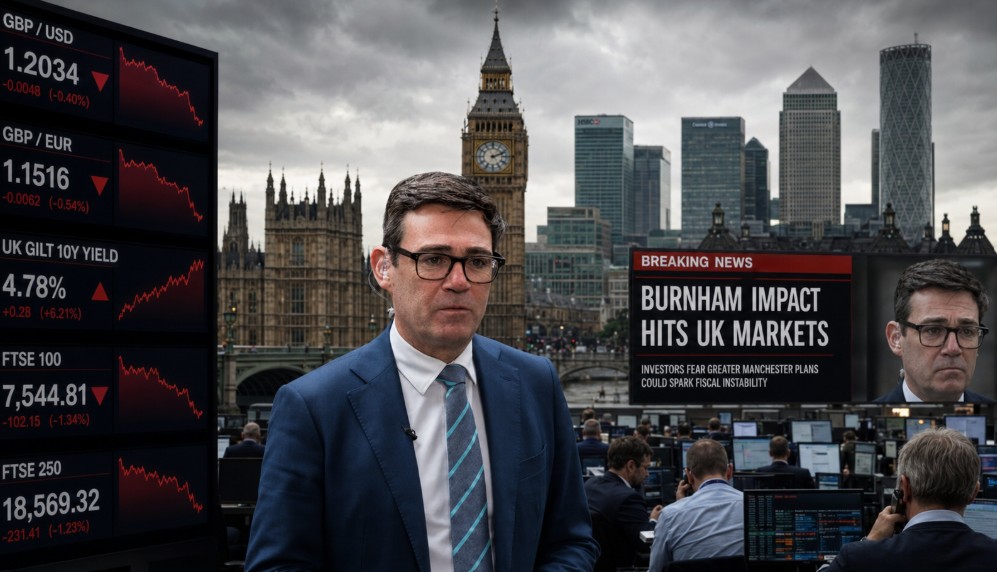
The burnham impact on uk exchange has become a growing concern because investors believe political uncertainty inside Labour could affect Britain’s financial stability. Andy Burnham’s possible move toward national leadership has increased fears about higher borrowing, weaker fiscal discipline, and pressure on the pound and UK bond markets. Following his parliamentary announcement, sterling weakened while gilt yields climbed sharply.
Key takeaways:
- The pound fell against the dollar and euro after Burnham’s announcement
- UK borrowing costs rose as investors reassessed fiscal risks
- Markets fear a more left-leaning economic direction
- Political instability is increasing volatility in sterling and gilts
- Investors are comparing current uncertainty with past UK market crises
Although no policy changes have been confirmed, markets are reacting to future expectations and growing leadership uncertainty within the Labour Party.
Why Is Andy Burnham Affecting the UK Exchange Market?

Andy Burnham is affecting the UK exchange market because investors believe his political rise could change Britain’s economic direction. Financial markets usually prefer stable leadership and predictable fiscal policies.
Burnham’s previous comments about borrowing and bond markets have created concerns that a future government under his influence may increase public spending and weaken fiscal restraint.
Sterling and UK government bonds reacted quickly because traders often price political risks into markets before official policy changes happen. Leadership uncertainty inside Labour has added pressure at a time when the UK economy is already dealing with inflation concerns and weak growth.
Investors are also worried that prolonged political instability could reduce international confidence in Britain’s financial credibility. The market reaction reflects concerns about future economic management rather than immediate policy changes.
Why Did the Pound Fall After Burnham Entered the Leadership Conversation?
The pound weakened sharply after Andy Burnham moved closer to returning to Parliament because markets viewed the development as a sign of growing political and fiscal uncertainty. Currency markets dislike unpredictability, especially when concerns emerge about higher government borrowing or economic policy changes.
How Did GBP React Against the Dollar and Euro?
Sterling fell against both the dollar and euro following Burnham’s political announcement. Traders interpreted the situation as a possible shift toward a more left-leaning Labour agenda.
Key market reactions included:
- GBP/USD falling toward the 1.33 range
- GBP/EUR declining steadily
- Sterling underperforming against several G10 currencies
- Increased forex market volatility
Nigel Green, CEO of deVere Group, said,
“Investors will immediately associate his leadership ambitions with heavier state spending, looser fiscal discipline and a greater willingness to test market tolerance on borrowing.”
He added that markets still remember how quickly confidence collapsed during previous fiscal crises. Some analysts believe the selloff reflects caution rather than panic, but traders remain highly sensitive to further political developments.
Why Do Currency Markets React Quickly to Political Events?
Currency markets react quickly because exchange rates are driven by future expectations rather than current conditions alone. When traders fear political instability, they often reduce exposure to a country’s currency immediately.
Political uncertainty can influence currencies through:
- Fears of higher public borrowing
- Lower investor confidence
- Slower economic growth expectations
- Concerns over inflation and debt
The UK has experienced similar reactions during Brexit negotiations and the 2022 mini-budget crisis. Kamal Sharma from Bank of America noted that political risk premiums in sterling had already been rising before Burnham’s announcement. Markets are now reassessing how much uncertainty should be priced into the pound moving forward.
Why Are UK Gilts and Borrowing Costs Rising?
UK borrowing costs are rising because investors are demanding higher returns to hold British government debt during political uncertainty. Concerns about future fiscal policy have increased pressure on UK bond markets.
What Are Gilts and Why Do They Matter?
Gilts are UK government bonds used to finance public spending. When gilt yields rise, borrowing becomes more expensive for the government.
Higher gilt yields matter because they can affect:
- Mortgage rates
- Business borrowing costs
- Pension performance
- Government debt expenses
Recent rises in 10-year and 30-year gilt yields have alarmed investors because they reached levels not seen in many years.
Kathleen Brooks from XTB explained that investors appear to see Burnham as one of the least market-friendly Labour figures currently being discussed. Rising yields reflect concerns about long-term fiscal discipline.
Why Are Markets Concerned About Burnham’s Economic Approach?
Investors are concerned because Burnham has previously supported greater public investment and criticised governments for being too focused on bond markets.
Key concerns include:
- Increased infrastructure borrowing
- Higher public spending
- Reduced emphasis on debt control
- Potential tax increases
One widely discussed Burnham comment criticised governments for “being in hock to the bond markets.” Although he later softened the statement, investors continue monitoring his economic stance closely.
Neil Mehta from RBC BlueBay warned that UK assets could face an “elevated political risk premium” if Labour moves further left economically. Some economists believe markets may be overreacting, but uncertainty alone is enough to increase volatility.
Is the Market Comparing Burnham to the Liz Truss Crisis?
Many investors are comparing current market tensions to the 2022 Liz Truss mini-budget crisis because both situations involve concerns about fiscal credibility and borrowing.
The comparison does not mean the circumstances are identical, but markets remain highly sensitive after the previous collapse in investor confidence.
Today’s concerns focus on fears that a future Burnham-led government may increase spending significantly while weakening fiscal restraint. That has revived memories of how quickly sterling and gilts reacted during the Truss period.
However, analysts also caution against exaggerating the comparison. Burnham has not announced a national economic programme, and current market volatility remains smaller than the extreme turbulence seen in 2022.
The broader issue is market confidence. Investors want reassurance that Britain’s future leadership will maintain stable fiscal planning and avoid policies that could damage financial credibility.
Could Burnham Actually Become Prime Minister?

Andy Burnham’s route to becoming prime minister remains uncertain, but recent developments have increased speculation about his national ambitions.
Why Is the Makerfield By-Election So Important?
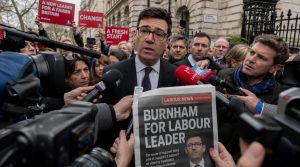
The Makerfield by-election matters because it could provide Burnham with a direct route back into Westminster politics.
Key factors include:
- Josh Simons stepping aside
- Burnham positioning himself nationally
- Pressure on Keir Starmer after local election setbacks
- Strong Reform UK competition
Polling models suggest Reform UK could perform strongly in the constituency, meaning Burnham’s path is far from guaranteed.
What Do Polls and Prediction Markets Suggest?
Prediction markets and polling show growing support for Burnham among parts of Labour, but uncertainty remains high.
Current indicators include:
- Rising prediction market odds for Burnham
- Internal Labour tensions
- Continuing pressure on Starmer
Peter Ricketts warned that ongoing political “psychodrama” could damage Britain’s international reputation and weaken confidence abroad. Markets are reacting mainly to uncertainty rather than confirmed political outcomes.
How Are Financial Analysts and Economists Responding?
Financial analysts are responding cautiously, warning that sterling and gilts may remain under pressure while political uncertainty continues. Several investment firms believe UK assets now carry a growing political risk premium.
Economists from Deutsche Bank, Commerzbank, RBC BlueBay, and Bank of America have all highlighted concerns surrounding investor confidence and fiscal credibility.
Michael Pfister from Commerzbank said sterling weakness may continue because markets still lack clarity about Labour’s future economic direction. Some strategists believe the pound could stabilise if political tensions ease, while others expect continued volatility.
Overall, analysts agree that markets will remain highly reactive to every major political development in the coming weeks.
Could Political Uncertainty Damage the UK Economy Further?
Political uncertainty can damage the UK economy because businesses and investors often delay major decisions during unstable periods. Uncertainty surrounding leadership, borrowing, and fiscal policy can weaken confidence across financial markets.
The current situation is already affecting sterling, borrowing costs, and investor sentiment. If instability continues, it could discourage foreign investment and increase financing costs for businesses and households.
Economists also warn that political distractions may reduce focus on key economic challenges such as inflation, weak growth, and energy costs.
While the UK economy remains resilient overall, prolonged uncertainty itself can become a financial risk if confidence continues deteriorating.
How Does Burnham’s Political Position Differ From Keir Starmer’s?
Markets see clear differences between Andy Burnham and Keir Starmer on economic policy. Starmer has generally tried to present Labour as fiscally disciplined and cautious with spending to reassure investors and businesses.
Burnham, however, is viewed as more supportive of public investment, regional spending, and stronger state intervention. His previous comments regarding bond markets have increased concerns among traders about future borrowing levels.
Investors usually prefer predictable fiscal policies, which is why some markets see Burnham as carrying greater economic risk.
Supporters of Burnham argue that stronger investment in housing and infrastructure could support long-term growth. The debate reflects wider disagreements about how Britain should balance investment with fiscal discipline.
What Role Is Reform UK Playing in the Market Reaction?
Reform UK is contributing to market uncertainty because its growing support is making future election outcomes harder to predict. Investors generally dislike political fragmentation because it creates uncertainty around future economic policy.
Important concerns include:
- Rising Reform UK polling numbers
- Increased pressure on Labour leadership
- Greater election uncertainty
- Possible short-term market volatility
The Makerfield by-election has become especially important because Reform UK is expected to challenge strongly there.
Some investors fear that stronger support for Reform UK could push mainstream parties toward more aggressive political positioning, increasing uncertainty further.
Although Reform UK is not directly controlling currency movements, its rise is adding to broader investor nervousness about Britain’s political future.
What Could Happen Next to the Pound and UK Financial Markets?

The next direction for sterling and UK financial markets will depend largely on political stability and investor confidence.
Possible scenarios include:
- Further sterling weakness if political tensions worsen
- Continued pressure on gilt yields
- Stabilisation if Labour tensions ease
- Increased volatility during the Makerfield by-election
Markets will also monitor inflation, energy prices, and Bank of England decisions alongside domestic politics. Some analysts believe fears surrounding Burnham may eventually fade if no major policy shifts emerge. Others think uncertainty alone could continue weighing on UK assets in the short term.
For now, traders expect continued market sensitivity while waiting for clearer political direction.
What Does the Burnham Impact on UK Exchange Mean for Ordinary People?
The burnham impact on uk exchange could affect households if market volatility continues increasing borrowing costs and weakening sterling.
Possible effects include:
- Higher mortgage rates
- More expensive foreign travel
- Rising import costs
- Pressure on pensions and savings
For example, a weaker pound can increase prices for imported goods, while rising gilt yields may influence fixed mortgage rates.
Families travelling abroad may notice exchange rate changes immediately, while homeowners could feel the impact later through higher borrowing costs.
However, economists caution that short-term market movements do not always lead to a wider economic crisis. Financial markets often react emotionally during political uncertainty before stabilising later.
Is the Current Market Reaction Based on Facts or Speculation?
The current market reaction is based on both confirmed developments and investor speculation. Some facts are clear: Burnham is moving closer to Parliament, sterling has weakened, and gilt yields have risen.
However, many concerns remain based on assumptions about what a future Burnham-led government might do. No official national economic platform has been announced, and there is no certainty that he will become prime minister.
Markets are reacting mainly to future expectations rather than confirmed policy changes. Investors are trying to price potential risks before they happen.
The distinction matters because uncertainty itself can create volatility even when major policy changes have not yet occurred.
What Should Investors and UK Readers Watch Going Forward?

Investors and UK readers should closely monitor political and financial developments in the coming weeks.
Key areas to watch include:
- The Makerfield by-election
- Labour leadership tensions
- Sterling performance
- UK gilt yield movements
- Bank of England commentary
Markets will also focus on inflation data, growth forecasts, and any signals regarding future fiscal policy.
Analysts expect UK assets to remain highly sensitive to political developments until greater clarity emerges around Labour’s leadership and Britain’s economic direction.
Conclusion
The burnham impact on uk exchange shows how strongly political uncertainty can influence financial markets. Investor concerns about leadership instability, fiscal policy, and future borrowing have already pressured sterling and UK bond markets.
Although comparisons to previous UK market crises have intensified debate, much of the current volatility is still driven by expectations rather than confirmed economic changes. Markets are seeking reassurance that Britain can maintain fiscal stability and investor confidence during an already challenging economic period.
The coming weeks will be critical as traders, businesses, and households watch political developments closely while assessing what they could mean for the future of the UK economy.
FAQs
Why did the pound fall after Andy Burnham’s announcement?
The pound weakened because investors became concerned about growing political uncertainty and the possibility of higher government borrowing under a different Labour leadership direction. Currency markets usually react quickly when traders fear changes to fiscal stability or economic policy.
What are gilts and why are they important to the UK economy?
Gilts are UK government bonds used to raise money for public spending and infrastructure projects. Rising gilt yields matter because they can increase borrowing costs for the government, businesses, and households.
Could Andy Burnham really become prime minister?
Andy Burnham could become prime minister if he successfully returns to Parliament and gains enough support within the Labour Party. However, his path remains uncertain due to electoral challenges and ongoing political competition.
Why do political events affect currency exchange rates?
Political events affect exchange rates because investors use currencies to measure economic confidence and future stability. Uncertainty around leadership or government policy can quickly influence investor behaviour in global forex markets.
Is the UK facing another Liz Truss-style market crisis?
Some investors are comparing current tensions to the Liz Truss period because of concerns about fiscal discipline and borrowing. However, current market conditions are less severe, and no major economic package has been announced.
How could higher gilt yields affect ordinary households?
Higher gilt yields can eventually increase mortgage rates, loan costs, and financing expenses across the economy. They may also influence pension funds and government spending decisions over time.
What should investors monitor over the next few weeks?
Investors should monitor the Makerfield by-election, Labour leadership developments, and movements in sterling and gilt yields. Bank of England commentary and inflation data will also remain important for market direction.
Why are analysts concerned about fiscal discipline in the UK?
Analysts are concerned because rising public borrowing without clear fiscal controls can weaken investor confidence in Britain’s economy. Financial markets generally prefer stable spending policies and predictable debt management.