
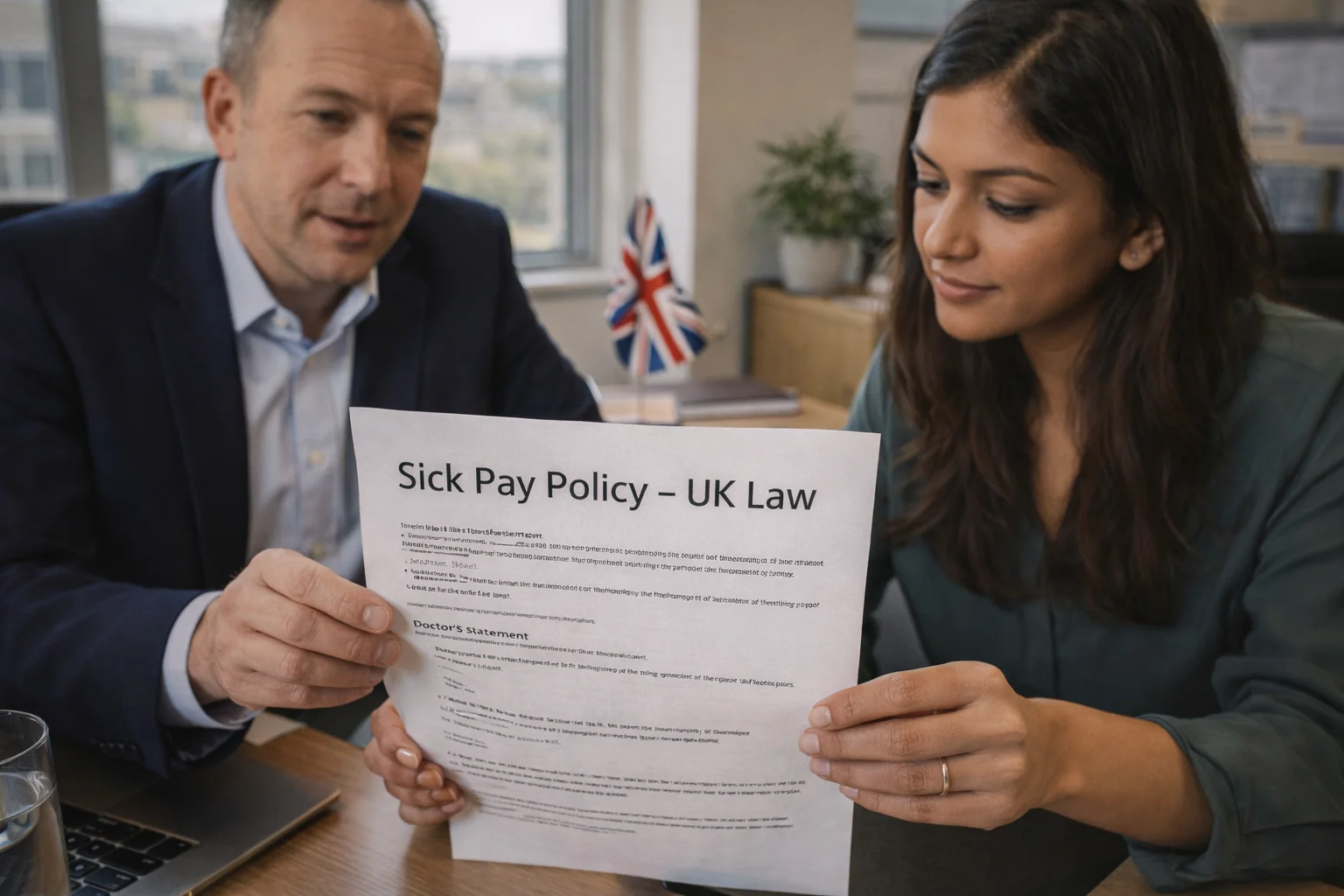
Yes, employers in the UK are legally required to pay Statutory Sick Pay (SSP) to eligible employees. If you fall ill and meet the qualifying conditions, your employer must pay you at least the government-set minimum sick pay. They can also offer more generous company sick pay schemes, which must be stated clearly in your contract.
Key takeaways:
- SSP is currently £118.75 per week for up to 28 weeks.
- You must be off sick for four or more consecutive days.
- Not everyone qualifies, earnings and employment status matter.
- Employers must issue an SSP1 form if you’re ineligible.
- You still accrue holiday while off sick.
What Is Sick Pay and Why Does It Matter?

Sick pay is the money you receive from your employer when you’re unable to work due to illness. It ensures that employees have financial support during health-related absences.
In the UK, the most common form is Statutory Sick Pay (SSP), which is the legal minimum that qualifying employees must be paid. On top of that, many employers offer contractual or company sick pay, which can be more generous.
Understanding your sick pay rights matters because illness can happen unexpectedly, and knowing what support is available can reduce financial stress. Whether you work full-time, part-time or have multiple jobs, your rights may differ, and so can the amount and duration of sick pay.
Your employment contract, type of work, and earnings all play a role in determining what you’re entitled to. By knowing the difference between statutory and contractual sick pay, you can better navigate any future sick leave.
Do Employers Legally Have to Pay Sick Pay in the UK?
Yes, by law, employers in the UK must pay Statutory Sick Pay (SSP) to employees who meet certain eligibility criteria. It’s a legal obligation under UK employment law and cannot be avoided by any employer. SSP must be paid for up to 28 weeks to those who are too unwell to work, as long as they meet all the qualifying conditions.
Employers may also offer a company sick pay scheme, sometimes referred to as contractual or occupational sick pay. These are not required by law, but if they are offered, the terms must be outlined in the employment contract.
While employers can choose to pay more than SSP through these schemes, they cannot offer less than the statutory minimum. So, if you’re wondering whether your employer must pay you sick pay, the answer is yes, provided you meet the eligibility requirements.
Who Is Eligible for Statutory Sick Pay?
To qualify for SSP in the UK, you must meet several conditions set out by the government. First, you must be classed as an employee and have started work under your contract. Next, you must have been sick for at least four days in a row, which includes non-working days like weekends. This is called a “period of incapacity for work.”
You must also earn an average of at least £125 per week before tax. Additionally, you’re required to inform your employer within their set deadline or within seven days if no deadline is specified. If you’ve worked less than eight weeks, you’re still eligible if your average earnings meet the threshold. Below is a table outlining the main eligibility criteria:
Eligibility Requirement Condition
Employment status Must be an employee
Contract Must have started work under contract
Duration of illness Sick for 4 or more consecutive days
Earnings threshold At least £125 per week (average)
Notice given Within 7 days or employer’s time frame
How Much Is Statutory Sick Pay in the UK?
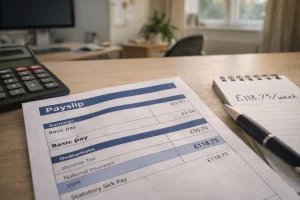
If you qualify for SSP, your employer must pay you a minimum of £118.75 per week for up to 28 weeks. This payment is not optional and must be processed through the usual payroll system, meaning it is subject to tax and National Insurance deductions.
You are only paid SSP for the days you would normally work, these are called qualifying days. However, the first three qualifying days are unpaid, which are referred to as waiting days. Payment begins from the fourth consecutive day of your illness.
Here’s a closer breakdown:
SSP Payment Structure Explained
- Current Rate: £118.75 per week
- Maximum Duration: 28 weeks
- Waiting Days: No SSP for the first 3 qualifying days
- Start of Payment: From day 4 of illness onwards
- Payment Method: Paid on your usual payday, with tax and NI deducted
- Qualifying Days: Only the days you normally work
- Fit Note: Required if you’re off for more than 7 calendar days
If you’ve already received SSP in the last 8 weeks and it was part of a linked sickness, the waiting days may be waived. Your employer must calculate payments accurately using your normal work pattern.
When Do Employers Start and Stop Paying SSP?
Employers begin paying SSP on the fourth qualifying day of your sickness, assuming the first three days are unpaid waiting days. However, if your sickness is part of a linked period within the past eight weeks, you may not need to wait again. Your employer must calculate your qualifying days based on the days you normally work.
SSP stops when you either return to work or no longer meet the qualifying conditions. If your SSP entitlement runs out after 28 weeks, your employer must issue a form SSP1 so that you can apply for other benefits like Employment and Support Allowance (ESA).
Also, if you’re no longer eligible for SSP due to contract changes, reduced earnings, or other reasons, your employer must notify you and issue the SSP1 form within the appropriate timeframe.
What Is Contractual or Company Sick Pay?
Contractual or company sick pay is any arrangement where your employer chooses to pay more than the statutory SSP. It is not a legal requirement, but many companies provide it as part of employee benefits. These schemes must be clearly stated in your employment contract or staff handbook, and the terms must be consistently applied across similar roles.
Company sick pay may offer full pay for a set period (such as two weeks or a month), then reduced pay or SSP thereafter. Some employers also implement a tiered structure, starting with full pay and transitioning to half-pay.
Others include waiting periods or only offer company sick pay after a probationary period. Importantly, if your employer offers this scheme, they cannot bypass SSP. The contractual sick pay is added on top of the SSP, not a replacement for it.
What Counts as Proof of Sickness?
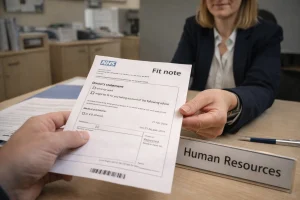
To receive SSP, you need to notify your employer of your illness in a timely manner. Most employers have their own policy regarding notification, but if they don’t, the default is within seven days. You don’t need a doctor’s note unless your absence lasts more than 7 calendar days, including weekends.
After seven days, your employer can ask for a fit note, also known as a sick note. This can be issued by a qualified healthcare professional such as a GP, nurse, physiotherapist, or pharmacist. The fit note can be digital or paper-based. You cannot be denied SSP for submitting it late, though it’s best to provide it promptly. Here is a breakdown:
Proof Requirement Details
Notification Deadline Within 7 days or as per employer policy
Fit Note Needed If sick for more than 7 calendar days
Accepted Professionals GP, nurse, pharmacist, physiotherapist
Digital Proof Yes, accepted
AHP Report Alternative Accepted if agreed with employer
What If You’re Not Eligible for SSP?
If you don’t meet the eligibility criteria for SSP, your employer is required to inform you in writing. This is usually done through form SSP1, which should be provided within seven days of your first sick day. Common reasons for ineligibility include not earning enough, being self-employed, being on maternity leave, or not having an active employment contract.
Even if you are ineligible for SSP, you may still qualify for government support such as Universal Credit or Employment and Support Allowance (ESA). Form SSP1 is also necessary to apply for these benefits.
If your sickness lasts longer than 28 weeks, your employer should issue the form early so you can prepare to transition to ESA. This process ensures you’re not left without financial support during extended illness.
What If an Employer Refuses to Pay Sick Pay?
If your employer refuses to pay you SSP and you believe you are eligible, start by asking for a written explanation. They should provide this via form SSP1. If they refuse or fail to issue the form, you have the right to escalate the issue to HMRC’s Statutory Payment Disputes Team.
Make sure to keep a record of your communication, including when you informed them about your sickness and any fit notes provided. If your employer denies SSP on unfair grounds, HMRC can investigate and enforce compliance.
You must contact HMRC within six months of when the SSP should have started. If you feel that you’ve been treated unfairly, act quickly to protect your rights.
Understanding Sick Pay for Different Employment Types

Different types of workers may have different rules regarding SSP eligibility. For instance, agency workers and zero-hours contract employees are eligible as long as they earn enough and meet the criteria. Directors can also qualify for SSP, depending on how they are paid through PAYE.
If you hold multiple jobs, you may qualify for SSP from more than one employer. However, eligibility is calculated separately for each job. If you’re working outside the UK, you’ll need to check if your employer still pays National Insurance contributions, as this affects eligibility. Even if your company ceases trading, they may still owe you SSP, and HMRC can step in to help.
Do You Accrue Holiday While on Sick Leave?
Yes, even while on sick leave, you continue to accrue statutory holiday entitlement. This applies regardless of how long you are off work. You can also choose to take holiday while on sick leave if you wish, but your employer cannot force you to do so.
If your sick leave overlaps with booked annual leave, you may be able to move your holiday to another time. Should your illness continue beyond your SSP period, you will still build up holiday pay rights.
It’s important to discuss this with your employer to avoid any misunderstandings. Statutory annual leave remains protected under UK law, even during long-term sickness absence.
Conclusion
In the UK, employers are legally required to provide Statutory Sick Pay to employees who meet the eligibility criteria. This ensures that you have some financial protection if illness prevents you from working. Whether you receive SSP alone or additional contractual sick pay, your employer must follow the rules set by law.
Understanding your sick pay rights allows you to take the right steps when you’re unwell. Always notify your employer promptly and provide any required documentation.
If you’re not eligible or face issues receiving payment, you still have options through HMRC and government support. Stay informed, and make sure you check your contract and company policies for any additional benefits you might be entitled to.
FAQs
Can I be dismissed while on sick leave?
Yes, but only if your employer follows a fair and legal process, such as capability dismissal based on long-term health issues.
What happens when SSP ends after 28 weeks?
Once SSP ends, you may be eligible for Employment and Support Allowance (ESA) or Universal Credit from the government.
What if my employer doesn’t give me SSP1?
You can request it in writing, and if still not received, you can report the issue to HMRC’s Statutory Payment Disputes Team.
Am I entitled to SSP on a zero-hours contract?
Yes, as long as you earn the minimum required amount and meet the other qualifying conditions.
Does holiday continue to accrue while I’m off sick?
Yes, your statutory holiday entitlement continues to build up even during sick leave.
Can I claim SSP from more than one job?
Yes, if you meet the eligibility requirements in each job separately, you can receive SSP from multiple employers.
What if I get sick again within eight weeks of a previous illness?
It may be treated as a linked period of sickness, and you won’t need to serve new waiting days.