

Are you wondering how much more you’ll receive from your State Pension in 2026? With the UK government confirming a significant increase, it’s a question on many pensioners’ minds.
From April 2026, the Department for Work and Pensions (DWP) will implement a 4.8% rise in State Pension payments, following the Triple Lock mechanism. This change aims to help pensioners keep pace with the cost of living and wage growth across the country. Whether you’re approaching retirement or already receiving payments, it’s essential to understand how this increase will affect your income.
With so much financial jargon floating around and various figures mentioned in headlines, this guide breaks down exactly what the DWP 2026 State Pension increase means for you. We’ll explore eligibility, payment schedules, benefit comparisons, and more in a clear, human-focused format designed to help you make sense of it all.
What Is the DWP 2026 State Pension Increase?
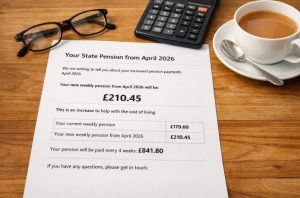
From April 2026, the UK government will implement a confirmed 4.8% increase to the State Pension. This applies to both the new State Pension (for those who reached pension age after 6 April 2016) and the basic State Pension (for those who reached pension age before that date).
The increase is part of the government’s Triple Lock commitment and is based on average wage growth figures for the year.
The full new State Pension will rise from £230.25 to approximately £241.30 per week, while the basic State Pension will go from £176.45 to £184.90 per week.
It’s important to note that these are maximum amounts, the actual amount you receive depends on your National Insurance record, and may include additional components such as deferred amounts or Additional State Pension.
Here’s a breakdown of the confirmed pension changes:
| Pension Type | 2025/26 Weekly Rate | 2026/27 Weekly Rate | Weekly Increase |
|---|---|---|---|
| New State Pension | £230.25 | £241.30 | £11.05 |
| Basic State Pension | £176.45 | £184.90 | £8.45 |
The uplift will be applied from April 2026, covering the 2026/27 tax year, and automatically reflected in your pension payments without requiring action on your part.
Why Is the State Pension Increasing in 2026?
Each year, the UK government reviews State Pension levels to ensure they remain fair and relevant to the economic climate. In 2026, the 4.8% increase is a result of the Triple Lock mechanism, which guarantees that pensions will rise by the highest of three key metrics inflation, average earnings, or 2.5%. For the 2026/27 financial year, average wage growth was the highest of the three, triggering the 4.8% increase.
How the Triple Lock System Work?
The Triple Lock has been in place since 2011 and ensures that the State Pension grows each year in line with one of the following:
- Consumer Prices Index (CPI), a measure of inflation, recorded at 3.8% for September 2025
- Average earnings growth measured between May and July 2025, recorded at 4.8%
- A fixed 2.5% minimum guarantee
In 2026, the average earnings figure of 4.8% exceeded both the inflation rate and the 2.5% minimum, making it the determining factor for the pension increase.
Why Average Earnings Triggered the Rise?
During the review period, the UK experienced stable inflation but significant wage growth. This wage growth, reported by the Office for National Statistics (ONS), reflected increased average earnings across industries. As this figure surpassed CPI and the 2.5% baseline, the State Pension will be aligned with it for the 2026 update.
Difference Between Triple Lock and CPI-linked Benefits
It’s also important to understand that not all benefits are governed by the Triple Lock. While the State Pension follows the Triple Lock, other government benefits such as Universal Credit, Personal Independence Payment (PIP), and Carer’s Allowance are linked to CPI. This means they will only rise in line with inflation – in this case, by 3.8% in April 2026.
To summarise, the State Pension increase is driven by strong wage growth in the economy, giving pensioners a higher-than-inflation raise. This ensures your retirement income continues to reflect changes in the real-world cost of living.
Will You Get the Full New State Pension in 2026?

Not everyone will receive the full £241.30 per week from April 2026. Your exact entitlement depends on your National Insurance (NI) record, which tracks your working life and contribution history.
To qualify for any new State Pension, you must have at least 10 qualifying years on your NI record. To receive the full amount, you generally need 35 qualifying years of contributions or credits.
These can include:
- Years spent working and paying NI contributions
- Years receiving NI credits (e.g. for unemployment, illness, or caring responsibilities)
- Years with voluntary contributions
If your NI record started before 2016, you may have been contracted out of the State Pension, meaning you paid lower NI in exchange for higher workplace or private pension contributions. In this case, you might need more than 35 years to receive the full amount.
You can check your forecast through the official State Pension forecast service online to understand how much you’re likely to get when the new rates apply in April 2026.
Are Claims of £720–£750 per Week Accurate?
You may have seen media reports or online discussions claiming that the State Pension could rise to £720–£750 per week in 2026. These figures, however, are often misleading. They refer to total retirement income from various sources combined, not just the new State Pension.
The actual increase for the full new State Pension is from £230.25 to £241.30 per week, totalling around £12,547.60 annually.
So, if you are receiving figures in the £700+ range weekly, it most likely includes:
- Additional State Pension (if eligible)
- Deferred pension payments (if you delayed claiming)
- Workplace or private pensions
- Pension Credit or other benefits
These elements can vary greatly from person to person. Therefore, while some pensioners may receive a weekly income approaching that range, it is not reflective of the basic State Pension alone. Always verify sources and understand what’s included in such calculations before planning your retirement income.
Could You End Up Paying Tax on Your State Pension?
As the State Pension continues to rise, more pensioners may find themselves crossing into taxable income territory.
In 2026/27, the full new State Pension will be approximately £12,547.60 annually, placing it just under the personal allowance threshold, which remains at £12,570. This means your pension alone might leave you with only £22.40 of tax-free margin, a very slim buffer.
Tax Thresholds vs State Pension income in 2026/27
The personal allowance, the amount of income you can earn before paying tax, is currently £12,570 and has been frozen until at least 2028. This freeze, combined with annual State Pension increases, makes it more likely that pensioners will begin paying income tax.
Your pension income will be taxable if:
- Your total annual income exceeds £12,570 (including pensions, savings, interest, or part-time work)
- You receive both the basic and the Additional State Pension
- You deferred your pension and now receive an increased weekly amount
Examples of How Close Pensioners Are to the £12,570 Personal Allowance
Here’s an example based on the full new State Pension:
- Weekly payment: £241.30
- Annual total: £12,547.60
- Difference from allowance: £22.40
Just a £1 per week additional income from any source could push you above the tax threshold, meaning you would owe tax, even if only a small amount. It’s also worth noting that tax is not automatically deducted from your State Pension.
If HMRC determines you owe tax, they may collect it via:
- Adjusting your tax code
- Taxing other pensions or income
- Requesting direct payment
While the increase benefits pensioners, it’s vital to be aware of how close this brings many to becoming tax liable and plan accordingly for April 2026.
How Does the 2026 Increase Compare to Other Benefits?

While the State Pension will see a 4.8% increase from April 2026, not all benefits are rising at the same rate. Many inflation-linked benefits such as Universal Credit, Child Benefit, and Personal Independence Payment (PIP) will only increase by 3.8%, based on the CPI figure from September 2025.
Universal Credit and Other Benefit Increases (3.8%)
The 3.8% rise for inflation-linked benefits is still helpful, but it’s notably lower than the 4.8% used for the State Pension.
Here’s how Universal Credit will increase in 2026/27:
| Category | 2025/26 Rate | 2026/27 Rate | Increase |
|---|---|---|---|
| Single under 25 | £316.98/month | £338.58/month | £21.60 |
| Single 25 and over | £400.14/month | £424.90/month | £24.76 |
| Joint claimants under 25 | £497.55/month | £528.34/month | £30.79 |
| Joint claimants 25 and over | £628.10/month | £666.97/month | £38.87 |
This uplift also includes an additional 2.3% top-up for Universal Credit, introduced by the Universal Credit Act 2025.
Side-by-side Comparison of Benefit Increases
| Benefit Type | 2025/26 Rate | 2026/27 Rate | % Increase |
|---|---|---|---|
| New State Pension | £230.25/week | £241.30/week | 4.8% |
| Basic State Pension | £176.45/week | £184.90/week | 4.8% |
| Universal Credit (25+) | £400.14/month | £424.90/month | 6.2%* |
| Child Benefit (1st child)** | £24.00/week | ~£24.91/week | 3.8% |
| Carer’s Allowance | £81.90/week | ~£85.00/week | 3.8% |
Includes CPI plus 2.3% uplift. Exact 2026/27 child benefit amounts are to be confirmed in the Budget.
What This Means for Low-income Pensioners?
Low-income pensioners who rely on a mix of State Pension and benefits may see modest gains in 2026. However, since benefits like Pension Credit and Housing Benefit are inflation-linked, they won’t rise as quickly as the new State Pension. The growing gap between benefit increases and pension boosts could reduce overall support for some.
It’s crucial to check whether you’re entitled to Pension Credit, which can supplement income and open access to additional help such as council tax relief and cold weather payments.
Are You Eligible for the New State Pension?
Eligibility for the new State Pension depends on your date of birth and National Insurance record.
You qualify if you’re:
- A man born on or after 6 April 1951
- A woman born on or after 6 April 1953
If you were born before these dates, you’ll continue to receive the basic State Pension instead, along with any Additional State Pension you may have built up.
To get any amount of the new State Pension, you must have at least 10 qualifying years of National Insurance contributions. To receive the full amount (which will be £241.30/week in 2026), you’ll usually need 35 qualifying years.
Qualifying years come from:
- Working and paying NI
- Receiving NI credits for things like illness or caring
- Making voluntary NI contributions
If you’ve worked abroad or paid reduced-rate NI as a married woman, your eligibility may still count. You can check your official State Pension forecast online to see what you’re likely to receive in 2026.
How Can You Check or Increase Your State Pension?
If you’re unsure how much State Pension you’ll receive in 2026, it’s essential to use the official State Pension forecast tool.
This tool helps you:
- See your estimated weekly pension amount
- Check your qualifying years
- Understand whether you’ve been contracted out
If your forecast shows a lower amount than the full £241.30/week, you may be able to increase your future payments by:
- Continuing to work and pay National Insurance until retirement
- Receiving NI credits if you’re caring for someone, claiming benefits, or ill
- Paying voluntary NI contributions to fill in missing years
You can also defer claiming your State Pension. For each year you delay, your weekly payment increases by just under 5.8%, as long as you defer for at least nine weeks.
However, deferral can impact your entitlement to certain benefits, so always seek guidance before making a decision.
Improving your record now can lead to a significantly better pension in future years, especially when you consider compounding increases through mechanisms like the Triple Lock.
What Happens If You’ve Inherited a Pension or Lost a Spouse?

Losing a spouse or civil partner can be emotionally challenging, and understanding what happens to their State Pension is equally important. In some situations, you may be able to inherit extra payments from their pension, depending on when you were married or partnered and whether they reached State Pension age before or after 6 April 2016.
If your partner was already receiving the new State Pension, you might be eligible to inherit half of their protected payment, provided your marriage or partnership started before they reached pension age and they died on or after 6 April 2016.
For those who received the old State Pension, there’s a chance you could inherit part of their Additional State Pension.
You won’t inherit anything if you remarry or enter a new civil partnership before reaching State Pension age. Your own National Insurance record still determines your core pension, but inherited elements are added to it based on eligibility.
When and How Will You Be Paid in 2026?
Once you’ve claimed your State Pension, payments will be made directly into your bank account every four weeks. This schedule remains unchanged in 2026. The amount you receive will reflect the new 4.8% increase from April of that year, meaning higher weekly figures automatically applied.
Your payment day depends on the last two digits of your National Insurance number:
- 00 to 19 – Monday
- 20 to 39 – Tuesday
- 40 to 59 – Wednesday
- 60 to 79 – Thursday
- 80 to 99 – Friday
If your payment date falls on a bank holiday, it may be sent earlier. Your first payment will usually arrive within 5 weeks of your chosen start date, and if you defer claiming, your payments will reflect any increases due to the delay. It’s a straightforward process, but always check the confirmation letter from the DWP for precise timing.
What If You Live or Worked Abroad?
If you’ve spent time living or working abroad, this may still count toward your eligibility for the new State Pension. The UK has social security agreements with several countries, allowing qualifying years abroad to be added to your National Insurance record.
You typically need at least 10 UK qualifying years to receive any pension. However, if you’ve contributed to the state pensions in countries such as those in the European Economic Area (EEA), Switzerland, Canada, Australia (before 2001), or New Zealand, those years can help meet the minimum threshold.
While you may become eligible due to your international record, only the UK contributions will determine your actual payment amount. This means your weekly pension will reflect how many qualifying UK years you’ve built up.
When claiming from abroad, the International Pension Centre helps manage your application and coordinates with foreign authorities to assess your eligibility.
What Should You Do Next?
Now that you understand how the DWP 2026 State Pension increase affects you, the next step is to prepare accordingly. This means ensuring you’re receiving the right amount and taking any action needed to improve your financial position before April 2026.
Here’s what you should consider doing:
- Use the State Pension forecast tool to see your projected amount
- Review your National Insurance record to check qualifying years
- Identify and fill any gaps with voluntary contributions if appropriate
- Look into deferral options if you’re considering delaying your claim
- Contact the Pension Service or an independent financial adviser if unsure
If you’re caring for someone, unemployed, or on a low income, check whether you’re entitled to NI credits or Pension Credit. These can make a meaningful difference in both eligibility and payment amounts. Finally, ensure your personal information is up to date with the DWP to avoid delays in receiving your new rate from April 2026.
2026/27 Pension and Benefit Increases at a Glance
For a quick summary of what’s changing from April 2026, here’s a clear breakdown of the key DWP benefit and pension uprates. These figures come from official government announcements and apply for the 2026/27 financial year.
| Payment Type | 2025/26 Rate | 2026/27 Rate | Increase |
|---|---|---|---|
| New State Pension (weekly) | £230.25 | £241.30 | £11.05 (4.8%) |
| Basic State Pension (weekly) | £176.45 | £184.90 | £8.45 (4.8%) |
| Universal Credit (25+, monthly) | £400.14 | £424.90 | £24.76 (6.2%) |
| Universal Credit (Under 25, monthly) | £316.98 | £338.58 | £21.60 (6.8%) |
| Joint UC claimants (25+, monthly) | £628.10 | £666.97 | £38.87 (6.2%) |
| Carer’s Allowance (weekly) | £81.90 | ~£85.00 | ~£3.10 (3.8%) |
These increases reflect both Triple Lock adjustments and CPI-linked uplifts. While the pension rise outpaces inflation, most benefits like Carer’s Allowance and Child Benefit follow CPI and receive a smaller increase. This disparity highlights the growing focus on maintaining the value of the State Pension for retirees.
Conclusion
The DWP 2026 State Pension increase represents a meaningful improvement to retirement income for millions of UK citizens. With a confirmed 4.8% uplift, the State Pension is rising faster than inflation, providing some welcome financial breathing room.
This change, driven by the Triple Lock, reflects average earnings growth and ensures pensioners’ income keeps up with the wider economy.
Whether you’re currently claiming or preparing to retire, now is the time to check your National Insurance record, understand your entitlement, and ensure you’re set up to benefit from this increase.
From eligibility rules to inheritance considerations, every detail matters in determining how much you’ll receive. With careful planning, you can make the most of what the 2026 changes have to offer and secure a stronger financial future in retirement.
FAQs
What is the full new State Pension amount in 2026?
The full new State Pension will be £241.30 per week from April 2026. This represents a 4.8% increase from the 2025/26 rate.
How do I know if I’m eligible for the new State Pension?
You’re eligible if you’re a man born on or after 6 April 1951 or a woman born on or after 6 April 1953. You also need at least 10 qualifying years on your National Insurance record.
Why are some pensioners getting more than £241.30 per week?
Higher weekly amounts may include Additional State Pension, deferred payments, or income from private or workplace pensions. These are not part of the core State Pension.
Can I still increase my State Pension before 2026?
Yes, you can increase it by adding qualifying years through work, National Insurance credits, or voluntary contributions. You can also defer claiming to receive higher weekly payments later.
Will my pension be taxed in 2026?
If your total income exceeds £12,570, you may pay tax on your pension. The full new State Pension for 2026/27 is just under this threshold.
How often will I receive my pension payments?
Pensions are paid every four weeks. The exact day depends on the last two digits of your National Insurance number.
What happens if I’ve lived or worked abroad?
You may still qualify for the new State Pension using social security agreements with countries like Canada, EEA nations, or Australia (pre-2001). Only UK qualifying years count toward the final payment amount.