

The government national cancer plan is a 10-year strategy for improving cancer prevention, diagnosis, treatment and long-term support in England.
Published on 4 February 2026, it sets out changes intended to improve survival, reduce waiting times, expand screening and make cancer care more personalised by 2035.
The plan applies to England rather than the whole UK. Its central ambition is that three in four people diagnosed with cancer in 2035 will be cancer-free or living well with cancer five years later.
If delivered, the government estimates this would mean 320,000 more lives saved over the life of the plan.
What Are the Main Targets in the Government National Cancer Plan?
The plan combines short-term NHS performance targets with longer-term changes to screening, digital care, research and prevention.
| Target or change | Planned timeframe |
|---|---|
| New employer collaborative to support people with cancer at work | 2026 |
| Four new aseptic medicine production hubs | 2027 |
| NHS App to become the main digital access point for cancer care | 2028 |
| Meet the 28-day, 62-day and 31-day cancer waiting-time standards | March 2029 |
| Deliver 9.5 million additional diagnostic tests per year | March 2029 |
| National cervical screening self-testing rollout for people who have not taken up screening | 2029 |
| Complete national lung cancer screening rollout | 2030 |
| Deliver up to 10,000 cancer vaccines through NHS programmes | 2030 |
| Three in four people diagnosed in 2035 cancer-free or living well after five years | 2035 |
The earlier-diagnosis strategy will also be measured against four indicators: more cancers found at stages 1 and 2, fewer stage 3 and 4 diagnoses, a smaller gap in early diagnosis between richer and poorer areas, and fewer cancers first identified through an emergency presentation.
The plan aims for at least a 20 percentage-point increase in stage 1 and 2 diagnosis rates compared with 2019 by 2035.
What Has Changed Since the Plan Was Published?

Several important developments have taken place since February 2026.
Cancer waiting times remain one of the biggest delivery challenges. In July 2026, 79.3% of patients received a diagnosis or all-clear within 28 days, 71.2% started treatment within 62 days of an urgent referral and 92.5% started treatment within 31 days of a treatment decision.
All three remained below the plan’s intended standards of 80%, 85% and 96%.
The Tobacco and Vapes Act received Royal Assent on 29 April 2026. Measures connected with the new tobacco age-of-sale system are due to take effect from 1 January 2027, preventing tobacco from being legally sold to people born on or after 1 January 2009.
The first full NHS-Galleri trial results also changed the picture around multi-cancer blood testing. The trial did not meet its main goal of reducing stage 3 and stage 4 cancers combined.
However, annual testing found four times more cancers through screening than standard screening alone and was associated with 25% fewer cancers being diagnosed after an emergency presentation. The results are being assessed before any wider role for the technology is decided.
Targeted prostate cancer screening has moved forward as well. England has agreed to introduce PSA testing every two years for men aged 45 to 61 who have a pathogenic BRCA2 gene variant and a relevant family history of prostate, breast, ovarian or pancreatic cancer. Rollout is expected to begin in 2027.
The plan itself has also been corrected several times since publication, including wording relating to tobacco sales, palliative-care timing and the number of radiotherapy treatments expected from new equipment.
How Will Cancer Prevention Change?
Prevention is a major part of the plan because around a third of cancers are considered preventable.
Tobacco control is the most prominent measure, alongside more stop-smoking support. The plan also links cancer prevention with obesity policy, including wider access to GLP-1 weight-management medicines and mandatory health reporting and healthier-sales targets for large food and drink businesses.
HPV vaccination is another priority. Catch-up programmes are intended to reach young people who missed vaccination at school, with the long-term aim of eliminating cervical cancer by 2040.
The plan also proposes stronger action on excessive UV exposure. This includes consultation on tighter commercial sunbed protections, such as safety warnings, supervised use and stronger age checks.
What Will Change for Cancer Screening and Early Diagnosis?
Lung cancer screening will be expanded nationally by 2030. Existing lung health checks have already shown a much higher proportion of cancers being detected at stages 1 or 2 than outside the programme.
More than six million people are expected to receive an invitation for a lung check between the plan’s launch and 2035.
Bowel screening is also being made more sensitive. The faecal immunochemical test threshold is due to move to 80µg Hb/g nationally, with the plan estimating that improved screening and uptake could lead to 17,000 earlier diagnoses and almost 6,000 lives saved by 2035.
Cervical screening will include wider self-sampling for people who have not taken up the standard screening offer, with national rollout planned by 2029. The plan also calls for mammography equipment that is more accessible to people with physical disabilities.
Earlier diagnosis will increasingly use inherited-risk information and genomic testing, including pathways for inherited risks such as BRCA variants and Lynch syndrome.
Jess’s Rule is intended to encourage GPs to reconsider a diagnosis when a patient returns three times with the same unexplained symptoms or concerns.
Self-referral pathways are also being tested for some symptoms, including breast symptoms through NHS 111 online and future chest X-ray pilots.
Can the NHS Meet the New Cancer Waiting-Time Targets?
The targets are clear, but the current gap remains significant.
By March 2029, the plan wants:
- 80% of patients to receive a diagnosis or all-clear within 28 days of an urgent referral
- 85% to begin treatment within 62 days of referral
- 96% to begin treatment within 31 days of a decision to treat
The 62-day national standard has not been met consistently for years.
Diagnostic capacity is therefore central to delivery. The plan includes £2.3 billion for diagnostics transformation over three years and a target of 9.5 million additional tests per year by March 2029.
There is also £604 million for digital diagnostics, including digital pathology, plus £96 million to automate histopathology. This matters because only 68% of cancer-pathway histopathology tests were being reported within 10 days when the plan was published, compared with a 98% standard.
Other commitments include £200 million ring-fenced for cancer delivery in 2026/27, £80 million for four aseptic medicine production hubs and £70 million for 28 new radiotherapy machines.
The new machines are expected to deliver 15% more treatments, equivalent to around 27,500 additional treatments a year. These are separate commitments and should not be described as one new £2 billion cancer fund.
The plan also supports wider use of stereotactic ablative radiotherapy and more flexible diagnostic capacity.
A regional single-queue diagnostic model cited in the plan reported more than 17,000 patient pathway days saved, illustrating how shared capacity can reduce waits without simply adding new sites.
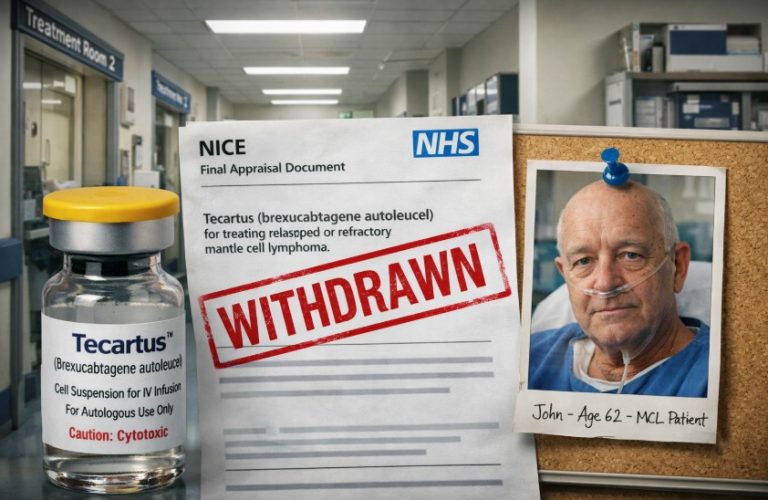
Access to advanced treatments will also remain an important test of whether innovation reaches patients in practice.
Recent debate around NHS access to CAR T-cell cancer treatment shows why funding, evidence and treatment availability can be as important as developing new therapies.
How Will Technology and Cancer Research Change?
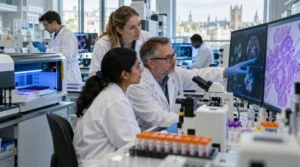
The plan places major emphasis on AI, genomics, digital services and new forms of cancer detection.
By 2028, the NHS App is expected to become the main digital access point for cancer care, including screening invitations, appointments, care navigation and prevention support.
By 2035, the aim is to combine genomic, lifestyle and medical information to offer more personalised cancer-risk insights.
HealthStore is also planned as a route for approved third-party digital health tools covering areas such as diet, weight, alcohol and tobacco use. The wider model also depends on partnerships with life-sciences businesses, investors, charities, social enterprises and other organisations outside the NHS.
Research plans include six national cancer research challenges, a cancer trials accelerator and wider access to clinical trials.
The plan also aims to deliver up to 10,000 cancer vaccines by 2030 and expand technologies such as AI-assisted imaging, digital pathology, liquid biopsy and genomic testing.
What Does the Cancer Plan Mean for Employers and Workers?
Cancer policy is not only a healthcare issue. Diagnosis and treatment can affect absence, income, productivity, retention and a person’s ability to return to work.
The plan says every patient should receive a personalised assessment and cancer support plan covering physical, mental, social and employment needs.
A national employer collaborative is due to bring together public and private employers with health and employment services, while Health and Growth Accelerators are intended to test better ways of helping people stay in or return to work.
For workers whose earnings fall during a long period of illness, understanding long-term sick pay and Universal Credit eligibility may also become important alongside employer support and workplace adjustments.
From 2028, a digital-first prehabilitation offer is planned to help patients improve fitness and health before treatment, while named neighbourhood care leads are intended to coordinate support after treatment.
What Does the Plan Say About Children, Rare Cancers and Inequality?
Children and young people receive a separate set of commitments. These include up to £10 million a year to help families with travel costs for cancer care and changes intended to improve early diagnosis and coordination.
Rare and less common cancers also receive greater focus.
The plan commits to appointing a national clinical lead for rare cancers, improving publicly available data, expanding specialist multidisciplinary care and making rare cancers a higher research priority.
It also proposes implementing measures intended to widen access to clinical trials and counting recurrent cancers more consistently, beginning with metastatic breast cancer.
The plan recognises major geographical and social inequalities. Premature cancer mortality in some of England’s most deprived areas is around twice the level seen in the best-performing areas.
Closing gaps in screening, early diagnosis, clinical-trial access and treatment is therefore built into the performance framework rather than treated as a separate issue.
How Is This Plan Different From Earlier Cancer Strategies?
England has had national cancer strategies before, including major plans in 2011, 2015 and the 2019 long-term health strategy.
The 2026 plan tries to go further by linking cancer policy to wider NHS reform. It combines prevention, neighbourhood care, digital services, genomic data, screening, workforce reform, research, clinical trials and performance accountability within one 10-year framework.
Delivery will be monitored through a reformed National Cancer Board, annual progress reporting, public performance data and a formal three-year review.
Cancer manuals are also expected to set clearer standards for specific cancer pathways from 2027, while challenged trusts can receive more intensive turnaround support and performance comparisons can be made more transparent.
What Are the Biggest Risks to Delivery?
The biggest risk is not a lack of targets but whether the system can close the gap between current performance and the required standards.
Cancer services still face pressure in diagnostics, pathology, treatment capacity and staffing. Some of the plan’s most ambitious changes also depend on digital infrastructure, access to genomic testing, successful research programmes and consistent adoption across NHS organisations.
The scale of the programme also means funding needs to be understood carefully. Diagnostics, radiotherapy, digital pathology, Cancer Alliance funding and medicine-production investment sit in different funding streams rather than forming one simple headline cancer budget.
For that reason, progress should be judged against measurable outcomes: whether waiting times improve, whether more cancers are found earlier, whether inequalities narrow, whether new technology reaches patients and whether people experience better support during and after treatment.
Frequently Asked Questions
Does the government national cancer plan apply to Scotland, Wales and Northern Ireland?
No. The 2026 National Cancer Plan applies to England. Scotland, Wales and Northern Ireland have separate health systems and cancer policies.
What is the 62-day cancer target?
The target is for 85% of patients to start cancer treatment within 62 days of an urgent referral. The plan aims to restore this standard by March 2029.
What Is Jess’s Rule?
Jess’s Rule asks GPs to reflect, review and rethink when a patient presents three times with the same symptoms or concerns and there is still no clear diagnosis, including where cancer may be a possibility.
Will Everyone Be Able to Self-Refer for Cancer Tests?
Not immediately. Self-referral is being developed through pilots and selected pathways. Breast-symptom self-referral and future chest X-ray pathways are examples of how direct access could expand.
What Is the Main 2035 Cancer Target?
The headline ambition is for three in four people diagnosed with cancer in 2035 to be cancer-free or living well with cancer five years later, with the plan estimating 320,000 more lives saved over the decade.