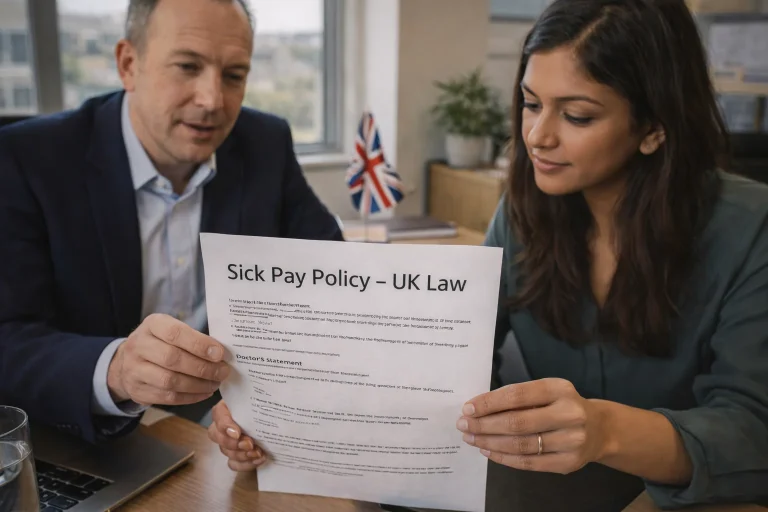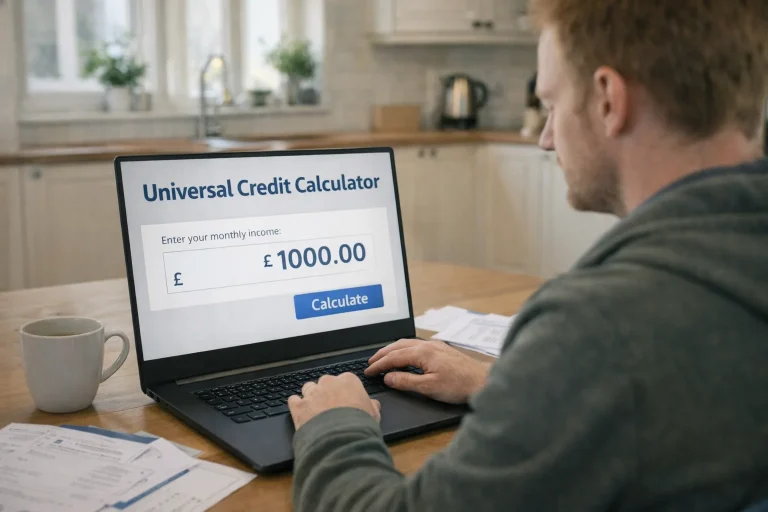


Yes. You can potentially get Universal Credit while on sick pay, including while you are still employed.
Universal Credit is available to people on a low income as well as people who are out of work or unable to work. Receiving Statutory Sick Pay (SSP) does not automatically prevent you from qualifying. However, SSP is treated as earnings when your Universal Credit payment is calculated.
This means your Universal Credit may change as your income changes. If your normal wages fall because you move onto sick pay, your Universal Credit will usually increase if you remain entitled.
The exact amount depends on your household circumstances, earnings during the monthly assessment period, housing costs, savings and any additional Universal Credit elements you qualify for.
Being signed off work is not the same as automatically being awarded Limited Capability for Work (LCW) or Limited Capability for Work and Work-Related Activity (LCWRA). If your illness affects how much work you can do for longer than 28 days, you may need a Work Capability Assessment.
How Does Sick Pay Affect Universal Credit?

Is Statutory Sick Pay counted as income for Universal Credit?
Yes. Statutory Sick Pay and Universal Credit can be received at the same time if you otherwise qualify, but SSP counts as earnings.
The Department for Work and Pensions states that statutory payments, including SSP, are treated in the same way as regular earnings for Universal Credit. Where a work allowance applies, only earnings above that allowance are subject to the normal earnings reduction.
For every £1 of relevant earnings above any applicable work allowance, Universal Credit is normally reduced by 55p.
What Happens to Universal Credit When Your Earnings Fall?
Universal Credit is assessed in monthly assessment periods. If the earnings recorded during one assessment period are lower than before, your Universal Credit will usually increase, assuming your other circumstances remain the same and you are still eligible.
This is one reason long-term sick pay and Universal Credit can interact differently from one month to the next. Someone receiving full contractual sick pay initially might see little change, but their Universal Credit could rise later if their employer reduces their sick pay to half pay or SSP only.
Payment dates can also matter. If weekly, fortnightly or four-weekly payments result in an assessment period containing an additional payday, the Universal Credit received for that month can be affected.
How Does the Universal Credit Work Allowance Affect Sick Pay?
A work allowance allows some people to receive a certain level of earnings before Universal Credit starts to reduce. It can apply where the claimant or their partner is responsible for a child or has a disability or health condition affecting their ability to work.
For the current 2026/27 rates, the work allowance is £427 per month where Universal Credit includes help with housing costs, or £710 per month where those housing circumstances do not apply. Earnings above the relevant allowance are then subject to the 55% taper.
Do not assume that simply submitting a fit note automatically creates a work allowance. Your individual Universal Credit circumstances and health status matter.
Does Company or Occupational Sick Pay Affect Universal Credit?
Many employers provide contractual or occupational sick pay that is more generous than SSP. Employers can offer more than the statutory minimum through a company sick pay scheme.
Where this money is paid as employment income through payroll, it can affect the earnings used to calculate your Universal Credit. This means someone receiving full contractual sick pay may receive less Universal Credit than someone whose employer has reduced them to SSP only.
Check your employment contract, workplace sickness policy and payslips so you know when full pay, half pay or SSP is expected to end.
How Much Statutory Sick Pay Can You Get in 2026?

For the 2026/27 tax year, eligible employees can receive £123.25 a week or 80% of their normal weekly earnings, whichever is lower. SSP can normally be paid for up to 28 weeks.
SSP is paid by your employer in the same way as your normal wages, and tax and National Insurance can be deducted.
What Changed to Statutory Sick Pay From 6 April 2026?
The SSP rules changed significantly on 6 April 2026.
Eligible employees can now qualify regardless of their earnings, removing the previous Lower Earnings Limit for SSP. The former waiting-period rules were also removed, so SSP can now be paid from the first full day of sickness absence rather than starting from day four.
These changes are particularly important when reading older information about sick pay and Universal Credit, because guidance written before April 2026 may still describe the old earnings threshold or three waiting days.
Special transitional rules can apply where a sickness absence started before 6 April 2026 and continued beyond that date.
What if Your Employer Pays More Than SSP?
Your employer may operate a company, contractual or occupational sick pay scheme. Such a scheme can provide more than SSP, although the contractual terms determine how long enhanced payments continue.
For example, a workplace might offer several months on full salary followed by half salary before the employee moves onto SSP only. The Universal Credit calculation can therefore change more than once during a long sickness absence.
Do You Need to Tell Universal Credit If You Are Off Work Sick?
If you already claim Universal Credit and develop a health condition or disability that affects your ability to work, you should report it as a change of circumstances through your Universal Credit account.
This is separate from telling your employer that you are off sick.
When Do You Need a Fit Note for Universal Credit?
For Universal Credit purposes, you can generally self-certify for the first seven days if a health condition limits how much you can work. If the restriction continues for longer than seven days, medical evidence such as a fit note is normally required.
A fit note for Universal Credit is therefore important even where your employer already knows about the illness.
Why Should You Keep Supplying Fit Notes?
If your health condition continues and you are waiting for a Work Capability Assessment decision, you should continue obtaining and reporting fit notes when required.
Current DWP guidance says claimants should continue providing fit notes until they receive a decision about their assessment. Once someone has been found to have LCW or LCWRA, they do not normally need to continue providing fit notes for that condition.
What Happens if Your Illness Becomes Long Term?
If your condition limits the amount of work you can do for longer than 28 days, you may be referred for a Work Capability Assessment (WCA).
The assessment considers the effect of your physical or mental health condition on your capability for work. It is not simply an assessment of the name of your diagnosis.
Before the assessment, claimants may be asked to complete the WCA50 Capability for Work questionnaire and can submit relevant medical information such as treatment plans or test results.
Some decisions can be made using the evidence provided without requiring a separate assessment appointment.
What Does Limited Capability for Work mean?
An LCW decision means DWP has decided that your condition currently limits your ability to work, but you may be expected to undertake appropriate activities to prepare for possible work in the future.
For most new Universal Credit claims, an LCW decision does not itself provide the health-related extra amount that LCWRA can provide. There are exceptions for certain older claims and transitions from ESA.
What Does LCWRA Mean?
LCWRA stands for Limited Capability for Work and Work-Related Activity.
Someone found to have LCWRA is not normally expected to look for work or undertake work-preparation activities because of the effect of their health condition or disability. A qualifying LCWRA decision can also result in an additional amount being included in Universal Credit.
When Can You Be Treated as Having LCWRA Automatically?

People often search for conditions that automatically qualify you for LCWRA, but this wording can be misleading.
There is no simple official list saying that everyone diagnosed with condition A, B or C automatically gets LCWRA. The Work Capability Assessment normally looks at the functional effect of someone’s condition rather than diagnosis alone.
However, the Universal Credit Regulations contain particular circumstances in which a person can be treated as having LCWRA without having to satisfy the usual functional descriptors in the ordinary way.
Terminal Illness
Special rules apply to people nearing the end of life. Current Universal Credit guidance says that where a medical professional has said a claimant might have 12 months or less to live, they usually do not need a Work Capability Assessment or claimant commitment and can receive the higher LCWRA rate.
Certain Pregnancy-related Health Risks
A pregnant claimant can be treated as having LCWRA where there would be a serious risk of damage to their health or the health of their unborn child if they did not refrain from work and work-related activity.
This does not mean pregnancy itself automatically results in LCWRA.
Certain Cancer Treatment Circumstances
Schedule 9 of the Universal Credit Regulations includes circumstances involving cancer treatment by chemotherapy or radiotherapy.
This can include someone receiving treatment, likely to receive qualifying treatment within the specified period, or recovering from it, subject to the regulatory conditions.
Substantial Risk to Health
The regulations can also allow someone to be treated as having LCWRA where, because of a specific illness, disease or disability, requiring work-related activity would create a substantial risk to their physical or mental health or that of another person.
This is an individual assessment of risk. It is not a diagnosis-based automatic entitlement.
Why a Diagnosis Alone Does Not Guarantee LCWRA?
Two people with the same medical diagnosis can experience very different levels of functional limitation.
The WCA therefore considers what someone can and cannot do and how their condition affects their ability to work. Official WCA statistics guidance explicitly states that health conditions do not themselves grant entitlement; the effect of the condition on capability is what is assessed.
Where Are You in Your Sick Pay Journey?
Choose your current situation to see how sick pay could interact with Universal Credit and what you may need to do next.
You are receiving company sick pay
Contractual or occupational sick pay paid through payroll can count as earnings when Universal Credit is calculated.
- Check your employer's sickness policy.
- Confirm when full or enhanced sick pay will reduce.
- Check your Universal Credit statement after each payday.
How long has your health condition limited your work?
If your health condition continues to limit how much you can work beyond seven days, Universal Credit will normally require medical evidence such as a fit note.
Normal UC reduction for each £1 of relevant earnings above any applicable work allowance.
SSP can normally continue for up to this maximum period.
You may be able to apply for New Style ESA before SSP finishes.
Does LCWRA Mean You Get More Universal Credit?
A qualifying LCWRA decision can result in an extra monthly amount being added to Universal Credit.
From 6 April 2026, the LCWRA extra amount has two rates rather than one. For the current 2026/27 rates, GOV.UK lists a higher monthly amount of £429.80 and a lower amount of £217.26.
Which rate applies depends on factors including when the health condition was declared and whether the claimant has a severe, lifelong condition or is nearing the end of life. People who reported their condition before 6 April 2026 and certain existing or transferring claimants can be protected by the higher-rate rules.
Someone declaring a condition on or after 6 April 2026 will generally receive the lower LCWRA amount if they do not meet the severe lifelong or end-of-life conditions and no relevant higher-rate rule applies.
When Does the LCWRA Payment Start?
Where a WCA decision awards LCWRA, the additional payment will usually start after three monthly assessment periods have passed from when the claimant began submitting medical evidence showing that their condition limits their ability to work.
There are exceptions. For example, special rules can apply to people nearing the end of life and to some people moving from ESA to Universal Credit.
Can You Work While Having LCWRA?
Having LCWRA does not create a blanket ban on working.
Current Universal Credit guidance says people can work and claim Universal Credit, and there is no general hours limit for Universal Credit itself. Earnings can still affect the amount paid.
You should report relevant changes to your condition and circumstances. Working may also be relevant if your circumstances show that your health condition has materially changed, so individual advice may be useful if you are unsure.
What Happens When Statutory Sick Pay Ends After 28 Weeks?
SSP can normally be paid for a maximum of 28 weeks. If you are still unable to return to work, this is an important point to review your benefits rather than waiting for the final SSP payment to arrive.
Ask Your Employer About Form SSP1
When SSP is expected to end before your sickness does, your employer must normally provide form SSP1 on or before the beginning of the 23rd week.
If SSP ends unexpectedly while you are still sick, the employer must normally provide SSP1 within seven days of it ending.
The form can help support a claim for benefits such as ESA.
Can Universal Credit Continue after SSP Ends?
Yes, provided you remain entitled to Universal Credit. Because SSP counts as earnings, its disappearance from your earnings can affect the following Universal Credit calculation.
Lower earnings in an assessment period will usually mean a higher Universal Credit payment, although the actual result depends on your household circumstances and other income.
This makes Universal Credit after SSP ends especially important for households where sick pay has been the main remaining employment income.
Can You Apply for New Style ESA Before SSP Ends?
Yes. You cannot actually receive New Style ESA while you are receiving SSP from your employer, but current DWP guidance allows you to apply up to three months before SSP ends. If you qualify, New Style ESA can then start when SSP finishes.
Eligibility for New Style ESA normally depends on having paid or been credited with enough National Insurance contributions in the relevant tax years.
Can You Claim New Style ESA and Universal Credit Together?

Potentially, yes. New Style ESA can be claimed on its own or alongside Universal Credit. However, receiving both does not mean you simply receive the full amount of each benefit: the New Style ESA payment is normally deducted from Universal Credit by the same amount.
New Style ESA can still have other advantages depending on individual circumstances, so it is worth checking entitlement rather than assuming it offers no value.
What Other Financial Help Can You Check During Long-Term Sickness?
Personal Independence Payment (PIP) may be relevant where a long-term physical or mental health condition causes difficulty with specified everyday activities or mobility. PIP is separate from Universal Credit and can be paid while someone is working, has savings or receives most other benefits.
New Style ESA may become particularly relevant as SSP approaches its end if the claimant meets the National Insurance contribution requirements.
Universal Credit itself can include help with eligible rent and some service charges through its housing costs element. Homeowners may have different support options, including potential help with mortgage interest through a loan where the rules are met.
Council Tax support is separate from Universal Credit, so someone whose income has fallen because of sickness should also check the reduction scheme available through their local council.
Your employer may have additional support beyond SSP, including occupational sick pay, income-protection arrangements or other workplace benefits. Check your contract and HR policies before assuming statutory sick pay is the only payment available.
Can You Return to Work Part-Time While Claiming Universal Credit?
Yes. Universal Credit is designed to adjust as earnings change, and there is no general limit on the number of hours you can work and still receive it.
If you return from long-term sick leave on reduced hours, your Universal Credit will normally be recalculated using the earnings reported for each assessment period. Higher earnings usually reduce Universal Credit, while lower earnings will usually increase it.
This can make Universal Credit useful during a phased return where someone is gradually rebuilding their working hours.
Returning to work does not automatically cancel an existing LCWRA decision. However, you must report relevant changes to your health and circumstances, and DWP can review capability decisions where appropriate.
What Should You Do If Your Employer Stops Your Sick Pay?
If your sick pay is reduced or stops while you remain unable to work, take action early rather than waiting for your next Universal Credit statement:
- Ask your employer why the payment changed and confirm the exact final date of SSP or contractual sick pay.
- Check whether you should receive form SSP1, particularly where SSP is approaching its 28-week limit.
- Review your Universal Credit account and report relevant changes, including an unreported health condition or disability.
- Continue supplying fit notes where required until you receive the relevant Work Capability Assessment decision.
- Check New Style ESA before SSP expires because an application can be made up to three months before SSP ends.
- Check other possible support, including PIP where a long-term condition affects daily living or mobility.
- Use a reputable benefits calculator or independent welfare-rights service if you need an individual entitlement calculation.
The employer’s SSP1 obligations and the ability to apply early for New Style ESA are particularly important for people approaching the end of long-term sick pay.
Long-Term Sick Pay and Universal Credit: What to Do at Each Stage
| Your situation | What may happen | What to check next |
|---|---|---|
| Receiving normal wages | Earnings may reduce Universal Credit | Your monthly UC statement and assessment period |
| Receiving SSP or contractual sick pay | Sick-pay income can affect UC | Payslips, employer sick-pay policy and UC calculation |
| Illness continues beyond 7 days | Medical evidence may be required | Fit note and reporting the health condition |
| Illness affects work for more than 28 days | You may need a WCA | WCA50, medical evidence and fit notes |
| SSP approaches 28 weeks | Employer sick pay may end | SSP1 and possible New Style ESA application |
| SSP ends | Employment earnings may fall | Universal Credit award and ESA eligibility |
| LCWRA is awarded | An extra UC amount may apply | Rate, assessment-period start date and reporting duties |
| You return on reduced hours | Earnings change again | UC statement and any relevant health changes |
These stages are not separate benefit claims in every case. A person can remain employed, receive sick pay, claim Universal Credit and go through the health-condition process at overlapping points depending on their circumstances.
Common Mistakes to Avoid
One common mistake is assuming you cannot claim Universal Credit because you still have an employment contract. Universal Credit can be available to people on a low income, including employed people.
Another is assuming a fit note automatically awards LCWRA. A fit note is medical evidence and can form part of the process, but an LCWRA decision normally follows application of the Work Capability Assessment rules or one of the specific circumstances in which a claimant can be treated as having LCWRA.
Similarly, searching for a list of conditions that automatically qualify you for LCWRA can give the wrong impression. Diagnosis alone is not normally the deciding test.
People can also lose valuable planning time by waiting until the 28th week of SSP before looking at what happens next. New Style ESA can be applied for up to three months before SSP ends, and an employer expecting SSP to expire before sickness ends should normally provide SSP1 by the beginning of week 23.
Finally, check the date of any SSP information you read. The rules changed on 6 April 2026, removing the old Lower Earnings Limit and waiting period for eligible employees.
Practical Steps to Take While on Long-Term Sick Pay
Start by establishing exactly what you are receiving. Look at your employment contract, employer sickness policy and recent payslips to determine whether you are still on normal salary, contractual sick pay, SSP or a combination.
Next, check the dates. Knowing when full sick pay reduces, when SSP starts and when the 28-week SSP period is expected to finish gives you time to prepare for the next stage.
If you already receive Universal Credit and your illness affects your ability to work, make sure the health condition has been reported correctly. Keep providing appropriate fit notes while required and respond to any WCA50 questionnaire or assessment request.
As SSP approaches its end, check that SSP1 will be issued and consider whether you meet the contribution requirements for New Style ESA. Do not assume you need to wait until the final SSP payment before starting that process.
You should also look beyond Universal Credit. Depending on how your condition affects you, PIP, housing support, Council Tax support, workplace benefits or other assistance may be relevant.
Because Universal Credit is household-based, two people receiving exactly the same sick pay can receive very different amounts. A benefits calculator or qualified welfare-rights adviser can therefore be more useful than relying on another claimant’s payment as a comparison.
Conclusion: Long-Term Sick Pay and Universal Credit
Understanding long term sick pay Universal Credit rules is mainly about recognising that sick pay and the Universal Credit health process are two related but separate issues.
You can potentially receive Universal Credit while on sick pay and remain employed. SSP counts as earnings, so the amount of Universal Credit you receive can change when your income drops.
From 6 April 2026, eligible employees can receive SSP from the first full day of sickness and there is no longer a Lower Earnings Limit for SSP entitlement.
If your condition continues, reporting it, supplying fit notes and completing the Work Capability Assessment process can become important.
LCWRA is based primarily on how your condition affects capability, although legislation also contains specific circumstances in which someone can be treated as having LCWRA.
Planning also matters when SSP is approaching 28 weeks. Universal Credit after SSP ends may increase because employment earnings have fallen, while New Style ESA may become available if you meet its contribution requirements. An application for New Style ESA can be started before SSP finishes.
The best next step is therefore to check your sick-pay end date, Universal Credit assessment periods, health-condition status and possible additional benefits together rather than treating each one in isolation.
Frequently Asked Questions
Can I claim Universal Credit while receiving sick pay?
Yes. You can potentially claim Universal Credit while employed and receiving Statutory Sick Pay or other sick pay if your household meets the Universal Credit eligibility rules. SSP is treated as earnings, so it can reduce the amount of Universal Credit payable.
Does Statutory Sick Pay reduce Universal Credit?
SSP is treated as earnings for Universal Credit. If a work allowance applies, earnings above that amount are generally subject to the 55% taper. If no work allowance applies, earnings can reduce Universal Credit from the first £1 taken into account.
Will Universal Credit increase if my sick pay is lower than my normal wages?
Usually, lower earnings during an assessment period will increase Universal Credit if you remain eligible and your other circumstances are unchanged. The actual increase depends on your full household calculation, so it will not necessarily match the amount of wages you lost.
What happens to Universal Credit when SSP ends?
When SSP stops, your earnings may fall substantially. Universal Credit normally adjusts to the earnings recorded during the relevant assessment period, so your award may increase. You should also check New Style ESA because it can potentially start once SSP ends if you qualify.
Do I need a fit note for Universal Credit if I am still employed?
You may. If your health condition limits how much you can work for more than seven days, Universal Credit normally requires medical evidence such as a fit note. Being employed does not remove that requirement where you are asking Universal Credit to take your health condition into account.
What conditions automatically qualify you for LCWRA?
There is no straightforward official list of diagnoses that automatically qualify everyone for LCWRA. Normally, the effect of the condition on your capability is assessed. However, legislation allows claimants to be treated as having LCWRA in specified circumstances, including certain end-of-life cases, serious pregnancy risks, qualifying cancer-treatment situations and cases where work-related activity would create a substantial health risk.
Long Term Sick Pay Universal Credit Guide 2026: How Sick Pay Affects Your Claim
Yes, if you qualify for both. However, New Style ESA is normally deducted from Universal Credit by the same amount, so receiving both does not generally mean adding the full two payments together. You cannot receive New Style ESA while receiving SSP, although you can apply up to three months before SSP ends.