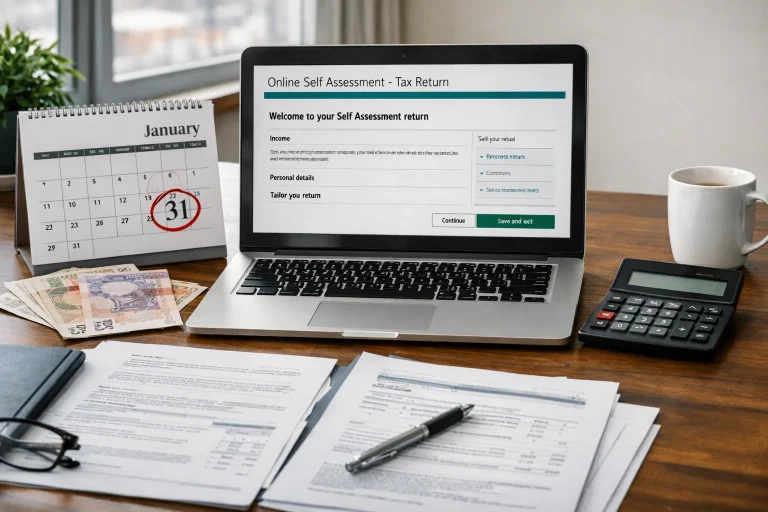

The HMRC personal allowance allocation changes mean that from April 2027, your £12,570 personal allowance will have to be used against your salary, self-employment income or pension first. You will no longer be able to ask HM Revenue and Customs to apply more of it to savings, rental income or dividends if that would reduce your tax bill.
As a result, some landlords, investors and pensioners with more than one source of income could pay up to £182 more a year, while others may see a larger rise once new tax rates are added.
Key points to know:
- The personal allowance itself stays at £12,570
- The rule change begins in April 2027
- People with only employment income are unlikely to be affected
- Landlords, savers and investors are most at risk of paying more
- ISAs and pensions remain protected from the new rules
Why Is HMRC Changing How the Personal Allowance Is Allocated?

The Government says the change is designed to make income from savings, dividends and property more closely aligned with the way earnings from work are taxed.
At the moment, your personal allowance can sometimes be moved around in the most tax-efficient way, especially if you have several different income streams. From April 2027, that flexibility will disappear.
Ministers argue that this creates a fairer system because people with income from assets will pay tax in a similar way to people who only earn a salary. However, critics say the real reason is to increase tax revenue without raising the headline rate of income tax.
The change also arrives at the same time as frozen tax thresholds and planned increases to tax rates on savings, property income and dividends. Together, these changes could quietly pull more people into paying higher rates of tax, even though the personal allowance remains unchanged at £12,570.
Who Will Be Most Affected by the HMRC Personal Allowance Allocation Changes?

The people most likely to feel the impact are those who receive income from more than one source. If you only earn a salary from one job, the change may make little or no difference. However, if you also receive rent, savings interest, dividends or a pension, you could lose the ability to use your personal allowance in the most tax-efficient way.
Why Could Landlords and Property Owners Pay More Tax?
If you earn money from rental properties, the new rule could increase the amount of tax you pay each year. Under the current system, you may be able to ask HMRC to use part of your personal allowance against your rental income, especially if doing so keeps more of that income in a lower tax band.
From April 2027, your personal allowance must first be used against your employment income or pension. That means more of your property income could become taxable.
For example, if you earn £20,000 from a job and £10,000 from renting out a property, your entire personal allowance would first be used against your salary. The full £10,000 of rental income could then be taxed at the new property income rates.
This could particularly affect:
- Buy-to-let landlords
- People renting out a second home
- Individuals with holiday let income
- Landlords who already pay higher-rate tax
Tom Goddard from Blick Rothenberg warned that the change may eventually push some landlords to increase rents to cover the extra tax cost.
“While I agree with the policy objective, the changes are just another tax increase contributing to the highest post-war tax burden. The objective is clear: the government is trying to raise revenue without increasing tax for the working population. However, the changes will likely disincentivise saving and lead to increases in rent for tenants.”
Why Could Savers and Investors Be Hit by the New Rules?
The changes could also affect you if you receive savings interest or dividends from shares. At the moment, HMRC may apply part of your personal allowance to this type of income if it reduces your overall tax bill.
After April 2027, that may no longer be possible. Your savings and investment income will only benefit from any personal allowance that is left over after your salary or pension has been covered. That means more of your interest and dividend income could move into a higher tax band.
You may be more exposed if you:
- Hold large sums in taxable savings accounts
- Receive regular dividend payments from shares
- Own investments outside an ISA
- Have side income from investments alongside your main job
The impact may be strongest if you are close to the higher-rate threshold, because even a small shift in income can increase the amount taxed at 40 per cent or above.
ISAs and pensions are still expected to remain outside these rules. Any interest, gains or dividends earned within those wrappers should continue to be tax-free. That means many savers may want to review where they keep their money before the changes begin.
Why Might Pensioners and People With Multiple Income Sources Be Affected?
You may also be affected if you receive a pension and have other forms of income. Many pensioners supplement their retirement income with savings interest, dividends or rent from a property. Under the current rules, HMRC can spread the personal allowance across those different income streams.
From 2027, the allowance must be used against your pension first. If your pension already uses most or all of your £12,570 allowance, your other income may become fully taxable. This could create difficulties for people who appear comfortable on paper but have limited spare cash available each month.
In particular, the changes may affect households that are:
- Retired but still relying on investment income
- Receiving both a workplace pension and rental income
- Living off savings while keeping assets for later life
- Asset-rich but cash-poor
Chris Etherington from RSM said many people may not realise the change is coming until they see their tax bill rise.
“While many may be unaware of this change, they may not be surprised that there is an extra tax squeeze in store for those with income from savings and rental properties. It may be presented as a technical tweak to the rules but it might ultimately be seen by taxpayers as a further stealth tax rise.”
How Does the Current HMRC Personal Allowance System Work?
At the moment, HMRC applies your personal allowance in the way that creates the lowest overall tax bill. Although the allowance is usually used against your salary first, the rules allow it to be spread across different types of income if that would save you money.
For example, you might earn a salary, receive bank interest and also get dividend income from investments. In that situation, HMRC can divide your £12,570 allowance between those sources rather than putting all of it against your wages.
The current system can work in several ways:
- Part of the allowance may be used against employment income
- Another part can be used against savings interest
- The remainder can reduce taxable dividend or rental income
In many cases, HMRC does this automatically through your tax code or self-assessment return. However, you can also contact HMRC and ask for your allowance to be allocated differently if there is a more tax-efficient option.
This flexibility matters because different types of income are taxed at different rates. By using the personal allowance against the most heavily taxed income first, you can sometimes avoid paying more tax than necessary.
What Will Change From April 2027?
From April 2027, the rules will become much stricter. You will no longer be able to choose how your personal allowance is split between different types of income.
Instead, the allowance must be applied in a fixed order:
- Employment income first
- Self-employment or trading income next
- Pension income after that
- Only any unused allowance can then be applied to savings, rental income or dividends
For many people, this means there will be no allowance left to reduce the tax due on property income, investment returns or savings interest.
The biggest difference is that the current flexibility disappears. Under today’s rules, if it saves you money, HMRC can place more of your allowance against savings or dividends. From 2027, that option ends completely.
The change is expected to affect the 2027/28 tax year onwards. Although the personal allowance remains frozen at £12,570, more of your non-earned income could become taxable because of the order in which the allowance is used.
A Treasury spokesperson said the aim is to narrow the gap between tax paid on earnings and tax paid on assets.
“We are taking action to ensure income from assets is taxed more fairly, narrowing the gap with tax paid on work. Most taxpayers have no taxable savings or property income and ISAs and tax-free allowances will continue to protect those with small amounts of income from assets.”
How Much Extra Tax Could You Pay Under the New Rules?

The amount of extra tax you pay will depend on how much income you receive from work, property, savings and investments. If you only have one source of income, the change may not affect you.
However, if you have several income streams, even a small change in how your personal allowance is allocated could make a noticeable difference.
What Happens in the Common Example Used by Tax Experts?
Tax advisers at Blick Rothenberg have used a common example to show how the new rules could work in practice.
Imagine you have:
- Salary of £29,775
- Property income of £15,000
- Savings income of £5,715
- Dividend income of £1,885
Under the current rules, HMRC could split your personal allowance like this:
- £7,075 against your salary
- £5,215 against your savings income
- £280 against your dividend income
That would leave you with a total tax bill of £7,913.
From April 2027, your full personal allowance would have to be used against your salary first. As a result, your savings, dividends and rental income would become more heavily taxed.
According to the example, your tax bill could rise by £614 in total. Around £182 of that increase would come purely from the change in how the personal allowance is allocated.
How Do the New Tax Rates Make the Personal Allowance Change Worse?
The personal allowance restriction becomes more expensive because it arrives alongside planned increases to tax rates on property income, savings and dividends.
| Income Type | Current Basic Rate | New Rate | Current Higher Rate | New Rate |
|---|---|---|---|---|
| Property income | 20% | 22% | 40% | 42% |
| Savings interest | 20% | 22% | 40% | 42% |
| Dividend income | 8.75% | 10.75% | 33.75% | 35.75% |
These higher rates mean that once more of your savings or rental income becomes taxable, it is also taxed more heavily than before.
For some households, the combined effect could be much larger than £182. One example shows a worker with £30,000 salary, £15,000 property income, £6,000 savings and £2,000 dividends paying roughly £676 more each year. Around £236 of that increase comes directly from the new personal allowance rule.
You may therefore notice the biggest increase if you:
- Already pay higher-rate tax
- Have large savings outside an ISA
- Receive rental income and dividends together
- Sit close to the £50,270 higher-rate threshold
Why Are Experts Calling This a Stealth Tax Increase?
Many tax specialists describe the change as a stealth tax because the Government is not reducing the personal allowance or raising the main rates of income tax on earnings. Instead, it is changing the order in which the allowance is applied.
On the surface, nothing appears different. The £12,570 allowance remains in place, and many people may not realise anything has changed until they receive a larger tax bill.
Experts argue that this is why the policy may catch people by surprise. If you have savings, rental income or dividends, more of that money could become taxable even though your overall income has not increased.
Accountants also point out that the change comes on top of frozen thresholds and higher tax rates for asset income. Combined, those measures quietly increase the amount of tax paid without announcing a direct rise in income tax.
For that reason, many analysts believe the policy will be seen as a hidden tax increase rather than a simple administrative update.
What Can You Do Now to Reduce the Impact of the HMRC Personal Allowance Changes?

Although the rule change does not begin until April 2027, there are still steps you can take now to reduce the effect on your future tax bill. The most useful approach is to review where your income comes from and whether it is being held in the most tax-efficient way.
Should You Move Savings or Investments Into an ISA or Pension?
One of the simplest ways to reduce the impact is to move savings and investments into accounts that remain tax-efficient.
Money held in an ISA is not taxed on interest, dividends or capital gains. Pension contributions can also reduce your taxable income while helping you save for the future.
You may want to consider:
- Moving cash savings into a Cash ISA
- Holding shares inside a Stocks and Shares ISA
- Increasing pension contributions before April 2027
- Using both your ISA and pension allowance each year
For 2026/27, you can still put up to £20,000 into ISAs each tax year, and pension contributions may qualify for tax relief depending on your earnings.
If more of your savings are protected inside these wrappers, the personal allowance changes may have much less impact on you.
Should You Review Your HMRC Tax Code and Income Sources?
It is also worth checking how your tax code currently works. If you have more than one source of income, HMRC may already be allocating your personal allowance in a way that reduces your tax bill.
Before the new rules start, review:
- Your employment income
- Any private or workplace pensions
- Savings interest from bank accounts
- Rental income from properties
- Dividends from shares or business interests
You should also look at whether any of your income could be moved or reduced before April 2027. For example, some people may choose to withdraw savings gradually, sell an investment, or rearrange ownership of a property before the new rules take effect.
If your finances are more complicated, speaking to an accountant or tax adviser may help you understand exactly how much extra tax you could pay.
Could You Legally Reduce Your Tax Through Better Planning?
You may be able to reduce the impact legally through sensible tax planning. This is not the same as tax avoidance. Instead, it means using the allowances and rules that are already available.
Possible options include:
- Sharing investment income with a spouse or civil partner
- Using the Marriage Allowance if eligible
- Timing dividend payments over different tax years
- Making extra pension contributions to stay below the higher-rate threshold
- Keeping more savings in tax-free accounts
For example, if one partner pays little or no tax, transferring some savings or investments into their name could reduce the total amount your household pays.
The earlier you review your position, the more options you are likely to have. Waiting until after April 2027 may leave you with fewer ways to avoid the extra cost.
What Information About the HMRC Personal Allowance Changes Is True and What Is Misleading?
There has already been confusion about what these changes actually mean. Some reports make it sound as though everyone in the UK will lose their personal allowance, but that is not true.
The following points are confirmed:
- The personal allowance remains at £12,570
- The new allocation rule starts in April 2027
- The biggest impact is on people with more than one source of income
- Most employees with only a salary are unlikely to notice any difference
There are also several misleading claims that need to be corrected:
- The Government is not abolishing the personal allowance
- Not every saver or pensioner will pay more tax
- The change is not a brand-new tax on wages
- ISAs and pensions are still expected to keep their tax advantages
The real issue is not the allowance itself. It is the way HMRC will be forced to use it. If you currently benefit from applying some of your allowance to savings, dividends or property income, you may lose that advantage from 2027 onwards. Everyone else may see little or no change.
How Could the HMRC Personal Allowance Allocation Changes Affect You in Real Life?

Imagine you earn £28,000 from your job, receive £4,000 a year in savings interest and also rent out a small property that brings in £8,000 annually.
Under the current rules, HMRC may use part of your personal allowance against the savings interest or rental income to keep more of it in a lower tax band.
From April 2027, the full allowance would first be used against your salary. That means the £12,000 from savings and property could become fully taxable.
You might not notice the effect immediately, because the extra tax could be spread across your monthly pay or appear later through self-assessment. However, over a full year, you could find that your take-home income is noticeably lower.
For someone already dealing with higher mortgage costs or rising household bills, even an extra £150 to £300 a year in tax could make a difference. That is why reviewing your finances before the change arrives may be worthwhile.
What Should You Remember About the HMRC Personal Allowance Allocation Changes?
The most important thing to remember is that the personal allowance itself is not being cut. You will still receive £12,570 tax-free each year. What is changing is the order in which that allowance is used.
From April 2027:
- Your allowance must go to salary, self-employment income or pensions first
- Savings, dividends and rental income may become more taxable
- People with several income sources are most likely to pay more
- Employees with one salary may not notice any difference
You should pay particular attention if you:
- Own rental properties
- Hold investments outside an ISA
- Receive dividend income
- Have a pension alongside other earnings
The changes may seem technical, but they could have a real effect on your yearly tax bill. The earlier you understand how the rules apply to your situation, the easier it will be to make any adjustments before 2027.
Conclusion
The HMRC personal allowance allocation changes are likely to affect a smaller group of taxpayers than many headlines suggest, but if you have savings, rental income, dividends or a pension alongside your salary, the impact could still be significant.
From April 2027, you will lose the ability to apply your personal allowance in the most tax-efficient way, which may increase the amount of tax you pay each year.
While some people could face an extra £182, others may see a much larger increase once higher tax rates are included.
The good news is that there is still time to prepare. Reviewing your income, using ISAs and pensions, and checking your tax code now could help reduce the effect of the new rules before they arrive.
FAQs
Will the HMRC personal allowance change affect everyone?
No, the change is mainly expected to affect people who have more than one source of income. If you only earn money from one job, you are unlikely to notice much difference.
Will the personal allowance still stay at £12,570 after 2027?
Yes, the personal allowance is expected to remain at £12,570. The change only affects how that allowance is allocated across your different types of income.
Can you still ask HMRC to split your personal allowance after April 2027?
No, from April 2027 HMRC will no longer allow you to choose how the allowance is divided. It will automatically be applied to employment, self-employment or pension income first.
Could you pay more tax if you have a buy-to-let property?
Yes, landlords may pay more tax because rental income could become fully taxable once the personal allowance has already been used elsewhere. The increase may be larger if you are close to the higher-rate tax band.
Are ISAs affected by the HMRC personal allowance allocation changes?
No, money held in a Cash ISA or Stocks and Shares ISA should remain tax-free. Interest and dividends earned inside an ISA will not be affected by the new rule.
Will pensioners have to pay more tax under the new system?
Some pensioners could pay more if they receive extra income from savings, dividends or property. This is because their personal allowance will have to be used against their pension first.
Can you reduce the impact of the changes legally?
Yes, you may be able to reduce the impact by using ISAs, making pension contributions or reviewing how income is shared within your household. Speaking to a tax adviser may help you identify the best option for your situation.
When do the HMRC personal allowance allocation changes begin?
The new rules are expected to start from April 2027 and apply to the 2027/28 tax year. Until then, HMRC can still allocate your personal allowance in the most tax-efficient way.
Could the changes push you into a higher tax band?
Yes, if more of your savings, rental income or dividends become taxable, some of that income could move into a higher tax band. This may increase the amount of tax you pay even if your total income stays the same.