

Are you wondering how the new Child Benefit rules coming in January 2026 might impact your family? With the cost of living rising and the need for reliable financial support growing, many UK parents are anxious to understand these upcoming changes.
The Government and HMRC have revised the Child Benefit system to make it fairer and more reflective of today’s household income patterns. Whether you’re already receiving Child Benefit or are unsure if you qualify, it’s essential to know what’s changing and how it could affect your entitlement.
This guide will walk you through the key updates, including new income thresholds, adjusted rates, and eligibility requirements. With millions of households set to benefit, understanding the new Child Benefit system is more important than ever. Let’s explore what this means for you.
What Is Child Benefit and Why Does It Matter in 2026?

Child Benefit is a tax-free payment provided to parents or guardians who are responsible for raising children. It’s a longstanding form of financial support in the UK, designed to help cover the costs associated with bringing up a child. In 2026, this benefit takes on even more importance due to the economic pressures many families are facing.
You can claim Child Benefit for a child under 16, or under 20 if they are in approved education or training. It is typically paid every four weeks and is available regardless of your employment status. However, your income level can influence how much of the benefit you’re able to keep.
What makes Child Benefit especially relevant now is the way it supports both working and non-working parents. It also ensures that National Insurance credits are maintained for those who aren’t working, helping to protect future State Pension entitlements.
The upcoming reforms aim to make this vital benefit more accessible and equitable, especially for families previously penalised for crossing income thresholds by small margins.
What’s Changing With the Child Benefit System in January 2026?
From January 2026, several key changes will reshape how Child Benefit is calculated and delivered. The primary reform focuses on the High Income Child Benefit Charge (HICBC), which has long been criticised for being unfair to single-earner families.
Here’s what’s changing:
- The income threshold for the HICBC will increase, allowing more families to keep their full or partial Child Benefit.
- The charge will be applied more gradually instead of the sharp reductions that previously occurred.
- Parents will no longer be penalised by a sudden benefit cut for receiving small pay rises or one-off bonuses.
These updates are part of a broader effort to modernise the Child Benefit system and reduce administrative burden. The Government’s goal is to provide a fairer, clearer, and more flexible benefit system that better reflects the reality of modern working families. Fewer families will now be pushed into Self-Assessment because of Child Benefit, which will simplify the process and reduce paperwork.
How Will the New Income Thresholds Affect You?

The new Child Benefit changes coming in January 2026 will have a significant impact on how income is assessed and how much support families will receive.
This shift is especially crucial if you’re near the current threshold, as the updated rules aim to remove the ‘benefit cliff edge’ that penalised parents for modest salary increases.
Changes to the High Income Child Benefit Charge (HICBC)
Previously, the HICBC began once one parent earned over £50,000 and completely removed the benefit at £60,000. This applied even if the second parent had no income, disproportionately affecting single-earner households.
From 2026, this threshold will be raised. Although the Government hasn’t released the final figures, it’s expected that households will retain more of their benefit, even with incomes previously considered too high.
Tapering Mechanism vs Sharp Cut-Off
The older system used a sudden and steep clawback approach, leading to frustration when a minor income increase caused a large drop in support. The 2026 reform introduces a gradual tapering system, which reduces the benefit progressively, making it easier to understand and plan for.
- Reduces financial shocks from sudden income changes
- Supports stable budgeting for parents
- Encourages career progression without fear of losing benefits
Example Scenarios to Show Benefit Retention
Let’s consider a couple of practical examples:
- Single-Earner Household: A parent earning £52,000 previously lost a large portion of their Child Benefit. From 2026, under the tapered approach, they might still retain up to 70–80% of their benefit.
- Dual-Income Household: A family with two earners each earning £45,000 could previously keep full benefit. The changes aim to equalise outcomes by reassessing how combined or individual incomes affect eligibility.
These updates mean many middle-income households, particularly those who opted out due to tax penalties, will now benefit from reapplying.
What Are the New Child Benefit Rates for 2026–2027?
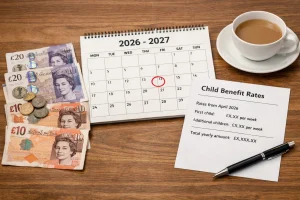
The Government has announced provisional Child Benefit rates for the tax year 2026–2027, providing a modest increase to help parents cope with rising living costs. The weekly amount for the eldest or only child is set to increase to £27.05, while payments for additional children will rise to £17.90.
This follows consistent annual increases as seen in the table below:
| Tax Year | Eldest/Only Child | Additional Children | Guardian’s Allowance |
|---|---|---|---|
| 2024–2025 | £25.60 | £16.95 | £21.75 |
| 2025–2026 | £26.05 | £17.25 | £22.10 |
| 2026–2027 (Provisional) | £27.05 | £17.90 | £22.95 |
These rates, though not dramatic increases, are part of a broader support system to ease financial pressure on families, especially when coupled with the updated income thresholds.
Who Will Gain the Most From These Changes?
The 2026 Child Benefit updates are designed to redistribute financial support more fairly.
As a result, several groups are expected to benefit significantly:
- Single-earner households will see fairer treatment under the new threshold system.
- Middle-income earners, previously hit by steep benefit reductions, can now retain more.
- Parents with minor pay increases won’t face abrupt losses in benefits.
- Families who previously opted out due to HICBC may now be entitled to reapply.
- Households with growing children in full-time education can continue claiming with clearer rules.
These updates aim to tackle previous criticisms of unfairness, especially for those who faced the benefit cliff-edge or inconsistencies compared to dual-income households with higher combined earnings.
What Will Stay the Same in the Child Benefit Rules?
Despite the upcoming reforms, many core elements of the Child Benefit system remain unchanged, ensuring continuity and clarity for parents.
You’ll still be able to claim Child Benefit if you’re responsible for a child under 16, or under 20 if they are in approved education. The benefit remains available regardless of employment status, though income can still affect how much you receive through the adjusted HICBC.
Another constant is the link between Child Benefit and National Insurance credits. Even if you opt out of receiving payments to avoid tax charges, registering ensures your credits are applied, which is essential for your State Pension.
Payment schedules will continue every four weeks, typically on Mondays or Tuesdays, and there’s no need to reapply unless your family circumstances change significantly.
Do You Need to Reapply or Take Action Before 2026?
With the new rules approaching, preparation is key. While most changes will apply automatically, some steps will ensure you don’t miss out.
- Review your current Child Benefit status, especially if you opted out in the past.
- Check your income projection for the 2025–2026 tax year to see if the new thresholds may benefit you.
- Update HMRC with any changes in your income, employment, or family size.
- Ensure your bank details and contact information are correct for payments.
- Monitor updates from HMRC for the final confirmed income thresholds and transition guidelines.
Doing this before January 2026 ensures a smooth adjustment when the reforms take effect, and avoids missed payments or unnecessary Self-Assessment filings.
How Do These Changes Affect New Parents in 2026?
If you’re welcoming a child in late 2025 or early 2026, these reforms directly impact your benefit eligibility and planning. Understanding the transition is essential.
- Children born before January 2026 may initially fall under the old rules before being shifted automatically.
- Children born after January 2026 will be assessed using the new thresholds and rates.
- Parents are encouraged to apply as early as possible after birth to avoid delays.
- Eligibility remains based on responsibility for the child, not employment status.
- You don’t need to reapply when the rule changes, HMRC will handle this internally.
This ensures continuity of support for new families during what is often a financially challenging time.
What Mistakes Should You Avoid With Child Benefit in 2026?
To make the most of your entitlement, avoid these common missteps:
- Assuming you’re not eligible based on previous thresholds, check the new rules.
- Failing to update HMRC about income changes can lead to incorrect payments or tax penalties.
- Missing out on National Insurance credits by not registering, even if you don’t receive payments.
- Overlooking joint income scenarios, only one parent’s income applies to the HICBC.
- Neglecting to check thresholds annually, especially if your financial situation changes.
Staying proactive and informed will help you receive what you’re entitled to and avoid unnecessary issues.
Why Are These Updates Important During the Cost of Living Crisis?

As the UK continues to face soaring food prices, energy bills, and childcare costs, these Child Benefit updates come at a crucial time.
Here’s why they matter:
- Wider eligibility ensures more families receive support.
- Less severe income-based reductions protect parents from financial penalties for modest salary increases.
- Improved fairness between single and dual-income families.
- Encourages benefit take-up by removing the stigma or penalties attached to minor income changes.
- Provides extra help for middle-income earners who often fall through the cracks in support systems.
Together, these reforms help parents manage rising costs more confidently and provide a safety net where it’s most needed.
Conclusion
The upcoming Child Benefit changes set to begin in January 2026 represent one of the most significant updates in recent years. With a revised income threshold, a fairer tapering approach, and increased payment rates, these reforms are clearly aimed at easing financial strain on UK families.
Whether you’re a current recipient or previously opted out, now is the time to reassess your eligibility and take advantage of the new rules. By understanding how these changes work and preparing ahead of time, you can secure the support your family needs without any surprises.
The updates not only bring clarity and fairness but also acknowledge the changing financial landscape that many parents are navigating today. Stay informed, keep your details up to date, and make sure you’re not missing out on the support you’re entitled to in 2026 and beyond.
FAQs
Will Child Benefit rates increase in January 2026?
Yes, the rates will increase to £27.05 for the eldest child and £17.90 for additional children in the 2026–2027 tax year.
How will the new High Income Child Benefit Charge be calculated?
It will use a gradual tapering system instead of a sharp cut-off, allowing families to retain more benefit as income increases.
Can I claim Child Benefit if my income is over £60,000 in 2026?
Yes, under the new rules you may still be eligible to receive partial benefit depending on how far above the threshold your income is.
What happens if I already opted out of Child Benefit payments?
You can choose to reapply if the new rules improve your entitlement, especially if your income now falls within the adjusted range.
Do both parents need to report income to HMRC for Child Benefit?
Only the higher earner in the household needs to consider the HICBC and may be required to file a tax return if affected.
What is the Guardian’s Allowance and who qualifies in 2026?
Guardian’s Allowance is an additional weekly payment for those raising a child whose parents have died, set to be £22.95 in 2026–2027.
Why is it important to claim Child Benefit even if you don’t need the money?
Claiming ensures you receive National Insurance credits, which help protect your State Pension entitlement later in life.