
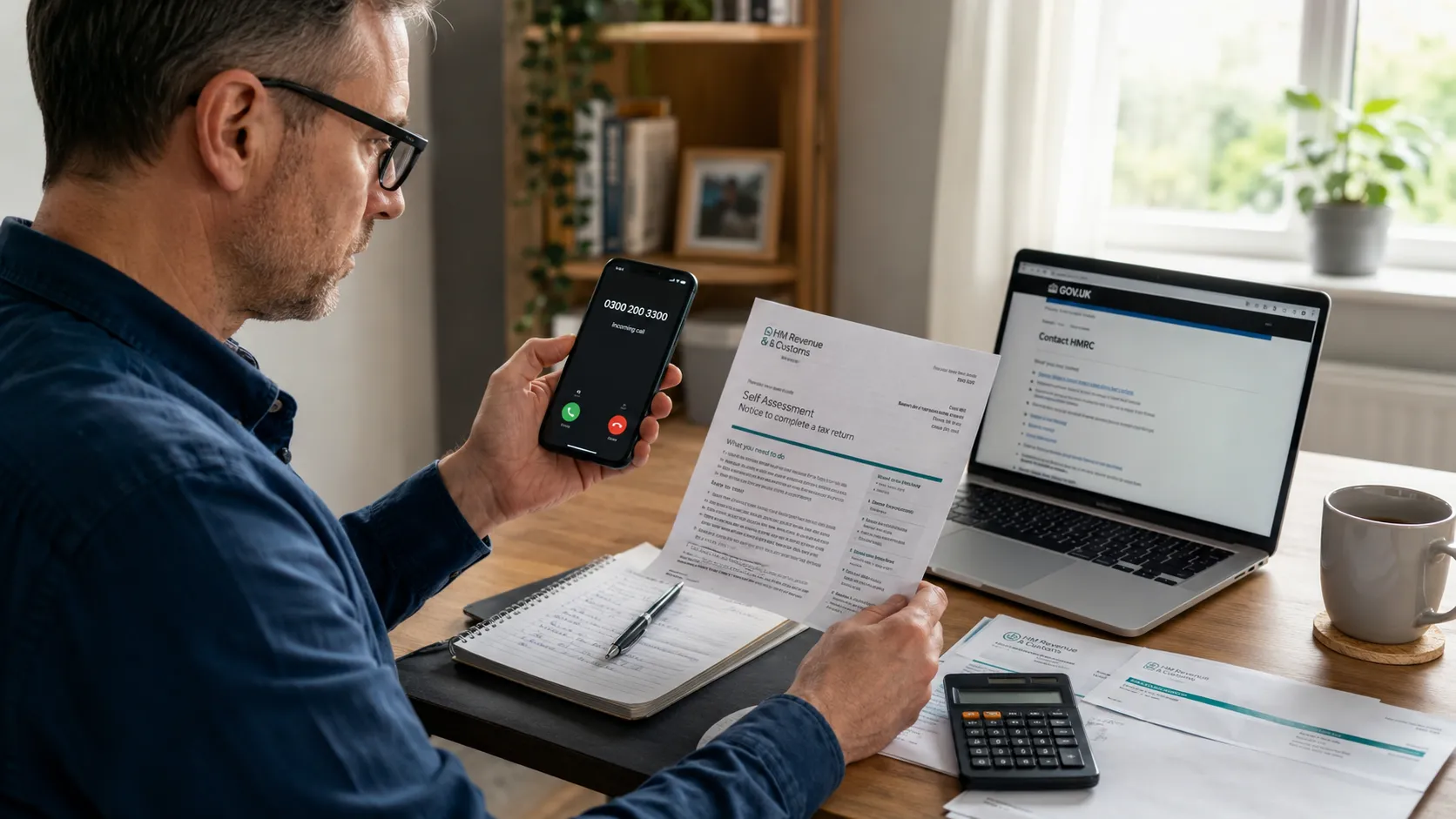
Yes, HMRC can call your mobile phone, and genuine outbound HMRC calls do take place. Current HMRC guidance says that in certain circumstances it may call a person’s mobile or landline and may leave a voicemail.
However, the question “does HMRC call from mobile numbers?” is slightly different. HMRC’s public guidance does not provide a blanket rule saying that every genuine HMRC outbound call must display one particular type of caller ID.
It currently identifies 0300 200 3884 for certain missed calls and voicemails, while other genuine HMRC contacts may appear as withheld.
Therefore, an unexpected call displaying an 07 mobile number should be treated cautiously and independently verified, but the displayed number alone should not be used as the only test of whether the caller is genuine.
What Number Does HMRC Call From?

There is no single caller-ID number that covers every possible type of HMRC contact.
HMRC has many departments, campaigns, caseworkers and contact arrangements. Its official collection of genuine contacts includes telephone calls alongside letters, emails and text messages.
HMRC also states that not every communication it sends is included in its published genuine-contact lists.
That makes it risky to decide whether an HMRC phone call is genuine simply by searching the displayed number.
Can HMRC Call From a 0300 Number?
Yes. HMRC uses 0300 numbers for a range of official telephone services.
For example, HMRC’s current guidance specifically identifies 0300 200 3884 in relation to certain outbound calls and voicemails. Other HMRC departments also have their own published 0300 contact numbers.
However, seeing an 0300 number on caller ID is not sufficient evidence that the person speaking to you is genuinely from HMRC. Caller-ID information can be manipulated, so the substance and context of the call still need to be checked.
Is 0300 200 3884 an HMRC Number?
HMRC currently states that it may contact people by phone or leave a voicemail from 0300 200 3884.
HMRC also makes an important qualification: 0300 200 3884 is not a general enquiries number. If you receive a call associated with it, HMRC says it may leave a voicemail explaining that it will try to contact you again.
That makes 0300 200 3884 useful when checking certain HMRC calls, but it should not be treated as the only number from which HMRC can ever make contact.
Can HMRC Call From a Withheld or Private Number?
Yes, there are circumstances in which a genuine HMRC call may appear as withheld.
For example, HMRC’s guidance for PAYE or Self Assessment complaints says that, from 27 April 2026, it may send a text informing someone that their complaint is being reviewed and that an HMRC representative will call the following day. The guidance specifically warns that the incoming number may show as withheld.
This is another reason why rules such as “withheld number equals scam” are unreliable.
Can an HMRC Phone Number Be Spoofed?
Caller-ID spoofing allows a fraudster to manipulate the number displayed on your phone.
HMRC has repeatedly warned taxpayers not to trust caller ID simply because a telephone number looks convincing. Government anti-fraud guidance states that numbers can be spoofed.
HMRC has previously worked with telecommunications companies and Ofcom to introduce protections against criminals spoofing some of its most commonly used helpline numbers. That improves protection but does not make caller ID a substitute for independent verification.
How Do Genuine HMRC Calls Work?
HMRC communicates with taxpayers in several ways, including telephone calls, letters, emails and text messages. Which method it uses depends on the reason for the contact.
Why HMRC May Call You?
A genuine HMRC phone call could relate to an existing tax matter, an outstanding return, debt management, a compliance matter, research, a complaint or another HMRC service.
Current HMRC guidance provides several examples of genuine outbound telephone contact. It also publishes time-limited campaigns explaining who may be contacted, why and what information callers will or will not request.
An unexpected phone call is therefore not automatically fraudulent merely because you did not initiate it.
It should, however, be checked carefully.
Does HMRC Leave Voicemail Messages?
Yes. HMRC confirms that it can leave voicemail messages in some circumstances.
Its current phone-call guidance says it may call or leave a voicemail from 0300 200 3884 and, if the call is missed, may leave a message explaining that it will try again.
HMRC’s internal debt-management guidance also recognises that staff may sometimes need to leave answerphone messages and instructs them to keep those messages limited because other people might hear them.
A voicemail claiming to be from HMRC should therefore not automatically be dismissed but its content matters.
HMRC has specifically warned that it will not leave voicemail messages threatening legal action or arrest.
What Information Might HMRC Ask for?
The answer depends on the type of contact.
Some HMRC processes may involve security or identity checks. For example, current HMRC guidance for certain Corporation Tax contacts says HMRC may ask the recipient to confirm their identity but will not ask for financial or bank details during that contact.
Do not assume that a caller requesting security information is automatically legitimate. If you have any doubt about who is calling, end the conversation and contact HMRC independently using contact details obtained directly from GOV.UK.
Can HMRC Contact You by Letter, Text and Phone About the Same Matter?
Yes. HMRC specifically says that it sometimes uses more than one communication method for the same matter.
For example, HMRC may send a letter first and later follow it with an email, telephone call or text. According to HMRC, doing this can add security and prepare the taxpayer for the follow-up contact.
This gives you another useful verification check.
If someone claims to be calling about a letter HMRC recently sent you, compare what the caller says with the correspondence you already hold. Do not use telephone numbers or links supplied unexpectedly until you have verified them independently.
Are All Genuine HMRC Phone Calls Listed Online?
No. HMRC maintains official lists of recent genuine communications to help taxpayers check suspicious contact, but it explicitly states that not every HMRC communication is included.
This matters because an unlisted telephone number or campaign should not automatically be labelled fraudulent.
Instead, consider the complete picture:
- why the person says HMRC is calling
- whether you have existing correspondence about the matter
- whether the caller tries to rush or threaten you
- what information or payment they request
- whether you can verify the issue independently through official HMRC channels
Current Example of Genuine HMRC Outbound Calls in 2026
There are current examples showing that HMRC genuinely makes outbound telephone calls.
HMRC says that from 29 June 2026 to 31 December 2026, its Pensions Programme may telephone pension scheme administrators who have not yet migrated their schemes to the Managing Pension Schemes online service.
HMRC states that these callers will not ask for personal financial information.
HMRC’s wider 2026 contact guidance also contains current campaigns involving telephone contact by HMRC itself or research organisations acting on its behalf.
The practical lesson is that “HMRC never phones people” is incorrect. The better question is whether the particular call you received can be independently verified.
How to Tell If an HMRC Call Is Genuine?
If you receive an unexpected call claiming to be from HMRC:
- Check whether you were expecting contact: Look for recent correspondence, an open complaint, tax enquiry, compliance matter or another reason HMRC might need to contact you.
- Check any recent letters or texts: HMRC sometimes warns people that another form of contact will follow.
- Do not rely on caller ID alone: Even convincing-looking numbers should not be treated as proof of identity.
- Listen to what is being requested: Requests for an immediate transfer of money, extreme urgency or threats are major warning signs.
- Verify the matter independently: Find the relevant HMRC contact details through GOV.UK rather than relying on a number supplied unexpectedly during the call.
- End the call if you are uncomfortable: You do not need to remain on a suspicious call while trying to decide whether it is genuine.
HMRC itself recommends checking its published list of genuine contacts when a call, email, text or letter appears suspicious.
HMRC Mobile Number Scam Warning Signs
An HMRC mobile number scam often relies on urgency, fear or the promise of money.
HMRC says suspicious contact may:
- rush you into acting
- threaten you
- arrive unexpectedly
- request personal information such as bank details
- instruct you to transfer money
- offer a refund, tax rebate or grant.
Be particularly suspicious of a caller who says you must make an immediate payment to avoid arrest, refuses to let you verify the matter, or claims you have an unexpected tax refund that can only be released after you provide payment or banking information.
Would HMRC Ever Threaten You Over the Phone?
A genuine HMRC officer may need to discuss tax owed, missed deadlines or the consequences of failing to deal with a legitimate tax matter. That should not be confused with a scammer using fear to force an immediate payment.
HMRC specifically warns about scam calls threatening arrest if fictitious tax debts are not paid immediately. It also states that HMRC will not leave voicemails threatening legal action or arrest.
What Genuine HMRC Contact May Involve?
A legitimate conversation may involve explaining an existing issue, discussing what action is required, requesting appropriate information or referring you to official HMRC processes.
The precise nature of the conversation depends on the tax or service involved.
Why Threats and Urgency Can Signal an HMRC Scam?
Scammers benefit when a victim acts before checking the story.
Statements such as “pay in the next hour”, “the police are on their way”, “you will be arrested unless you transfer money now” or “do not hang up” should be treated as serious warning signs.
HMRC’s published scam checklist specifically identifies threatening or rushed contact as indicators of possible fraud.
HMRC Call From a Mobile Number vs HMRC Calling Your Mobile
These two ideas are often confused. HMRC calling your mobile means HMRC has telephoned your mobile device.
HMRC calling from a mobile number refers to the caller-ID number displayed on your screen.
HMRC expressly confirms that it can call people on mobile and landline devices in certain outbound-contact situations.
That statement does not mean that every 07 number claiming to be HMRC is genuine.
The Difference Between the Two
When checking would HMRC call from a mobile number, avoid interpreting “HMRC can call a mobile” as evidence that any displayed mobile number is safe.
The receiving device and the caller’s displayed number are separate questions.
Why an 07 Number Should Be Verified?
If a supposed HMRC call appears from an 07 number, treat it cautiously.
Rather than calling the number back immediately or giving personal information, independently verify the reason for the contact.
Current public HMRC guidance gives specific examples of outbound numbers and withheld calls, but it does not establish a simple universal rule under which caller ID alone proves legitimacy.
Why a Familiar-Looking Number May Still Be Fake?
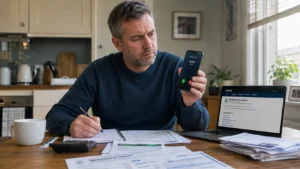
The reverse is equally important.
A familiar-looking 0300 number does not automatically make a call safe because caller-ID information can be manipulated. HMRC advises taxpayers not to rely on caller ID for precisely this reason.
Genuine HMRC Call vs HMRC Scam Call
| Check | Possible genuine HMRC call | Possible HMRC scam call |
|---|---|---|
| Caller number | May match published HMRC contact information, but should still be checked in context | Could use an unfamiliar, mobile or manipulated caller ID |
| Reason for contact | Corresponds with a real tax matter, campaign or previous communication | Vague or unexpected allegation designed to create panic |
| Payment request | Uses established HMRC processes | Demands an urgent transfer or unusual payment |
| Threats | May explain legitimate consequences where relevant | Uses immediate arrest, police or legal threats to force action |
| Personal information | Some processes can involve appropriate identity verification | Pressures you to disclose excessive sensitive or financial information |
| Caller ID | Helpful context but not proof | May be spoofed |
| Safest next step | Verify through independently obtained HMRC details | End the call and report suspicious contact |
No single row in this table should be treated as a definitive authentication test. Look at the whole situation and verify independently where there is uncertainty.
Unsure Whether an HMRC Phone Call Is Genuine?
The number displayed on a phone does not tell the whole story. Explore the type of call received, recognise important warning signs and see the safest way to verify the contact.
Start With the Number You Saw
Choose the caller-ID type to see what it may mean.
Do not assume an unexpected mobile number is genuine simply because the caller says they work for HMRC. Check the reason for the contact independently before giving information or making a payment.
HMRC currently identifies 0300 200 3884 for certain outbound calls and voicemails. However, a convincing caller ID is not proof of who is actually calling.
Some legitimate HMRC contacts can appear as withheld. Look for supporting correspondence and verify the matter through an official HMRC contact route.
Different departments and contact situations can work differently. The safest approach is to verify the reason for the call instead of trusting the displayed number alone.
Open the Warning Signs That Match the Call
These behaviours deserve particular attention during an unexpected call claiming to be from HMRC.
Your Safer Verification Route
If something does not feel right, follow this route instead of letting the caller control how the contact is verified.
What Should You Do If HMRC Calls From a Mobile Number?
Do Not Share Information Immediately
You do not have to provide sensitive information simply because somebody says they are from HMRC.
If the call is unexpected, first establish why you are being contacted and whether the matter corresponds with anything you already know about.
Verify the Call Independently
Make a note of relevant details such as:
- the time and date
- the number displayed
- the caller’s claimed name or department
- what they say the call concerns
- any reference number provided
Do not treat these details as proof. Use them to help verify the contact separately.
Contact HMRC Using Official Details
If you remain uncertain, end the call and locate the appropriate HMRC contact information yourself on GOV.UK.
This prevents a fraudster from controlling the verification process by supplying a fake callback number.
Report a Suspicious HMRC Phone Call
HMRC provides an online service specifically for reporting suspicious calls that claim to be from HMRC.
Reporting suspicious contact can help authorities identify and disrupt active scams.
What If You Already Gave Details to a Fake HMRC Caller?
If you believe you have disclosed information or lost money to a fake HMRC caller, act according to what has been compromised:
- Contact your bank immediately if payment or banking details are involved.
- Change affected passwords if login credentials may have been exposed.
- Secure your HMRC online account if you believe somebody may have accessed it.
- Monitor accounts and records for changes you did not make.
- Keep evidence such as the telephone number, call time and any messages.
- Report the suspicious HMRC call through the official HMRC reporting service.
HMRC’s July 2026 guidance says that if someone has used your information to access an HMRC online account, you should report the activity immediately and change your password if you still have access.
If money has been stolen, current HMRC advice says to contact your bank immediately and report the fraud to Report Fraud. In Scotland, HMRC directs victims to contact Police Scotland on 101.
This is a useful point when reading older online advice: Report Fraud replaced Action Fraud as the national reporting service for England, Wales and Northern Ireland on 4 December 2025.
Common Myths About HMRC Mobile Phone Calls
“HMRC Never Calls Taxpayers”
Incorrect. HMRC publishes current examples of genuine outbound telephone calls and explains that it may use calls alongside letters, emails and text messages.
“Any HMRC Call From a Mobile Number Must Be Fake”
This is too absolute.
An unexpected 07 number deserves caution, but HMRC’s official guidance does not provide a universal authentication rule based solely on the type of number displayed.
Verify the contact and reason for the call, rather than trusting a simple caller-ID rule.
“A 0300 Number Means the Caller Is Definitely HMRC”
No. HMRC uses genuine 0300 numbers, including 0300 200 3884 for certain outbound contact, but caller ID should never be your only authentication method.
“Caller ID Is Enough to Verify an HMRC Call”
No. HMRC explicitly advises people not to trust caller ID, because numbers can be spoofed.
How to Protect Yourself From HMRC Phone Scams?

Treat Unexpected HMRC Calls With Caution
An unexpected call does not automatically mean fraud, but it should encourage you to verify what you are being told.
Do not allow urgency to replace verification.
Never Trust the Displayed Number Alone
Whether the screen shows an 07 mobile number, an 0300 number, a withheld number or something else, caller ID is only one piece of information.
The safest question is not simply “what number does HMRC call from?” but “can I independently confirm that this particular contact relates to a genuine HMRC matter?”
Verify Contact Before Sharing Information or Making Payment
Where possible, check:
- your existing HMRC correspondence
- the current genuine-contact guidance on GOV.UK
- whether the claimed reason for the call makes sense
- the correct official HMRC contact route
Do not use an unexpected caller’s own telephone number as your sole method of verifying them.
Keep Your HMRC Account and Personal Details Secure
Use strong, unique passwords and protect access to your HMRC online account.
Unexpected authentication codes, unexplained changes to tax records, a changed password or losing access to your account can indicate suspicious activity. HMRC provides a dedicated process for reporting possible identity fraud affecting an online account.
Conclusion: Should You Trust an HMRC Call From a Mobile Number?
So, would HMRC call from a mobile number? HMRC certainly makes genuine outbound calls and can telephone your mobile phone, but you should be cautious about treating the caller-ID number itself as evidence that a call is genuine or fraudulent.
Current HMRC guidance confirms genuine outbound telephone activity, identifies 0300 200 3884 for certain missed calls and voicemails, and shows that some legitimate contacts can even appear as withheld.
At the same time, HMRC warns people that caller ID should not be trusted because numbers can be spoofed.
If an HMRC call comes from a mobile number, particularly an unexpected 07 number, do not panic and do not immediately provide information or make a payment. Check the context, consider the caller’s behaviour and verify the contact independently through official HMRC channels.
That approach is safer than relying on any blanket claim that HMRC “always” or “never” calls from a particular type of number.
Frequently Asked Questions
Would HMRC call from a mobile number?
HMRC genuinely makes outbound telephone calls and can call people’s mobile phones. However, whether a displayed 07/mobile caller ID is genuinely HMRC cannot be determined from the number alone. If you receive an unexpected call, verify the reason for contact independently.
Does HMRC call from 07 numbers?
HMRC’s current public genuine-call guidance identifies certain 0300 outbound contact and also documents situations where calls may appear withheld. It does not provide a universal rule saying every genuine HMRC call must display one specific type of number. Treat an unexpected 07 number cautiously and verify it independently.
What number does HMRC normally call from?
HMRC does not have one universal outbound caller-ID number covering every department or type of contact. Its current guidance says HMRC may call or leave a voicemail from 0300 200 3884 in specified circumstances, but that number is not for general enquiries.
Is 0300 200 3884 really HMRC?
Yes. HMRC currently lists 0300 200 3884 as a number it may use to contact people by phone or leave a voicemail. HMRC also says it is not a general enquiries number. Caller ID should still not be relied upon as the sole proof of authenticity.
Can HMRC call from a withheld number?
Yes, in some circumstances. For example, HMRC’s 2026 guidance states that people with certain PAYE or Self Assessment complaints may be told by text that HMRC will call the following day and that the number may appear as withheld.
Does HMRC leave voicemail messages?
Yes. HMRC confirms that it may leave voicemail messages for certain genuine contacts. However, HMRC says it will not leave voicemail messages threatening legal action or arrest.
How can I check whether an HMRC call is genuine?
Check whether the contact relates to a matter you recognise, review any recent HMRC correspondence, check HMRC’s current genuine-contact information on GOV.UK and independently contact the relevant HMRC service if you remain unsure. Do not rely solely on caller ID because HMRC warns that telephone numbers can be spoofed.