
Yes, black cabs are now backed by a fairer tax system, and as a UK rider, this means a more level playing field, transparent pricing, and stronger protection for traditional taxi services you rely on.
The UK government has closed a long‑standing tax loophole that allowed some online minicab firms to pay less VAT, while black cab drivers paid the full rate.
Key takeaways for you
- Black cabs no longer compete against reduced VAT fares
- Online minicab firms face stricter VAT rules in London
- The reform raises around £700 million annually for public priorities
- Fairer competition supports reliable taxi services for riders
This reform reshapes how taxi services operate and how fairly they are taxed across the UK.
What Is the Fairer Tax System Announced by the UK Government?

The fairer tax system announced by the UK government focuses on stopping online minicab firms from misusing a specialist VAT rule that was never designed for everyday taxi journeys.
This rule, known as the Tour Operators Margin Scheme, was intended for holiday packages and coach tours, allowing VAT to be paid only on profits rather than full fares.
For years, some large private hire vehicle operators used this scheme to significantly reduce the VAT they paid on passenger journeys.
As a result, they paid far less VAT than black cab drivers and small taxi companies, even though they were operating in the same market. This imbalance placed traditional taxi services at a competitive disadvantage.
Following the Budget announcement, private hire vehicle operators in London can no longer access this scheme. The change ensures VAT is applied fairly to taxi fares, removing an uneven advantage.
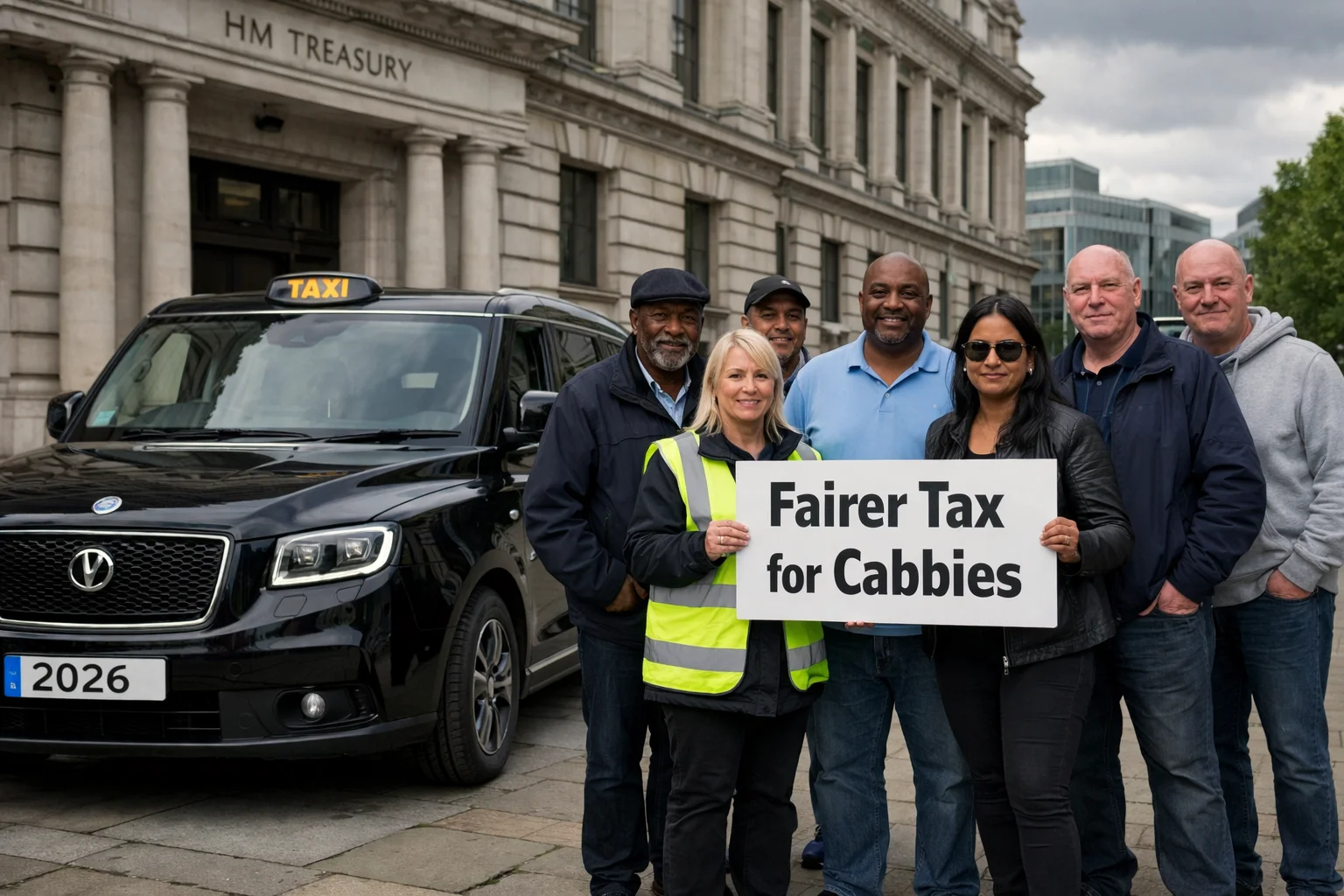
The reform protects black cabs and smaller operators, ensuring they are not undercut by firms benefiting from reduced tax obligations. The government estimates this change will protect around £700 million in annual revenue, supporting public services and restoring fairness within the UK taxi industry.
Why Was This Reform Necessary for the UK Taxi Industry?
This reform was necessary because the UK taxi industry had developed a clear imbalance between traditional taxi operators and large online minicab firms.
Black cab drivers consistently paid full VAT, while some competitors benefited from a reduced tax burden. The consequences of this imbalance affected drivers, businesses, and riders alike.
Key reasons the reform became essential include:
- Traditional black cab drivers paying 20 percent VAT on fares
- Online minicab firms reducing VAT to around 4 percent through niche schemes
- Smaller taxi companies struggling to compete on price
- Growing pressure on fair competition within urban transport
Over time, this system undermined trust in how transport services were regulated and taxed. Drivers who complied with full tax rules felt penalised for operating transparently.
At the same time, large firms scaled rapidly using tax advantages unavailable to others. By closing this loophole, the government restored balance across the sector.
The reform ensures that everyday cabbies are not punished for following the rules, while larger operators contribute fairly to public finances. This was a critical step in protecting the integrity of the taxi industry and supporting long‑term sustainability.
How Does This Change Impact Black Cab Drivers?
For black cab drivers, this reform represents a significant and long‑awaited correction. You are now benefiting from a system that recognises the financial pressures faced by licensed taxi drivers who have always complied with VAT obligations.
Previously, black cab drivers had to compete against firms offering cheaper fares due to reduced VAT payments. That competitive gap is now closing, allowing black cabs to operate on fairer commercial terms.
The impact on black cab drivers includes:
- Removal of unfair VAT advantages held by competitors
- Improved ability to compete on pricing without cutting earnings
- Greater confidence in long‑term industry stability
Steve McNamara, General Secretary of the Licensed Taxi Drivers Association, said:
“The government’s decision to apply VAT to all private hire journeys is a landmark step for fairness and integrity in our industry. For too long, drivers and small operators paying the full 20 percent VAT have had to compete with online mini cab firms benefiting from a niche tax scheme.”
“We welcome this move and commend the government for taking decisive action.”
This endorsement reflects the relief felt across the black cab community. The reform strengthens professional standards and protects livelihoods without increasing regulatory burden on compliant drivers.
What Will Happen to Online Minicab Firms Like Uber?
Online minicab firms, particularly Uber, have already begun adapting to the new tax environment. Rather than absorbing the full VAT cost, Uber has rewritten contracts for drivers outside London to shift VAT liability away from the company.
Under this revised structure, Uber operates as a booking agent rather than the main transport provider. Drivers contract directly with passengers, making them responsible for VAT only if they exceed the VAT registration threshold.
Key changes affecting online minicab firms include:
- Shift to an agency model outside London
- VAT liability moved from company to driver
- Continued VAT charged on Uber commission only
- Different rules applied within London
In London, this model is not permitted, meaning the full fare is subject to VAT. As a result, Uber faces higher tax costs in the capital compared to other regions.
This approach reduces Uber’s tax exposure but raises concerns about lost Treasury revenue. Individual drivers are unlikely to exceed the income threshold required for VAT registration, which limits how much VAT is ultimately collected outside London.
While Uber argues this keeps fares affordable, it highlights ongoing tension between tax compliance and commercial strategy within the ride hailing sector.
Will UK Riders See Fare Changes Because of This Reform?

This reform raises an important question for you as a rider, will taxi fares increase as companies adjust to the new VAT rules. The answer depends largely on where you travel and which service you use.
At the heart of the issue is how operators choose to absorb or pass on additional tax costs.
Potential Fare Increases
Uber has warned that fares may rise, particularly in London, where the agency model is not allowed. Since the full fare is now subject to VAT, operators face higher costs per journey. These costs may be passed on to riders, especially during peak demand periods.
Commission Structures and Cost Shifting
Uber’s commission structure plays a major role in how fares are calculated. The company now uses a dynamic commission model, which can range widely depending on demand. Even if base fares remain stable, increased commission variability could influence final prices you pay.
Outside London, shifting VAT responsibility to drivers helps limit fare increases. However, this approach reduces government tax revenue and places more financial complexity on drivers rather than companies.
London Versus Outside London
Regional differences are central to understanding fare impacts. In London, stricter rules apply, and full VAT is unavoidable. Outside London, drivers often operate below the VAT threshold, reducing overall tax costs.
For riders, this means fares may rise more noticeably in London than elsewhere. However, increased fairness in competition may also improve service quality and long‑term pricing stability.
Who Really Pays VAT Now – Companies or Drivers?
Understanding who pays VAT under the new system helps clarify why this reform matters. The answer varies depending on location and operating model.
In London, private hire vehicle operators must pay VAT on the full fare. This applies directly to companies, increasing their tax responsibility. Outside London, the agency model allows companies to limit VAT exposure by shifting liability to drivers.
Drivers only become VAT liable if they exceed the annual VAT registration threshold. Most do not, meaning VAT is not collected on many journeys outside the capital.
| Journey Type | VAT Responsibility | VAT Applied |
|---|---|---|
| Black cabs | Driver or operator | Full rate |
| Uber London | Company | Full fare |
| Uber outside London | Driver if registered | Limited |
| Pre reform scheme use | Company | Reduced rate |
This split system explains why the reform significantly affects London while having a different impact elsewhere.
What Does This Mean for Fairness in UK Transport?

This reform represents a broader shift toward fairness in how UK transport services are regulated and taxed. For years, uneven VAT rules distorted competition and undermined trust in regulatory enforcement.
Economic Implications
By closing the loophole, the government secures around £700 million in annual revenue. This income supports national priorities and reduces reliance on borrowing.
Benefits for Small Operators
Small taxi companies and independent drivers benefit from a system that no longer favours large platforms. Fairer tax treatment strengthens local services and preserves consumer choice.
Public Funding Outcomes
Chancellor of the Exchequer, Rachel Reeves, said:
“We’re putting the brakes on the illegitimate use of a niche tax scheme to protect everyday cabbies. We’ll use the £700m a year this raises to deliver the country’s priorities cutting the cost of living, cutting waiting lists and cutting debt and borrowing.”
This funding contributes to NHS waiting list reductions, economic stability, and household cost relief. The reform connects transport fairness with wider social benefits.
Will This Reform Change the Future of Ride Hailing Services?
This reform may influence how ride hailing services operate in the UK moving forward. Companies will need to balance compliance, pricing, and driver relations more carefully.
Greater scrutiny of tax practices could encourage more transparent business models. Legal rulings already limit how agency models can be used, particularly in London.
For you as a rider, this could lead to clearer pricing structures and improved service accountability. While innovation will continue, regulatory expectations are now clearer. The industry may shift toward models that prioritise long‑term sustainability over aggressive tax optimisation.
Is This a Win for the Everyday Rider?
Overall, this reform is a positive step for everyday riders. It promotes fairness, protects trusted taxi services, and ensures companies contribute appropriately to public finances.
You benefit from a more stable and competitive transport market, where pricing reflects genuine costs rather than tax loopholes. While some fare adjustments may occur, particularly in London, the long‑term impact supports service quality and reliability.
By backing black cabs with a fairer tax system, the government reinforces the value of professional, regulated transport. This creates a healthier ecosystem for drivers, companies, and passengers alike.
Conclusion
The decision to back black cabs with a fairer tax system marks a significant shift in how the UK regulates taxi services. By closing the misuse of the Tour Operators Margin Scheme, the government has restored balance between traditional taxis and online minicab firms.
For you as a rider, this means greater transparency, fairer competition, and more sustainable transport services. While ride hailing companies adapt their models, the core objective remains clear. Everyone should contribute fairly.
The reform protects public revenue, supports everyday cabbies, and strengthens trust in the transport system. Over time, these changes are likely to benefit riders through improved service quality and long‑term market stability.
FAQs
Is the fairer tax system already in effect for taxis?
Yes, the reform takes effect from the announced date and applies immediately to private hire vehicle operators in London.
Will black cab fares increase because of this change?
Black cab fares are not directly affected, as drivers were already paying full VAT before the reform.
Why does Uber pay VAT differently outside London?
Outside London, Uber uses an agency model where drivers contract directly with passengers, shifting VAT liability.
Does this reform affect small taxi operators outside London?
No, smaller operators and black cabs outside London are not impacted by the scheme closure.
How much money will this reform raise for the government?
The government estimates around £700 million per year will be protected through this change.
Will riders benefit from this reform long term?
Yes, fairer competition supports reliable services and sustainable pricing over time.
Does this reform stop all tax avoidance in ride hailing?
It closes a major loophole, but companies may still adapt within existing legal frameworks.