

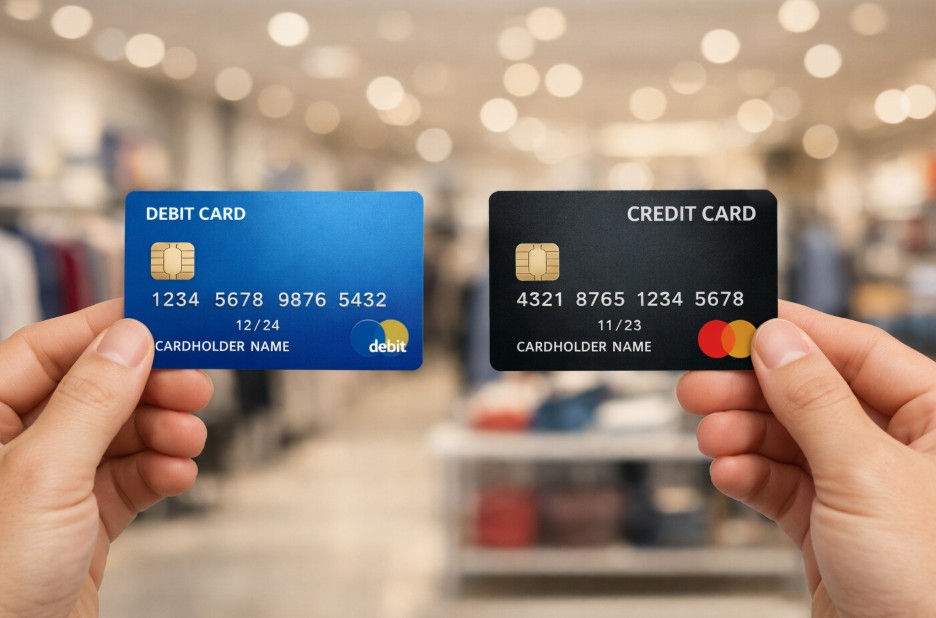
Choosing between a debit card and a credit card influences more than just how you pay, it determines your protections, your risk exposure, and where your money actually comes from.
For UK consumers dealing with an increasingly cashless economy, understanding the practical differences between these two card types has never been more relevant.
Both cards are widely accepted across retail, online, and contactless environments. But their mechanics, costs, and legal safeguards differ significantly. Getting this wrong can mean paying unnecessary interest, losing dispute rights, or being caught out by unexpected restrictions.
Debit Cards vs Credit Cards: Which One Should UK Shoppers Use?
How Each Card Type Handles Payments?

Debit cards draw directly from your current account, meaning every transaction reflects money you already hold. There is no borrowing involved, no interest to manage, and no monthly statement to reconcile. This simplicity makes debit cards the default choice for everyday spending among UK consumers.
Credit cards operate on a short-term line of credit extended by your provider. You spend up to a set limit and repay, either in full or in instalments.
If you carry a balance, interest applies, typically at APRs ranging from 20% to 30% for standard cards. Cash withdrawals on credit cards attract immediate interest with no grace period, making them particularly expensive for that purpose.
Consumer Protections and Spending Limits Compared
Credit cards carry a significant legal advantage for larger purchases. Under Section 75 of the Consumer Credit Act 1974, purchases between £100 and £30,000 give consumers joint liability recourse against both the retailer and the card provider, useful when goods are faulty or a supplier collapses. This protection does not apply to debit cards.
Debit cards offer the Chargeback Scheme, a voluntary mechanism through which banks can reverse unauthorised or misrepresented transactions. It is not a legal right, but it functions well in practice.
The key distinction is that disputed funds come from your own bank account balance rather than a credit facility, which can create short-term cash flow pressure while a claim is being processed.
Where Credit Cards Are Restricted or Blocked?

Credit cards face growing regulatory restrictions in specific sectors. Since October 2024, the UK Gambling Commission has prohibited the use of credit cards for online gambling deposits, citing consumer protection concerns around debt-fuelled betting.
However, many local casinos accept credit cards for withdrawals and not deposits, but players can visit an international credit card casino online, as these often still accept them as a payment method for deposits and withdrawals.
Debit cards remain permitted for this purpose, reflecting regulators’ preference for spend-linked rather than credit-linked transactions in high-risk categories. This policy reflects a broader trend.
High interest rates pushed credit card transactions down to just 12.6% of total retail spending in 2025, compared to 14.2% the previous year, as consumers and regulators alike grew cautious about credit-funded expenditure in discretionary categories.
Which Card Suits Different Buyer Profiles?
For everyday spending, groceries, bills, and subscriptions, debit cards are the practical choice. UK Finance data from November 2025 recorded 2.3 billion debit card transactions, compared to 391 million credit card transactions in the same month, showing how heavily consumers rely on debit for routine purchases. The volume gap reflects genuine behavioural preference, not just card availability.
Credit cards make more sense for significant one-off purchases where Section 75 protection adds genuine value, think electronics, travel bookings, or home appliances. They also suit those building a credit history, provided the balance is cleared monthly.
For shoppers prone to carrying balances or operating close to their limit, the interest costs quickly outweigh any rewards or protections on offer. Knowing which card to reach for in each situation is the kind of financial literacy that saves money quietly, every month.